Upper Mustang Restricted Area and Entry Requirements
Beyond Kagbeni is a restricted area and special permits are necessary for entry into the area of Upper Mustang. The permits are required for the cycle to Lo Manthang and its surroundings.
The upside of this is that you don’t have to get the permits sorted out. 3A Adventure will acquire and schedule any necessary permits for you prior to entering the restricted area on the tour. The permit fees are part of the tour and no separate permit fee will be charged on the way.
Our crew is also responsible for paperwork and permits for the route. Only personal documents (such as passport, visa information, etc) are required to be provided in advance.
On the ride, 3A Adventure will coordinate the necessary support at checkpoints and will ensure that the necessary permits are secured along the ride.
Motorcycle and Riding Experience Required
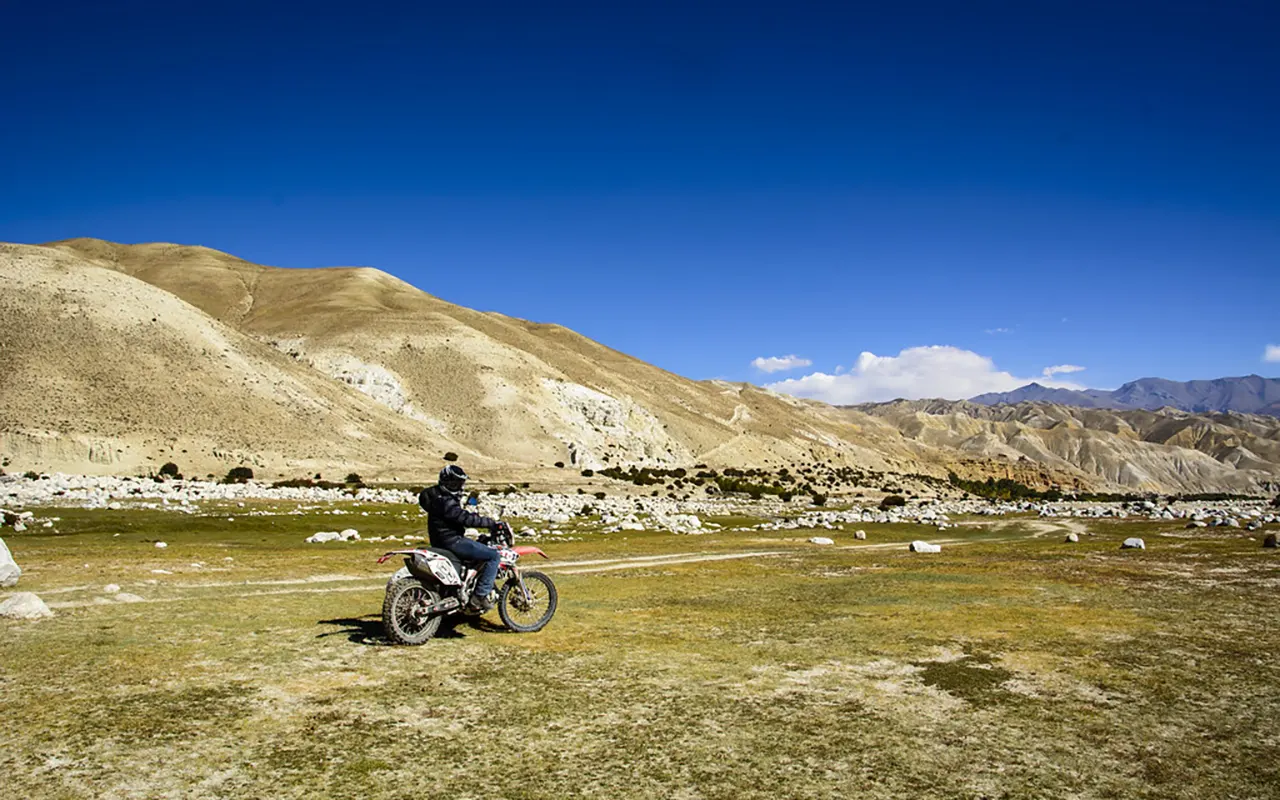
The motorcycle tour from the Upper Mustang will require reasonable skill in riding on rough mountain roads. The rider should be comfortable and capable of handling a motorcycle on gravel, loose stones, dirt tracks and steep slopes, but does not have to be a professional off-road rider.
The Royal Enfield Himalayan 411 Tour bike in this tour is suitable for mixed road conditions that exist between Pokhara and Lo Manthang. This is helpful when the asphalt surface changes to dirt.
It is advisable to be comfortable on the bike at low speeds, braking at a slow pace on loose terrain, cornering on narrow streets and slopes and climbing and descending the hills. Riding a motorcycle in Kathmandu allows you to get accustomed to the machine prior to the journey.
Road Conditions and Riding Challenges
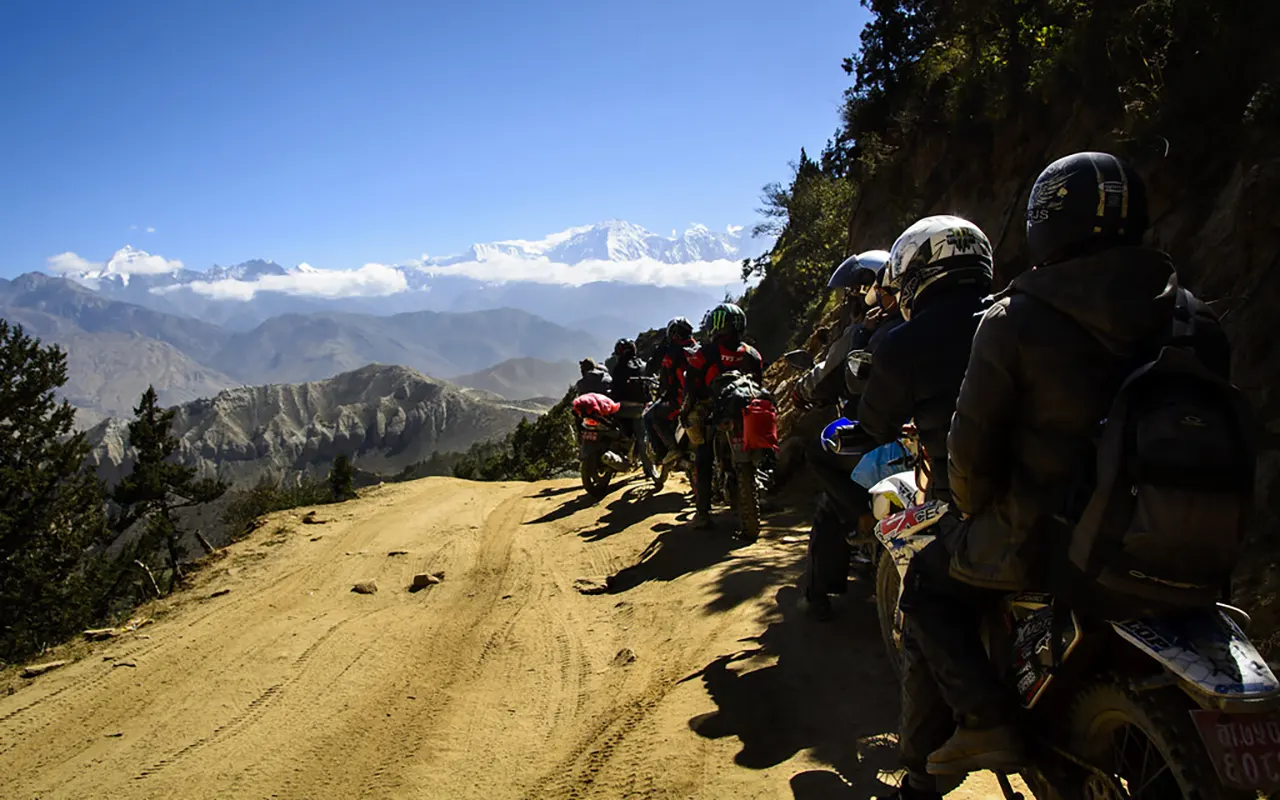
The road trip conditions vary considerably throughout the trip. The Kathmandu to Pokhara route is mostly on a tarmac road, but towards Jomsom and Upper Mustang it is gravel, dirt, rocky and rough mountain road.
| Route section |
Typical road condition |
Main riding concern |
| Kathmandu to Pokhara |
Mainly paved highway |
Traffic and bends |
| Pokhara to Beni |
Paved and mixed sections |
Traffic and road works |
| Beni to Jomsom |
Gravel, dirt and rough sections |
Dust, stones and uneven surfaces |
| Jomsom to Kagbeni |
Dirt and rocky track |
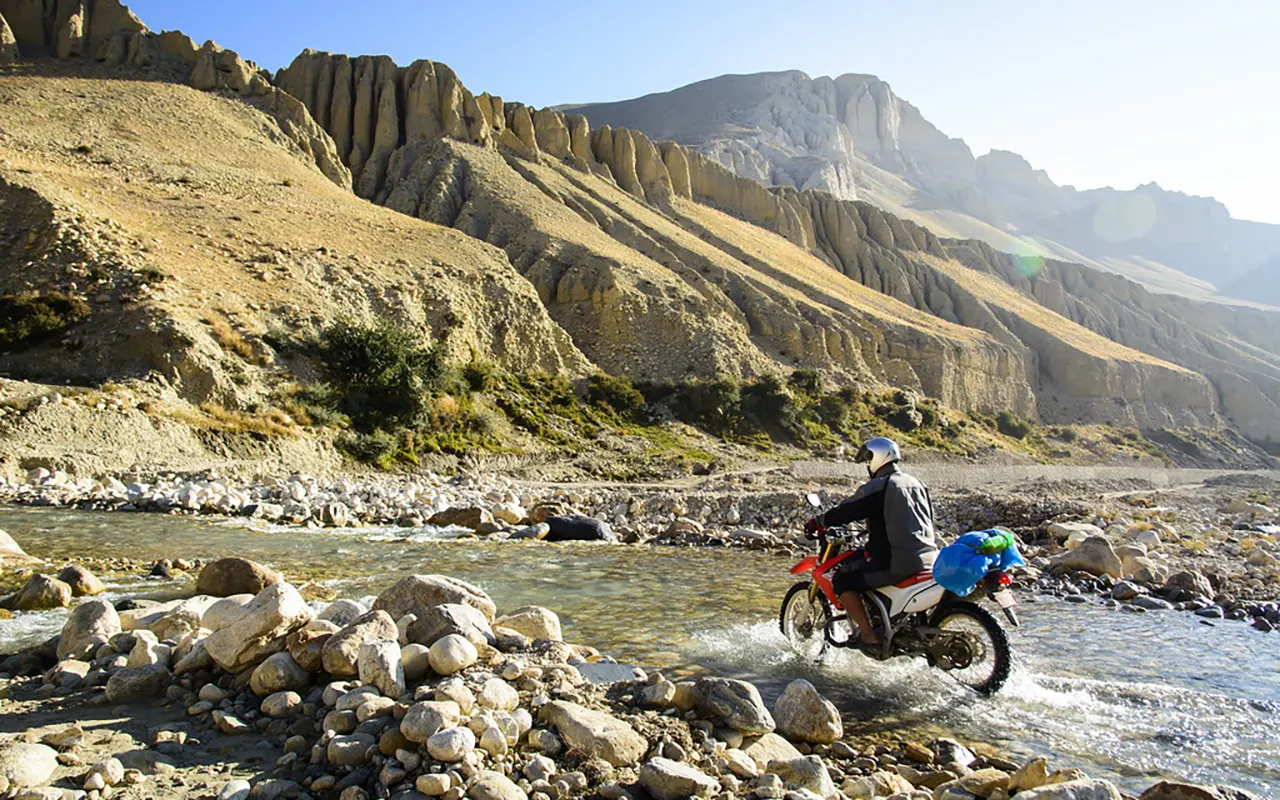
Loose surfaces and river crossings |
| Kagbeni to Chele |
Rough mountain trail |
Rocks, climbs and narrow sections |
| Chele to Lo Manthang |
Predominantly off-road |
Steep climbs, loose rock and exposed sections |
| Lo Manthang to Muktinath |
Mixed rough and improved road |
Long riding day and changing surfaces |
It is then more challenging than a motorcycle vacation on the roads and highways. Weather, construction and local traffic can also impact road conditions.
Fuel, Motorcycle Maintenance and Breakdown Support
Fuel planning is significant as, as you head north of Kagbeni, petrol stations start to become scarce. The information on the current route says that fuel is readily available at Beni, Jomsom and Kagbeni and not so predictable further into Upper Mustang.
It is therefore a good idea to fuel up whenever a good opportunity arises, not when the tank is almost full. The riding team should also inspect fuel, tyres, brakes, chain and engine condition daily.
3A Adventure can arrange for practical support if a motorcycle should develop a problem during the Upper Mustang Motorbike Tour. There are few repair shops available to people in remote areas, so simple maintenance and careful riding are important. If the mechanical issues are severe, it may be necessary to get help from another settlement or a support vehicle.
Altitude, Acclimatization and High Altitude Riding
The climb from Kathmandu is gentle, but then it goes up to the higher valleys of the Mustang. The most significant part is after Kagbeni, when several days are spent above 3k/m above 9843 ft.
| Location |
Approx. elevation |
Riding consideration |
| Kathmandu |
1,400 m / 4,593 ft |
Starting altitude |
| Pokhara |
800 m / 2,625 ft |
Lower elevation |
| Kalopani |
2,530 m / 8,301 ft |
First major high elevation stop |
| Samar |
3,650 m / 11,975 ft |
Allow time for adjustment |
| Lo Manthang |
3,860 m / 12,664 ft |
High altitude overnight stay |
| Mui La Pass |
4,170 m / 13,681 ft |
Highest point on the route |
The Adventure of the Upper Mustang Motorbike Tour is both a trip on a motorcycle and an exposure to altitude, so take your time! Take in plenty of water, regular feedings and time for your body to acclimate. Symptoms of altitude sickness include headache, nausea, dizziness and unusual tiredness. If symptoms do become more severe or get worse, it is more important to descend than to keep on the route.
Weather, Wind and Dust Conditions
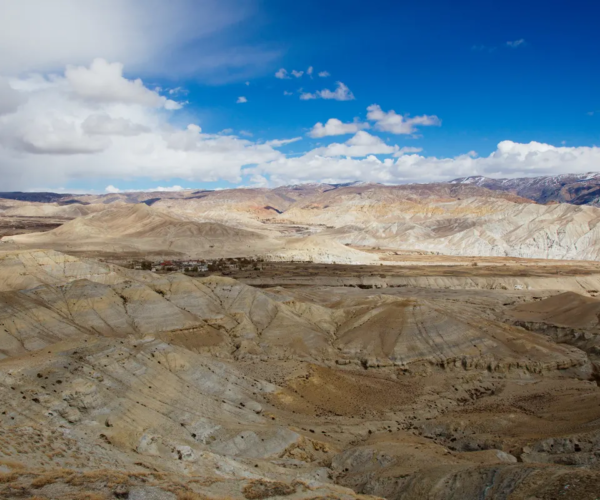
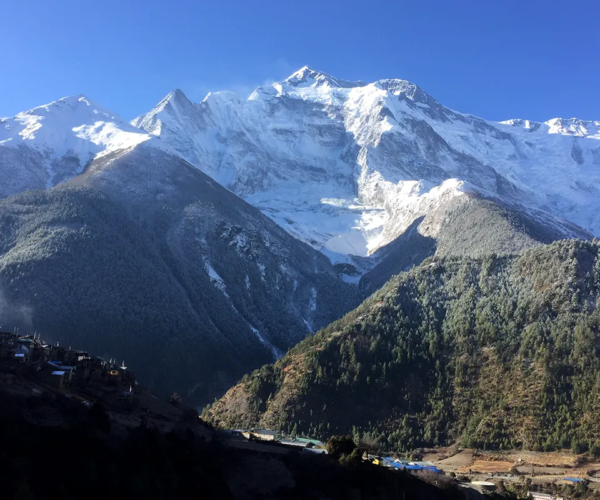
However, Upper Mustang is on the lee side of the Annapurna and Dhaulagiri ranges and therefore the weather is quite drier. But it may still be problematic due to high winds, dust and a significant difference in temperature between the morning and afternoon.
The mornings are usually a more favorable time to ride as winds are stronger later in the day. When multiple vehicles are driving on the same unpaved roadway, dust can also make it harder to see.
As the trail rises in elevation, so do the temperatures. Even in months where the daytime temperatures are comfortable, it is important to wear warm layers. Sunglasses and face covering are also recommended on dusty roads.
The daily riding plan may need to be flexible as weather can turn on a dime in the mountains.
Best Time for the Upper Mustang Motorbike Tour
Riding is best in spring and fall. Dry conditions and comfortable daytime temperatures are common during March-May and September-November often seems clear skies following the monsoons.
| Month |
Conditions |
Suitability |
| January |
Very cold, possible snow at higher elevations |
Not recommended |
| February |
Cold with winter conditions |
Not recommended |
| March |
Spring begins, generally dry |
Good |
| April |
Stable weather and clearer mountain views |
Very good |
| May |
Warm spring conditions; Tiji Festival period varies by year |
Excellent |
| June |
Monsoon begins elsewhere, but Upper Mustang remains relatively dry |
Possible |
| July |
Rain shadow keeps Upper Mustang comparatively dry, but approach roads can be difficult. |
Experienced riders |
| August |
Similar to July, with dust and stronger winds possible |
Experienced riders |
| September |
Monsoon gradually retreats; conditions improve |
Good |
| October |
Clear skies and stable weather |
Excellent |
| November |
Dry and clear but increasingly cold at altitude |
Very good |
| December |
Cold, with possible snow and limited services |
Not recommended |
April, May and October are a good time for most riders to have road conditions, weather and mountain visibility that are all practical. The road from the lower Mustang region to the Upper Mustang should also be carefully monitored during the monsoon season, but it can also be used during the summer.
Motorcycle Gear and Clothing
The route is a mixture of warm valleys at low levels and cold high-altitude winds and requires the correct riding gear. Clothing should be easy to change for changing temperatures throughout the day.
On an Upper Mustang bike tour, try bringing:
- Certified motorcycle helmet
- A protective padded riding jacket
- Motorcycle gloves
- Riding trousers
- Waterproof outer layer
- Ankle-supporting riding boots
- Wearing a warm fleece or insulated jacket
- Thermal base layers
- Sunglasses and clear riding glasses
- Buff or face covering for dust
- Apply sun and lip protection.
- Lightweight personal backpack
Don’t depend on a single thick jacket. There are several lighter layers that are easier to manage when there is a temperature difference between valleys and high passes.
Accommodation on the Motorcycle Route
As the route continues into Mustang, the road changes course from the accommodation. Most of the hotels in Kathmandu and Pokhara are private and have some extra facilities, while in the remote areas, only teahouses and lodges are available.
In some areas like Kalopani, Samar, Lo Manthang and Muktinath, it’s easier to stay in a place than it is in a city. Room facilities are typically simple and may differ from lodge to lodge.
The heating, hot water, electricity and bathroom facilities may not be available to the same extent as in Kathmandu or Pokhara. Weather and local supplies can also be a factor in providing services in remote areas.
3A Adventure is able to plan accommodation as per the itinerary during the Upper Mustang Motorbike Tour. It may be helpful to bring a sleeping bag liner and a few personal comfort items for overnight trips.
Food, Water and Health on the Road
There are food facilities in the main overnight settlements where you can get food, but this decreases as you explore the area of Upper Mustang further. Dal bhat, noodles, rice, soups, Tibetan-style dishes and basic breakfast items are commonly available at local lodges.
Regular hydration is necessary on the Upper Mustang motorcycle tour since riding at higher elevations may cause the loss of fluids. Bring a water bottle to drink from that can be replenished from a safe source or with properly treated drinking water.
Continue to eat on a regular schedule even if you are not feeling very hungry. Generally, simple foods of easy digestibility are a safe option at altitude.
Avoid or limit alcohol consumption at high altitudes as it can cause dehydration and increase difficulty with managing symptoms of altitude.
Mobile Network, Internet and Charging Facilities
Cell phone reception is fairly good in Kathmandu and Pokhara and deteriorates as you head deeper into Mustang. There are areas in the remote valleys and areas between villages that have poor or no cellphone reception, so don’t depend solely on your phone to communicate.
There are charging facilities in many hotels and teahouses and in remote settlements, electricity may be limited.
In an Upper Mustang Motorbike Tour, it helps to have the following items with you:
- The power bank has a high capacity.
- Spare charging cables
- A travel adapter that is suitable for every electronic device.
- An offline map on your phone
- A waterproof phone pouch
- A second battery/back-up device, if feasible
Access to the Internet is generally good in larger settlements and poor in remote villages. If the route goes through an area without a high level of connectivity, 3A Adventure can help with communication and local arrangements.
Travel Insurance, Emergency Support and Medical Facilities
Travel Insurance is to be arranged before the tour begins. This is a high-altitude motorcycle trip, so be sure your policy is for motorcycle riding as well as medical treatment at the elevations on the trip.
It’s also important to see if there is a clause on emergency evacuation. This is significant since, as you head further into Upper Mustang, there will be fewer hospitals available and severe conditions might need to be taken to a larger medical facility.
Have insurance information, emergency contacts and passport information on hand during the ride. If you get seriously ill or injured, or if you have been in an accident, tell your guide right away.
The Upper Mustang Motorbike Tour takes you into mountains, regions where help may be delayed. In the event of a crisis, 3A Adventure can coordinate with the local team and support arrangements, but it is important that riders do have suitable insurance and personal medication on board.