Best season and weather
The best season for the Everest Base Camp Trek with Island Peak Climbing is autumn. This season is one of the most chosen times of the year for hiking and trekking. Many trekkers prefer this season for its overall dry period with very minimal rainfall. The average daytime temperature is also very suitable for trekking, while the nighttime temperature can often be freezing in the highlands.
Difficulty
The Everest Base Camp Trek with Island Peak Climbing can be given a 7.5 out of 10 on the difficulty scale. There are many ascents that will test your endurance and require great physicality. The descents can be slippery too, as we have to trek over loose rocks and icy patches.
Altitude Sickness
There are some chances of altitude sickness on this trek since we will be spending an extended period of time over 4500 meters above sea level, but if you keep yourself well hydrated, the risks are dramatically lower. Other preventive measures include avoiding dehydrating food and drinks, following a safe pace while ascending, and following the “climb high, sleep low” principle.
Preparation and Fitness
To prepare well for this trek, we recommend that trekkers start their training at least 14 to 16 weeks before the scheduled start of the trek. You will have ample opportunity to practice endurance and psychologically prepare yourself as a result. Cycling, jogging, running, swimming, and other basic and easy workouts can adequately prepare your body for the physical demands of the walk.
Food and Accommodation
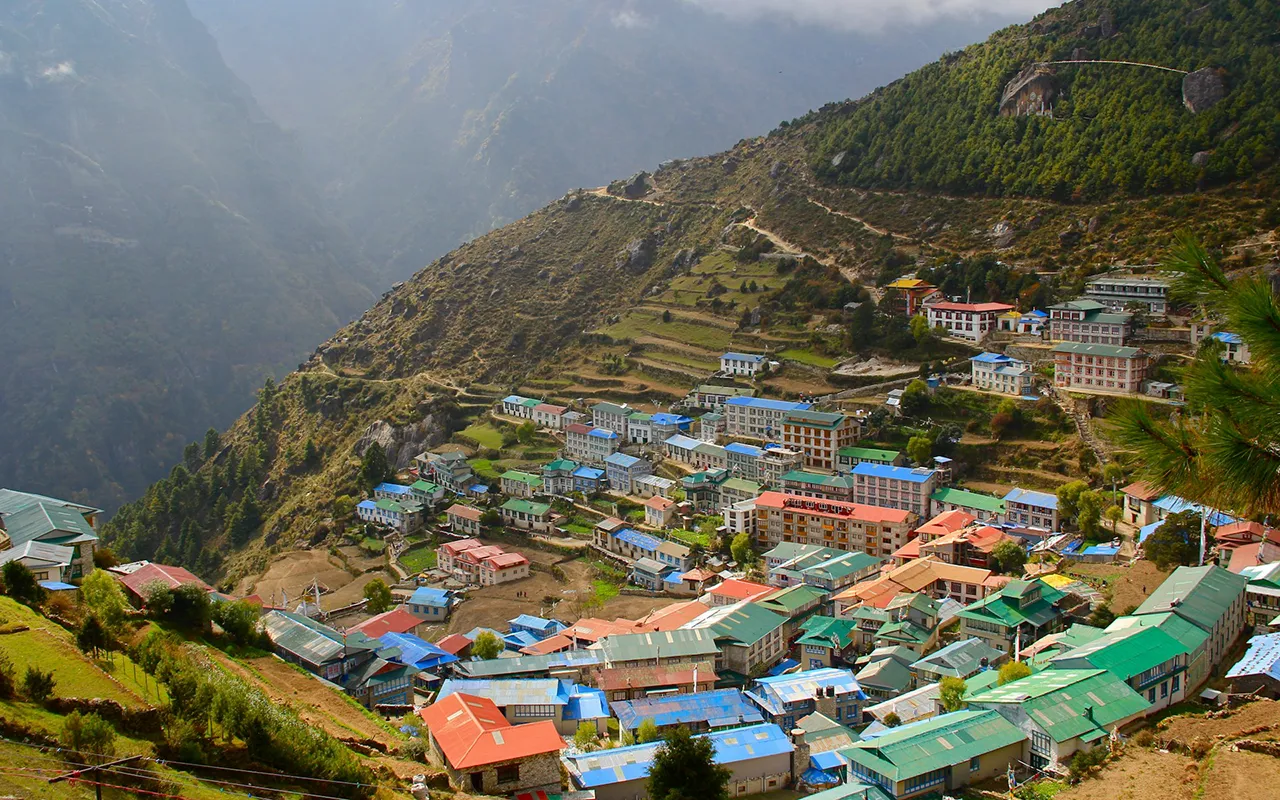
During the trekking days, the Everest Base Camp Trek with Island Peak Climbing package will provide trekkers with 3 meals per day. You are free to choose any meal from the menu provided by the establishments. Trekkers usually go for the national dish of Dal Bhat, which comes with unlimited refills. Likewise, your accommodation expenses throughout the trek will be covered by the package.
Transportation
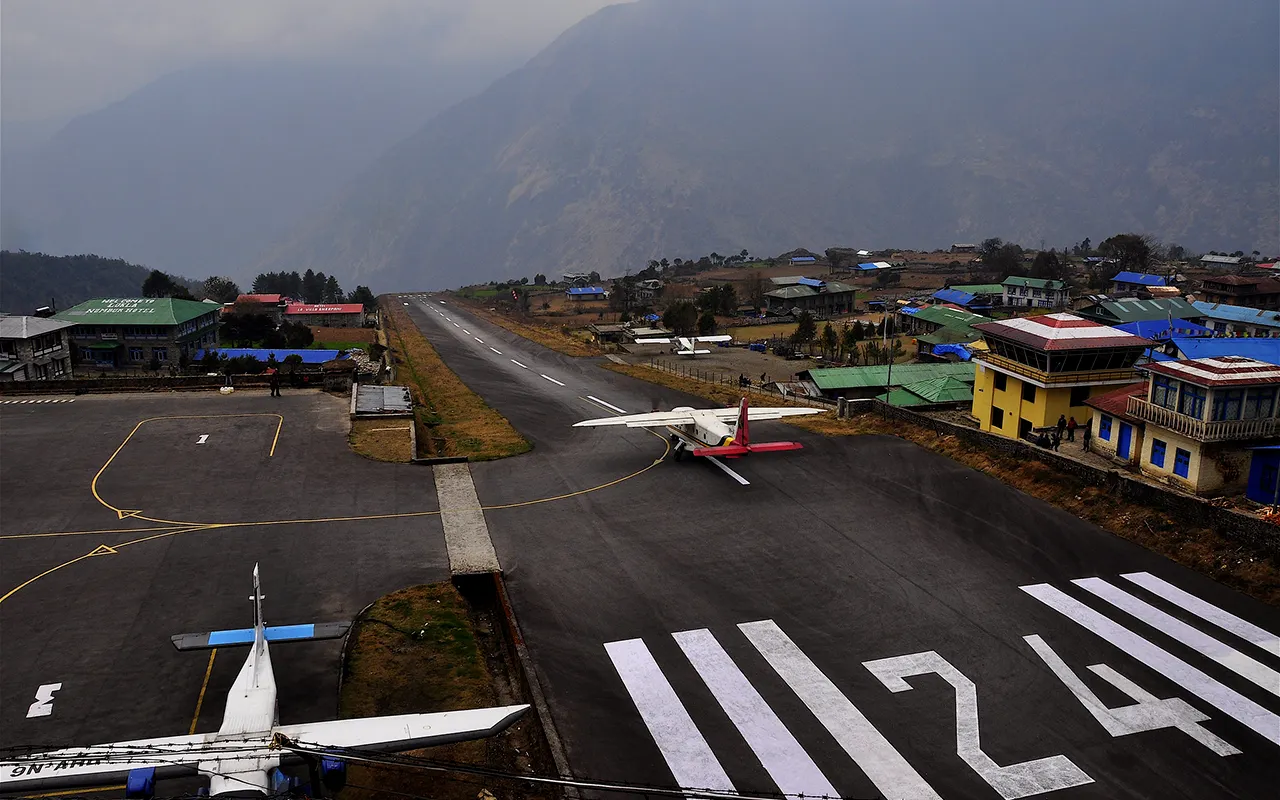
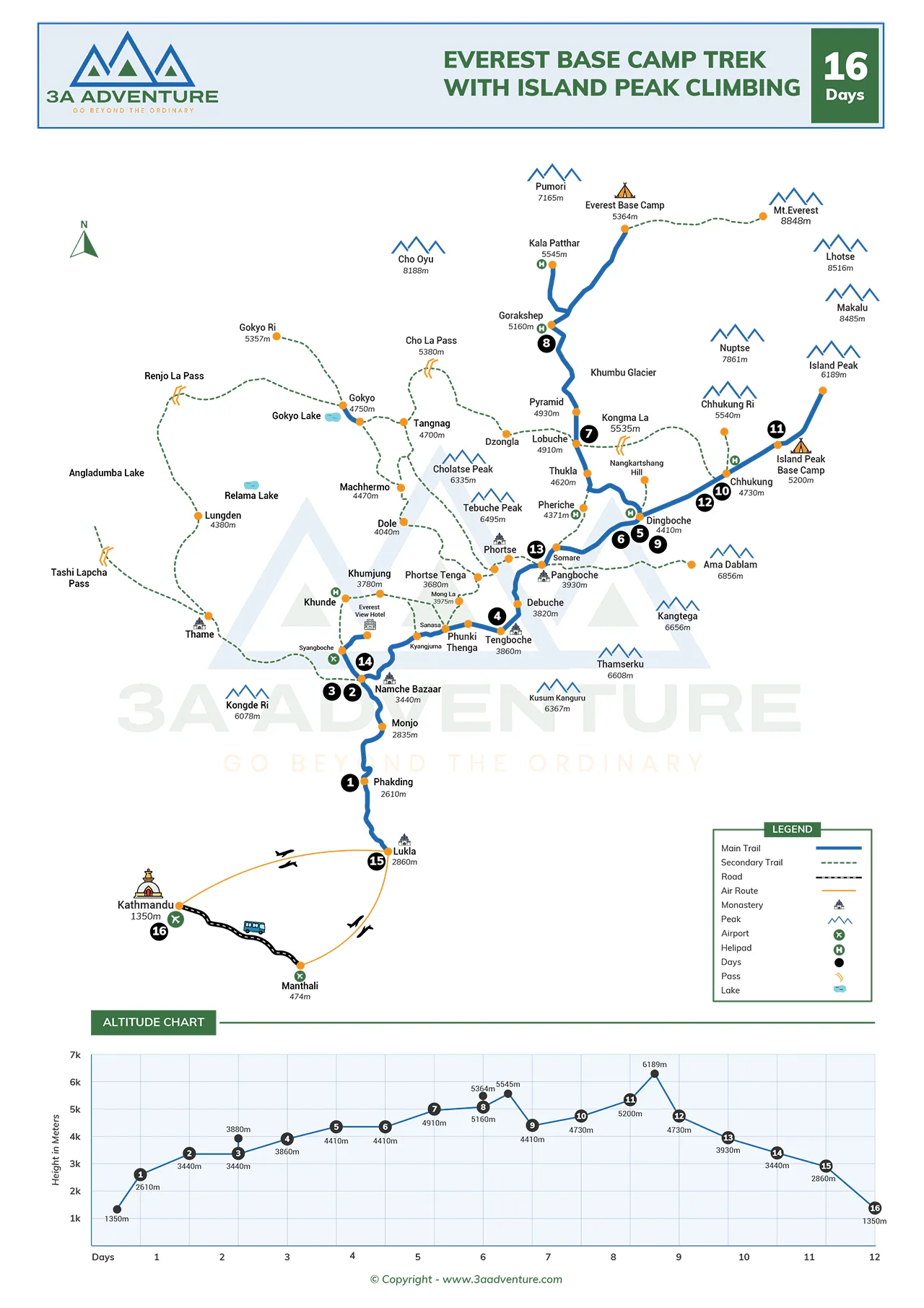
A flight from Kathmandu to Lukla is required at the beginning of the journey, and a flight back to Kathmandu is required at the conclusion. The Everest Base Camp Trek with Island Peak Climbing package will include both of these flights as well as airport pickup and drop-off.
Communication
Mobile networks will be available only during your stay in the lower region villages. After you reach the highlands, you are highly likely to receive zero network connection. However, you can stay connected to the internet by using the Everest Link Card, which you have to buy separately for around USD 30.
Permit
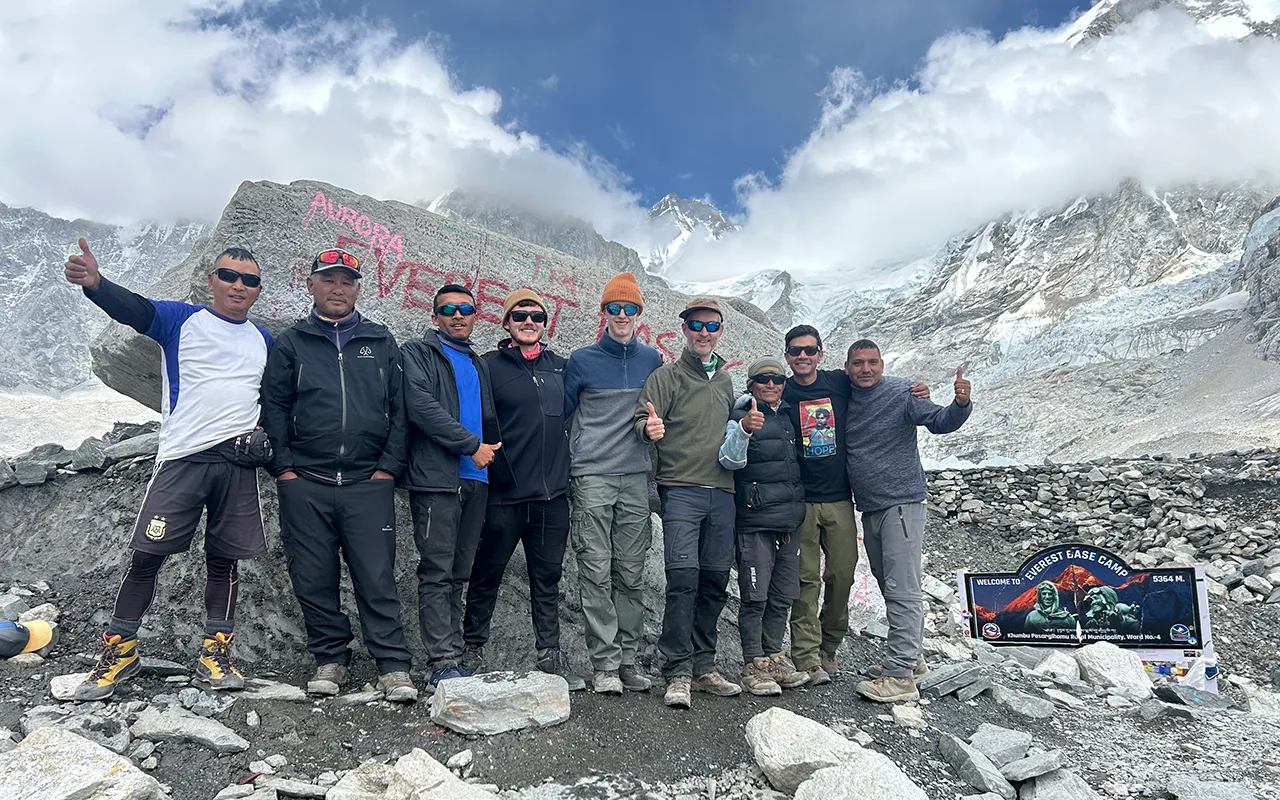
The permits required for this trek are covered by the trek package. This includes the Sagarmatha National Park Entry Permit, the Khumbu Pasang Lhamu Rural Municipality Permit for EBC, and a peak climbing permit.
Visa
Your visa fees are not a part of the Everest Base Camp Trek with Island Peak Climbing package. We do not cover it under any circumstances.
Travel Insurance
Travel insurance is mandatory for this trek; without it, you can not join the trek. The trek guide will check your insurance before beginning the journey. Just like your visa fees, this is not a part of the package either.
Extra Expenses
As much as we cover most of the daily expenses, there are certain expenses that the Everest Base Camp Trek with Island Peak Climbing package does not cover. These include international flights, hot showers, laundry, bar bills, WiFi fees, extra meals, additional night stays, any kind of beverages, personal trekking gear, high-altitude rescue expenses, and more.
Private vs. group trek
For families or groups of friends who wish to see the Himalayas with just their loved ones, a private trek is the ideal choice. The private trek option is available if you would rather not go with strangers. There are, nonetheless, some individuals who wish to go on the expedition but lack companions. The group trek is your best bet in these situations.