Best season and weather
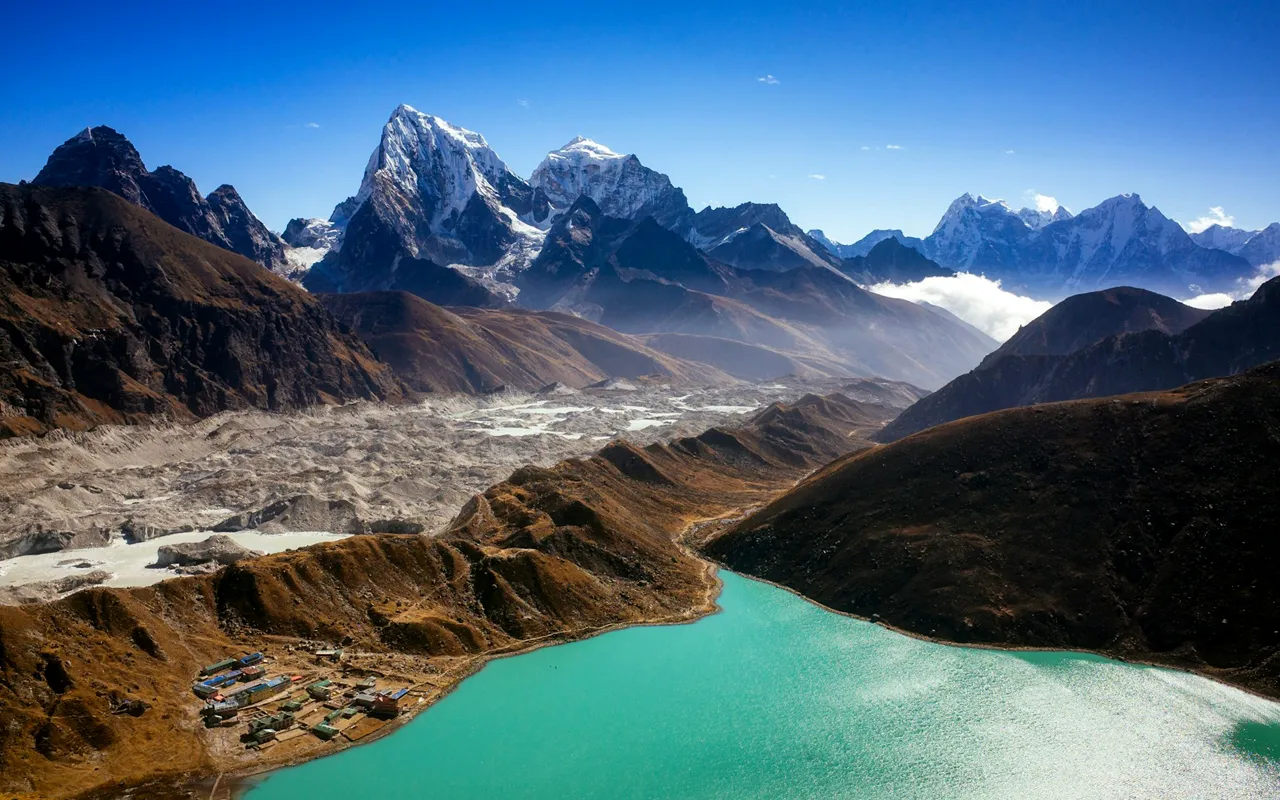
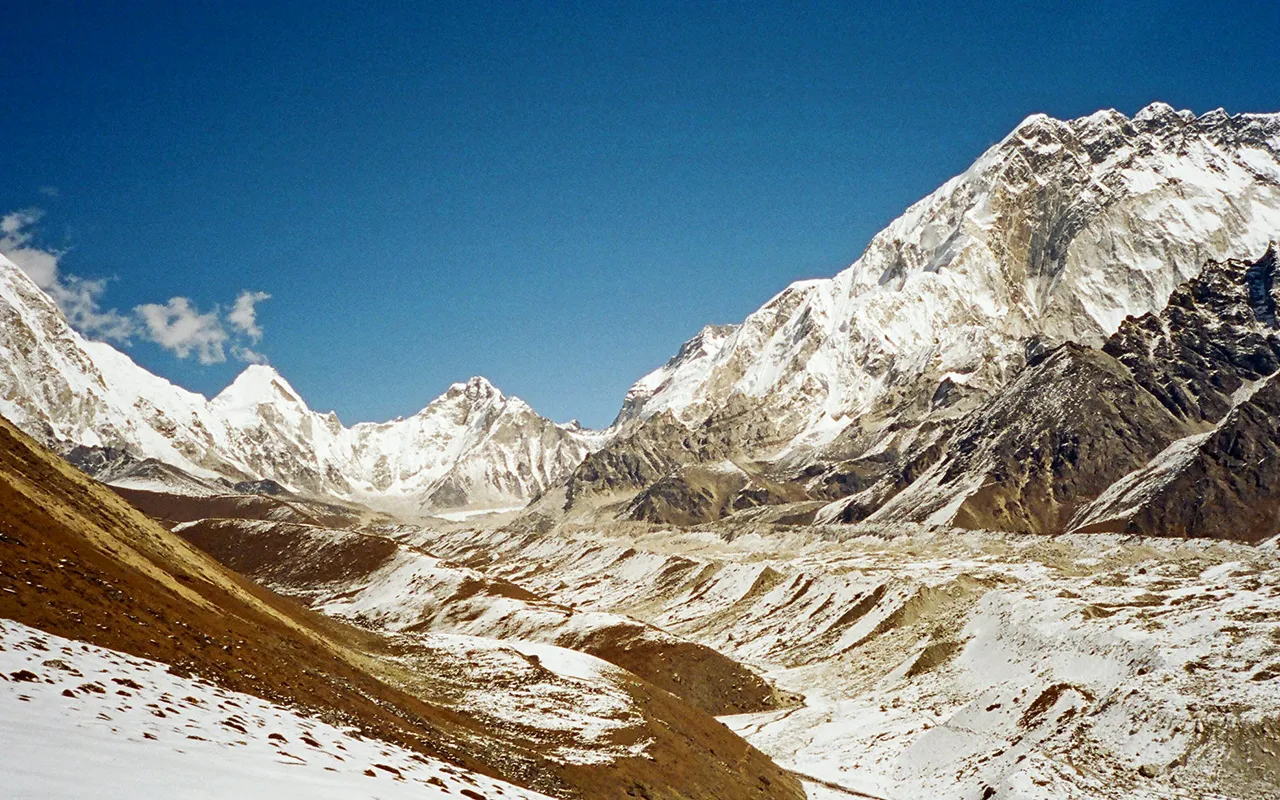
The best season to experience this trek is definitely autumn. During the autumn season, the trails are dry, keeping us safe from icy and snow-covered sections. In addition to that, you will also experience a mild daytime temperature during your trekking days, which is very optimal for us. Likewise, the chances of rainfall are minimal, with clear, bright skies being the default weather setting.
Difficulty
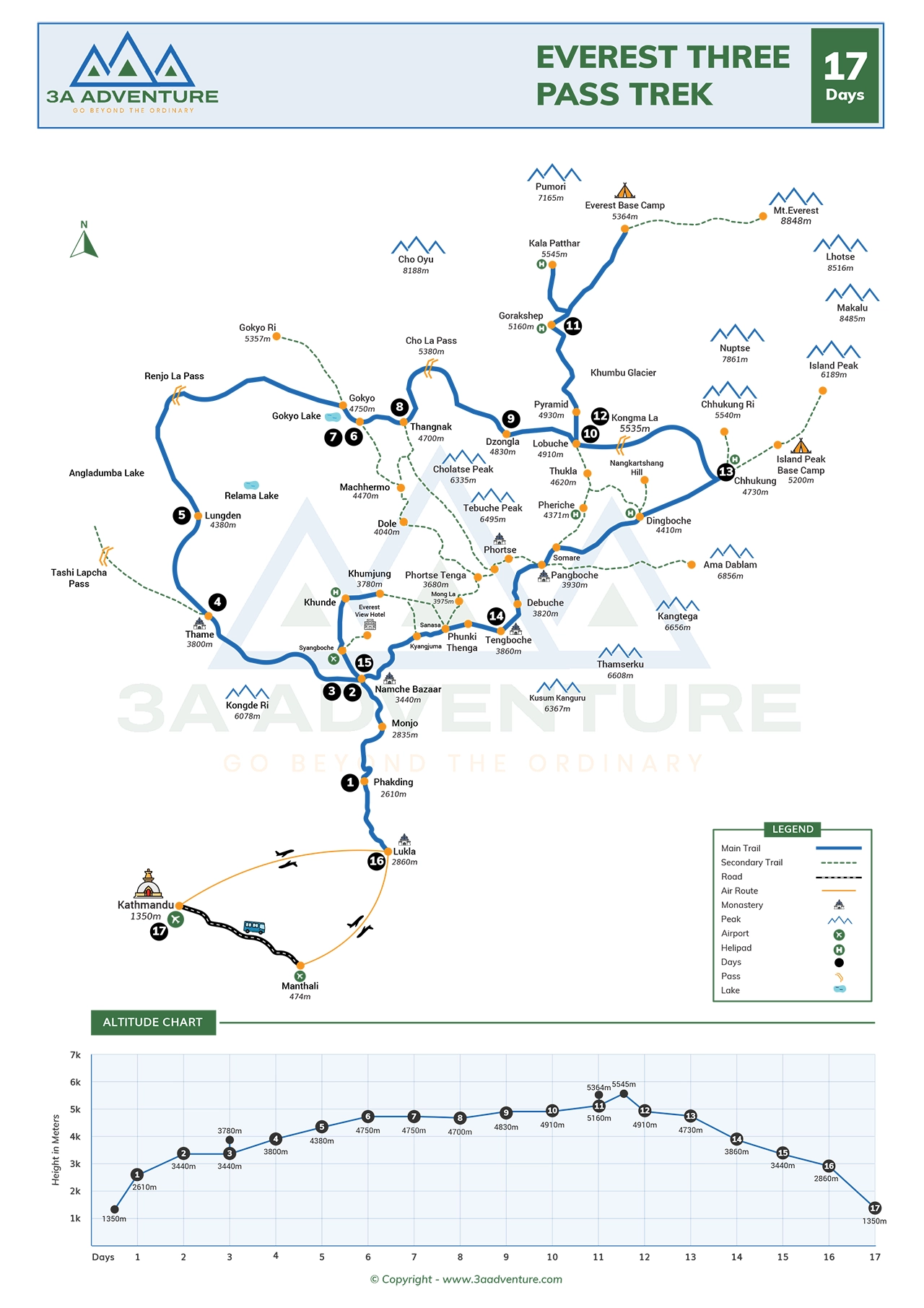
The Everest Three Pass Trek is considered to be a challenging trek that demands a high level of physical fitness and preparation. We will spend 9 nights at an elevation over 4500 meters, which increases the risk of altitude sickness. In addition to that, there are many steep ascents and descents that you have to trek in order to get to the next destination on the itinerary. Out of 10, this trek deserves a rating of 9.5.
Altitude Sickness
Altitude sickness is a major risk on this trek, since we will be spending over a week straight at elevations higher than 4500 meters. Generally, people start feeling the effects of altitude sickness after 3500 meters, so it is definitely a great deal that we are spending such a prolonged duration at considerable altitude. However, if we follow the preventive measures and the guide’s recommendation, altitude sickness can be prevented to a certain extent.
Preparation and Fitness
To prepare for this exciting and challenging trek, you must draft a 20 to 22-week-long training period. Within that time frame, you must build your endurance level and work your leg muscles to the point that you are easily able to walk for 6 to 7 hours without any problem. Your preparation level will surely affect the overall trekking experience, so train well.
Food and Accommodation
The Everest Three Pass Trek package covers 3 meals per day, but no beverages will be covered. Likewise, the package will cover all your accommodation expenses from the first day of the trek to the last. All your standard rooms are to be shared by two trekkers in the group.
Transportation
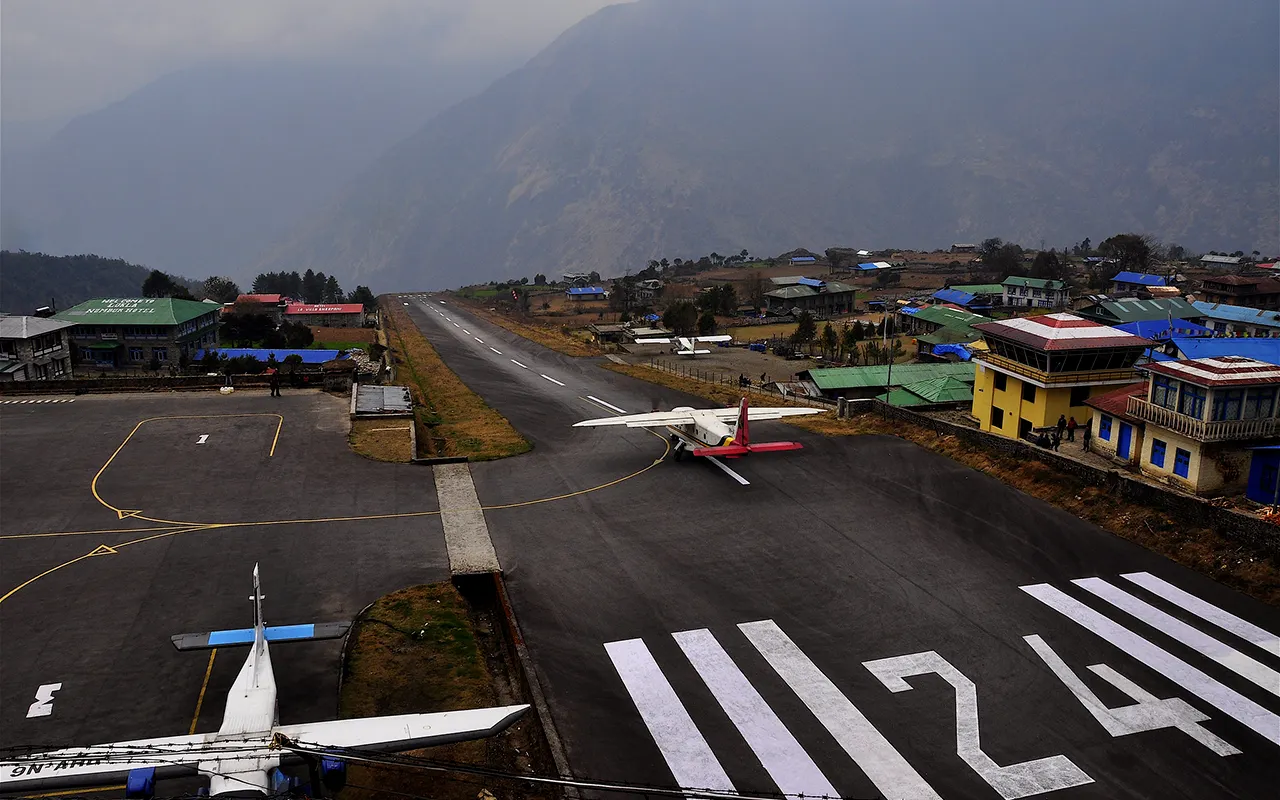
All the ground transportation required by the Everest Three Pass Trek itinerary will be covered. The flight to and from Lukla will also be covered. Meanwhile, your international flight to and from Nepal is your personal expense.
Communication
For most days, you are not going to see any mobile networks. However, you can buy an Everest Internet card to keep in touch with your close ones. Tea houses en route also offer WiFi, but they charge you a buck or two, and it’s usually not that reliable.
Permit
For this trek, travelers are required to have the Sagarmatha National Park Permit and the Khumbu Pasang Lhamu Rural Municipality Entry Permit. Both of these permits will be covered by the package and managed by the trek guide.
Visa
Your visa fees upon arrival in Nepal are your own personal expense. You have to pay the fees as per your intended duration of stay. We do not hold any say in it, nor do we cover any part of it.
Travel Insurance
Travel insurance is necessary for the Everest Three Pass Trek since we will be trekking to considerable altitudes for over a week. At such high elevations, medical facilities are not present, and the ones present are very basic. So, having insurance that covers emergency rescue costs is the way to go.
Extra Expenses
Your extra expenses include things like international flights, visa fees, private accommodations, bar bills, laundry fees, hot showers, WiFi fees, insurance fees, etc.
Private vs. group trek
If you want to experience this trek with only your close ones, you should go for our private trek option. It costs a bit more in comparison, but you will get to have a private experience. Meanwhile, if you do not really care about sharing the experience with others, you can go for a group trek.