Best season and weather
The best season for the Mera Peak Climbing trek is autumn, as this season offers the best trail conditions. The temperature is very mild, with daytime temperatures ranging from 10°C to 15°C in the higher elevation ranges. The trails remain dry as it is the season of fall, and the best thing about this season is the minimal chances of rainfall, keeping us safe from getting wet. The autumn season is also the festive period in Nepal, offering you the chance to witness various celebrations.
Difficulty
The Mera Peak Climbing trek is definitely a difficult trekking experience. Although the Mera Peak has been graded as a trekking peak, it is not a walk in the park. You have to have adequate endurance and above-average physical fitness to complete this trek fully. This trek is a mix of long trekking hours and steep ascents and descents that will surely test your stamina and overall physicality. On a scale of 10, our trek experts and guides have given it an 8.
Altitude Sickness
This trek reaches a maximum altitude of 6470 meters above sea level, which is a considerable elevation that can definitely induce altitude sickness in trekkers and climbers. To keep you safe from the harms of the illness, the trek guide will make sure that you know all the preventive measures. He will also check your oxygen levels throughout the trek to make sure that he can take the necessary actions if there are early signs of altitude sickness.
Preparation and Fitness
The best way to prepare for this Mera Peak Climbing trek is to draft a 16 to 20-week-long physical preparation plan that involves working out your leg muscles and lower half body. Strengthening your lower body prepares you for the strain that the trails will give you after a long day of trekking. In addition to that, we also need you to have ample endurance capacity so that you can make it to your daily destinations on time. Without stamina, you will have to take many breaks, which will extend the trek duration.
Food and Accommodation
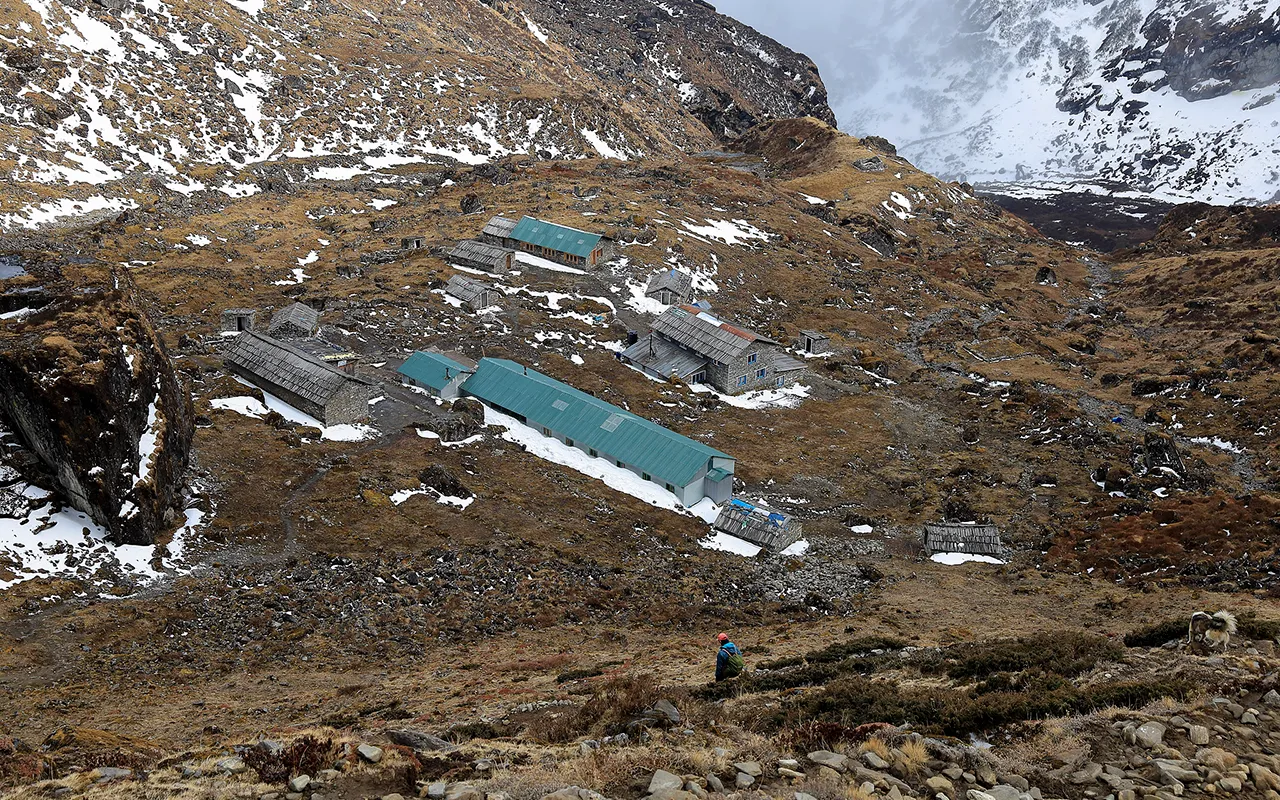
Food options during the camping nights at the high camps will be packaged food and dehydrated food that you can just add hot water to. Resources are very valuable in the remote campsites, so every resource we have will be used to its full extent with no wastage. During your stay in tea houses, you can get a range of delicious dishes, including various local and traditional meals, along with some Western options.
Transportation
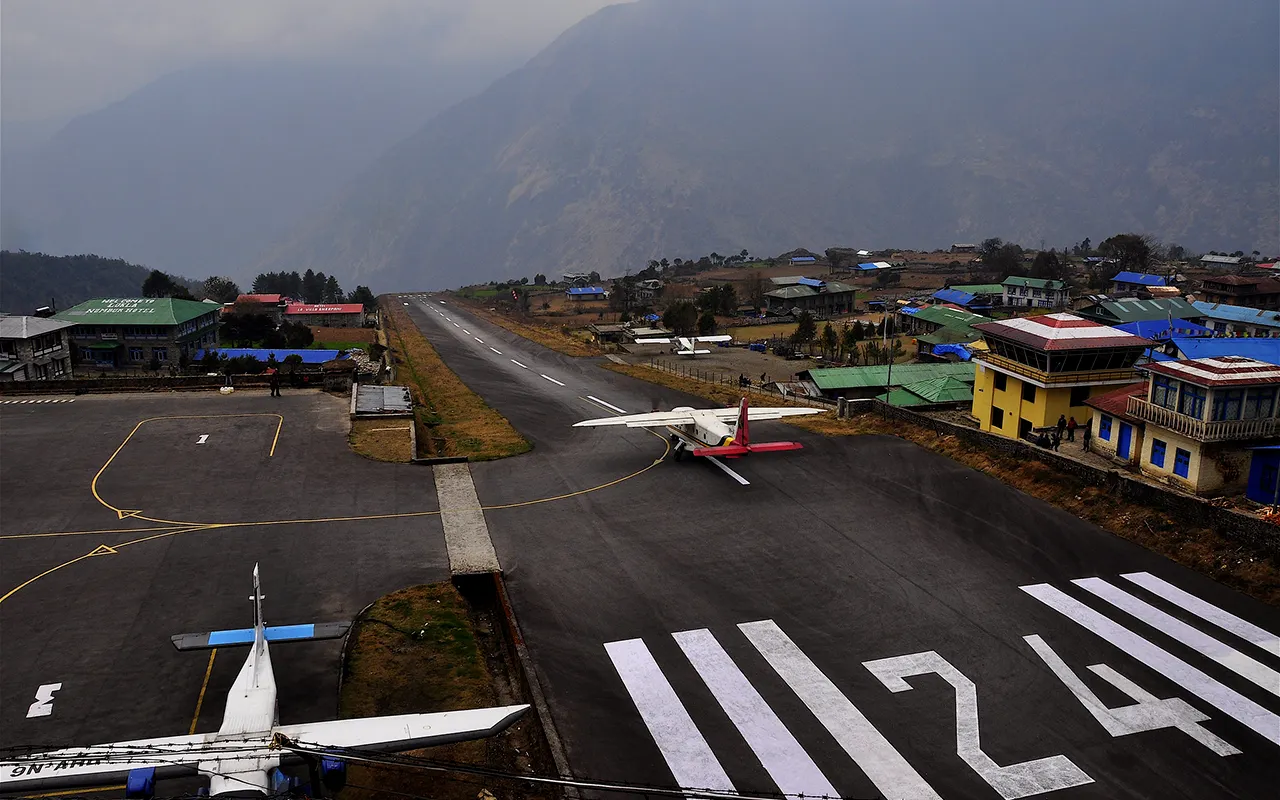
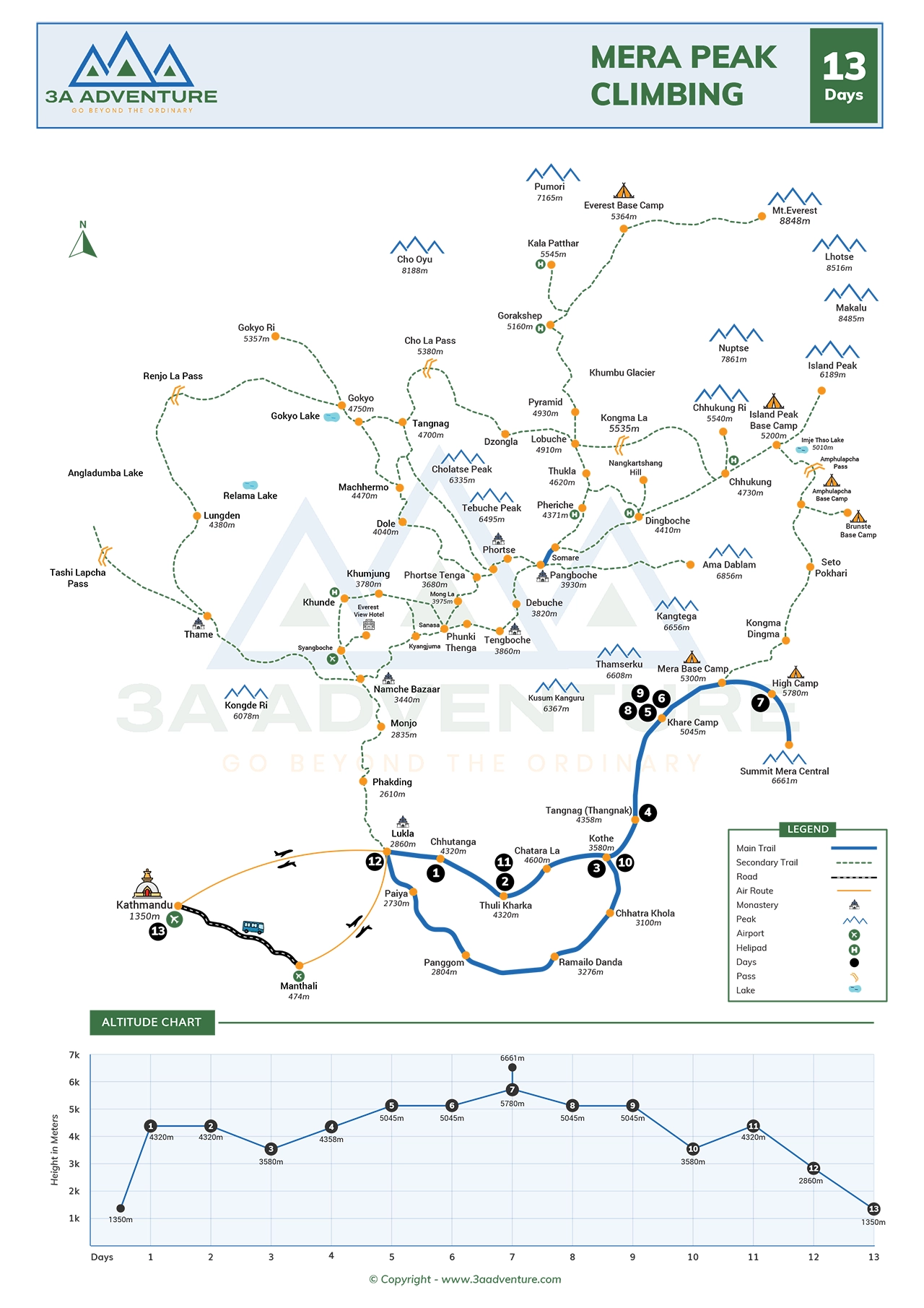
The Mera Peak Climbing itinerary requires a flight to Lukla and some ground transportation. You also have to take a flight back to Kathmandu. All of the aforementioned transportation will be covered by the trek package, along with free airport pickup and drop-off.
Communication
Unfortunately, you will not get any cellular reception on this trek since it is a remote and secluded trekking experience. However, you have the option of getting an Everest internet card, which should work at most of the nightly stops except at camping sites. 3A Adventure’s guide will carry a satellite phone to call for help in case of medical emergencies.
Permit
For this trek, you just need to have the Mera Peak climbing permit and the Makalu Barun National Park permit. Since this itinerary avoids the main EBC trail, you do not have to get the Khumbu Pasang Lhamu Rural Municipality permit. Both permits are a part of the trek package.
Visa
After your arrival at the Kathmandu airport, the airport officials will guide you to towards the immigration section. That is where you get a visa application, which you must fill out and submit to the immigration officer. But, before that, you need to make sure that you pay your visa fees at the adjacent counter and get a receipt. You have to submit the application and receipt along with your passport, return tickets, two passport-sized photos, and proof of accommodation. The visa fees are not a part of the trek package.
Travel Insurance
Travel insurance is one of the mandatory things for this trek; we can not take you on this trek if you do not have travel insurance. This trek can be heavy on your health since we will be reaching over 6400 meters above sea level. In case of medical emergencies, your travel insurance will cover all the rescue operations costs, which is why it is necessary to be insured.
Extra Expenses
Your extra expenses include international flights to and from Nepal, extra nights and meals, visa fees, travel insurance fees, extra nights in Kathmandu, personal trekking gear, tips for the crew members, etc.
Private vs. group trek
If you want to experience this trek with a trek group consisting of you and your friends, family, or loved ones, you need to get a private trek package. Unlike a group trek, there are no random people in the group in a private trek. However, a group trek is the most budget-friendly option out of the two.