Based on 27 reviews
Trip Duration
13 DaysTrip Difficulty
ModerateMax Altitude:
4,130m. / 13,550ft.Group Size
2 to 25 PeopleBest Season
Autumn, SpringMeals
Breakfast, Lunch and DinnerAccommodation
Hotel/Lodge/TeahouseTransportation
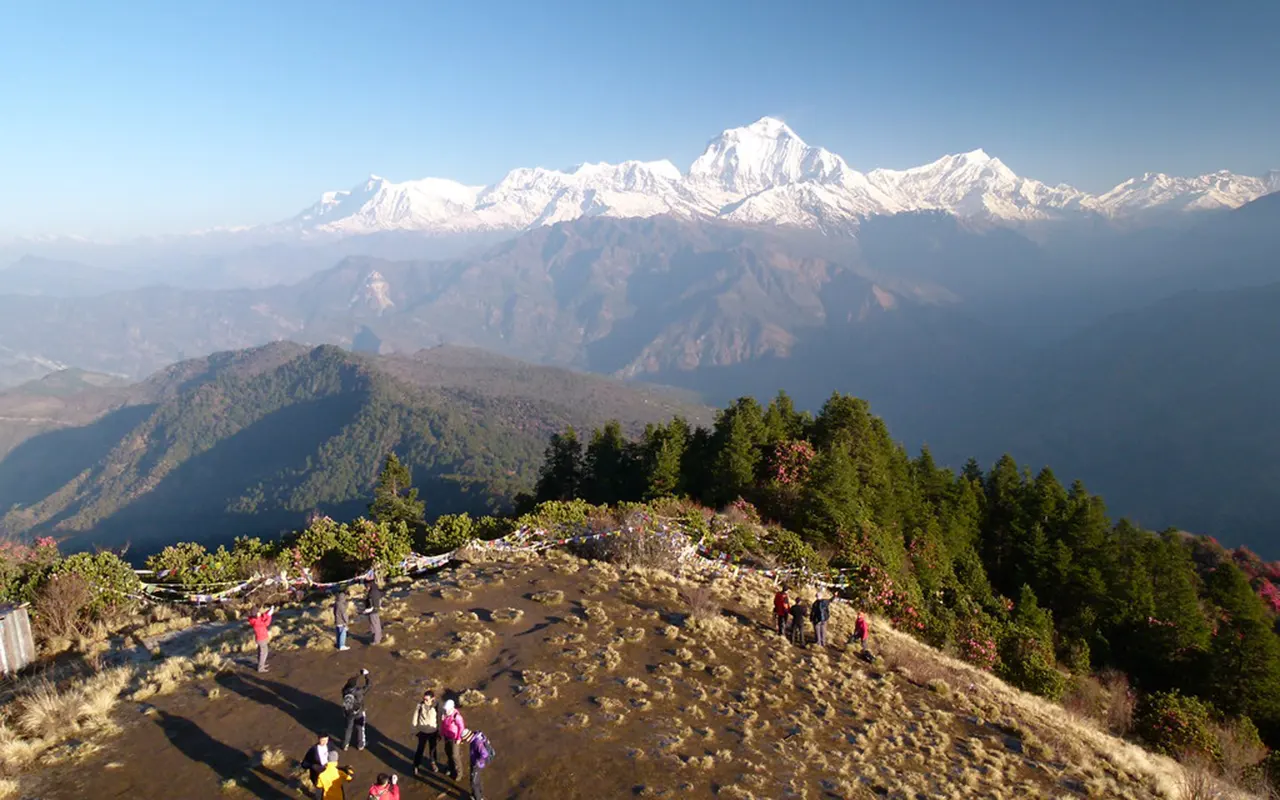
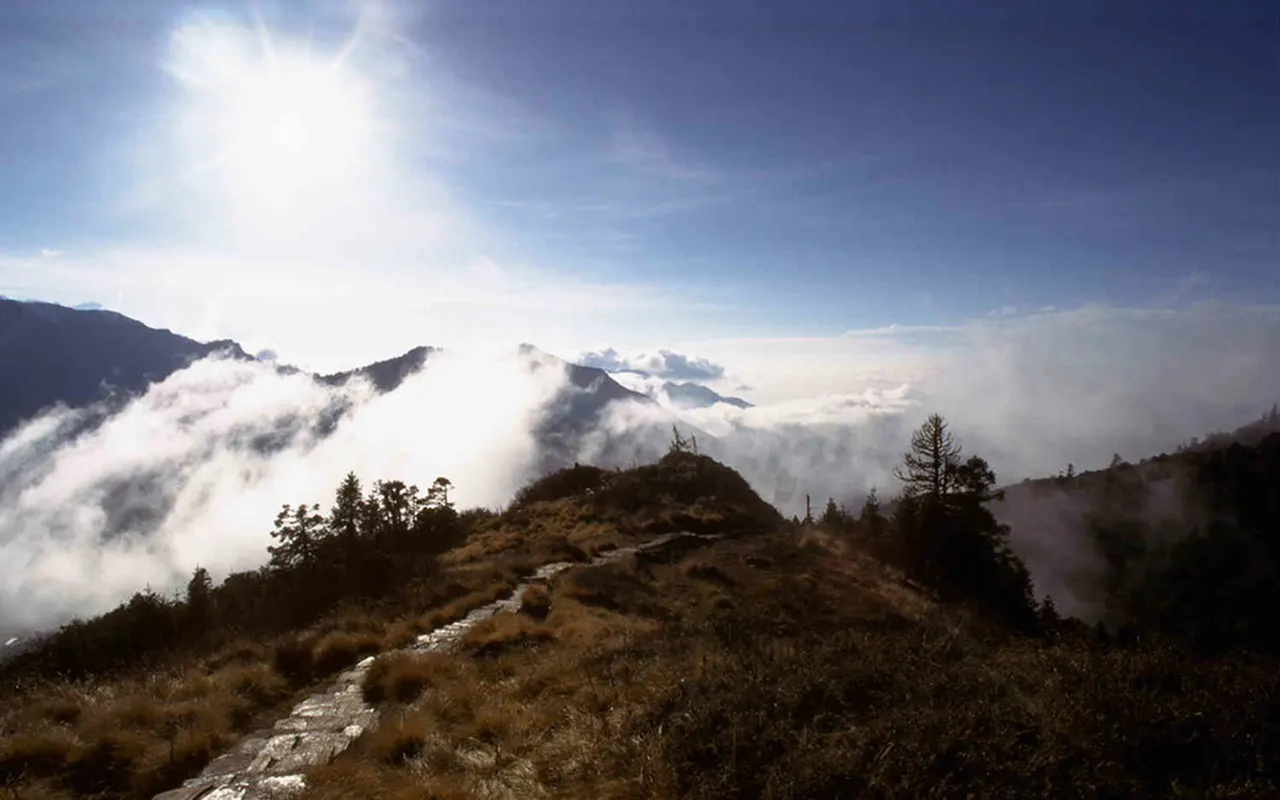
Tourist BusThe Annapurna Base Camp Trek via Poon Hill is a blend of two of the most popular trekking sites in the Annapurna region into one fulfilling adventure. It will take you through the traditional villages, the terraced farmland, rhododendron forests and mountain scenery until you reach the Annapurna Base Camp (4,130 m / 13,550 ft). You will also take a trip to Poon Hill, which is an iconic point of view which boasts sunrise over the Annapurna and Dhaulagiri mountain ranges.
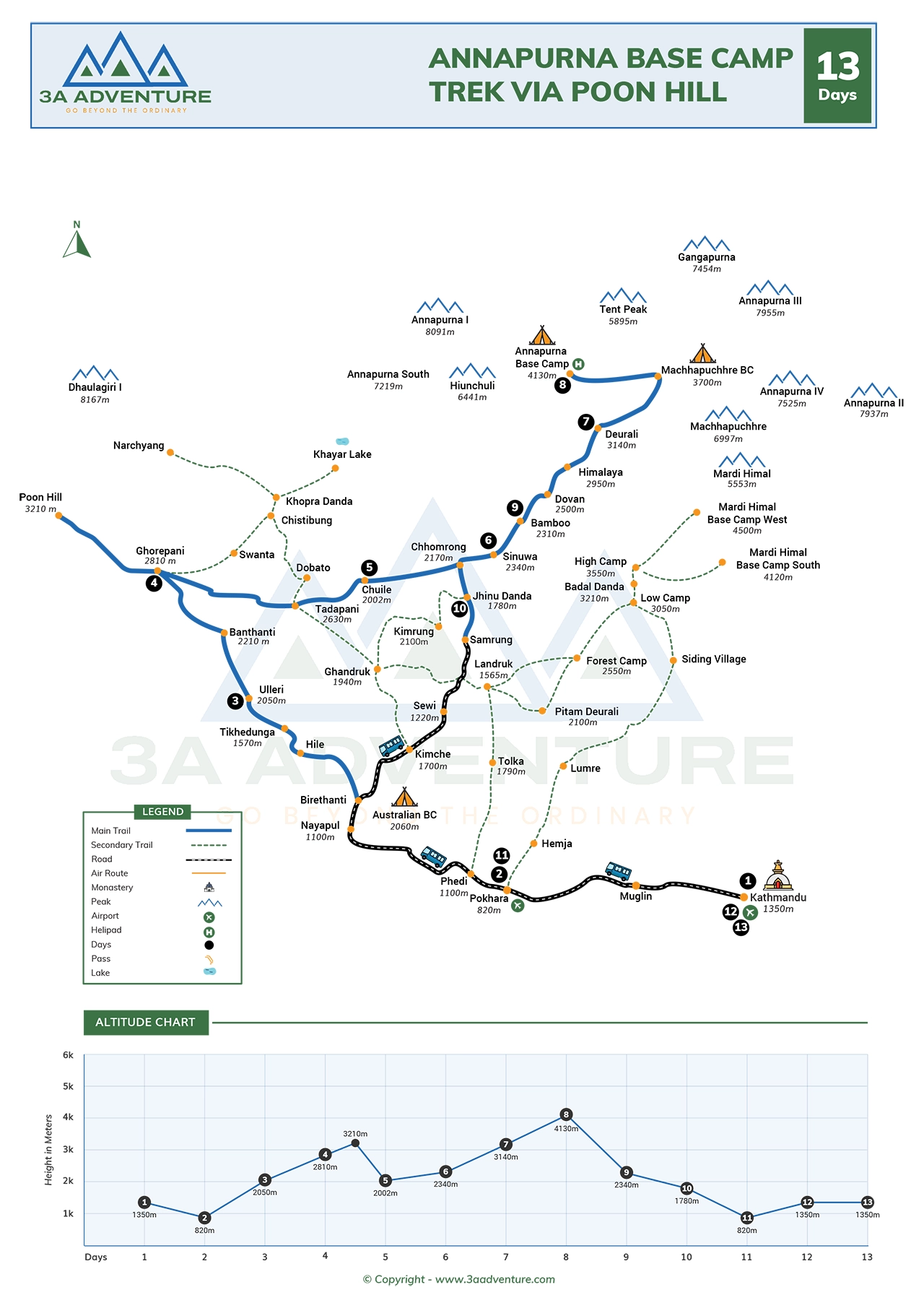
This journey starts with a tour of Kathmandu to Pokhara by car and moves to some villages including Ulleri, Ghorepani, Chuile, Chhomrong and Deurali. The slow climb enables the trekkers to experience the evolving view and also adjust to the elevations. On arrival at the base camp, the path takes a different part of the trail and then goes back to Pokhara.
Poon Hill Annapurna Base Camp Trek is an ideal trekking experience among trekkers who would like to have both the cultural and mountain views. The path provides a good combination of woody trails, stone steps, suspension bridges, and mountainous terrain. The trail is surrounded by well-established trekking villages and thus accommodation and meals are easily accessible during the trek.
The Annapurna Sanctuary is a natural amphitheater encircled by some of the highest mountains in Nepal is also an opportunity in this itinerary. The shifting scenery and daily walks provide uniqueness and enjoyment every day.
Having a plan, with long-time local assistance, 3A Adventure guarantees a comfortable and pleasant trekking experience from arrival to departure. Be it a first-time trek in Nepal or a repeat of your previous Himalayan adventure, the trail is an ideal introduction to the Annapurna.
ABC Trek including Poon Hill is very popular among trekkers, as it gives them a well-known sunrise spot to see as well as the satisfaction of reaching Annapurna Base Camp. The Annapurna Base Camp Trek, including Poon Hill, is a well-rounded Himalayan adventure that will leave an indelible mark on those who venture along the trails of some of the most beautiful mountain scenery in Nepal.
You will start once you arrive in Kathmandu, the capital of Nepal. Upon landing at Tribhuvan International Airport, you will be taken to hotel. The ride is just a short one that enables you to have a preview of the crowded streets and Kathmandu life. As soon as you arrive at the hotel, you will be able to relax after your flight and get settled in your room.
There will be a comprehensive briefing on the trek later; this will include the route, timetable and several preparations that will be significant on the subsequent days. It is also a good time to meet with your guide and pose any questions about the trek. You can visit the surrounding places in the city provided that you have time. Otherwise, you can pack your trekking equipment and ensure that everything is in readiness for the adventure. The remaining time is at your own will to rest and have a break before the trek starts.
Activity: Airport Transfer and Trip Preparation
Max. Altitude: 1,350m/4,429ft. (Kathmandu)
Meal: Breakfast
Accommodation: Hotel
Having breakfast, you will leave Kathmandu and visit Pokhara, where most trekking treks in the Annapurna region begin. The trip is along the Prithvi Highway running along the river valleys, small towns, terraced agricultural fields and hills. There are also varying landscapes during the drive as you watch the local life as it passes by the road.
The road trip is a full-day adventure, with numerous possibilities to enjoy the landscape of the Nepali countryside. After reaching Pokhara, you will be admitted to your hotel where you will get time to relax after this long journey. You will have time in the evening to pack your backpack and see how your equipment is doing before the trek. The serene nature of Pokhara is a nice contrast to the hustle of Kathmandu. A good night’s rest is important as your trekking adventure begins the following day.
Activity: 9 hours Tourist Bus Drive
Max. Altitude: 1,350m/4,429ft. (Pokhara)
Meal: Breakfast
Accommodation: Hotel
Today you begin your journey. In Pokhara you will have breakfast, and then you will be driven to Birethanti, whence the walking part of the trek opens. The landscape shifts gradually during the drive, with the green hills, terraces with cultivated land and traditional settlements appearing.
After arriving at Birethanti you will start walking along a well-marked path. The trail runs through Rime, Hile and Tikhedhunga and further up the mountain to Ulleri. During the journey, you will cross agricultural landscapes, forested areas and terraced fields that are indicative of the rural nature of the area. The long stone staircase to Ulleri is one of the most trying of the day. The gradual ascent takes time and perseverance but pays off when you get to the village. Once there, you will be able to rest and look forward to another day of climbing the next day.
Activity: 5 hours Drive and Trek
Max. Altitude: 1,960m/6,430ft. (Ulleri)
Meal: Breakfast, Lunch and Dinner
Accommodation: Teahouse, Lodge
You are going to trek from Ulleri to Ghorepani. The path slowly ascends through covered with rhododendron and other plants. Its serene setting and the fresh mountain air make the walk pleasurable as you get higher throughout the day.
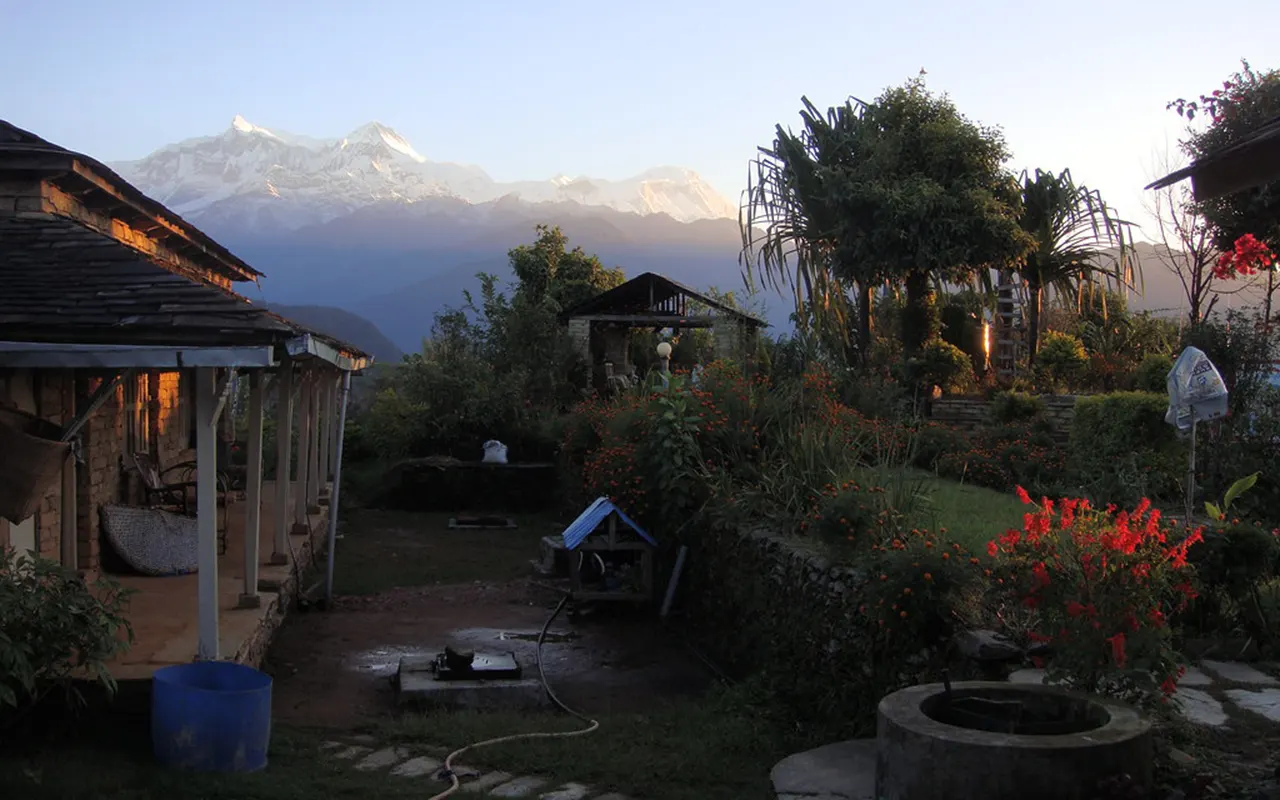
On the way, you will cross Banthanti and Nangethanti and arrive at Ghorepani. The trail takes you through woody trails and the voices of birds and nature will be with you. Some of the parts entail a slow, gradual uphill climb, where you can get used to a slow trekking pace. Ghorepani is at a higher altitude and a key rest point for trekkers going to Poon Hill. Upon arriving in the village, you will be able to unwind and have some time to savor the mountain scenery as you ready yourself to join the early morning hike the following day.
Activity: 5 hours Trekking
Max. Altitude: 2,874m/9,429ft. (Ghorepani)
Meal: Breakfast, Lunch and Dinner
Accommodation: Teahouse, Lodge
Today you will hike to Poon Hill before sunrise. The hike up the mountain is approximately an hour long and ends at the peak of the day at (3,210 m / 10,531 ft). You will have spent some time at Poon Hill, and after breakfast at Ghorepani, you will resume the trek.
The path starts at Ghorepani and ascends to Deurali, then down to Banthanti. The trail then passes over a bridge and leads to Tadapani. The trail then goes down to Chuile, by a more woody path. The day is a mixture of ascents and descents and one of the more diverse trekking days on the path. Before you get to Chuile, you will have travelled some considerable distance, and you will have had a good deal of variation in elevation. The tranquility of the village gives a comfortable stay of the night.
Activity: 7 hours Poon Hill Hike and Trekking
Max. Altitude: 3,210m/10,531ft. (Chuile)
Meal: Breakfast, Lunch and Dinner
Accommodation: Teahouse, Lodge
Today you leave Chuile and walk along the path to Lower Sinuwa. The path is surrounded by wooded areas with pine and rhododendron trees, making the process of walking a good one during most of the day. The path then slowly wends across to Chhomrong, which is a significant village along the path to the Annapurna Base Camp.
Once in Chhomrong, you will proceed on a trail that leads down through terraced agricultural land and then across a bridge over the Chhomrong River. The path leads up the river, gradually ascending after one hour towards Lower Sinuwa. The downward and upward mix makes the day physically challenging but gratifying to go further into the Annapurna region. When you get to Lower Sinuwa, you may have some time to rest and admire the quiet mountain environment as you get ready to face the longer trekking days ahead.
Activity: 7 hours Trekking
Max. Altitude: 2,340m/7,677ft. (Lower Sinuwa )
Meal: Breakfast, Lunch and Dinner
Accommodation: Teahouse, Lodge
You will be trekking from Lower Sinuwa to Deurali today. The trail starts with an ascending path to Upper Sinuwa and then into thick forest. The scenery is getting more mountainous and remote as you pass shaded parts of the path.
As you go on, you will cross Bamboo, Dovan and Himalaya. The path is characterized by slow ascents and descents as it goes along the valley to greater heights. On the pathway, you will be met by streams and waterfalls and even forested areas that will make the trip interesting. The shifting scenery shows the shift of the environment from lower hills towards the high mountains. As the day progresses, the air becomes cooler and the vegetation gradually changes. In a few hours of walking, you will reach the little village of Deurali, encircled by high mountainous land. The night is spent in rest and preparation to approach Annapurna Base Camp.
Activity: 8 hours Trekking
Max. Altitude: 3,200m/10,499ft. (Deurali)
Meal: Breakfast, Lunch and Dinner
Accommodation: Teahouse, Lodge
Today is one of the most important days of the trek as you make your way to Annapurna Base Camp. You will leave Deurali after breakfast and go on by the trail across a wide mountain valley. The trail has parts that run along the territories of avalanches and then it leads to Bagar.
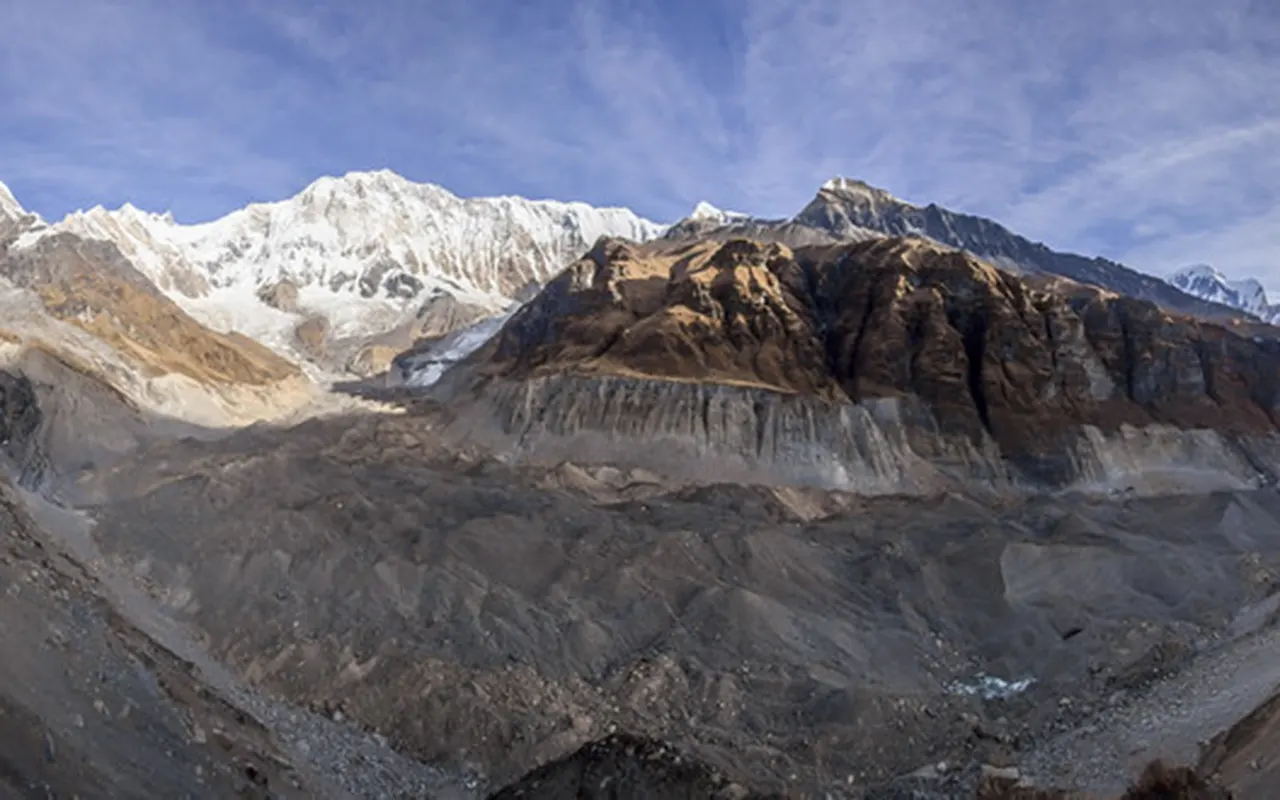
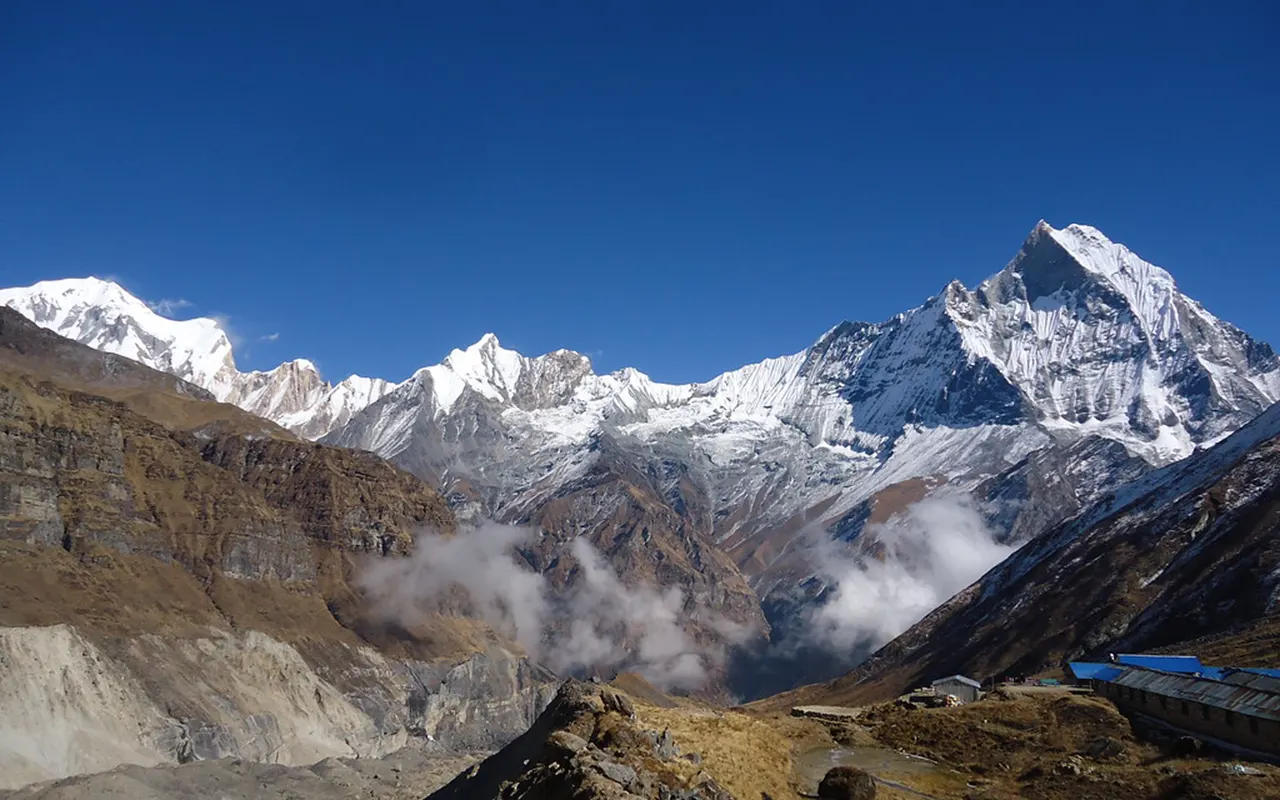
The trail slowly ascends to Machhapuchhre Base Camp (3,700 m / 12,139 ft). This area provides more and more amazing scenery of the high mountains and glacial scenery around. Once you have spent a few days at Machhapuchhre Base Camp, you will proceed on the last leg of Machhapuchhre Base Camp to Annapurna Base Camp. The route is over rough terrain and through the center of the Annapurna Sanctuary. Making it to the Annapurna Base Camp (4,130 m / 13,550 ft) is a significant accomplishment. With the giant peaks and glaciers around, you have an opportunity to enjoy the achievement and then relax in the night.
Activity: 6 hours Trekking
Max. Altitude: 4,130m/13,550ft. (Annapurna Base Camp)
Meal: Breakfast, Lunch and Dinner
Accommodation: Teahouse, Lodge
This day starts with the early sunrise of Annapurna Base Camp. The scenery slowly becomes brighter as the day breaks, with the mountains around making the day unforgettable. You will start the journey back after viewing the morning scenes and having breakfast.
The route is the same as the one taken in the uphill climb, descending slowly through the Annapurna Sanctuary. On the way down the valley, you will pass Machhapuchhre Base Camp, Deurali and other points on the trail that you are familiar with. Most of today’s walk is downhill, allowing you to cover a considerable distance. The rising and falling levels offer a warmer and greener environment as you go down it.
Several hours of hiking will lead you to Bamboo, where you will finally relax after a tiring day on the trail. The evening is usually more comfortable in the lower camp than in the higher ones.
Activity: 8 hours Trekking
Max. Altitude: 4,130m/13,550ft. (Bamboo)
Meal: Breakfast, Lunch and Dinner
Accommodation: Teahouse, Lodge
You will leave Bamboo after breakfast and proceed on the trail, which is now forested. The path cuts through the forest that is covered with rhododendron and other vegetation and slowly decreases in height. You find the same sights again as you leave part of the road to Jhinu Danda.
The trek has a combination of uphill and downhill before arriving at the last destination. On reaching Jhinu Danda, you can pay a visit to the natural hot springs that are situated close to the Modi Khola. The walk to the springs is not very long and is worth it after days of walking. A lot of trekkers like to spend time here to rest their muscles and get rid of the physical activity of the trip. You will spend time at the hot springs and then come back to your place of stay and sleep.
Activity: 6 hours Trekking and Hot Spring Visit
Max. Altitude: 2,310m/7,579ft. (Jhinu Danda)
Meal: Breakfast, Lunch and Dinner
Accommodation: Teahouse, Lodge
This is the last day of the trekking part of the journey. You will go out of Jhinu Danda after breakfast, and walk about half an hour to Syomrong. The brief hike will enable you to have the last moments in the trail before you get back to road transport.
On arrival to Syomrong, you will be driven by a jeep, and you will start your journey back to Pokhara. On your way out of the mountains, the road goes through rural communities, mountainous terrain and valleys along rivers. You will reach Pokhara in about two and a half hours and then stay at a hotel. The rest of the day is at your leisure to rest and relax after the trek.
You can either go out and walk around the surrounding place or have a relaxing evening in the city. This move off mountain trails to urban comfort gives a good ending to the trekking experience.
Activity: 3 hours Trekking and Jeep Drive
Max. Altitude: 1,780m/5,840ft. (Pokhara)
Meal: Breakfast and Lunch
Accommodation: Hotel
At breakfast time, you will depart Pokhara and start the trip back to Kathmandu. The drive takes up the same highway as it was taken earlier in the journey and here, one has the chance to view rivers, hills, farmland and small settlements on the way.
The road trip is a time-consuming situation that lasts most of the day as you pass through central Nepal on your way to the capital city. On reaching Kathmandu, you will be welcomed to your hotel and the remaining day will be at your own. The time to rest after the trek and analyze the experiences acquired during the trip is a good one. You can either sightsee nearby streets around Thamel depending on your arrival time or just have a rest in the hotel. This last night in Kathmandu will allow you to have some comfort before you leave Nepal.
Activity: 9 hours Tourist Bus Drive
Max. Altitude: 1,350m/4,429ft. (Kathmandu)
Meal: Breakfast
Accommodation: Hotel
Today your Annapurna Base Camp Trek with Poon Hill ends. You will have some time to spend in the morning before leaving the hotel depending on your flight schedule. Upon making the required departure arrangements, you will be taken to Tribhuvan International Airport.
It is a short ride through Kathmandu, giving you a last look at the city before taking a flight. During the transfer, you have the opportunity to think about the trip through the Annapurna region, the forest of Ulleri and Ghorepani and the mountainous scenery of the high mountains.
After landing at the airport, you shall undergo check-in processes and get ready to continue your journey. Having memorable trekking memories and experiences throughout the route, your adventure ends as you leave Nepal.
Activity: 0.5 hours Airport Transfer
Max. Altitude: 1,350m/4,429ft. (Kathmandu)
Meal: Breakfast
Note:
If you have a private group and prefer a personalized experience, we can organize a custom trip tailored to your requirements and group size, running it any day you choose.
Transportation
Food and Accommodation
Guide and Support Staff
Permits and Expenses
Medical and Gear
Others
International Visa and Flights
Food and Accommodation
Travel and Medical Insurance
Other Expenses
The Annapurna Base Camp Trek via Poon Hill can be done all through the year, though spring and autumn are usually regarded as the best seasons to do so. Spring (March to May) is mild, and the trail is lined with the colorful rhododendron forests. Autumn (September to November) is generally characterized by stable weather, good mountain sightseeing, and easy trekking.
Experienced trekkers who are equipped for cold temperatures at higher altitudes can also enjoy winter at Annapurna Base Camp (4,130 m / 13,550 ft). In monsoon season (June to August), the rain may cause trails to become muddy and decrease visibility.
The Poon Hill Annapurna Base Camp Trek goes through various climatic zones, and thus the weather is subject to change at a very fast rate. Before their departure, 3A Adventure avails up-to-date seasonal information to ensure that trekkers get ready for the trip adequately.
The Annapurna Base Camp Trek via Poon Hill can be said to be a moderate trek that can be undertaken by individuals who have a fairly good level of fitness. The trail involves a number of days of walking, rocky staircases, wood trails, and slow ascents of mountainous landscapes.
Among the hard parts is the trek between Tikhedhunga and Ulleri that contains thousands of stone steps. The height of the trail also rises slowly as one moves towards Annapurna Base Camp (4,130 m / 13,550 ft). Though it does not involve technical climbing abilities, trekkers are expected to be ready to spend some time on prolonged walks between five and eight hours.
The ABC Trek with Poon Hill is a mix of high mountain trekking and scenic viewpoints and is not too challenging. When well-trained and timed, the majority of healthy trekkers will be able to finish this adventure.
Altitude Sickness might also be experienced during the Annapurna Base Camp Trek via Poon Hill since the route has the Annapurna Base Camp (4,130 m / 13,550 ft). The higher the altitude, the less oxygen there is in the air and this can have an impact on some trekkers.
Common symptoms are headache, loss of appetite, dizziness, tiredness and difficulty sleeping. The adjustment for most trekkers is gradual as the path ascends with an increase in altitude over a number of days. To reduce the risk, staying hydrated, walking slowly, and getting enough rest can help.
When the symptoms are more severe, the best course of action is to descend immediately. You need to report any discomfort that you experience to your guide. 3A Adventure has made the safety of the trekkers a priority and pays close attention to the trekkers during the entire journey to facilitate the safe and enjoyable experience of trekking.
Early preparation for the Annapurna Base Camp Trek via Poon Hill can significantly enrich your trekking experience. The route does not demand any technical climbing ability, but proper physical training can make the trek more comfortable.
Walking, hiking, jogging, cycling or running up the stairs a few weeks before departure can enhance stamina and build up leg muscles. They should also train to carry a small backpack. The hike will consist of walks through the forests, the villages, and the mountain tracks every day, with a few uphill and downhill sections.
It is also important to prepare mentally in case weather conditions and long walks are problematic. To commence a fitness program, 3A Adventure suggests at least one or two months before the trek. When well prepared, trekkers can comfortably enjoy the scenery, culture and the mountain environment during the journey.
The Annapurna Base Camp Trek via Poon Hill includes food and accommodation through local teahouses on the trek. The teahouses have basic, but comfortable rooms, commonly with twin beds, blankets and shared or attached bathrooms, depending on the location. The higher up you go, the more primitive the facilities are.
Food is cooked on order and usually consists of rice, noodles, soups, vegetables, eggs, bread and other local or continental dishes. Hot beverages like tea, coffee and hot lemon are also common. Due to the difficulties in transport, food options can be reduced close to the Annapurna Base Camp (4,130 m / 13,550 ft). Poon Hill Annapurna Base Camp Trek is a good balance between comfort and good mountain hospitality.
The Annapurna Base Camp Trek transportation to Poon Hill involves road and walking. The trip starts with the Kathmandu to Pokhara trip, where one travels in a tourist bus or short domestic flight. Once in Pokhara, the trekkers are transferred by road up to the trailhead where the trekking part of the adventure starts.
The trek finally ends with a jeep transfer off the trekking path back to Pokhara before heading back to Kathmandu. The weather and seasonal factors may cause variations in the road conditions when in the mountainous regions. The travel time can sometimes be affected by road maintenance or traffic. 3A Adventure is a company that organizes transport based on the itinerary and assists trekkers to travel without any inconveniences and concentrate on the trekking experience.
Communication facilities is available in most of the Annapurna Base Camp Trek via Poon Hill, but it is not so reliable at higher altitudes. A majority of the villages along the route are connected to the mobile network, which enables trekkers to make calls or access minimal mobile data services.
It is also possible to find many teahouses with WiFi where a fee is charged, but the speed might not be as high as in the cities. The internet and phone services can become more unstable as the trek approaches the Annapurna Base Camp (4,130 m / 13,550 ft) because of the weather conditions and location.
Having a local SIM card is convenient to keep in touch. Although there are communication facilities in most places, trekkers need to be ready to face some network failures and take a break offline.
The Annapurna Base Camp Trek via Poon Hill needs several permits. Before entering the trekking area, trekkers have to acquire an Annapurna Conservation Area Permit (ACAP) and Trekker information management system (TIMS) card. The permits are used to assist in conservation and enhance the safety of the trekkers through the registration of visitors.
At all times, there are permit checkpoints at different locations along the route, and trekkers are expected to have their papers on them at all times. The permit regulations are applicable to both individual trekkers and trekkers in the company of organized groups. With the right permits, trekkers can enjoy the mountain environment without fear of the administration since they can walk there.
Tourists visiting Nepal to explore the Annapurna Base Camp Trek via Poon Hill are usually in need of a tourist visa. A visa is granted to most nationalities on arrival at Tribhuvan International Airport. Travelers can also obtain a visa at a Nepalese embassy or consulate before traveling.
The necessary documents required are usually a valid passport, passport-size photographs and a visa fee. Visa policies can vary occasionally, so passengers ought to ensure that they confirm the new policies before their departure. Passports are recommended to be valid at least 6 months before the day of travel. Planning your visa assists in making the entry into the country as smooth as it can be and can also enable you to concentrate on the trekking experience.
Travel insurance is highly advisable for everyone who is a part of the Annapurna Base Camp Trek through Poon Hill. Despite the trek being moderate, there are unforeseen circumstances that may arise during the mountain travel, like illness, injury, weather delays, or emergency evacuation.
Appropriate insurance cover must cover the trekking activities, medical treatment, emergency rescue and interruptions of the trip. As the path will reach Annapurna Base Camp (4,130 m / 13,550 ft), it is necessary to make sure that the high-altitude trek will be part of the policy. It is possible to avoid future problems by carefully reading the coverage details and buying insurance.
The ABC Trek with Poon Hill is set in isolated mountain regions where there are few medical facilities and therefore, comprehensive insurance is a significant aspect of responsible trip planning.
Although the trekking package covers many of the necessary costs, trekkers ought to prepare for additional costs when they embark on the Annapurna Base Camp Trek via Poon Hill. Typical additional expenses are snacks, bottled water, hot showers, charging of electronic gadgets, WiFi, laundry and personal purchases.
Guide and porter tips are also typical trekking expenses in Nepal and this should be included in a budget. Other costs can be different based on personal preferences and expenditures. It is advisable to carry a little cash since there are no ATM machines in most parts of the trekking path. Budgeting these additional expenses can prevent inconvenience when making the trek and enable you to have a good experience without having to worry about incurring unexpected costs.
The Poon Hill Annapurna Base Camp Trek can be done as an individual trek or group trek at the individual’s choice. A private trek is more flexible, as it gives the trekkers the option of moving at their own time and pace. Families, couples or small groups of people that prefer a more personalized experience often choose it.
Group treks unite people of various backgrounds and may form a social and fun environment during the trip. When there are multiple participants, the costs tend to be lower. The two alternatives have identical paths of trekking, and both involve expert guidance during the trek. In 3A Adventure, trekkers will be able to select the style that best suits their interests, budget and travel objectives and still experience the same mountain view and trekking experience.
General
The most typical itinerary lasts 13 days, with arrival and departure in Kathmandu.
The highest point is Annapurna Base Camp (4,130 m / 13,550 ft).
Yes, beginners who are well-fit and prepared can successfully go through the trek.
Preparation & Fitness
A medium level of fitness is advisable since you will be walking a number of hours per day.
Yes, regular walking, hiking, jogging or stair climbing before the trip are helpful.
Insurance & Visa
Yes, emergency medical and evacuation travel insurance is highly suggested.
The majority of tourists are allowed to acquire a tourist visa at Kathmandu Airport.
Guides & Support Staff
Yes, a well-trained trekking guide will be there to guide you during the trip.
Yes, there are porters to transport your main trekking bag on the trek.
Accommodation and Facilities
Local teahouses on the trek and Kathmandu and Pokhara hotels are the main places of accommodation.
Hot showers are provided in many teahouses, normally at extra cost.
Weather & Seasons
The most stable and the most clear mountain views are in spring and autumn.
Yes, winter trekking can be done; however, at higher altitudes, the temperature can be extremely low.
Health & Safety
Yes, altitude sickness may occur in some of the trekkers since the trail goes up to greater heights.
You must immediately report to your guide to take appropriate action.
Booking & Payment
Your reservation is confirmed after making the necessary reservation and payment of the deposit.
Transportation & Flight
The transportation is generally by tourist bus, although there is an option of domestic flights.
Weather and road conditions may cause delays and alternative arrangements will be made when possible.