Based on 27 reviews
Trip Duration
16 DaysTrip Difficulty
ModerateMax Altitude:
4,700m. / 15,420ft.Group Size
1 to 25 PeopleBest Season
Autumn, SpringMeals
Breakfast, Lunch and DinnerAccommodation
Teahouse/ HotelTransportation
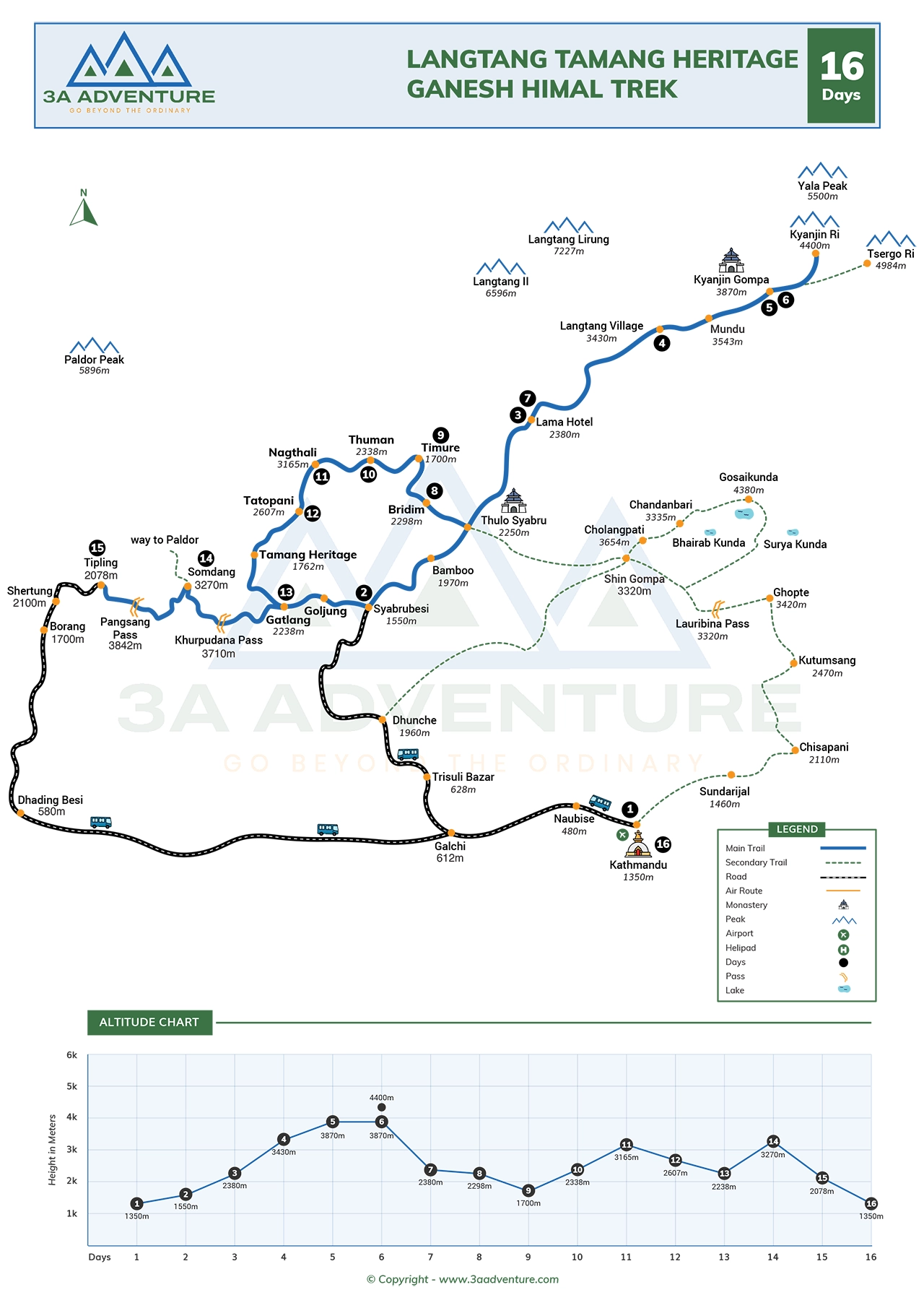
Tourist BusThe Langtang Tamang Heritage Ganesh Himal Trek is a 16-day trekking journey that combines the natural beauty of Langtang Valley, the rich culture of the Tamang people, and the peaceful trails of the Ganesh Himal region. The trail starts with a scenic drive from Kathmandu to Syabrubesi and then continues through forest tracks, mountain streams, villages with traditional houses and through alpine mountains. You will also get to enjoy a blend of mountainous landscapes, local cultures and secluded paths on the path to a good trekking experience in the core of the Himalayas in Nepal.
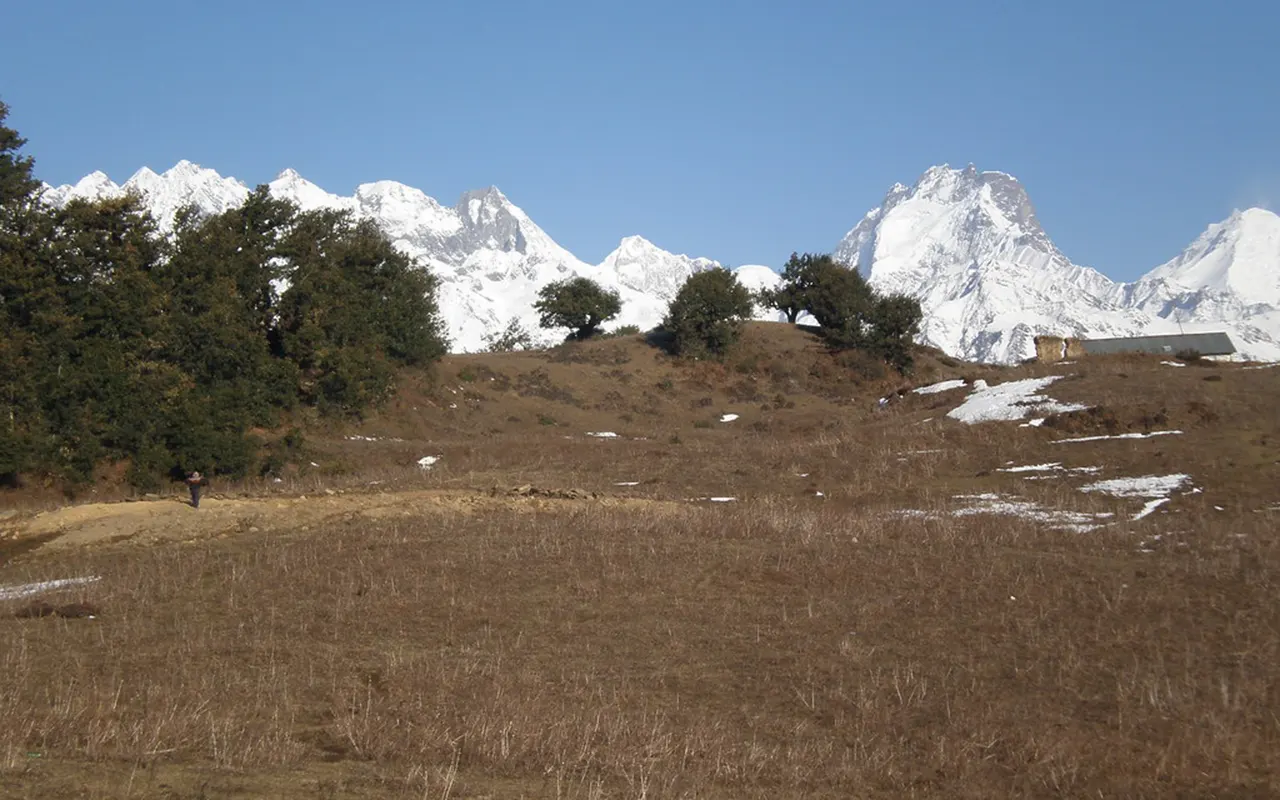
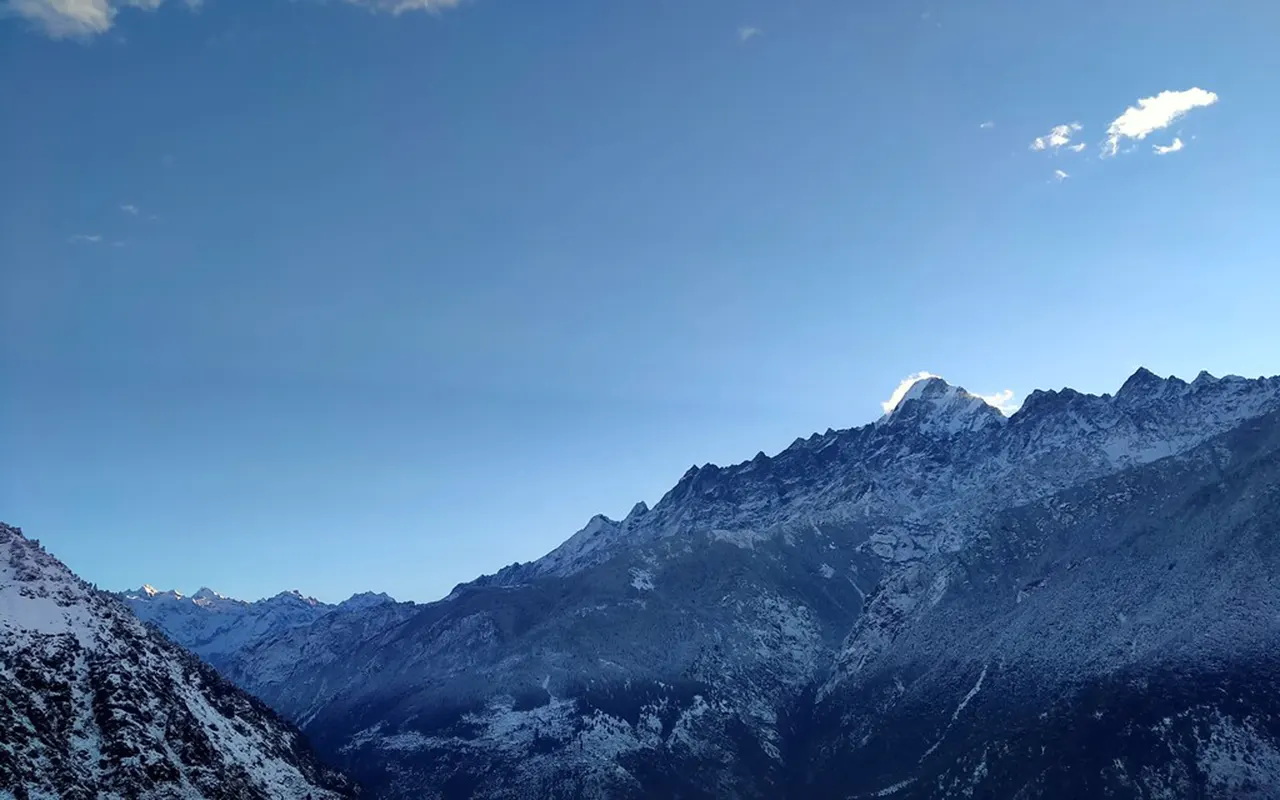
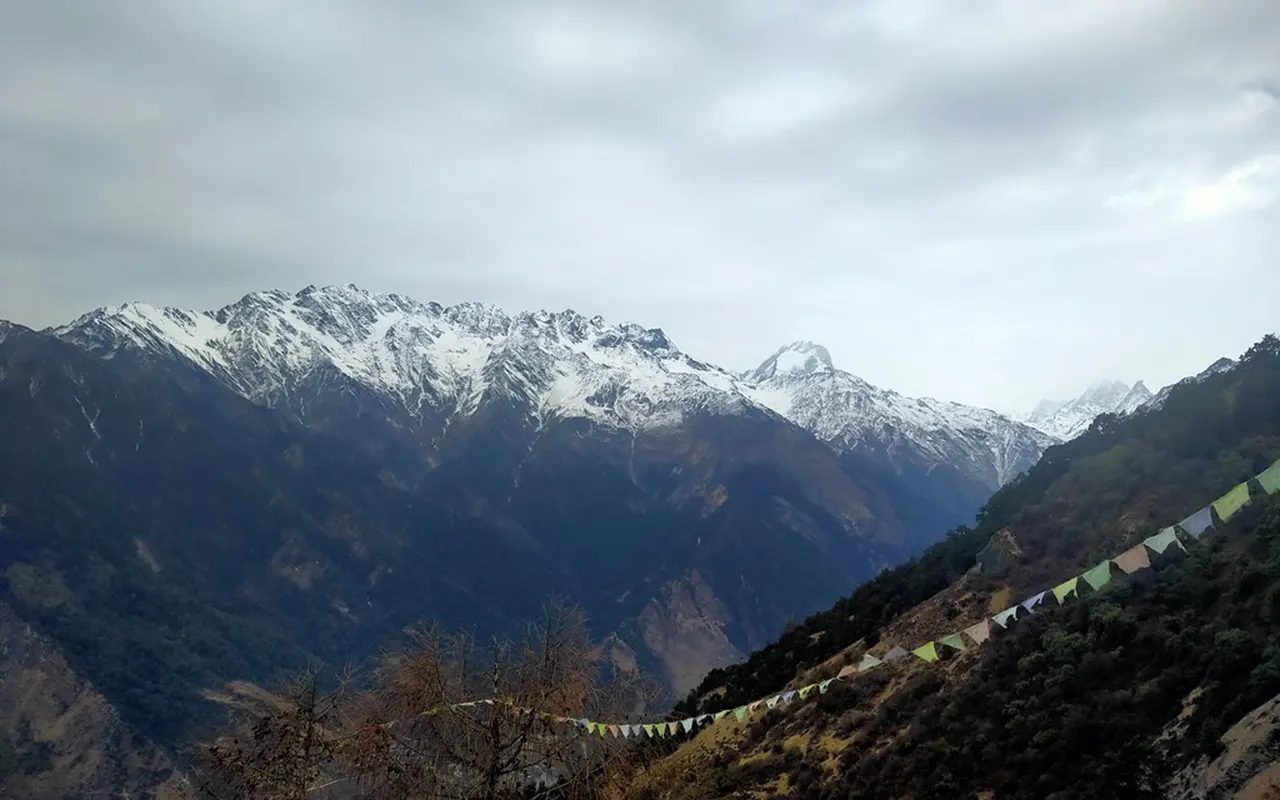
The Langtang Tamang Heritage Trek will travel through Langtang National Park where rhododendron, oak and bamboo forests are home to numerous varieties of birds and wildlife. As the trail ascends higher, the scenery transforms to large valleys in the Alpine range with snow-blanketed mountains. The trek ends in Kyanjin Gompa (3,900 m / 12,795 ft): a serene mountain village with an ancient monastery and a traditional yak cheese factory. A hike to Kyanjin Ri (4,700 m / 15,420 ft) is an acclimatization exercise that rewards the trekker with panoramic views of Langtang Lirung, Dorje Lakpa, Yala Peak and numerous Himalayan mountains in the surroundings.
The Langtang Ganesh Himal Trek goes beyond the main Langtang Valley and into the Tamang Heritage region, where you can get to learn the culture, traditions and everyday life of local inhabitants. There are villages like Briddim, Thuman, Gatlang and Tatopani where one can stay in family-operated teahouses and get to know about the practices that have been maintained through generations. A trip to the natural hot springs of Tatopani is also part of the trip and the trip proceeds through more peaceful mountain scenery to the distant Ganesh Himal.
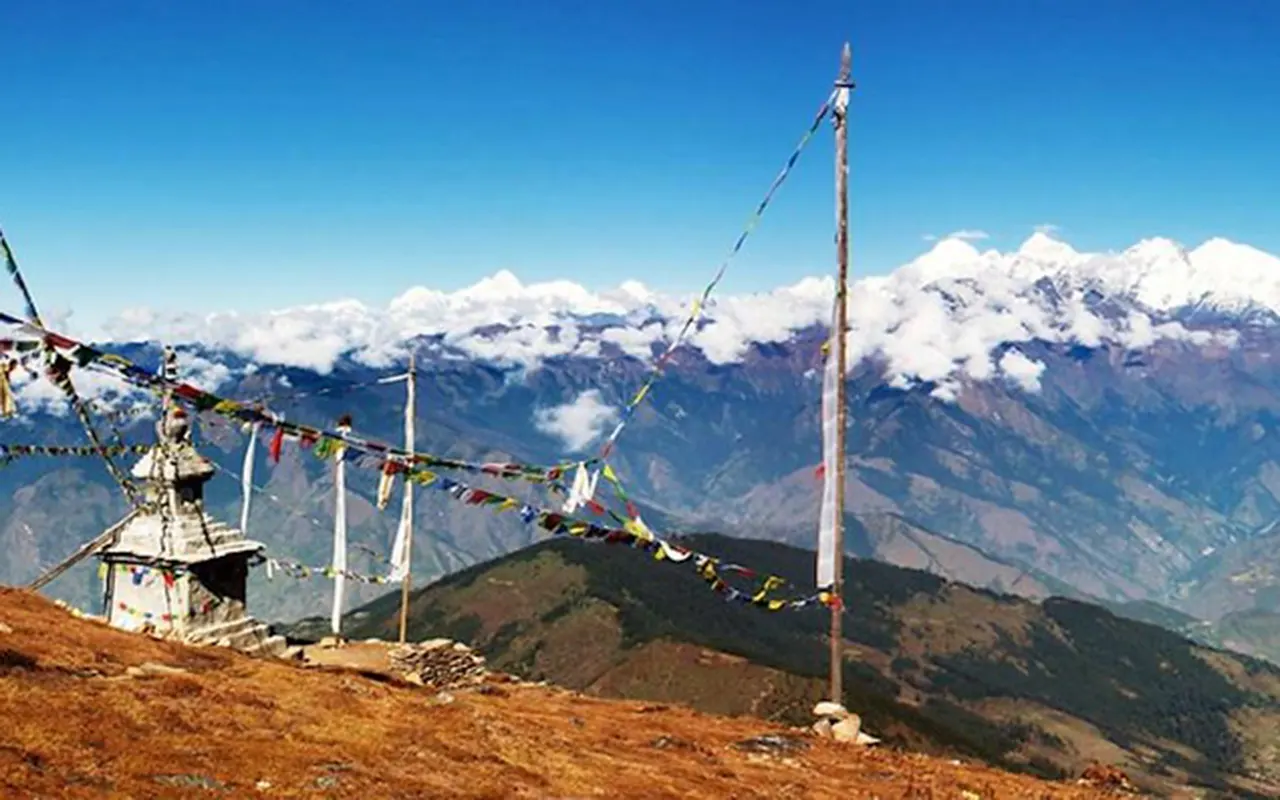
Another trek that visits the beautiful valley of the Langtang Tamang Heritage Ganesh Himal Trek Itinerary is the Pangsang Pass (3,850 m / 12,631 ft) before exploring the beautiful valley of the Tamang. The perspective provides spectacular views of the Ganesh Himal, the Langtang and Manaslu at a distance on clear days. During the trek, regular walks tend to be five to eight hours daily, and so the trek is appropriate for trekkers who have a good level of fitness and a sense of adventure. The mountainous landscape, cultural experience, and tranquil trails make a perfect blend of a trekking holiday that is not overcrowded with tourists on the busier trails in Nepal.
In case you want a nature, culture and remote Himalayan trekking adventure, then this is a great place to visit. The itinerary is well planned to give time to adapt to the new environment and gives a chance to visit the villages, monasteries, forests and high mountain outlooks. Having skilled guides, smooth logistics, and a strong resolve to assist you through 3A Adventure, you will have the pleasure of hiking the trail without worry and concentrating on the memorable moments that will be experienced on the way.
Welcome to Nepal. Once you land at Tribhuvan International Airport, we will welcome you and take you to the Kathmandu hotel. As soon as you arrive at the hotel, you will be able to rest after the trip and get used to your room.
The trekking guide will meet you later in the day and brief you on the trip. At this meeting, we will go through the itinerary, inspect your trekking gear and answer any questions you might have before we kick off. In case there is some last-minute shopping, you will have time to go shopping in the local markets.
You may also do a little stroll around the bustling streets of Thamel, should you have the time. It is the right place to get the local feel, to have Nepali food or just take some rest before the trek begins.
Activity: 30 to 45 minutes drive
Max. Altitude: 1,400m/4,593ft. (Kathmandu )
Meal: Dinner
Accommodation: Hotel
We start our drive from Kathmandu after breakfast and head to Syabrubesi. The trip takes the circuitous mountain routes through the small towns, terraced farms, rivers and green hills. During sunny days, you can also see the Himalayan mountains in the distance.
The road is very slow, and the mountain roads are the reason why the drive takes the majority of the day. We will receive lunch and breaks along the way in local restaurants. When we start climbing up and down the countryside road, a glimpse of rural life in Nepal will be experienced.
Late in the afternoon, we reach the small village of Syabrubesi, on the Bhote Koshi River. And once you have checked into the lodge, you can rest and get ready to begin the first day of trekking.
Activity: 7 to 8 hours Scenic drive
Max. Altitude: 1,400m/4,593ft. (Syabrubesi)
Meal: Breakfast, Lunch, Dinner
Today you trek to Lama Hotel/Rimche. We cross a suspension bridge and go through forests of oak, rhododendron and bamboo trees along the Langtang River after breakfast. The path steadily ascends as it crosses waterfalls and little villages.
As we move on up, the serene forest gives us an opportunity to see birds and hopefully, animals like langurs or red pandas. There some steep parts, but it is still pleasant with frequent rests on the way.
Afternoon, we arrive at Lama Hotel or Rimche (2,400 m / 7,874 ft). This is a nice place to take a rest before proceeding further into Langtang Valley due to the fresh mountain air and the quiet environment.
Activity: 6 to 7 hours Trek
Max. Altitude: 2,400m/7,874ft. (Rimche)
Meal: Breakfast, Lunch, Dinner
Accommodation: Hotel
Today we will trek from Rimche to Langtang Village after having breakfast. The higher we climb, the more spectacular the views are and we can see snow-covered mountains in front.
The path goes through Ghodatabela, where we take a little rest. Here, the path goes on to yak pastures and traditional villages that have been culturally shaped by Tibet. The mountain landscape is complemented by prayer flags, stone walls, and small monasteries.
In the afternoon, we reach Langtang Village (3,500 m / 11,483 ft). Following the 2015 earthquake, the village was rebuilt, and it continues to be a significant location in the valley. Spend the night relaxing and reveling in the serene environment.
Activity: 6 to 7 hours Trek
Max. Altitude: 3,500m/11,483ft. (Langtang Village )
Meal: Breakfast, Lunch, Dinner
Accommodation: Teahouse, Lodge
In the morning, having had breakfast, we move on towards Kyanjin Gompa. The path slowly ascends over vast meadows and yaks graze, giving one breathtaking scenery of the nearby snow-capped mountains. The distance of the walk is shorter than the last few days and you are able to appreciate the landscape at a relaxed pace.
On our way up the mountain, we cross prayer wheels, chortens and little streams and arrive at the last part of the trail. It opens up the mountainous terrain and the quiet environment makes this section of the hike pleasant. Along the way, you may see yaks grazing in the alpine fields.
In the early afternoon, we reach Kyanjin Gompa at (3,900 m / 12,795 ft). Once you have been checked into the lodge, you can go to the local monastery or the famous yak cheese factory as long as it is open. The remainder of the day is made easy to ease your body to the increased altitude.
Activity: 3 to 4 hours Trek
Max. Altitude: 3,900m/12,795ft. (Kyanjin Gompa)
Meal: Breakfast, Lunch, Dinner
Accommodation: Teahouse, Lodge
The day is an acclimatization and early morning hike to Kyanjin Ri. The path is ascending and difficult, but it is easier to reach the top as it is slow and has frequent pauses. With each step, you get an increasingly spectacular view as you get taller.
On top of Kyanjin Ri (4,700 m / 15,420 ft), one has panoramic views of Langtang Lirung, Dorje Lakpa, Yala Peak and the Himalayan range. This is the apex of the walk and a good place to rest and enjoy a bit of time before proceeding in the downward direction.
We take pictures and appreciate the landscape and then go back to Kyanjin Gompa to have lunch. Afternoon is at leisure, to wander about the village, or to do as we please before resuming the trek the following day.
Activity: 5 to 6 hours Hike
Max. Altitude: 4,700m/15,420ft. (Kyanjin Gompa)
Meal: Breakfast, Lunch, Dinner
Accommodation: Teahouse, Lodge
We move out of Kyanjin Gompa after breakfast and start the descent to Langtang Valley. Going down the mountain is usually not as tough and one has more time to admire the mountain scenery and the serene environment. The route is the same back through yak pastures and traditional villages.
We go through Langtang Village and Ghodatabela and enter the forest again. The path follows the Langtang River along the rhododendron, bamboo and oak tree-lined route. The alternating landscape and the fresh air make the current walk enjoyable.
In the late afternoon, we arrive at Lama Hotel or Rimche (2,400 m / 7,874 ft). Once you have been helped into the lodge, you can breathe and have a peaceful evening in the midst of the forest.
Activity: 6 to 7 hours Trek
Max. Altitude: 3,900m/12,795ft. (Rimche)
Meal: Breakfast, Lunch, Dinner
Accommodation: Teahouse, Lodge
Today we quit the trail of the main Langtang Valley and make our way towards Briddim Village. The trail leads through the woods and small hills to this traditional Tamang settlement. The trail has uphill and downhill parts, but it is a good trail to follow throughout the day.
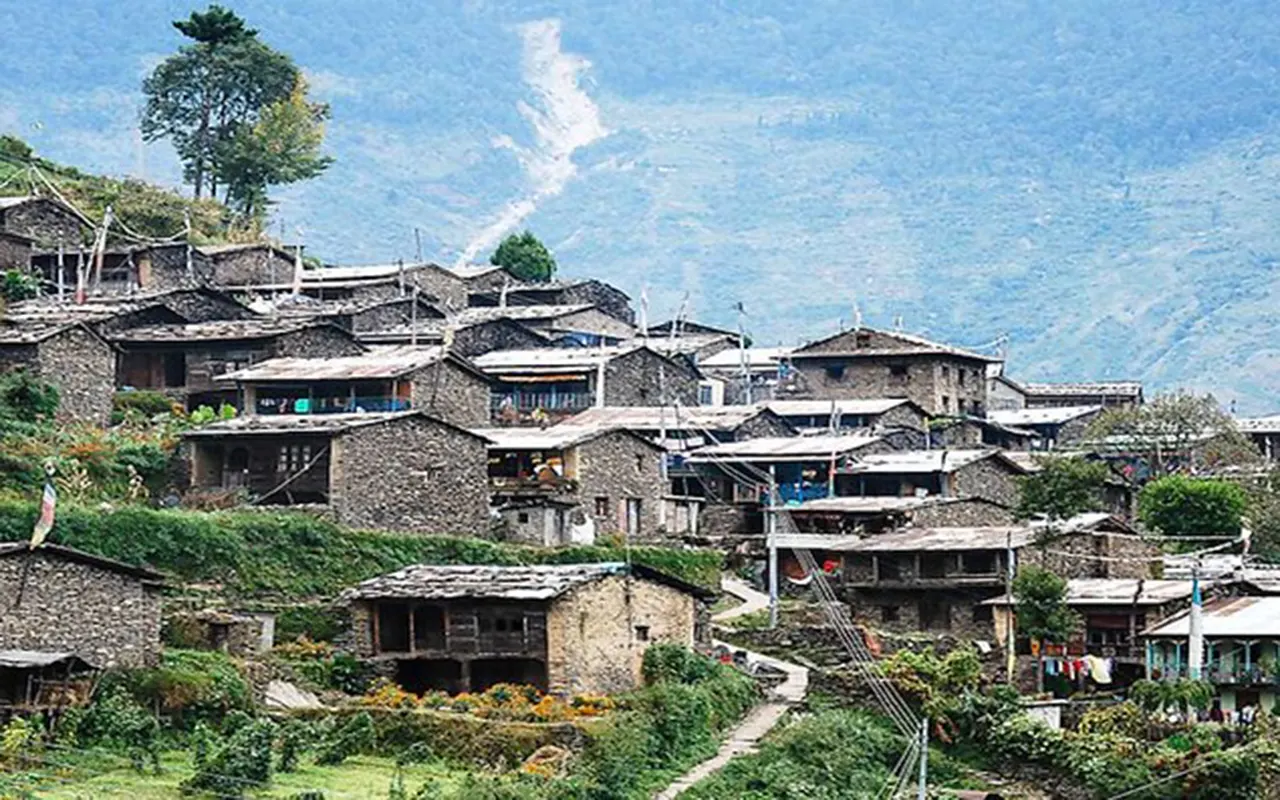
Briddim has a rich culture of the Tamang and is heavily influenced by Tibet. These stone buildings, prayer flags and hospitable locals provide an opportunity to explore the everyday life in the Himalayan world. You may have time to go around the village and see the local monastery.
Having arrived at Briddim (2,200 m / 7,218 ft), we take a seat in our lodge and pass the night admiring the quiet beauties of this quaint mountain village.
Activity: 5 to 6 hours Trek
Max. Altitude: 2,400m/7,874ft. (Briddim Village )
Meal: Breakfast, Lunch, Dinner
Accommodation: Teahouse, Lodge
We leave Briddim after breakfast and head to Timure. The path is through forests, fields and tiny Tamang villages that will provide you with more chances to feel the local life. You will also encounter terraced fields, old stone houses and prayer flags along the way that are evidence of the rich cultural heritage of the area.
The trail consists of a combination of gradual downward and brief upward slopes. We are strolling in the tranquil rural area, and there are also a couple of nice spots to take a break and view the mountain scenery. The path is also not busy and thus, a relaxing day of hiking.
In the afternoon, we reach Timure (1,700 m / 5,577 ft), a traditional village near the Nepal-Tibet border. On arrival at the lodge, you can visit the village or just have some rest before the next climbing day.
Activity: 5 to 6 hours Trek
Max. Altitude: 2,200m/7,218ft. (Timure )
Meal: Breakfast, Lunch, Dinner
Accommodation: Teahouse, Lodge
The present-day journey starts with a steady ascent from Timure to Thuman Village. The track runs through woods and trackways to the hillside, then on to higher terrain. The higher you are, the wider the views, and you see the surrounding hills and distant mountains along the way.
Thuman is a beautiful Tamang village with its traditional culture and hospitality. The traditions that were inherited by many local families are still observed by many of them nowadays. You can also listen to traditional Tamang songs and watch colorful prayer flags adorning the village.
We reach Thuman at (2,300 m / 7,546 ft) in the afternoon. Once in the lodge, you may take a little stroll about the village and taste the quietness of it before dinner.
Activity: 5 to 6 hours Trek
Max. Altitude: 2,300m/7,546ft. (Thuman Village )
Meal: Breakfast, Lunch, Dinner
Accommodation: Teahouse, Lodge
We proceed further on climbing towards Nagthali Ghyang after breakfast. The trail cuts across forests of pine and rhododendron trees to open grasslands. The gradual climb is compensated for by the more and more beautiful mountain scenery.
Nagthali Ghyang is a great meditation place and also gives great views of the surrounding Himalayan ranges. The ridge can be seen on a clear day with Langtang, Ganesh Himal, Kerung and adjacent snow-covered peaks. This is a memorable place to visit on the trek due to the peaceful environment.
Once you reach Nagthali Ghyang (3,100 m / 10,171 ft), you can take a moment to calm down, breathe in the mountain air and observe the evolving colors of the scenery in the evening.
Activity: 5 to 6 hours Trek
Max. Altitude: 3,100m/10,171ft. (Nagthali Ghyang )
Meal: Breakfast, Lunch, Dinner
Accommodation: Teahouse, Lodge
This is the morning we are leaving Nagthali Ghyang and going down the forest and traditional villages to Tatopani. The path has nice scenery of the hills around the area and crosses tranquil countryside where the residents carry out their daily farm work.
Tatopani is also famous because of its natural hot springs that have been the work of local communities over the years. Once you get to the village, you can have a nice bath in the hot mineral waters. It is an ideal method of relaxing the muscles after a few days of hiking.
We spend the night in Tatopani (2,600 m / 8,530 ft). The village with natural hot springs is a good resting ground to rejuvenate before moving to the Ganesh Himal area.
Activity: 5 to 6 hours Trek
Max. Altitude: 3,100m/10,171ft. (Tatopani)
Meal: Breakfast, Lunch, Dinner
Accommodation: Teahouse, Lodge
We leave Tatopani after having breakfast and head towards Gatlang Village. The route moves through the terraced agricultural lands, forests and small Tamang settlements. On your walk, you will be able to view the surrounding hills and snow-capped mountains in the distance and you will be in the quiet countryside.
The old stone houses and colorful prayer flags are more prominent as we move towards Gatlang. Gatlang is a beautiful Tamang village where one can still experience the local customs, traditional architecture, and village life. A tour in the small streets provides a more intimate insight into the culture and life of the natives.
In the afternoon, we reach the Village of Gatlang (2,200 m / 7,218 ft). Once you have settled down in the lodge, you may take a sightseeing tour of the village, or you may meet the villagers, or just take your time and enjoy the peaceful mountain environment.
Activity: 5 to 6 hours Trek
Max. Altitude: 2,600m/8,530ft. (Gatlang Village)
Meal: Breakfast, Lunch, Dinner
Accommodation: Teahouse, Lodge
Today, we start trekking from Gatlang to Somdang. The path slowly ascends through forests and alpine meadows and has beautiful scenery of the Ganesh Himal range. The road is less frequented as the villages are left behind and the landscape turns more mountainous.
On the path, we cross past grazing lands occupied by local herders in the summer season.The walk is pleasant due to the fresh air of the mountain and the quiet environment. As we ascend, the landscape shifts from farmland to open hills of spectacular Himalayan sights.
By late afternoon, we reach Somdang (3,200 m / 10,499 ft). This little mountain hamlet was once referred to by its ancient zinc mine and is presently used as a stopping place by trekkers who are visiting the Ganesh Himal region.
Activity: 6 to 7 hours Trek
Max. Altitude: 3,200m/10,499ft. (Somdang)
Meal: Breakfast, Lunch, Dinner
Accommodation: Teahouse, Lodge
It is the most gratifying day of the journey today. An early breakfast is followed by climbing Pangsang Pass (3,850 m / 12,631 ft). The climb is gradual, and when we arrive at the pass, the wide horizons of the Ganesh Himal range, the Langtang, the Manaslu and the surrounding mountains appear before us.
We are spending time at the pass and then going down to Tipling Village. The path goes through mountainous meadows, woods, and the old villages and finally arrives at the village. We also get to see beautiful Ruby Valley on our way, which is a quiet place with rich local culture.
Once you have reached Tipling Village (2,500 m / 8,202 ft), you have time to explore the village and get to know more about the lifestyle of the locals, and then spend your last evening in the mountains.
Activity: 7 to 8 hours Trek
Max. Altitude: 3,850m/12,631ft. (Ruby Valley)
Meal: Breakfast, Lunch, Dinner
Accommodation: Teahouse, Lodge
After breakfast and we start driving back towards Kathmandu from Tilting. The road follows the hills, rivers, forests and small villages, and this is the last opportunity to enjoy the beauty of rural Nepal. The path is long, but a lot to see on the way.
Lunch and brief stops along the way drive us towards the capital. The mountain roads slowly yield place to the bustling streets of Kathmandu as we approach the city.
Once we reach Kathmandu (1,400 m / 4,593 ft), we will take you to your hotel. The remaining day is at your own free time to go shopping, relax, or celebrate the successful completion of your Langtang, Tamang Heritage, and Ganesh Himal trek.
Activity: 8 to 9 hours Drive
Max. Altitude: 2,500m/8,202ft. (Kathmandu )
Meal: Breakfast, Lunch
Note:
If you have a private group and prefer a personalized experience, we can organize a custom trip tailored to your requirements and group size, running it any day you choose.
Transportation
Food and Accommodation
Guide and Support Staff
Permit and Expenses
Medical and Gear
Others
International Flights and Visa
Travel and Medical Insurance
Other Expenses
The Langtang Tamang Heritage Ganesh Himal Trek Itinerary is enjoyed at any time of the year, although spring (March- May) and autumn (September- November) are believed to be the best months to visit. These are the months of fairly stable weather, clear skies and most mountain views are at their best. Temperatures are warm enough to trek during the day, and in the mornings and evenings, it is cooler at the high altitudes.
Langtang Tamang Heritage Trek will be traversing forests, valleys, traditional villages, and alpine landscapes. Temperatures are far colder as the trail ascends to higher altitudes, such as Kyanjin Ri (4,700 m / 15,420 ft) and Pangsang Pass (3,850 m / 12,631 ft), at night. Even in the best trekking season, warm clothing is essential.
Trails are quiet and snow-free in winter, with views of the mountains being clear, although snowfall can be experienced in the upper parts of the route. The summer monsoon is accompanied by rains, muddy paths, and poor visibility. Before your arrival, 3A Adventure will furnish you with the latest weather conditions to enable you to prepare by packing the right outfit and equipment.
Langtang Ganesh Himal Trek is regarded as a moderate trekking adventure and can be attempted by any reasonably fit individuals. Normal walking time is five to eight hours a day, both uphill and downhill. Some days are longer than others and the rate is not very fast, and it has regular breaks.
The Langtang Tamang Heritage Ganesh Himal Trek Itinerary will peak at Kyanjin Ri, which is at 4,700 m / 15,420 ft. Reaching this point of view is difficult, and trekkers are advised to proceed at a slow pace and give ample time to have the necessary acclimatization. Proper preparation will assist in ensuring that the journey is safe and enjoyable.
Prior trekking experience is desirable, but not a prerequisite. Any person who exercises regularly and gets ready for this trip can take this trek with certainty. Our guides keep track of the group, give support when necessary, and ensure that all members have ample time to rest along the way.
In the Langtang Tamang Heritage Ganesh Himal Trek Itinerary, you will be slowly hiking up to a higher level where the air is thinner. Beyond approximately 2,500 m / 8,202 ft, a few trekkers might start feeling some mild symptoms of altitude. Good acclimatization is also a significant aspect of remaining healthy on the trip.
The Langtang Tamang Heritage Trek is a trek that consists of an acclimatization day in Kyanjin Gompa (3,900 m / 12,795 ft), then a hike up Kyanjin Ri (4,700 m / 15,420 ft). This will give your body time to get used to it before resuming. Consuming ample water, having frequent meals, and walking at a slow pace will help to minimize the chances of altitude sickness.
The typical symptoms are headache, lack of appetite, fatigue, dizziness and insomnia. These must not be overlooked. The 3A Adventure guides are highly experienced and they keep a close eye on all the trekkers and will advise them to rest or be at a lower altitude. The safety of all is always the most important thing during the trek.
The Langtang Tamang Heritage Ganesh Himal Trek Itinerary is more exciting when well prepared and it will enable you to end every day with a lot of confidence. Training is encouraged at least four or six weeks before your trip. Frequent walking, hiking, biking, jogging,or stair climbing will help increase your endurance and help make long trekking days more comfortable.
The Langtang Ganesh Himal Trek involves five to eight hours of hiking on cross-country mountain trails. Tone up your legs, increase your balance, and develop stamina and you will be able to manage both uphill and downhill runs. Stretching exercises will also be effective in alleviating muscle soreness during the trek.
It is not necessary to be an athlete so that you can go through this journey. Speed is not as important as a positive attitude, steady pace and proper preparation. Before the trek, 3A Adventure will supply a packing list and tips on how to be well prepared upon your arrival at the trek.
On the Langtang Tamang Heritage Trek, basic but healthy food is served on the way. The majority are teahouses, and they offer well-liked food like dal bhat, fried rice, noodles, pasta, soups, potatoes, eggs, pancakes, porridge and seasonal vegetables. Most of the stops on the route also sell hot drinks, tea, coffee, and snacks.
The Langtang Tamang Heritage Ganesh Himal Trek Itinerary will be accommodated in local teahouses and mountain lodges. The rooms are usually good and clean with twin beds, blankets and common bathrooms. The facilities are simple as the trek ascends to elevated areas like Kyanjin Gompa (3,900 m / 12,795 ft) due to the remote area.
The teahouses are run by the local families, which provide the trekkers with the opportunity to have authentic mountain hospitality. Despite the lack of luxury facilities, the friendly reception, new dishes and quiet environment make all the stays that we make overnight comfortable and unforgettable.
The Langtang Tamang Heritage Ganesh Trek starts with an overland transportation from Kathmandu to Syabrubesi and finishes with a reverse transportation from Kathmandu to Tipling. These scenic trips go through hills, rivers, terraced farms and traditional villages, which provide a glimpse of life in Nepal in rural areas.
The Langtang Tamang Heritage Ganesh Himal Trek Itinerary does not involve the use of domestic flights, so it is a good alternative for any traveler who is fond of travelling by road. The race is on mountainous winding roads, and, therefore, the time will be different according to weather and road conditions.
All the ground transport necessary for the package is arranged by 3A Adventure. Where practical, we employ the services of private tourist cars to afford a safe and comfortable journey. Our trained drivers have been driving up the mountain, and they are always conscious of what is going on on the road. They have the first concern of ensuring their safety, and you are able to sit back and enjoy the scenery.
The Langtang Tamang Heritage Ganesh Himal Trek Itinerary traverses through the main trekking regions and the very isolated mountain villages. In most of the lower parts of the trail, there is mobile phone coverage, but this becomes poor or non-existent as you ascend the trail and get into more remote regions.
On the Langtang Tamang Heritage Trek, there are a few teahouses with Wi-Fi services at a fee. Internet connection is usually sluggish compared to urban areas and is not always consistent due to weather conditions and local network conditions. You should also tell your family and friends that at some of the time during the trek, communication might be restricted.
Electronic gadgets can be charged in most of the lodges, but a small fee is usually paid at elevated levels. It is advisable to carry a power bank to ensure that your phone and camera are charged during the trip.
The Langtang Ganesh Himal Trek involves a number of permits prior to entering the trekking area. Trekkers require the Langtang National Park Entry Permit and the TIMS (Trekkers Information Management System) Card. These permits also aid in conservation and enhance the safety of the trekkers.
In the case of the Langtang Tamang Heritage Ganesh Himal Trek Itinerary, certain areas within the Ganesh Himal area might also need a local rural municipality or restricted area permit, depending on the specific route and the prevailing government laws. Permit regulations may vary, and before your trip, you should verify the most recent regulations.
When you book 3A Adventure, our team will do all the arrangements for trekking permits on your behalf. All that is needed is the submission of the necessary papers, including your passport and passport-sized photographs, and the trek will commence.
A majority of tourists who come to the Langtang Tamang Heritage Ganesh Himal Trek Itinerary require a tourist visa to Nepal. It typically has to be obtained on arrival at Tribhuvan International Airport in Kathmandu or a Nepalese embassy or consulate in your country of origin.
The Langtang Tamang Heritage Trek begins and ends in Kathmandu, and thus, care should be taken that your visa does not expire during your stay in Nepal. The tourist visas come in varying terms of stay, and you can decide the duration to visit the country that best suits you.
Immigration laws can be amended, so it is always advisable to check the new visa requirements before travelling, depending on your nationality. In case of any queries regarding the application process, 3A Adventure will be pleased to give some general advice before you arrive.
It is highly advisable that travel insurance be taken with the Langtang Tamang Heritage Ganesh Himal Trek Itinerary. A good policy offers you financial security in case you are caught up in unforeseen circumstances like trip cancellation, a flight delay, lost luggage, illness or injury on your trip. The right coverage will provide more peace of mind when you have to trek in the mountains.
Langtang Ganesh Himal Trek up to Kyanjin Ri (4,700 m / 15,420 ft): thus, your insurance policy should cover high altitude trekking and emergency helicopter evacuation. Treatment in remote mountain regions may not be cheap, and evacuation may be the only way to stay safe in case of a severe health problem.
To ensure that all the intended activities are covered in your insurance policy, thoroughly read your insurance policy before departing from Nepal. Always carry a hard copy and an electronic copy of your insurance policies during the trip in case of need.
The Langtang Tamang Heritage Trek package includes most of the principal trekking expenses, but you must also plan on spending on yourself when travelling. It is advisable to have a little bit of extra cash in Nepalese rupees since most villages in the mountains do not have ATMs.
Individual costs can be drinks, snacks, desserts, hot showers, Wi-Fi, battery charging, laundry services and souvenirs. Trekking guides and porters also do not tend to be part of the package and are welcome in case you are pleased with their service.
During the Langtang Tamang Heritage Ganesh Himal Trek Itinerary, spending habits vary from one traveler to another. To have an enjoyable time on the trek, you will need to plan a sensible daily budget so that you do not have to be concerned about extra expenses on the way.
The Langtang Tamang Heritage Ganesh Himal Trek Itinerary can be arranged as a group departure or a private trek. Both variants travel along the same route and itinerary, and you can enjoy the mountainous, picturesque landscapes, ancient villages and the local culture.
A Langtang Tamang Heritage Trek that is organized as a private trip is much more flexible. You have the option of setting your desired travel date and having a more customized experience with your own guide and support team. This is the best choice when one is traveling with their family, couple, or friends.
Departing in groups is suitable for individuals traveling or those who like associating with people of other nations. They tend to be lower priced and yet offer professional guides, well-planned logistics, and service. Whether it is a group or a private trek, 3A Adventure will provide you with a safe, well-organized, and fun trekking experience.
General
Yes. The journey is an amalgamation of Himalayan scenery, traditional Tamang villages, monasteries, natural hot springs,and remote valleys.
Yes. The trail traverses Langtang Valley, then enters the Tamang Heritage Trail, which leads to the more remote Ganesh Himal.
Yes. The Kyanjin Gompa acclimatization day is a day to allow your body to become accustomed to the new environment before you start the trek to Kyanjin Ri.
They are the combination of Langtang Valley, Tamang cultural villages, Ruby Valley and Ganesh Himal into one longer and more varied trekking adventure.
Preparation & Fitness
Train downhill walking, build leg muscles, and use trekking poles to decrease the pressure on your knees when going downhill.
No. A good physical condition, the right training and taking the instructions given by your guide should suffice for the majority of healthy trekkers.
Yes. The trek can be comfortably done by healthy older trekkers who are well-fitted and medically fit since they can walk at a steady pace.
Insurance & Visa
Yes. Trip cancellation coverage serves to safeguard your travel investment in case unforeseen circumstances compel you to cancel your trip before going.
Yes. Have both printed and electronic copies of your insurance policy so that you can refer to the policy in emergency cases or in cases where you have to go to the hospital.
Yes. The Department of Immigration can generally extend tourist visas before the expiry of your existing visa.
No. One Nepal tourist visa will usually suffice unless you intend to exit and re-enter Nepal.
Guides & Support Staff
Yes. Your registered guide also guides you on the walk, offers support, safety and local information on the entire journey.
Yes. The guide keeps track of your condition, gives you the best tips and organizes your evacuation in case a medical emergency arises.
Yes. Seasoned porters transport trekking bags at a safe rate by adhering to mountain trekking guidelines and adhering to suggested weight restrictions.
Yes. When visiting villages, your guide assists in making conversations and in explaining the local customs, traditions and cultural practices.
Accommodation and Facilities
Yes. Blankets are available in most of the teahouses, though a sleeping bag is advisable to keep one extra warm and comfortable.
Yes. Vegetarian food cooked using ingredients found in the area is served in most of the teahouses along the trekking trail.
Most villages charge, but at higher-altitude lodges, there might be an extra charge for electricity use.
The teahouses have some with western toilets and others with traditional squat toilets, in remote mountain villages.
Weather & Seasons
Autumn is generally by far the best time with clear skies, clear visibility, predictable weather, and the trekking is comfortable on the entire route.
Yes. There is also clear weather, which gives great views around a range of sections, mainly around Langtang Valley, Kyanjin Ri and Pangsang Pass.
Monsoon trekking can be undertaken, though due to regular rainfall, muddy roads and poor mountain scenery, the journey may be a little more difficult.
Health & Safety
Yes. Many teahouses offer boiled water, purification tablets or filtered water that can be used as safe drinking water.
The guide will evaluate the scenario and make the safest possible option, such as descent or emergency evacuation, where necessary.
In certain villages, there are basic health posts, but more sophisticated medical services can only be found in bigger towns or Kathmandu.
Yes. Carry adequate personal medication to last the whole trek, because in remote mountain villages, there are few pharmacies.
Booking & Payment
It is advisable to book a few weeks before arrival during the peak seasons of spring and fall trekking.
Yes. To obtain trekking permits and fill out other travel paperwork, a valid copy of a passport is needed.
Yes. Individuals are encouraged to come and can either book a private trek or go with an organized group.
Yes. With a prearranged itinerary, it is often possible to adjust the itinerary to your schedule, fitness level, and travel preferences.
Transportation & Flight
Yes. Driving time to and from the trekking region may be prolonged occasionally due to weather, road conditions and traffic conditions.
Yes. Individuals, families and groups can have their own vehicles, depending on the package chosen.
The trekking part starts in Syabrubesi, following the picturesque Kathmandu-Syabrubesi drive on the second day of the itinerary.