Weather and Best Season
Langtang, Gosainkunda, and Helambu regions all have a subtropical weather pattern with very dry winters and hot and humid summers. The thermometer shows the average temperature of 18.5°C, with yearly precipitation at 555.9 mm.
If you seek the higher chances of seeing elusive, wonderful red panda and snow leopard of the Langtang National Park, then choose the Langtang Gosainkunda trek either in the spring period between March- May or the autumn period between September-November.
Winter, of December-February can be quite chilly with minimal heating in the tea houses, while summer of June-August is regularly frequented by the monsoon rain.
Difficulty
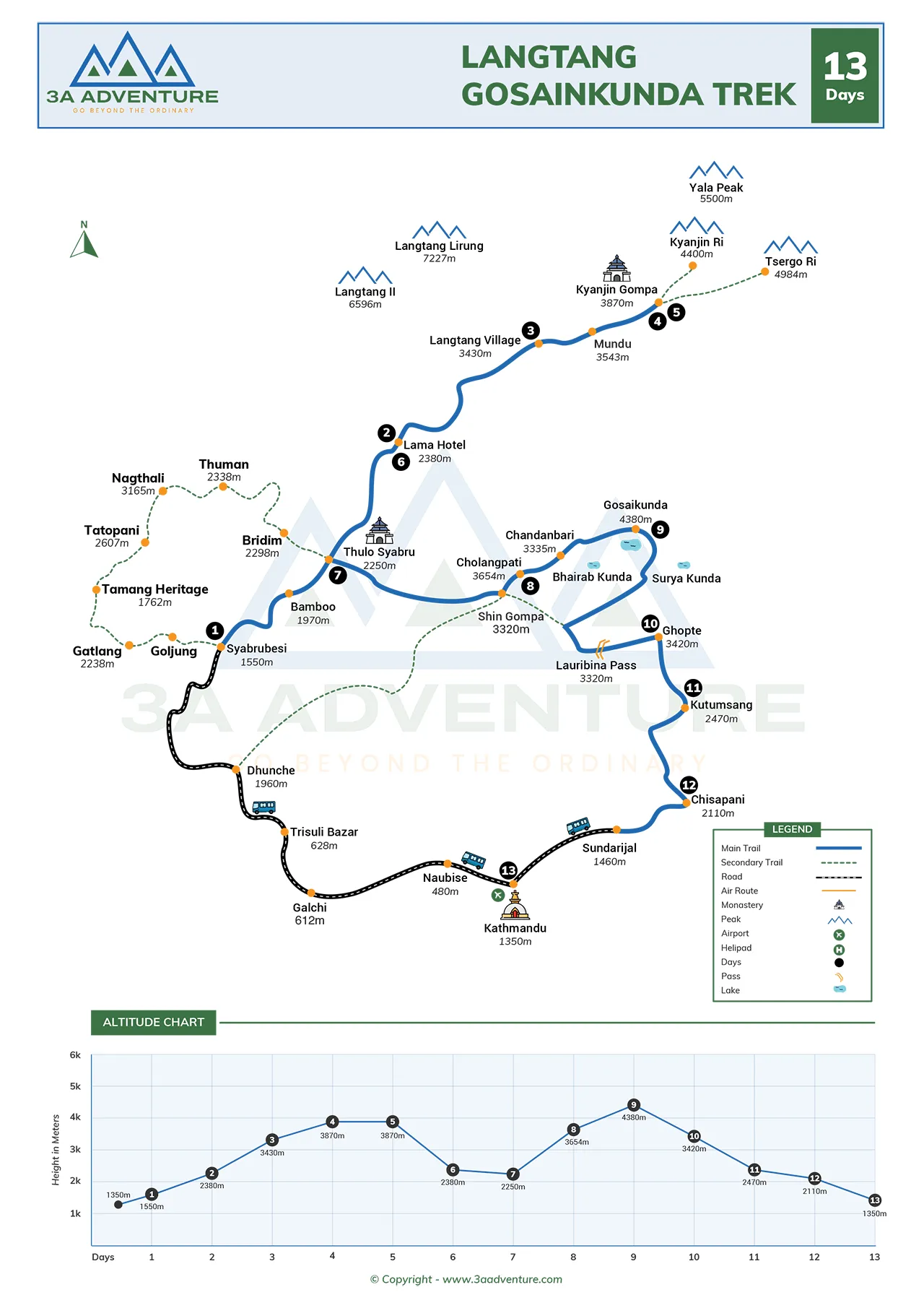
The ultimate elevation that our Langtang Gosainkunda trek will be taking us over 13 days is the altitude of the Lauribinayak pass/Lauribina Pass at 4610 m.
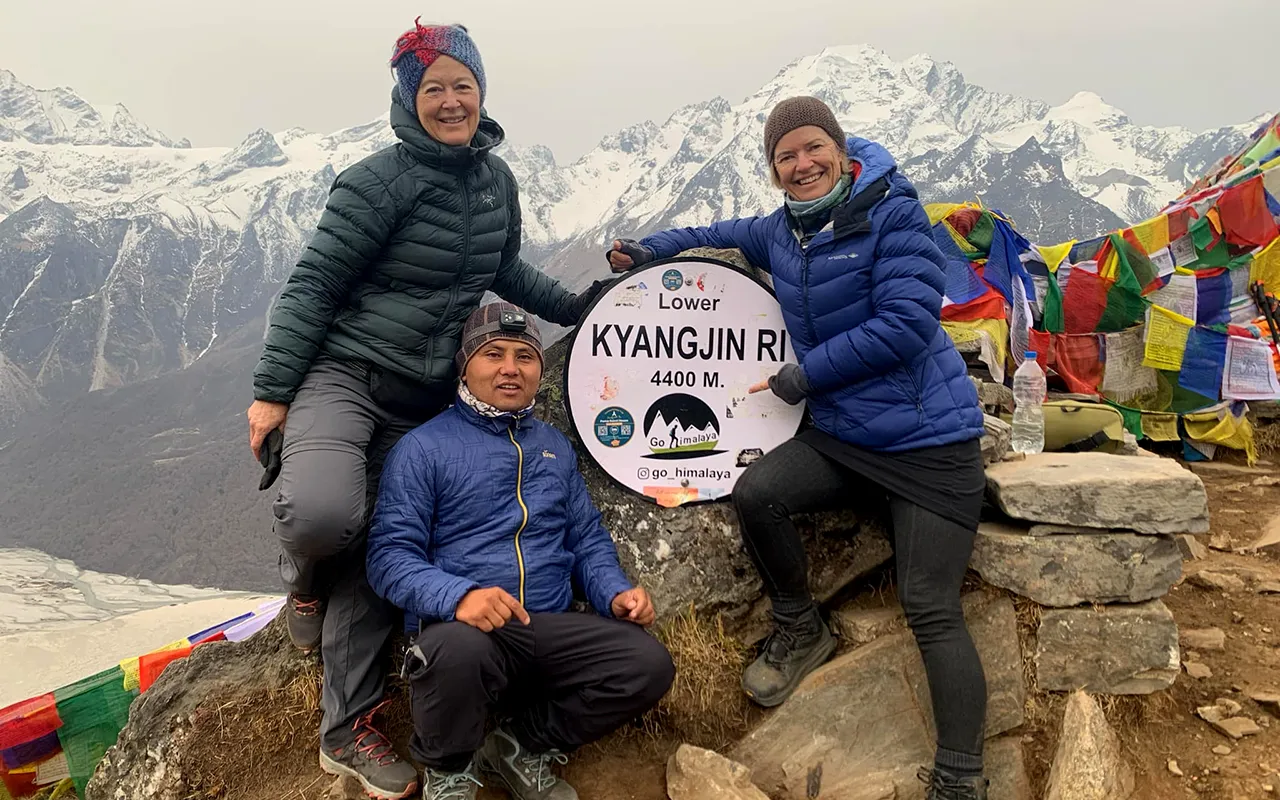
However, if you choose to climb any of the peaks available at Kyanjin Gompa, such as Chorkari Ri (5050 m), Tsergo Ri (4984 m), or Kyanjin Ri (4773 m), one of these ridges will represent the highest point of elevation of our trek.
The walking duration for each day during the trek will also be limited to 6 hours on average. As for the trekking route, it contains numerous local hills or Danda that can sometimes surpass the elevation of 3000 m.
You should also expect several hard and challenging steep climbs and descents, with some days even gaining over 1000 m in elevation. The Langtang Gosainkunda trek route also features several bridges to cross, and the tea houses will be quite simple.
Thus, all these factors contribute to making our Langtang Gosainkunda trek a level II moderate hiking mountain action that suits all trekkers who can endure the pressure of multi-day long-duration hikes.
Altitude Sickness/Acute Mountain Sickness/AMS
The Langtang, Gosainkunda, and Helambu regions are the closest areas to Kathmandu that offer you a chance of a quick Himalayan getaway. The typical elevation of the three areas is expected to be around 4000 m, which isn’t particularly high when compared to other trekking routes in the mountains of Nepal.
Plus, our Langtang Gosainkunda trek itinerary will first engage you in the Langtang trek, so you will already be acclimatized before starting the Gosainkunda trek and overcoming the Lauribina Pass.
Therefore, you won’t be bothered by the altitude on the second and third part of our Langtang Gosainkunda trek. However, it can bother you mildly while doing the Langtang trek, resulting in a mild case of AMS.
Such mild AMS is characterized by the onset of headaches, drowsiness, nausea, fatigue, and sleep trouble at first. In such instances, our guide will handle the situation well and make you rest at your current location or move you back down until AMS completely disappears.
To completely avoid AMS, you can purchase Diamox in Kathmandu and start taking it once the journey commences. We also urge you to consume 3 to 4 liters of water every day.
Preparation and Fitness
Although for our Langtang Gosainkunda trek 13 days journey, you don’t need to be a trained hiker, but you must be capable of walking long hours and traverse the steep terrains.
To increase your capability of walking, start with simple jogs or walks in the park nearby. Try the stairs at your office or home and make a simple plan involving running, yoga, cycling, swimming, and weight lifting.
Try to build in your flexibility, strength, and cardio through sports you like to play. Gradually, go on a real simple hiking adventure on the trails that are simple at first and then moderate.
With this physical readiness, also make your mind ready for what comes in the actual Langtang Gosainkunda trek. Learn to coexist with nature, wildlife, and people who are different from what you see and meet normally in your life.
Food and Accommodation
Your accommodation during the Langtang Gosainkunda trek will occur in simple, modest mountain lodges, often called tea houses. These are not the hotels that you find in cities, but these are the actual homes of locals who have transformed their residences into guesthouses.
In these tea houses, you will find a room with two single beds and minimal furniture. Toilets and showers are shared and may sometimes be located outside the lodge.
The food may not be very diverse, but they are excellent in terms of nutrition. Common menu items at the lodges include Dal Vat, momos, eggs, and porridge.
Please note that three-course meals during breakfast, lunch, and dinner will be served, while beverages will be at your own expense.
Transportation
Our Langtang Gosainkunda trek is truly about immersing yourself in the real experience of Nepal and its people. That’s why, for your mode of transportation from Kathmandu to Syabrubesi and from Sundarijal back to Kathmandu, a local public bus will be used.
This experience can be discomforting and exciting at the same time, but you will also be able to meet the locals and enjoy the adventure together. If you believe that local transport may be somewhat exhausting for you, we can also arrange a private transfer for a minimal surcharge.
Communication
Because Langtang and Helambu regions are located adjacent to Kathmandu, the national mobile networks of Ncell and Nepal Telecom will give you a strong signal during your travels, except of course in the high passes and at Gosainkunda Lake, where the signal may be on and off.
In terms of WiFi and internet, several new tea houses have been built in Langtang and Helambu, and most are equipped with WiFi, so they will offer you their WiFi for a minimal surcharge.
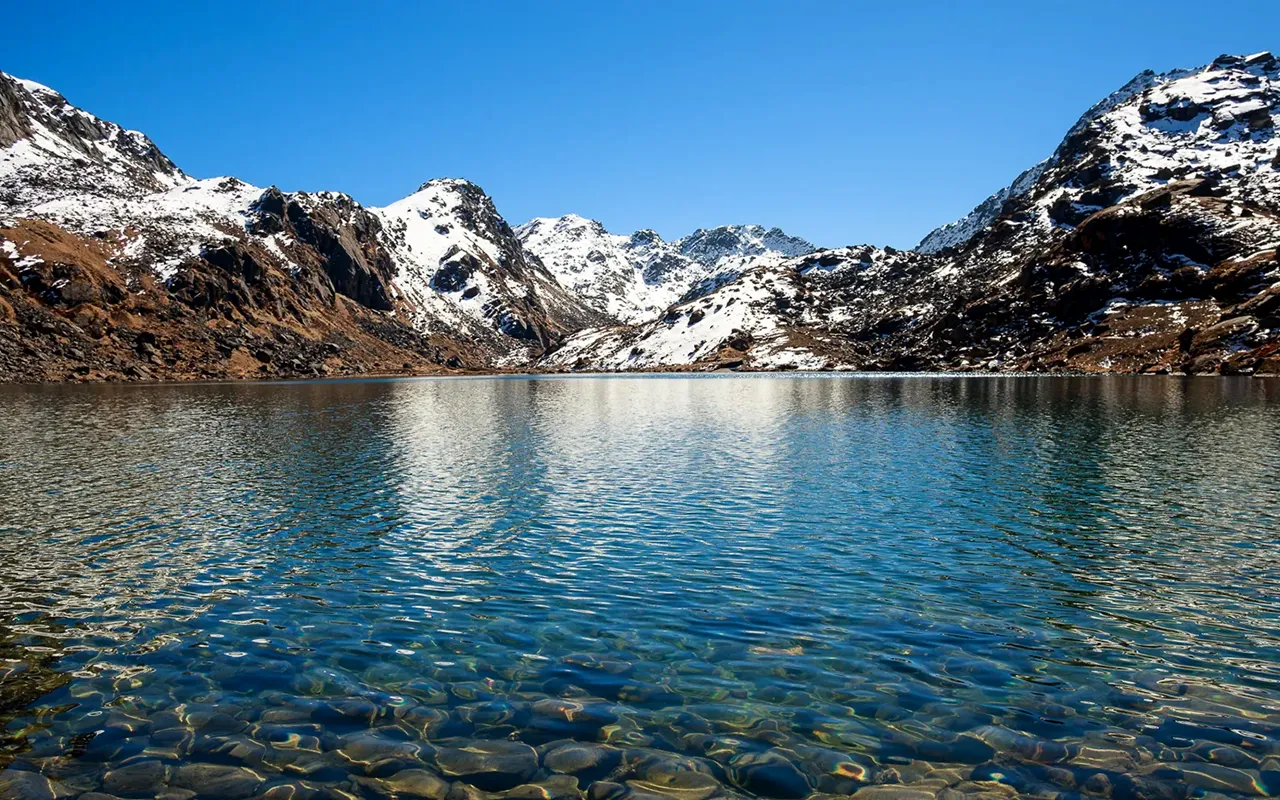
When you are at Gosainkunda Lake, internet access can not be assured, but you can take advantage of the 4G data offered by the mobile networks.
Permit
The confined territory of the Langtang National Park will allow you to trek through only after you have an entry permit for the Park. Thus, for our Langtang Gosainkunda trek, a Langtang National Park Permit is obligatory along with the TIMS Card (Trekkers Information Management System) that will guarantee your search and rescue in case of unfortunate events.
The 3000 NPR charge per hiker for the Langtang National Park and the 2000 NPR charge per hiker for TIMS are the mandatory parts of our service. In Dhunche, our guide will get these permits on your behalf.
Nepal Tourist Visa
You can buy a tourist visa for Nepal as you arrive at TIA by entering your details in one of the computers you will see at TIA, then printing your ticket, paying, and taking receipt of payment.
Present it at the immigration counter at TIA to have your visa added to your passport. If you want to skip the wait in line, you can also provide your information on the Nepal Immigration online site.
As for the duration, you can select from any three: 15 days (US$30), 30 days (US$50), or 90 days (US$125). The visa will be active once it is affixed to your passport.
Travel Insurance
Travel insurance for any mountain trekking in Nepal is vital and has been made obligatory for the permit procurement. For the Langtang Gosainkunda trek, we suggest you add the coverage of a helicopter rescue or air ambulance in case of medical emergencies up to 5100 m elevation.
If your insurance also protects you in the issues of extended stays, luggage damage, theft, or loss, then it will be more advantageous.
Extra Expenses
On our Langtang Gosainkunda trek itinerary, 3A Adventure has taken care of most of your expenses. However, costs for your stay in Kathmandu, meals, TIA transport, and extra nights are not included.
Additionally, beverages, WiFi, hot showers, and charging fees during the trek are excluded. Tipping your guide and porter will also be from your own pocket.
Likewise, international tickets, personal insurance, Nepal visa fees, and any unforeseen expenses beyond 3A Adventure’s control will be your own responsibility.
Private or Group Trip
If personal experience during a trip is what you desire, then we also offer you the opportunity to travel privately in our private Langtang Gosainkunda trek. Or, you can also form your personal group with your family and friends for an intimate adventure.
However, if you like to expand your network and like to share your journey with new people, then our group Langtang Gosainkunda trek will be the right one for you.
We don’t create a larger group but try to keep it to a smaller size so our guide can focus on each guest equally. In a private trip, you will get personal attention from your guide and porter.