Weather and Best Season
Everest Base Camp Trek by Road can be done during various seasons, but spring and autumn are the best seasons for trekking. Spring is from March to May, and autumn is from September to November. The weather is generally more settled, visibility is higher and trekking is more favorable during these months. The colorful rhododendrons blanket the lower part of the trail in springtime, and the crisp air and clear mountain vistas await in autumn, following the monsoon. Winter trekking is possible, but may be very cold at higher altitudes.
The Road Trip to Everest Base Camp is also not as much impacted by the flight disruptions in Lukla as the journey starts from the road. Spring and Autumn are popular times for trekking in the Everest Region Trek by Road as the weather is more comfortable. The 3A Adventure is open for activities all through the primary trekking seasons.
Difficulty Level
The Everest Base Camp Trek by Road is a moderately difficult trek to a moderately challenging trek. This hike takes several days, and requires frequent ups and downs on mountain trails. On most trekking days, the trekkers can be expected to walk for 5 to 7 hours. No technical climbing skills are required, but good physical fitness is important. The hike leads to Base Camp on Everest (5,364 m / 17,598 ft) and Kala Patthar (5,555 m / 18,225 ft), where trekking will be more challenging due to thinner air.
Excluding this extra road trip is not a significant drawback, as it slowly introduces one into the Everest region before setting off on the trek. The Road Trip to Everest Base Camp is designed for well-powered and reasonably fit trekkers. A successful trek is accomplished through proper acclimatization, a steady pace, and preparation. 3A Adventure guides and supports you on the way.
Altitude Sickness
One of the most frequently asked questions about the Everest Base Camp Trek by Road is about altitude sickness. Altitude sickness is one of the most common concerns of this trek, since the trek goes through heights above (5,000 m / 16,404 ft). The higher the altitude, the less oxygen will be available to the body and the more difficult the body will have a time adapting to it. Headache, dizziness, fatigue, nausea, loss of appetite, and trouble sleeping are common symptoms. Above (3000 m / 9,843 ft, most trekkers will start to experience the effects of altitude. To reduce the risk, the itinerary includes acclimatization days in important locations such as Namche Bazaar and Dingboche.
Preventive measures include drinking ample amounts of water, walking at a comfortable pace, and following the guides’ instructions. If there are any symptoms should be reported immediately in order to take appropriate steps to act upon them. The Everest Region trek by road is a gradual ascent trek, which is better for the body to adapt to. Safety is 3A’s top priority, along with acclimatization, which will be focused on throughout the trek.
Preparation and Fitness
Careful preparation is essential before embarking on the Everest Base Camp Trek by Road. Trekkers should start training weeks/months before the trip. Activities like hiking, jogging, cycling, stair climbing and cardiovascular exercise can help to build endurance. In addition to strengthening the legs and core muscles it can make trekking more comfortable. While previous mountain hiking experience is useful, it is not necessary in order to do the trek. It is also crucial to be mentally prepared, as this hike will require several days of walking at high altitude.
Road Trip to Everest Base Camp is a process of patience, consistency, and determination. Preparation of equipment should also be done before leaving for the trek, and familiarize oneself with the trekking boots. Proper preparation builds confidence and helps to minimize discomfort along the way. 3A Adventure is providing pre-trip information that will aid trekkers in preparing properly for the adventure.
Food and Accommodation
The food and accommodation at the Everest Base Camp trek by road are basic but adequate for a trek to the Himalayas. The trekker stays for the night in tea houses along the way where basic accommodations are provided along with communal dining areas. The higher we climb, the more basic the accommodation becomes, but still comfortable enough for overnight stays. Typically, there are different varieties of local and international dishes like rice, noodles, soups, potatoes, vegetables, eggs and bread.
There are plenty of hot drinks available all along the trail. Properly cooked foods are a good source of energy for walking every day. In higher elevations, the foods available for consumption might be more restricted, as certain foods may need to be carried from lower elevations. Everest Region Trek by Road is a journey through the region’s hospitality in traditional mountain lodges. The facilities are suitable for most trekkers for the length of their trek.
Transportation
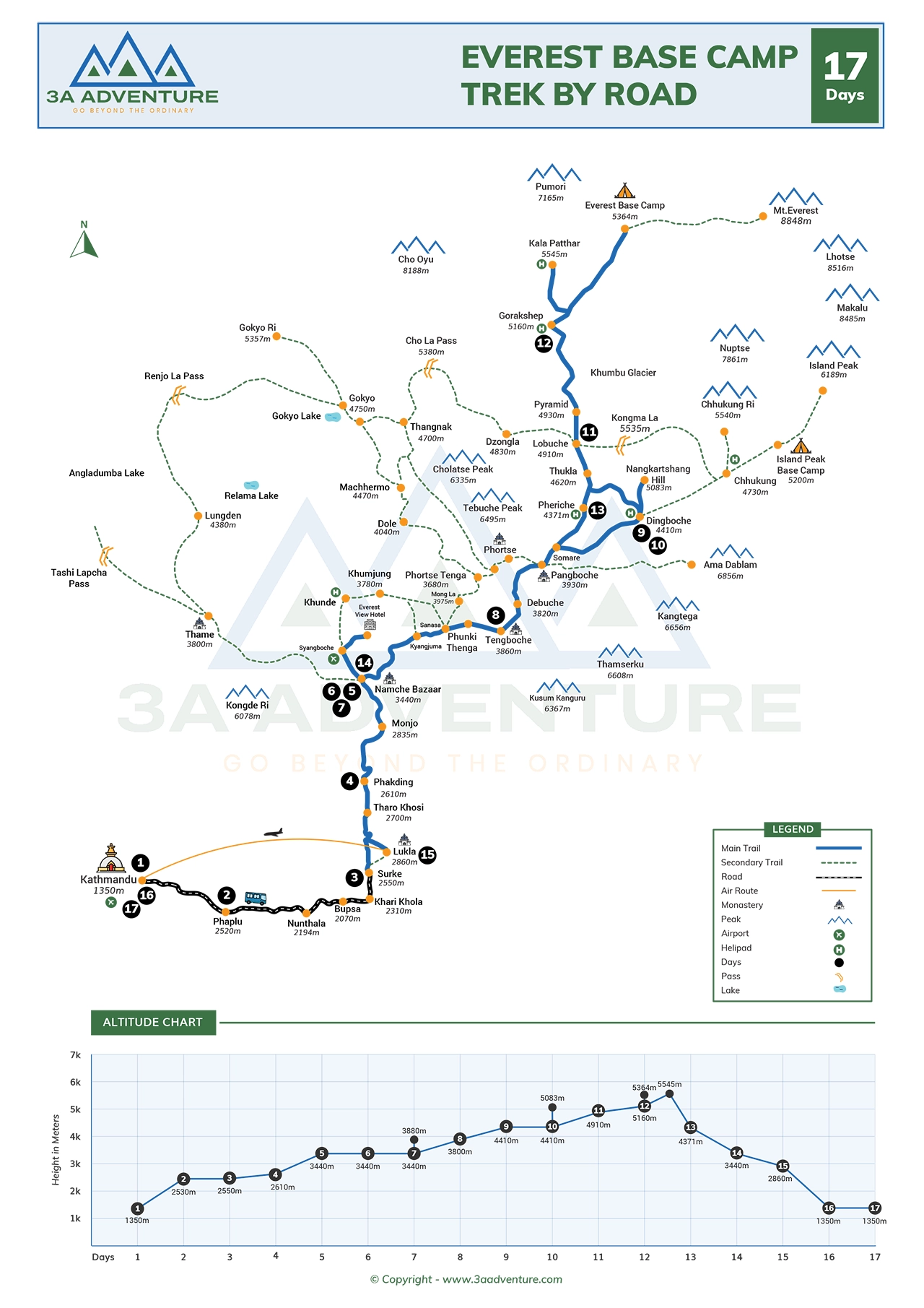
One of the exclusive features of the Everest Base Camp Trek by Road is transportation. The trip begins from Kathmandu, driving through Phaplu and Surkhe, rather than flying to Lukla. It enables trekkers to see rural Nepal and have a smooth induction into the Everest region. Some people prefer to take the Road Trip to Everest Base Camp because they do not want to risk flight cancellations and delays.
The road trip also provides another set of pictures of the local villages, hills and landscapes before trekking. The trekkers typically fly back to Kathmandu from Lukla. The ride can be a diverse and rewarding experience, thanks to the mix of road trip and outdoor adventure. 3A Adventure takes care of the necessary transportation and arrangements for the entire journey.
Communication
Communication facilities are available throughout most of the duration of the Everest Base Camp Trek by Road, but are less available at higher altitudes. Mobile phone signal is available in many villages, but will be weaker in some areas than others depending on location and weather conditions. Trekkers can keep in touch with family and friends through the internet in some tea houses which offer it for a charge. Most overnight stops allow charging of electronic devices with possible additional fees.
Communication may not always be available in remote mountain regions and trekkers should be prepared for periods of lost communications. If there is limited connectivity, it’s wise to let family members know beforehand. Although all this is a long way out, most trekkers can communicate at intervals throughout the trek. This year, communication is getting better in the Everest region every year.
Permit
Everest Base Camp Trek by Road requires several permits. Permits manage trekking activities and aid in conservation efforts in the Everest region. There are two permits issued: Sagarmatha National Park Entry Permit and Khumbu Pasang Lhamu Rural Municipality Permit. These permits are to be carried by the trekkers during the trek as they may be demanded at the various checkpoints along the way. The revenue from permits helps to fund trail upkeep, community support and natural protection.
The permits required for trekking are easily pre-arranged by most trekking companies before the start of the trek and hence the process becomes easy for the travelers. Without proper documentation, it is not legal to undertake the Everest Region Trek by Road. 3A Adventure arranges all permits and makes sure that all paperwork is completed before the trek.
Visa
For the majority of foreign nationals, Nepal has a simple visa application procedure. The tourists may get a tourist visa before arrival or on arrival at Tribhuvan International Airport in Kathmandu as per their country. Please verify passport and visa requirements before travel as requirements may change. To do this, visitors must be well-prepared with the necessary paperwork and the proper length of passport validity before embarking on their trip.
If staying longer than a day, ensure that one has obtained a visa and/or extension for that duration. Travel to Nepal for Everest Base Camp Trek by Road is always recommended to check the latest requirements for immigration with official sources prior to the actual trek.
Travel Insurance
It is strongly recommended that one should travel with travel insurance when participating in the Everest Base Camp Trek by Road. There are some risks associated with trekking at high altitude such as illness, injury, weather issues and changes in itinerary. High altitude trekking, emergency medical care, and evacuation by helicopter should be included in a comprehensive insurance plan. Without the right insurance, medical evacuation from a mountain area may cost a lot of money.
Trekkers need to read the policies carefully before they buy their insurance to make sure that trekking above 5000 m / 16404 ft is included. It’s also advisable to bring proof of insurance on the journey. Proper insurance will give you comfort and monetary coverage in case of unforeseen scenarios. Insurance is an important aspect of preparation, so ensure that all insurance is arranged beforehand before reaching Nepal.
Extra Expenses
While some services are covered in a trekking package, the tourists are advised to make some allowance for personal expenses during the Everest Base Camp trek by road. Additional costs can be for snacks, bottled water, hot showers, charging electronic devices, internet use, laundry and personal shopping. Tips should be taken into consideration when budgeting. In general, costs are higher on the higher elevations as supplies have to be brought into the more remote mountain regions.
It’s important to have sufficient Nepali rupees as ATMs are not widely available in the city of Kathmandu and beyond. With a good financial plan, you can easily manage the Road Trip to Everest Base Camp. Once you have an idea of the potential extra costs before going on a trek, you will be able to avoid unpleasant surprises and concentrate on enjoying the trek.
Private and Group Trek
Everest Base Camp trek by road can be organised as a private trek or group trek. A private trek is more flexible, with the ability to choose dates, pace and personal preferences. Families, friends or travellers may prefer to choose this option so they can get a special experience. Group treks, however, offer the chance to experience the trek with other trekkers with different backgrounds. Group trekking is popular for its social environment and inspirational nature.
They both take the same trail and offer entry to the best of the Everest region. This is dependent on the traveller’s personal travelling style, budget and preference. 3A Adventure can cater for private and group trips to meet various trekking needs and travel objectives.