Best season and weather
The Langtang Trek is best experienced during the spring season since the forested trails will come to life, offering lush jungles and vibrant flowers. The spring season is also the time when Rhododendron flowers bloom, making the Rhododendron forests seem like something out of a fairytale. In addition to that, the daytime temperature is very suitable for trekking with fewer chances of rainfall. The weather is pretty clear for the most part, but unexpected turns can happen every now and then.
Difficulty
The Langtang Trek is not a difficult trek at all; in fact, it is graded as a moderately difficult trek that is suitable for beginners as well. There are no technical skills required for this, and certainly no tricky and technical passages en route. However, there are some steep ascents and descents that are definitely not a piece of cake. Outside of that, you do not have to worry about any difficult aspects.
Altitude Sickness
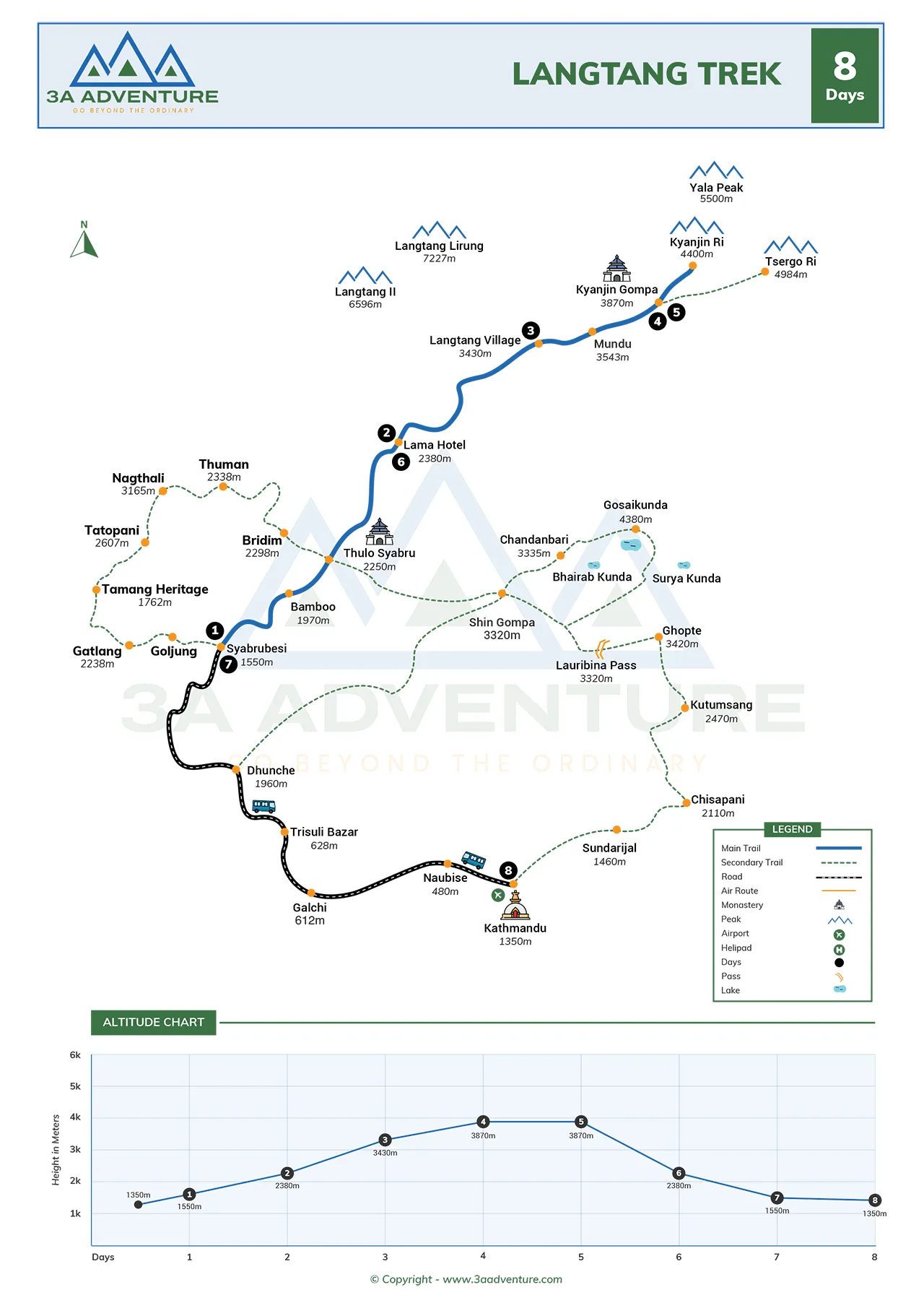
The highest point of the Langtang Trek is 4,773 meters above sea level, at Kyanjin Ri. If you decide to go further, we can reach 5450 meters above sea level at Tserko Ri, but this hike is meant for well-experienced trekkers only. So, a standard experience will get you to 4773 meters of maximum altitude, which is not very alarming. Even if you were to get altitude sickness, the effects of it are very trivial and non-lethal.
Preparation and Fitness
Preparing well for your trek is always a beneficial thing to do, even though you are someone who lives an active lifestyle. There is no disadvantage to getting some workout done for your Langtang Trek. 3A Adventure’s trek experts recommend light exercise such as swimming, jogging, walking, cycling, and others to engage your cardio muscles, and also boost stamina.
Food and Accommodation
The food options during the trekking days are pretty normal; you can get many types of Nepali dishes, some western options, and some local food. The trek package will provide 3 meals per day, but no drinks, except the ones the tea houses include with the meals. On the other side, all nightly accommodation expenses are covered by the package. You will share a room with one of the fellow trekkers in the group.
Transportation
The transportation required by the itinerary above will all be covered by the Langtang Trek package. This includes all the ground transportation we discussed in the detailed itinerary section.
Communication
Mobile networks will work in most villages in the region, but you will receive zero network in some places that are towered by hills or hidden by the valley. 3A Adventure’s guide will carry a satellite phone to make sure that he can actively communicate with the team and call for help when needed.
Permit
This trek required trekkers to have just the Langtang National Park Entry Permit. This permit fee will be covered by the package.
Visa
At your entrance to Kathmandu, the officials will have you obtain your tourist visa, which requires paying the visa fees. As per your desired number of days, you will have to pay your visa fees at the immigration section. This will not be covered by the Langtang trek package at all.
Travel Insurance
Travel insurance is a must for any trekking destination. Not only do they cover emergency rescue operation costs, but some packages also cover your medical costs. Just like your visa fees, the trek package will not cover your travel insurance fee.
Extra Expenses
The extra expenses of this trek are additional meals, visa fees, international flights, emergency medical care, travel insurance, extra nights, and more.
Private vs. group trek
If you want to experience this trek in a private circle of friends and family, you can choose our private trek option. Although it will cost you a bit more, the price is worth the experience. Meanwhile, a group trek is full of random trekkers, whom you get to befriend as you go along the trek.