Weather and Best Season
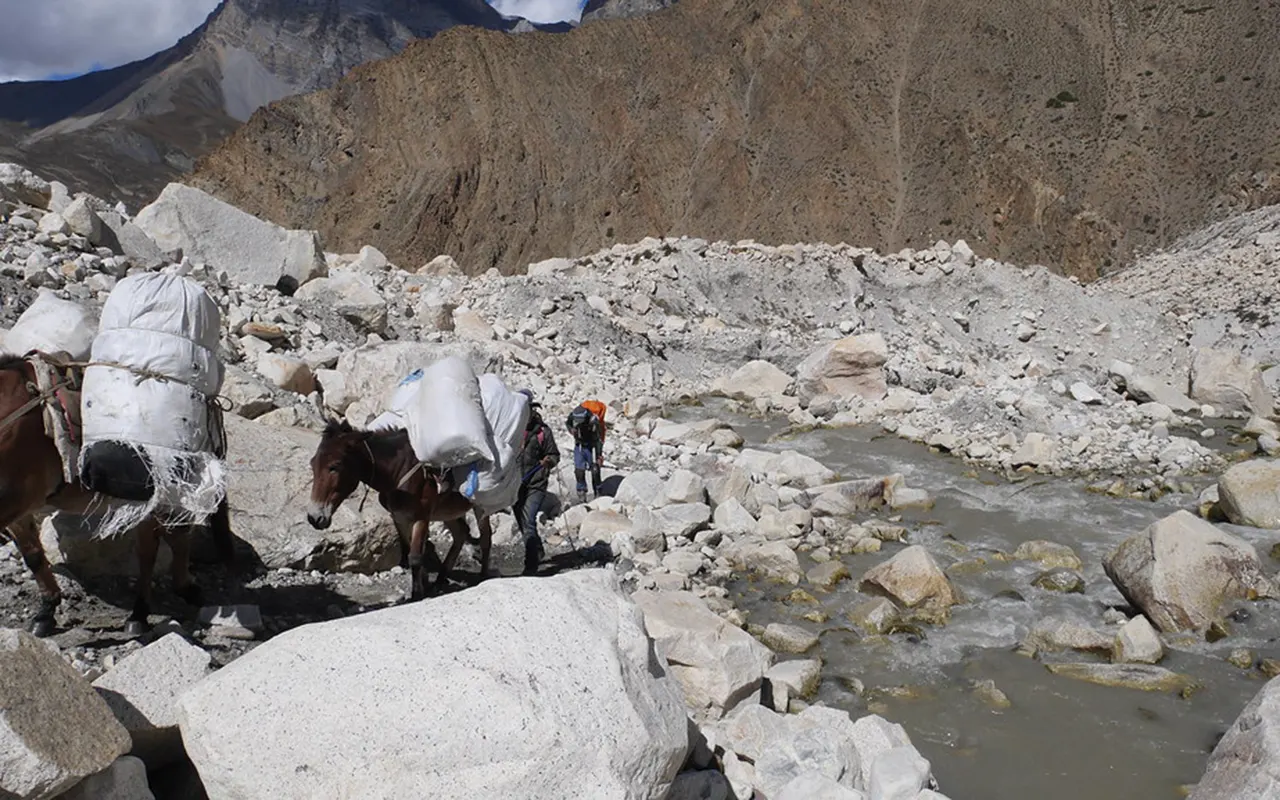
Best time of the Himlung Himal Expedition are in spring (March-May) and autumn (September-November). These seasons usually offer more consistent weather, clearer days, and better trekking and climbing conditions. Spring is warmer, with more daylight hours, whereas autumn is characterized by clear skies and great mountain views. The weather is unpredictable at high altitudes, particularly above (4,900 m / 16,076 ft), where cold temperatures, snow and heavy winds are the norm.
The climbers need to be ready for different weather conditions during the trip. The appropriate season can greatly enhance the comfort, safety, and success of the entire expedition. It is important to wear proper clothing and equipment no matter what season it is since the weather in the mountains can be unpredictable even during the most desirable climbing seasons.
Difficulty Level
The Himlung Himal Expedition is deemed a demanding high-altitude climbing mission, which requires physical fitness and willpower. The expedition entails days of hiking, acclimatization, and mountain climbing in a remote mountain setting. Participants will also be exposed to prolonged high altitudes that may experience low oxygen levels, thus complicating everyday activities. Some prior experience in trekking is beneficial, but good fitness and preparation can be more crucial.
This ascent involves stamina, patience, and adapting to the changing conditions of the mountains. Although the route is seen to be not as technical as some of the other Himalayan peaks, it is nonetheless very challenging because of the altitude and weather. The Himlung Himal Climbing preparation team must adhere to a systematic training program before their departure to have the most safety and the best opportunities of getting to the summit.
Altitude Sickness
The Himlung Himal Expedition is one of the expeditions where altitude sickness is a major consideration. The higher the climbers become, the lower the oxygen level in the air, and the more difficult it becomes to perform the normal functions in the body. The typical symptoms include headaches, fatigue, dizziness, nausea, and insomnia. The itinerary of the expedition is structured in such a way that it includes the acclimatization days so that the participants can become accustomed to the rising altitude. Before heading above Himlung Himal Base Camp (4,900 m / 16,076 ft), special attention is given to the issue of adaptation.
Hydration, regular pace, and obeying instructions provided by guides are also key to preventing the emergence of issues associated with high altitude. All climbers react differently to high altitudes, and thus it is important to closely watch the symptoms. One of the best methods to ensure a safe and successful mountain experience is proper acclimatization.
Preparation and Fitness
One of the secrets to a successful Himlung Himal Expedition is proper preparation. To increase power, stamina and heart capacity, members are supposed to start training a few months prior to departure. Hiking, running, cycling, swimming and climbing stairs can be included in the activities to enhance the overall conditioning. As the expedition involves many days of trekking and long days at high altitude, a good fitness base can help the expedition to be more comfortable and enjoyable. It is also important to be mentally prepared because weather conditions and physical difficulties might demand patience and determination.
It can also be a good idea to train with a weighted backpack and spend some time on more extended hikes. A regular training program will prepare the participants to be better adjusted to the requirements of the expedition and build confidence before venturing into the mountain setting. Proper preparation will help in the overall safety and performance a lot.
Food and Accommodation
During the Himlung Himal Expedition, the food and accommodation are organized as per the various stages of the expedition. In Kathmandu, the participants are housed in good hotels before and after the expedition. The trekking route has accommodation facilities in the local lodges where possible and tented camps are adopted in the steeper parts of the ascent. The food is cooked to supply the energy required in trekking and climbing activities.
Breakfast, lunch and dinner are provided based on the itinerary, and full-board meals can be offered during the climbing period. The menu usually contains a wide range of healthy foods that are aimed at maintaining physical performance at high altitude. There is a progression to more basic accommodation as the expedition enters more secluded mountainous regions, although all attempts are made to ensure the expedition is comfortable and conducive to the journey.
Transportation
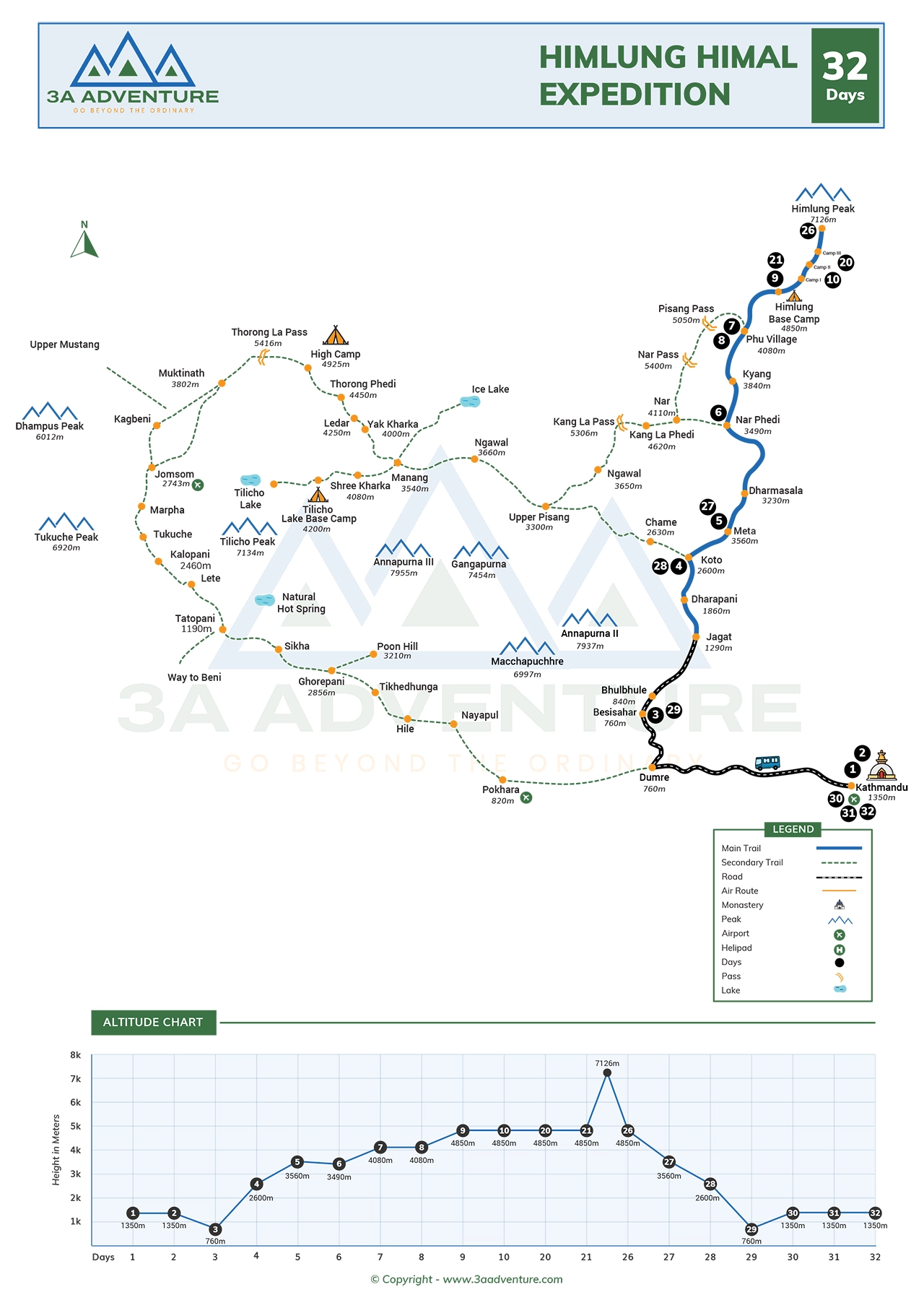
The trip starts with ground transport from Kathmandu to Besisahar and proceeds to Koto, where the walking part begins. Upon completion of the expedition, the same path is used to go back to Kathmandu. Every transportation detail is well synchronized to facilitate participants and expedition logistics. Effective travel planning also contributes to keeping the itinerary moving smoothly and enables the climbers to concentrate on the adventure they are going to experience.
The transport process is organised by 3A Adventure, which is involved in the organisation of the entire expedition and it assists in making sure that all the necessary travelling arrangements are taken care of on a professional level. A safe and well-managed expedition experience in a remote part of the Himalayas is an essential component that relies on proper transportation support.
Communication
The further the expedition goes into remote areas of the mountains, the fewer the communication facilities. In certain low regions, mobile network coverage might be good, but as you climb higher, the signal might become quite weak. Internet connection might also be slow and may not be present during the whole trip. Due to the distance of the path, the climbers will be ready for some communication discontinuities. It is always good to make family and friends aware in advance that contact may not always be regular.
Whenever necessary, expedition staff have important communication systems that can be used to communicate both operations and safety. Even though modern technology has enhanced connectivity in most mountain areas, communication in the Himlung Himal Expedition is to be regarded as inadequate when compared with the urban areas. Realistic expectations and flexibility will aid participants to be more prepared for the remote expedition environment.
Permit
There are a number of permits to join the Himlung Himal Expedition. These papers enable the climbers to access the area and participate in mountaineering as restricted by the law. The authorities issue the necessary permits that include the Himlung Himal Climbing Permit, Nar Phu Restricted Area Permit (RAP), and Annapurna Conservation Area Permit (ACAP) and they have to be obtained before the commencement of the climbing period. The permit regulations and fees can vary over time, and therefore it is better to check the requirements prior to travelling.
To avoid unnecessary complications, the majority of the participants prefer the permit process to be handled by their expedition operator. 3A Adventure will aid in the preparation and processing of the necessary documentation of the expedition, and help to ensure that all permits are in place. A key component of expedition planning is to have the right permits, and it leads to responsible tourism, conservation, and adherence to the mountaineering regulations of Nepal.
Visa
Any foreigner participating in the Himlung Himal Expedition should acquire a valid Nepal visa either before the trip or upon arrival, subject to nationality and prevailing immigration laws. The participants must make sure that the passport is valid enough in terms of the number of years it is required to be and that it has enough blank pages to place the entry and exit stamps. Depending on nationality, visa requirements can change and are usually different than those a few years ago, so it is always worth checking the most recent changes.
The visa does not come with trekking and climbing permits and has to be obtained independently. Any visa charges and paperwork are the responsibility of travelers. The visa process can be done beforehand to make the arrival process smooth and enable the participants to concentrate on the preparations of the expedition. Just planning before traveling can help to prevent unwarranted delays and administrative problems.
Travel Insurance
All those participants taking part in the Himlung Himal Expedition are strongly advised to have comprehensive travel insurance. High-altitude trekking and mountaineering activities, emergency medical treatment and evacuation services should be covered by the policy. The expedition is going to heights that are much higher (4,900 m / 16,076 ft) than the policy specifies, and it would be important to ensure that the policy explicitly covers the maximum height of the climb. Trip interruptions, delayed flights, lost luggage and other unforeseen events can also be covered by insurance.
Before people buy coverage, they should read all the conditions and terms of the policies carefully. It is also advisable to carry with them evidence of insurance during the expedition. Appropriate insurance can provide financial security and serenity, enabling the climbers to concentrate on the experience and be confident that they are ready to deal with any unforeseen and unplanned situations.
Extra Expenses
Despite the numerous services that were a part of the expedition package, the participants should have the individual cost of the trip. Typical additional charges can be visa fees, travel insurance, personal climbing gear, snacks, drinks, laundry services, internet, battery charging, and hot showers (where available). Guide, support, and porter tips are also usually thought of as personal expenses. Other expenses will be incurred because of weather delays, change of itinerary, or personal preference in the expedition. One should bring enough money to take care of these costs comfortably.
Budgeting before the trip gives the participants a chance to avoid inconvenience during the trip and avoid an unpleasant travel experience. Knowledge of possible extra costs enables the climbers to plan accordingly and concentrate on the adventure with no hidden financial costs.
Private and Group Trek
The Himlung Himal Expedition may be created in the form of a personal expedition or a group departure. A personal expedition is more flexible and offers the participants the opportunity to have their friends, family, or climbing partners join. Group departures unite various backgrounds of climbers with one goal and itinerary. Both alternatives adhere to the necessary safety protocols and have professional assistance along the way. The option that best suits their schedule, their budget, and their personal preferences can be adopted by climbers who are participating in Himlung Himal Climbing.
Before the summit stage, all teams take time to acclimatize around Himlung Himal Base Camp at (4,900 m / 16,076 ft). 3A Adventure has individual and group departures, which gives participants an opportunity to choose the experience they want that most closely aligns with their objectives. Both alternatives offer a satisfying Himalayan adventure, with adequate planning and assistance.