Best season and weather
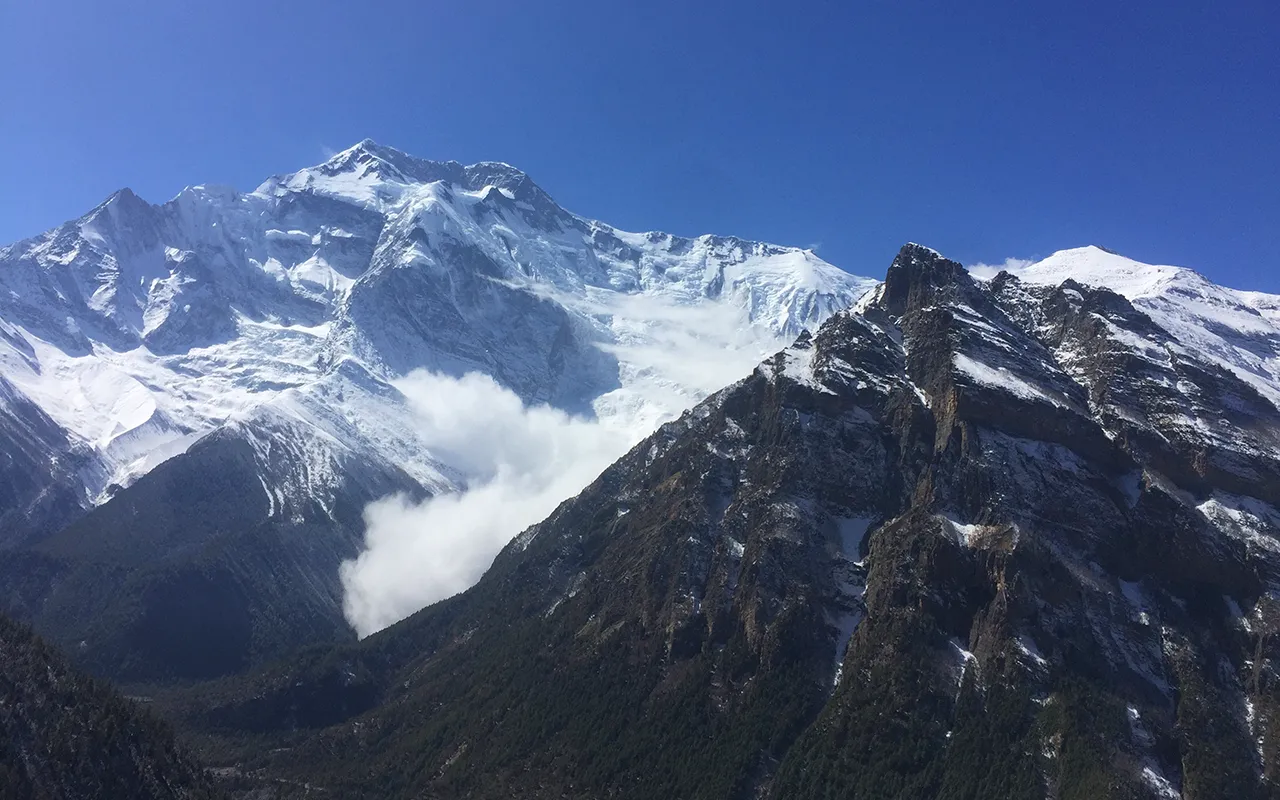
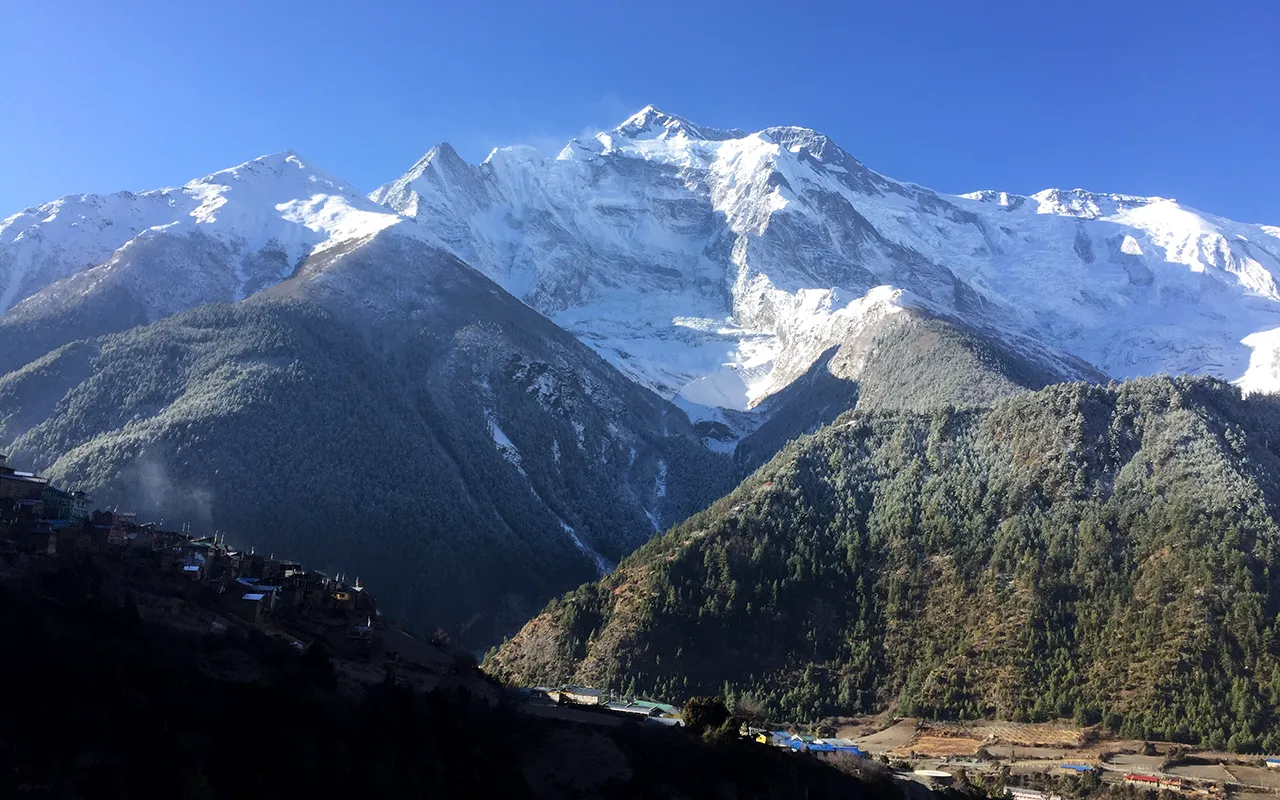
The seasons of fall, summer, and spring are the best times to trek the Annapurna Circuit. In the lower hills area, summer may feel a little too hot, but it’s also the finest time to visit the area. The region’s brightly lit, lush landscape in the summer, along with the distant snowy peaks, creates a sight you won’t soon forget. Furthermore, spring and autumn are also excellent times of year; however, they are typically picked because of their “less rainfall” characteristics. Overall, summer is the best season to trek the Annapurna Circuit, next to spring and fall.
Difficulty
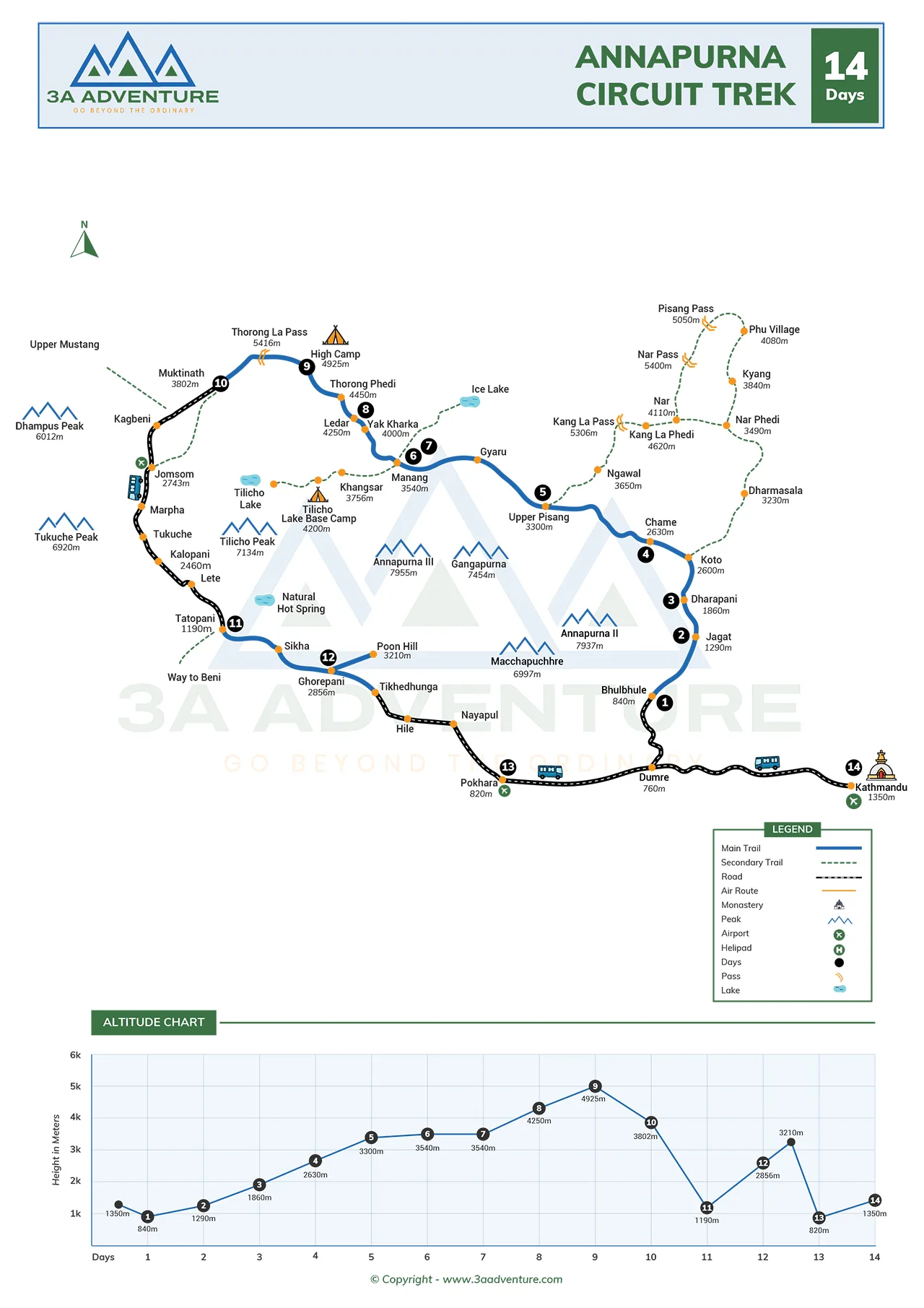
The Annapurna Circuit Trek’s challenging terrain, rough, inclining pathways, and cold air all make up for its high elevation (it reaches a maximum of 5416 m at Thorong La Pass). Because there is less oxygen in the air at high altitudes, people experience shortness of breath to compensate for the oxygen shortage. Since we will be walking on dirt grounds rather than well-paved roads, some of the incline routes are really challenging. Our Annapurna guides give this hike an overall rating of 7.5 out of 10.
Altitude Sickness
Since we seldom spend any time at elevations over 5000 meters, which is where severe altitude sickness turns up, you are unlikely to catch it on our journey. We won’t be spending much time at the Thorong La Pass, which is the highest point of the Annapurna Circuit Trek at an incredible 5416 meters above sea level. When someone spends a whole night at high elevation without being properly acclimated, altitude sickness usually results. We have incorporated an acclimatization day into our Annapurna Circuit Trek itinerary for just this purpose.
Preparation and Fitness
It is not at all simple to prepare for the Annapurna Circuit Trek. It is crucial that you adequately prepare yourself, both mentally and physically. We advise taking a 21-day vacation if you choose to undertake this journey. To account for unanticipated circumstances, you should leave enough room before and after the journey. You can take the additional days to recuperate completely if all goes according to plan.
Cardio exercises and lengthy walks are recommended by our experienced guides as physical preparation. Going on short treks up hills is the finest thing to do while you’re getting ready. It’s perfectly OK to only exercise for endurance and cardio if you don’t live near hills.
Food and Accommodation
A variety of traditional highland foods that are unique to the Annapurna area will be sampled on our Annapurna Circuit Short Trek. The Gurung, Magar, and Thakali tribes—all of whom have unique dietary habits—are the primary inhabitants of the Annapurna region’s highlands. Throughout the Annapurna Circuit Trek, the lodging is rather cozy and offers just the most basic conveniences. There are a few more conveniences available; however, some may be just showy.
Even if supplies are few in hardly accessible communities, the facilities in the Annapurna highlands are generally regarded positively since they make every effort to ensure that trekkers are comfortable.
Transportation
At the start of the Annapurna Circuit Trek, we will have you get on a drive from Kathmandu to Bhulbhule. On day 11, you will take a ride from Muktinath to Jomson. Then, you will get on a ride to Pokhara from Tikhedhunga at the end of the trek, followed by a bus ride to Kathmandu. All of these transport expenses are covered by the trek package.
Communication
The Annapurna area is made up of both isolated communities that can only be reached on foot and well-maintained villages. Even the most isolated highland communities now have some level of network connectivity, which is excellent since it means you will be able to communicate during the Annapurna Circuit Trek. The majority of the hotels and restaurants along the trekking route offer WiFi, while some may charge an additional fee.
Permit
An Annapurna Conservation Area (ACA) permit and a Trekker’s Information Management System (TIMS) card are required for this Annapurna Circuit Trek. The ACAP office in Pokhara charges NRs. 3000 for the ACA permit, whereas the Kathmandu Nepal Tourism Board in Kathmandu charges NRs. 2000 for a TIMS card. These permits may be obtained with the assistance of our guide, and the trek package will cover the fees.
Visa
Visa fees are considered personal expenses, and so they are not a part of the Annapurna Circuit Trek package. After you arrive at the Tribhuvan International Airport, you need to pay your visa fees to obtain a tourist visa.
Travel Insurance
Travel insurance fees are also considered expenses of a personal nature. Every trekker in the group must have insurance to join our Annapurna Circuit Trek.
Extra Expenses
Things like additional meals, international flights, extra nights, emergency rescue services, visa fees, travel insurance fees, hot showers, WiFi, tips for the crew members, and more are not a part of the trek package.
Private vs. group trek
Private treks are the best option for those who do not prefer to share the journey with strangers. You can go on this amazing Annapurna Circuit Trek with only your loved ones. On the other side, a standard group trek will have a bunch of individuals whom you are likely not to know.