Based on 27 reviews
Trip Duration
13 DaysTrip Difficulty
EasyMax Altitude:
5,630m. / 18,471ft.Group Size
2-20 PeopleBest Season
Oct-Dec & Mar-MayMeals
Breakfast, Lunch and DinnerAccommodation
Lodge, HotelTransportation
Private VehicleKailash Manasarovar Yatra is one of the most revered spiritual journeys in the world. Each year thousands of people come to this sacred area to enjoy its spiritual significance, its quiet atmosphere and the beautiful scenery of the mountains. You start your trip in the rich cultural city of Kathmandu and then enter into the remote region of Tibet with ancient monasteries, high passes and the sacred Lake Manasarovar providing a meaningful and memorable trip. This pilgrimage is unforgettable and will stay with each person for a lifetime, no matter for what purpose they go.
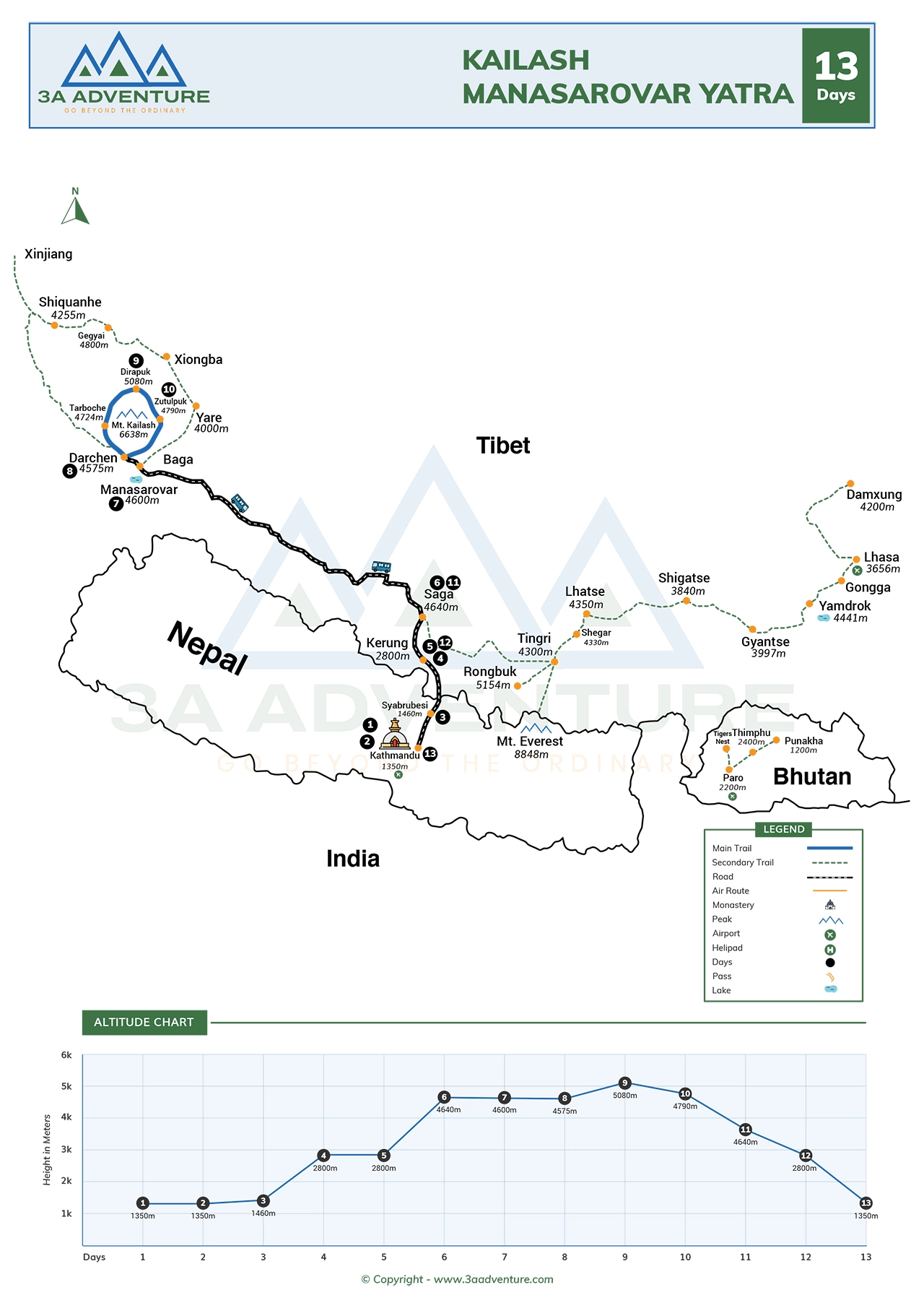
This is a well organized Kailash Manasarovar Yatra Nepal, which starts in Kathmandu and then crosses the Nepal China border and then travels through the vast Tibetan Plateau. On the way you will visit beautiful places like Kerung, Saga, Lake Manasarovar and Darchen and then begin your sacred Kailash kora. This pilgrimage is a blend of relaxation and a rewarding journey that will allow you to enjoy the stunning mountain scenery while you take in a pilgrimage path used by visitors all throughout history.
The best part of the trip is the three days of Kailash Kora, the ritual walk around Mt Kailash. Pilgrims hope to achieve spiritual blessings and peace of mind by taking this circuit. The journey will take you through the well-known Dolma La Pass (5,630 m / 18,471 ft) during the trek. The serenity of the waters of the lake Manasarovar, where many pilgrimages are made, are also visited. They are of great religious significance for the followers of Hinduism, Buddhism, Jainism and the Bon.
A trip to Mount Kailash from Nepal is best for healthy individuals willing to travel to high altitudes. The trek is arduous but not physically demanding; most of the time is spent by road. The trip also allows for a gradual acclimatization period, helping your body adapt to the thin air and making the trip safer and more enjoyable.
From transportation to permits, from accommodation to guiding you through the entire journey, every aspect of 3A Adventure’s pilgrimage is meticulously planned and professionally executed. They have built up a long history of staffing and ensuring that you have a safe and comfortable journey and that it is well managed so that you can concentrate on the spiritual and personal significance of this extraordinary journey.
Welcome to Nepal. Once you reach Tribhuvan International Airport, our representative will greet you outside the airport and welcome you to the journey of Kailash Mansarovar Yatra. After immigration formalities and picking up your bags, we are able to help you transfer to the hotel. You can purchase a local SIM card at the airport before you depart if you need to.
It will take around 20 minutes to reach your hotel from the airport, depending on traffic. Upon arriving, you will have the opportunity to rest in your room and recuperate from your trip. This free time provides an opportunity to refresh and get ready for the exciting days to come.
A briefing will take place at the hotel later about the short trip. At the meeting, our team will share with you the journey, a summary of information you will need while traveling and answer your questions. The remainder of the evening is yours for the taking! One may go around the vicinity or go to a local restaurant for dinner before spending the night in Kathmandu at an elevation of 1,320 m / 4,331 ft.
Activity: Airport arrival, hotel transfer and trip briefing, 20 minutes
Max. Altitude: 1,320m/4,331ft. (Kathmandu)
Accommodation: Hotel
We will now set off on a full-day sightseeing tour of Kathmandu Valley with our experienced guide after breakfast. This day is an introduction to some of the most important religious and cultural monuments in Nepal before you start your trek towards Mount Kailash.
We first visit the holy Pashupatinath Temple and then the Gujeshwari Temple. Next, we’ll go to Budhanilkantha, which is also called the Sleeping Vishnu and where a huge stone image of Lord Vishnu is lying peacefully in a pond. Later, we head to the renowned Boudhanath Stupa, one of the important Buddhist pilgrimage sites and a UNESCO World Heritage Site.
Upon completion of the sightseeing tour, we will be back at the hotel. The rest of the time is yours to use for your last preparations for the pilgrimage. This is a place where you can pack up your bags, purchase any last-minute items or just relax prior to the trip up into the mountains. Overnight stay in Kathmandu at (1,320 m / 4,331 ft).
Activity: Cultural sightseeing and trip preparation, 4 to 5 hours
Max. Altitude: 1,320m/4,331ft. (Kathmandu)
Meal: Breakfast
Accommodation: Hotel
After an early morning departure from Kathmandu, we set off on an exciting journey to northern Nepal. The road traverses amazing hills, rivers, terraced farms and traditional villages. The scenery is more tranquil and scenic as we ascend further into the mountain region.
En route, in good weather, you can get a view of the Langtang range and also see the distant mountains such as Ganesh Himal, Annapurna and Manaslu. The drive is through the winding mountain roads and is an excellent introduction to the beauty of Nepal’s natural landscape before arriving at the border region.
By the end of the afternoon, we reach either Syabrubesi (1,450 m / 4,757 ft) or Timure (1,900 m / 6,234 ft), depending on the journey and the situation at the border. Accommodations will be made in a local guesthouse, a dinner will be had and we will be getting our rest for the night before crossing into Tibet the next day.
Activity: Scenic mountain drive, 7 to 8 hours
Max. Altitude: 1,900m/6,234ft. (Timure)
Meal: Breakfast, Lunch, Dinner
Accommodation: Hotel
Following breakfast, we will head north to the border with Nepal and China. At immigration points, officials will check our documents and bags before crossing. After the formalities on the Nepal side, we will cross the border and meet with our Tibetan guide, who will accompany us on the journey in Tibet.
Once they have entered China, the immigration authorities will check our group visas before letting us through. After completion of all procedures, we will set off on our journey into the beautiful Tibetan scenery to either Kerung or Nyalam with the vehicle as per the approved route by the Chinese authorities.
On the Kerung route, we will stay at Kerung (2,800 m / 9,186 ft). From Nyalam, we will head on to Nyalam (3,750 m / 12,303 ft) via the Nyalam route. On our arrival, we will check in to the hotel and have the day to rest. You won’t be able to go any deeper into Tibet without the body having to get used to the higher altitude, so a bit of rest today helps with that.
Activity: Border crossing and drive to Kerung or Nyalam
Max. Altitude: 3,750m/12,303ft. (Nyalam)
Meal: Breakfast, Lunch, Dinner
Accommodation: Hotel
This is a significant Adaptation Day. We will not proceed to a more advanced area of Tibet, but remain in Kerung or Nyalam to acclimatise to the higher altitude. A lot of rest will decrease the likelihood of altitude problems occurring later in the journey. Following breakfast, you have the opportunity to unwind inside and outside the hotel and enjoy the tranquility.
We will then proceed to visit the Pakpa monastery in the middle of Kerung later in the day. This is an historic monastery built almost 1000 years ago by King Songtsen Gampo to remember his Nepali Queen Princess Bhrikuti as per the traditional Nepali style of architecture. It is a tranquil location of cultural and religious significance.
Once you have visited the monastery, you can take a stroll around the town. Small shops and restaurants are available to sample Nepali, Tibetan, Chinese or Indian cuisine. The advice today is to drink plenty of water and avoid exertion. Overnight accommodation in Kerung (2,900 m / 9,514 ft) or nearby, depending on the program.
Activity: Acclimatization and monastery visit
Max. Altitude: 2,900m/9,514ft. (Kerung )
Meal: Breakfast, Lunch, Dinner
Accommodation: Hotel
Following breakfast, the journey will be one of the longest and most picturesque that we will be faced with during the trip. After leaving Kerung, we cross the large Tibetan Plateau, with open spaces before us. The road goes through sandy plains, rocky hills and far away grasslands where local nomads tend to large flocks of yaks and sheep.
Along the way, you’ll encounter the special beauty of Tibet. The mountains are blanketed in snow, the skies are clear and the valleys are quiet all along the drive, making memorable vistas. We will also cross over the Brahmaputra River before arriving in the town of Saga.
We pass the highest point of the day (5,050 m / 16,568 ft) at Labug La Pass on the way. Often the day will be spent above 4500 m / 14764 ft), so it is important to stay hydrated and take it easy when stopping along the way. In the evening, we stop in the town of Saga and go into our hotel for the night.
Activity: Scenic drive across the Tibetan Plateau, 6 hours
Max. Altitude: 5,050m/16,568ft. ()
Meal: Breakfast, Lunch, Dinner
Accommodation: Hotel
Early morning, after breakfast, we will depart from Saga and head towards the holy lake Mansarovar. This is one of the days that is most awaited in pilgrimage; here we get an opportunity to get near to Lake Mansarovar and Mount Kailash for the first time.
Beautiful mountain views can be seen as we cross the high plateau. We can encounter some small Tibetan villages, monasteries, hot springs, open grasslands and wild animals along the way. The views are even grander on clear days.
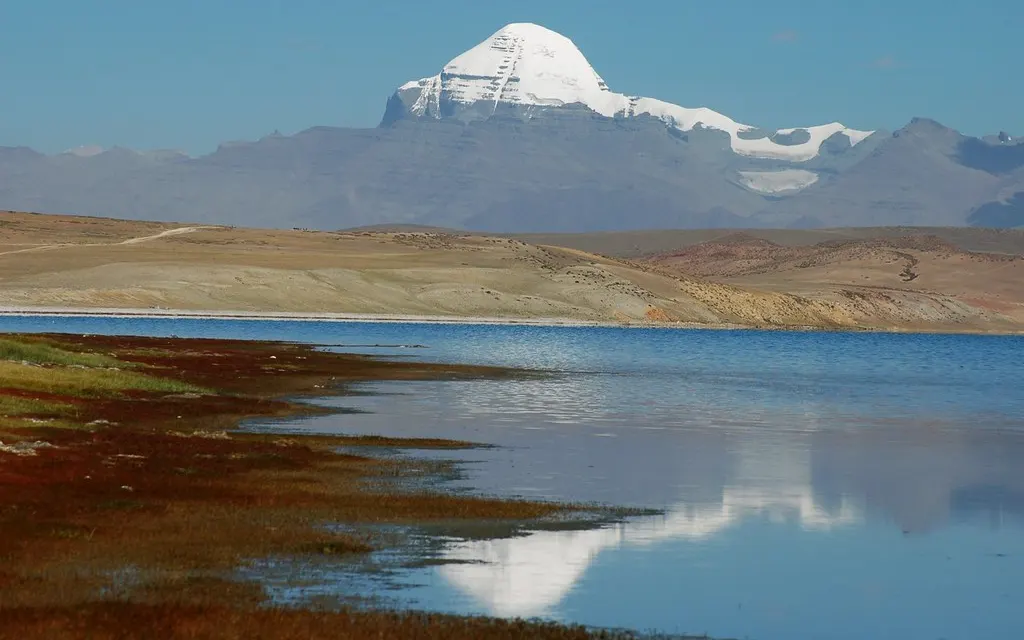
At (4,505 m / 14,780 ft), we arrive at the peaceful shores of Lake Mansarovar in the late afternoon. The lake is also famous for its clear and blue water and its deep spiritual significance in Hinduism and Buddhism. We will also have our first sight of the holy Mt Kailash and the Gurla Mandhata peak under favorable weather conditions. Tonight we spend the night in a simple guesthouse near the lake and are prepped up for spiritual activities the next day.
Activity: Drive to Lake Mansarovar, 7 to 8 hours
Max. Altitude: 4,505m/14,780ft. (Lake Mansarovar)
Meal: Breakfast, Lunch, Dinner
Accommodation: Guest House
This morning starts with peace near the holy Lake Mansarovar. Many pilgrims will draw water from the lake and participate in the purification bath, a traditional practice. We will also join in religious functions like puja, havan and prayers for the good health of our family and ancestors. This is a significant and memorable section of the pilgrimage in a peaceful atmosphere.
Once after morning rituals, we will drive around a portion of Lake Mansarovar and enjoy the beautiful mountain scenery. We can also pay a visit to Chiu Gompa, an abbey located on a hillside above the lake, if time permits.
In the afternoon, you continue to Darchen (4660 m / 15289 ft.). During pilgrimage season, Darchen is a busy place and is the point of departure for the Kailash Kora trek. Once you’ve checked in at the hotel, you’ll be able to get some rest and make preparations for the trek that starts the next day.
Activity: Puja at Lake Mansarovar and drive to Darchen, 1 hour
Max. Altitude: 4,660m/15,289ft. (Darchen)
Meal: Breakfast, Lunch, Dinner
Accommodation: Hotel
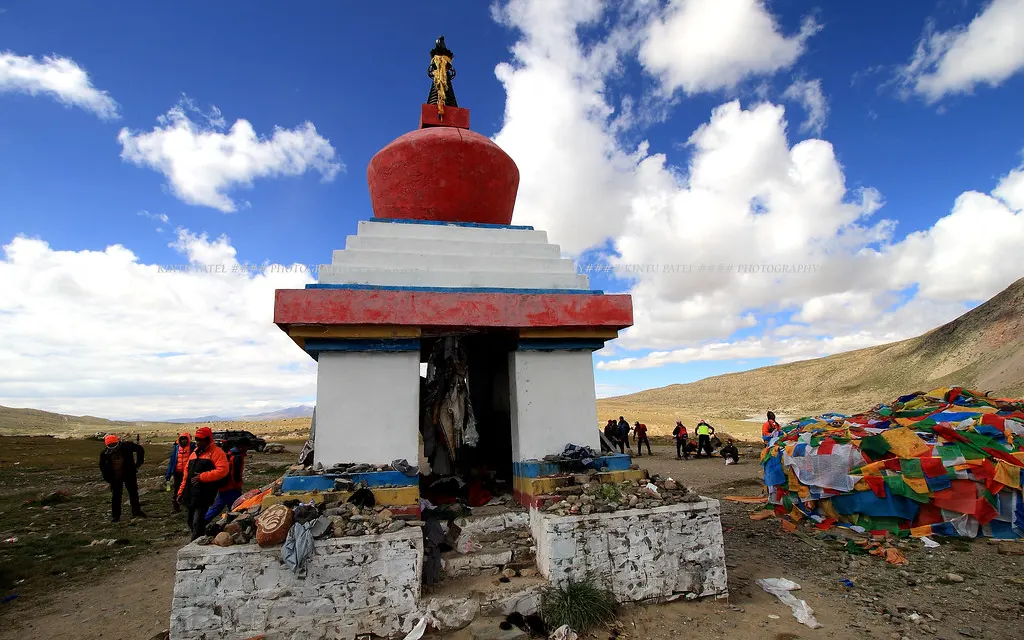
The auspicious Kailash Kora starts today. We will drop off the main luggage at the hotel during breakfast and take only what is necessary for the rest of the trip in Darchen for the next three days. It only takes a short drive to Tarboche, the traditional starting point of the pilgrimage. It is a well-known place for its colorful prayer flags and the annual Saga Dawa festival.
We start our trek from Tarboche towards Dirapuk. The path is easy for much of the day and passes through a scenic valley with some rocky outcrops, waterfalls and streams. Today’s walk is not only beautiful but also sacred, as the north face of the holy Mount Kailash begins to emerge as we pass by.
Late afternoon, we reach the simple guesthouse in Dirapuk (4,900 m / 16,076 ft). From here, you can have one of the best and closest perspectives of Mount Kailash. We then get some rest time after dinner to prepare for the difficult hike across Dolma La Pass tomorrow.
Activity: Drive to Tarboche and trek to Dirapuk, 5 to 6 hours trek
Max. Altitude: 4,900m/16,076ft. (Dirapuk)
Meal: Breakfast, Lunch, Dinner
Accommodation: Hotel
The most challenging and fulfilling day of the Kailash Kora is today. Our hike starts early in the morning, steadily climbing up to the renowned Dolma La Pass. It’s a very high elevation and the trail is steep, so we will have to take lots of breaks.
At (5,630 m / 18,471 ft) at Dolma La Pass, we can admire the colorful prayer flags and the spiritual ambiance of this sacred place. Here, many pilgrims halt to pray and meditate before starting downhill. We then descend further and arrive at Gauri Kunda, a sacred lake which is of special religious significance for the Hindu pilgrims.
Rocky valleys follow until it reaches Zutul Phuk (4,750 m / 15,584 ft). This is the region of the cave of the Tibetan saint Milarepa. Overnight stay at a simple guest house and a much-needed rest after the longest and toughest day of trekking.
Activity: Trek via Dolma La Pass to Zutul Phuk, 8 to 9 hours
Max. Altitude: 5,630m/18,471ft. (Dolma La Pass)
Meal: Breakfast, Lunch, Dinner
Accommodation: Hotel
Following breakfast, we start the last leg of Kailash Kora. Today’s walk will be quite easy because the path is guided along the river and through the narrow valley, which has plenty of interesting colors in the rocks and a quiet river. This is a gentle stroll and an opportunity to ponder the spiritual journey you have taken.
We will return to Darchen in about two to three hours after walking and our vehicle will be waiting for us. Our stowed luggage will be picked up before our long journey back to Saga. On the way, we will once again see the beautiful Lake Mansarovar and possibly a final glimpse of Chiu Gompa (depending on the weather).
By evening, we reach Saga (4,640 m / 15,223 ft) and check into our hotel. After the successful completion of the sacred Kailash Kora, it is a pleasant chance to relax tonight.
Activity: Complete Kailash Kora and drive to Saga, 2 to 3 hours trek and 7 to 8 hours drive
Max. Altitude: 4,640m/15,223ft. (Saga)
Meal: Breakfast, Lunch, Dinner
Accommodation: Hotel
We get up after breakfast and start our journey back to Kerung. The drive takes us through the same beautiful countryside, far-out mountains and quiet valleys as our first drive, allowing us another opportunity to experience the beauty of this unique region.
In the process, we pass through small Tibetan settlements and open grasslands where you can often see yaks and sheep grazing. Short stops will be made along the way for refreshments and photographs. Many visitors are becoming more comfortable while descending due to the lower elevation.
In the afternoon, we reach Kerung (2,800 m / 9,186 ft) and stay at the hotel. The remainder of the day is yours to enjoy, relax, stroll around town or have a warm meal, all before settling in for the night for another day of crossing back into Nepal.
Activity: Drive from Saga to Kerung, Full day drive
Max. Altitude: 2,800m/9,186ft. (Kerung)
Meal: Breakfast, Lunch, Dinner
Accommodation: Hotel
We depart from Kerung following breakfast en route towards the Nepal-China border. We go through immigration and customs on the Chinese side of the border and cross into Nepal on arrival. Then we complete all the paperwork with the Nepali officials and we are back on our journey.
The process of passing the border may take some time, depending upon the number of travelers and official procedures. After completing all the work, we resume our scenic journey back on Nepal’s hills and river valleys. There are opportunities to stop for food & brief rest breaks along the way.
We arrive in Kathmandu in the evening and are taken to our hotel. The successful completion of the Kailash Mansarovar Yatra is marked by coming back to the city. Relax, enjoy shopping for souvenirs or enjoy the celebration of this unforgettable pilgrimage before your trip to the next destination. Overnight stay in Kathmandu (1,400 m / 4,593 ft).
Activity: Border crossing and drive to Kathmandu, 8 to 9 hours
Max. Altitude: 2,800m/9,186ft. (Kerung)
Meal: Breakfast, Lunch, Dinner
Accommodation: Hotel
Note:
If you have a private group and prefer a personalized experience, we can organize a custom trip tailored to your requirements and group size, running it any day you choose.
Transportation
Food and Accommodation
Guide and Support Staff
Permit and Expenses
Medical and Gear
Others
International Flights and Visa
Food and Accommodation
Travel and medical insurance.
Other Expenses
Late spring and autumn are considered to be the best time for the Kailash Manasarovar Yatra, as the weather is more predictable during this season. The most common time for departures is from May through September, with May, June and September having comfortable weather and travel conditions. In these months, mountain vistas are frequently best, the journeys much more pleasant and the pilgrimage worthwhile.
High temperatures in Tibet turn much cooler as the trip goes to higher altitudes. Saga, Darchen and Dolma La Pass are very cold places due to their high altitude throughout the year. In summer, mornings and evenings are often very cold, particularly in the high areas (4,500 m / 14,764 ft). Warm clothes will be needed all the way.
So, for those who opt for one of the tour packages of Mount Kailash in Nepal, be ready for a sudden change of weather. In Nepal, you can find rain during monsoon season; however, Tibet is drier. Wearing waterproof clothing, wearing warm layers, wearing gloves and a good windproof jacket will help you be comfortable all the way through the pilgrimage.
Due to the rigorous trekking and high altitude of Mount Kailash, the long distance of the journey, the Kailash Manasarovar Yatra is regarded as a tough trek. The Kailash Kora is self-explanatory, most of the way being taken by vehicle, but there is a need for physical endurance and willpower to complete the Kora.
This hike has uneven mountain terrain as well as steep ascents. The highest point is the pass of Dolma La (5,630 m / 18,471 ft); the crossing is difficult due to the thin air. Even advanced hikers may have to hike slowly and stop frequently.
Opting for a package from Kailash Manasarovar Yatra Nepal with a well-experienced operator will make the trip more comfortable. The schedule at 3A Adventure is designed to give pilgrims sufficient acclimatization days and a well-planned travel schedule to allow for adjustment prior to the highest elevations. This once-in-a-lifetime pilgrimage is greatly influenced by good preparation and a positive attitude.
One of the most challenging parts of Kailash Manasarovar Yatra is to move above 4,000 m / 13,123 ft, where you experience Altitude sickness. The higher the altitude, the less oxygen the air will contain and the harder the body will find it to adapt.
Symptoms include headache, fatigue, dizziness, nausea, loss of appetite and insomnia. The symptoms typically resolve with rest, slow movement and increased fluid intake. Failure to recognize the signs could result in more severe health issues, so it is crucial to advise your guide when you are not feeling well.
Every tour to Mount Kailash from Nepal is well planned and has acclimatisation days. Don’t drink, don’t overeat, drink plenty of fluids and walk at your own pace all the way. During the pilgrimage, your guide will keep an eye on you and advise you of the most appropriate actions to take if you experience symptoms related to the altitude.
Thoroughly preparing for the Kailash Manasarovar Yatra makes this journey safer and more enjoyable. No technical climbing skills are required, but participants must be physically fit enough to walk several hours over a rough mountain trail with a small day-pack.
Stamina is improved with regular walking, hiking, jogging, cycling or stair climbing a couple of weeks before departure. Walking around Mount Kailash will be a lot easier if you strengthen your legs and develop your cardiovascular fitness. In case of any existing medical conditions, please get an opinion from the treating doctor before participating in the pilgrimage.
A Kailash Manasarovar Yatra Nepal package with 3A Adventure includes information on what clothes, equipment and other personal items to take. Bring warm layers, comfortable hiking boots, sunglasses, sunscreen, medication and water bottles. With careful preparation, you can concentrate more on the spiritual experience than on potential travel issues that can be avoided.
Meals are simple, fresh and prepared during the Kailash Manasarovar Yatra to keep the travellers fresh for the long days of hiking. Bread, porridge, eggs, tea or coffee are typically served for breakfast, while rice, noodles, vegetables, soup, lentils and seasonal dishes are served for lunch and dinner. In some hotels or restaurants, Chinese, Tibetan or Indian dishes may be available as well.
A change in accommodation is made on the trip. You will be accommodated in a comfortable hotel in Kathmandu with state-of-the-art amenities. Hotels can be found at Kerung, Saga and Darchen in Tibet and Dirapuk and Zutul Phuk are much simpler, as you would expect, due to the remote mountain locations.
Holding flexibility with regard to accommodation is essential if you’re planning a Mount Kailash tour from Nepal. Higher elevation accommodations may not always include hot showers, heat and private bathrooms. Packing snacks, energy bars and a reusable water bottle will make the trip more enjoyable, particularly on the days of trekking.
The arrangements for transporting tourists during the Kailash Manasarovar Yatra are made with utmost care to ensure the convenience of the tourists. This trip starts with the private transfer service in Nepal and then heads towards the Nepal-China border. Once immigration processing is complete, tourists are transported by comfortable tourist vehicles on the Tibetan Plateau.
The majority of the pilgrimage is done in stages by road. The major places are linked to each other by long drives like Kerung, Saga, Lake Mansarovar and Darchen. Roads in Tibet are mostly wide and well-maintained, but the distances between places are long. Travelers can rest, soak up the views and acclimate themselves to the higher altitude with regular rest breaks throughout the trip.
With 3A Adventure Nepal, all the major transportation arrangements are arranged in advance when you book a Kailash Manasarovar Yatra Nepal package with 3A. In the Kailash Kora, one has to travel on foot because there is no opportunity for vehicles to access the trek route around the sacred Kailash mountain.
Communication is available throughout most of the Kailash Manasarovar Yatra, but it becomes less available in remote areas of Tibet. In Kathmandu and larger Tibetan towns, like Kerung and Saga, mobile networks do function. But the signal could be stronger or weaker in other areas.
You can find Internet access at many hotels, but the Internet connection may not be as fast as you are accustomed to. Internet and mobile coverage are weak or not available in higher areas like Dirapuk and Zutul Phuk. It’s wise to warn family before heading into these far-out areas of the trip.
When booking a tour to Mount Kailash from Nepal, be aware that there are some websites and social media platforms that are unavailable in China. Make the necessary arrangements before crossing the border if you require access to certain online services. It is also advised to bring a power bank for charging, as it may not be convenient to charge on trekking days.
There are multiple permits that need to be obtained before embarking on the Kailash Manasarovar Yatra. As the pilgrimage journey is to be made in Nepal as well as in the Tibet Autonomous Region of China, all the formalities of the travel should be fulfilled before the journey is undertaken. These permits are issued by an authorised travel company and are not available to individual travellers.
Typically, the documents needed are the Tibet Travel Permit, Chinese Group Visa, Alien’s Travel Permit (if applicable) and other permits from local authorities. They will be inspected at various immigration posts on the way and you will need to have your passport with you at all times.
3A Adventure takes care of the permit application process for you when you hire our Kailash Manasarovar Yatra Nepal tour package. All that’s required is to submit the necessary documents on time. This allows you to concentrate on preparing for the pilgrimage with the travel arrangements taken care of professionally.
To participate in the Kailash Manasarovar Yatra, you must have a valid passport and a visa. Your passport should include at least six months’ validity from the date of your travel and at least 12 blank pages for visa stamps. Ensure that no personal particulars that are recorded on the passport are wrong before leaving to prevent delays in the application process.
Pilgrims must obtain a Chinese Group Visa instead of the normal Chinese tourist visa for this pilgrimage. This visa is granted for the entire group and is arranged upon your arrival in Kathmandu. For this route, individual applications are usually not considered, as this route is taken under special travel rules.
If you opt for the Mount Kailash Tour from Nepal, your travel agency will help you with the process of obtaining the visa and clarify all the documents needed to obtain it. As soon as they are requested, submit all required documents in a timely fashion for visa and travel documents to be issued before departure.
It is highly recommended that all participants of the Kailash Manasarovar Yatra avail themselves of travel insurance. The pilgrimage is conducted in far-flung regions of the mountains with scant medical support and in the event of unforeseen circumstances like illness, injury or travel difficulties. Renting an appropriate insurance policy offers additional tranquility during the trip.
When shopping for a policy, be sure that it will provide coverage for high altitude travel above (5,630 m / 18,471 ft), emergency medical treatment, hospitalization and trip cancellation and emergency evacuation if needed. Read the policy conditions carefully to make sure you know what is covered before travelling.
While you make the Kailash Manasarovar Yatra Nepal package with 3A Adventure, you will be given suggestions on how much insurance is required for this tour. Insurance, while an extra cost, is an important aspect of planning responsibly for this kind of high-altitude trip.
In addition to the cost of the package, a few personal expenses need to be taken care of in the Kailash Manasarovar Yatra. These can include drinks, snacks, laundry, personal shopping, electronic device charging (where applicable) and tips for drivers, guides and supporting staff. It’s nice to have some cash on hand for these little things.
Prayer flags, souvenirs, religious things or local handicrafts can be purchased along the way. Other typical, unbundled costs include personal medicines, extra bottled water and extra snacks. One person’s travel habits are different from another’s.
In most cases, a Nepal tour to Mount Kailash will include all the basic travel services, but it is advisable to have some cash in hand for unexpected events. A little extra cash has a lot of advantages when it comes to your travel plans because you can have the money on hand for any unexpected costs that may occur.
Kailash Manasarovar Yatra can be done on an individual basis or on a group basis. Both routes are sacred and have different travel experiences depending on your taste, budget and group size.
A private tour offers more flexibility. Travel with family, friends or a small group and enjoy a more personalized schedule as possible. This is the choice for tourists who desire more privacy and personal service during their trip.
Generally, a Kailash Manasarovar Yatra Nepal group departure is more economical. Participants share the transport, lodging and guide and spend their time with other participants from diverse backgrounds. Every trip is carefully planned at 3A Adventure, with experienced staff and all travelers can make their pilgrimage safely, comfortably and supported by our professional team from start to finish.
General
The Kailash Kora is a complimentary trek. If it is not possible to hike from Darchen, the traveler may remain in town until the group returns.
Yes. For various reasons, such as old age or health, many pilgrims visit Lake Manasarovar and do not do Kailash Kora.
The restrooms are available at a basic standard and are less developed and easier to access in remote Tibetan areas and guest houses.
Yes. The journey is open to all those who have an interest in nature and culture, history and the spiritual ambiance of the region.
Preparation & Fitness
Spending some time with the light backpack will make the trekking days more comfortable, balanced and stamina-boosting.
Yes. Trekking poles will help you to stabilize, lessen the strain on your knees and offer greater support on rough mountain trails.
Yes. Before your trek, wear your boots to avoid blisters and have more comfortable walking during the long days in the field.
No, experience is nice but not necessary if well-prepared and physically fit.
Insurance & Visa
Travelers must have a Chinese Group Visa for Kailash Travel.
Yes. Trip interruption coverage is designed to cover unexpected events that may result in a change to a trip or the need to return early from a trip.
May differ according to the policy. Be sure to read through your insurance policy for every detail before you buy your trip.
Guides & Support Staff
Yes. The Tibet part of the pilgrimage is accompanied by the party by a licensed Tibetan guide.
Yes. The guide facilitates immigration processes and guides along the immigration procedure.
Yes. The vehicles are driven by professional drivers who are knowledgeable about the route.
Yes. The guide offers basic support and arranges emergency support as needed.
Accommodation and Facilities
Yes. Basic blankets are usually provided, but sleeping liners are recommended for comfort.
Electricity is available in most areas; in remote mountain areas, there may be occasional power outages.
Most hotels will have Western toilets; guesthouses might only have simple toilet facilities.
Usually, an advanced warning is required, but this may not be possible in remote regions of Tibet.
Weather & Seasons
Yes. In Tibet, strong winds occur quite frequently in the afternoon at higher altitudes.
Yes. Morning weather is mostly clear with good visibility, before the afternoon clouds.
Yes. At higher passes, it may be possible to experience light snowfall during the normal pilgrimage months.
Yes. There is a big difference in temperature between Kathmandu and the higher Tibetan Plateau.
Health & Safety
Yes. Many towns have bottled tap water, though it may be more expensive in more rural areas.
The guide will evaluate the situation and will make the best local assistance available according to the circumstances.
Yes. Group use emergency oxygen carried where needed in high-altitude areas.
Yes. Bring sufficient prescriptions for the trip (and doctor’s prescriptions if needed).
Booking & Payment
Please note that permits and visas may take a few months to process, so please book a number of months ahead.
Yes. A clear copy of a passport is needed to start the permit and visa application procedure.
No, permits and visas are issued for the whole group at the same time.
Yes. Confirmations and key information before departure will be sent to you by the organizer.
Transportation & Flight
No. It’s done mostly by road after reaching Kathmandu.
Yes. Itinerary may change due to weather conditions, border requirements and road conditions.
Yes. People travelling should adhere to the luggage guidelines that have been given before travelling to ensure ease of transportation.
Yes. According to the programme, airport transfers are included in Kathmandu.