Best season and weather
The spring season offers a lush experience trekking through the forested parts of the Sagarmatha National Park and the overall Khumbu region. You can witness the vibrant Rhododendron flowers, wild flowers, and wild berries en route to the daily destinations. Spring is also great for mild daytime temperatures; you will have a consistent 10°C to 15°C average temperature during your trekking days. At the same time, the nighttime temperature can reach single digits.
Another best season for this trek is the autumn season. The average daytime temperature ranges from 12°C to 16°C during this time of the year. In addition to that, the visibility in the air is the best, out of all the other seasons. Most of the major festivals of the Nepalese people are celebrated during this season, giving you ample opportunities to witness cultural celebrations throughout your journey in Nepal. Since this season features very minimal chances of rain, it is often chosen by trekkers instead of spring.
Difficulty
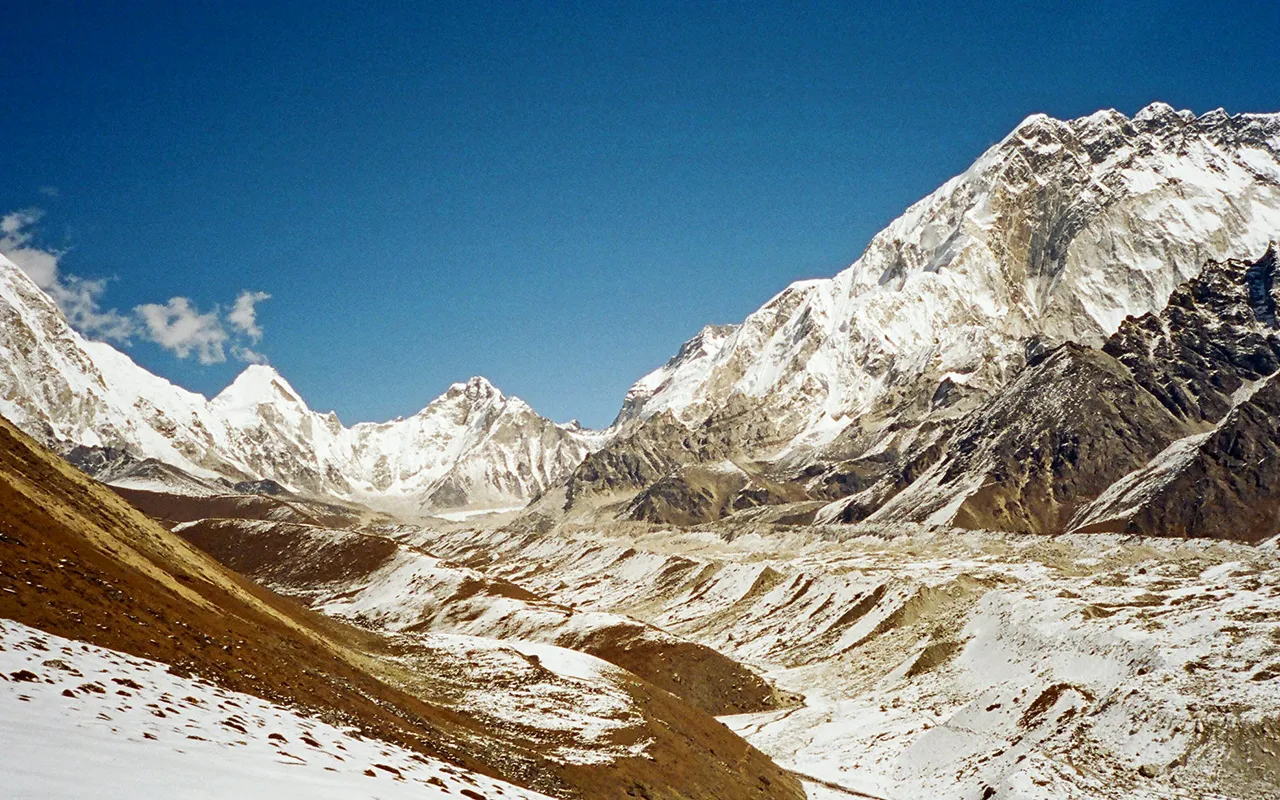
The most difficult aspect of the Everest Base Camp with Lobuche Peak Climbing is the altitude. The trail to Everest Base Camp is moderately difficult, and so is the climb up Lobuche Peak. It is graded as a trekking peak, which means that climbing the peak is not as difficult as others. However, it is still not a walk in the park. There are a couple of ascents on the way to EBC, and the snow-covered, steep path to the summit of Lobuche is a bit difficult as well.
The increasing altitude makes it a bit difficult for trekkers to be as active and mobile as they are at low altitude. This is because of the decreased amount of oxygen in the atmosphere, making us short of breath. This makes us physically tired easily, as we have to breathe more to make up for the lower oxygen content in the air. Overall, on a scale of 10, this Everest Base Camp with Lobuche Peak Climbing deserves a rating of 8.
Altitude Sickness
Altitude Sickness could be an issue on this trek, especially if you are not following the preventive measures. However, since 3A Adventure’s guides are trained to make sure that you follow and understand how to avoid altitude sickness, you are less likely to contract the illness easily. One of the things about altitude sickness that people misunderstand is its ability to affect any person. Regardless of age, sex, or trekking experience, anyone can get altitude sickness if they do not follow the preventive measures carefully.
To stay clear of altitude sickness, as much as possible, you must stay well-hydrated throughout the trek. This means drinking at least 2 to 3 liters of water per day and avoiding eating or drinking things that dehydrate your body. Moreover, you must always follow the pace of the Everest Base Camp with Lobuche Peak Climbing guide. If you rush to higher elevations, the chances of getting altitude sickness increase.
Preparation and Fitness
The Everest Base Camp with Lobuche Peak Climbing demands a slightly better physique than the average, as you will literally have to climb a mountain. This requires the tekkers to train their stamina and legs. You also have to do some strength training since you have to ascend steep mountain slopes with a backpack. You can do exercises like running, cycling, swimming, etc., for endurance building, and a weighted hike up small hills to train your lower half of the body.
Food and Accommodation
During the days on the trail, you will be provided with 3 meals per day, breakfast, lunch, and dinner, with whatever drinks the tea house offers on the side. These are the only meals covered by the Everest Base Camp with Lobuche Peak Climbing package, along with breakfasts during the stay in Kathmandu. Your meal options on the trails are Thukpa, Dal Bhat, different types of noodles, pasta, pancakes, stir-fried veggies, meat curry, seasonal veg curry, and more. You are free to choose any meal from the menu provided by the tea houses.
When it comes to accommodation, the Everest Base Camp with Lobuche Peak Climbing package covers all of it, from day 1 till the end of the trek. However, amenities such as hot showers, Wi-FI, laundry, bar bills, extra meals, etc., are not a part of the package in any way. Those are your extra expenses that you should cover separately.
Transportation
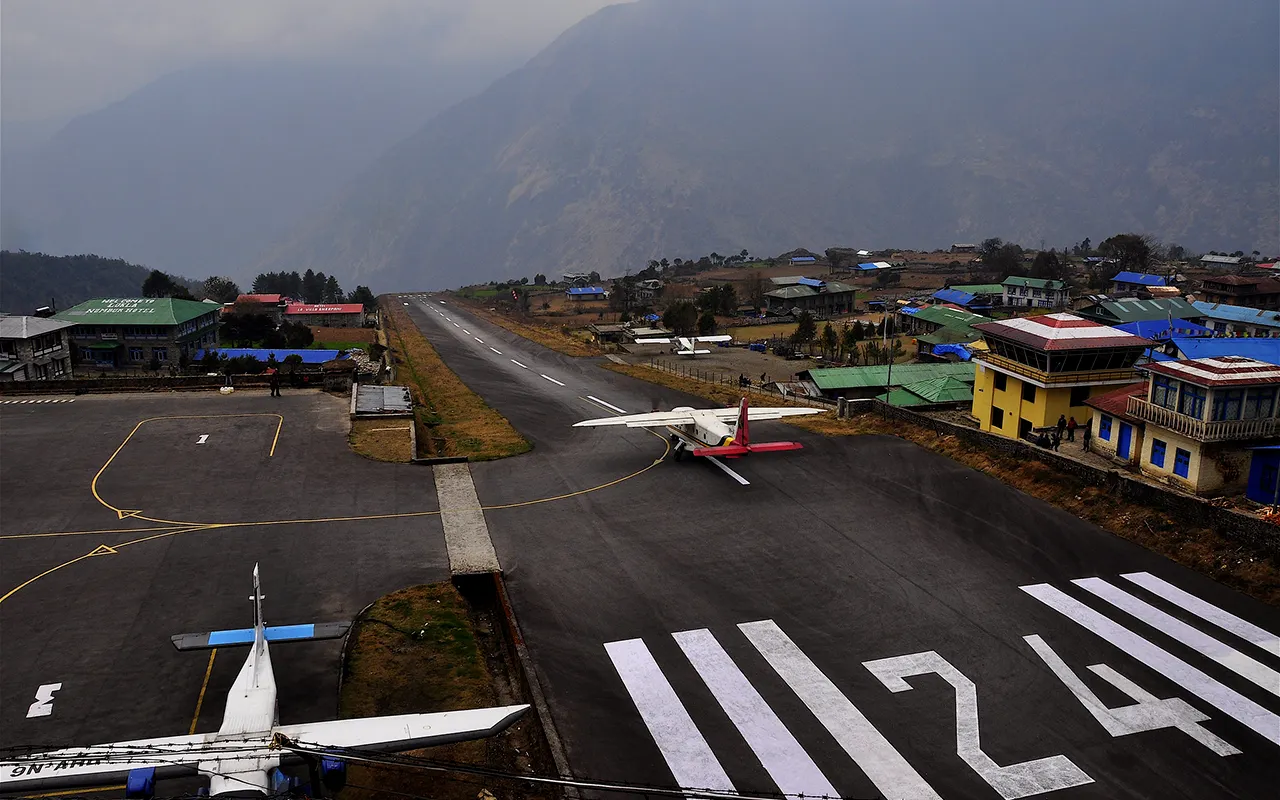
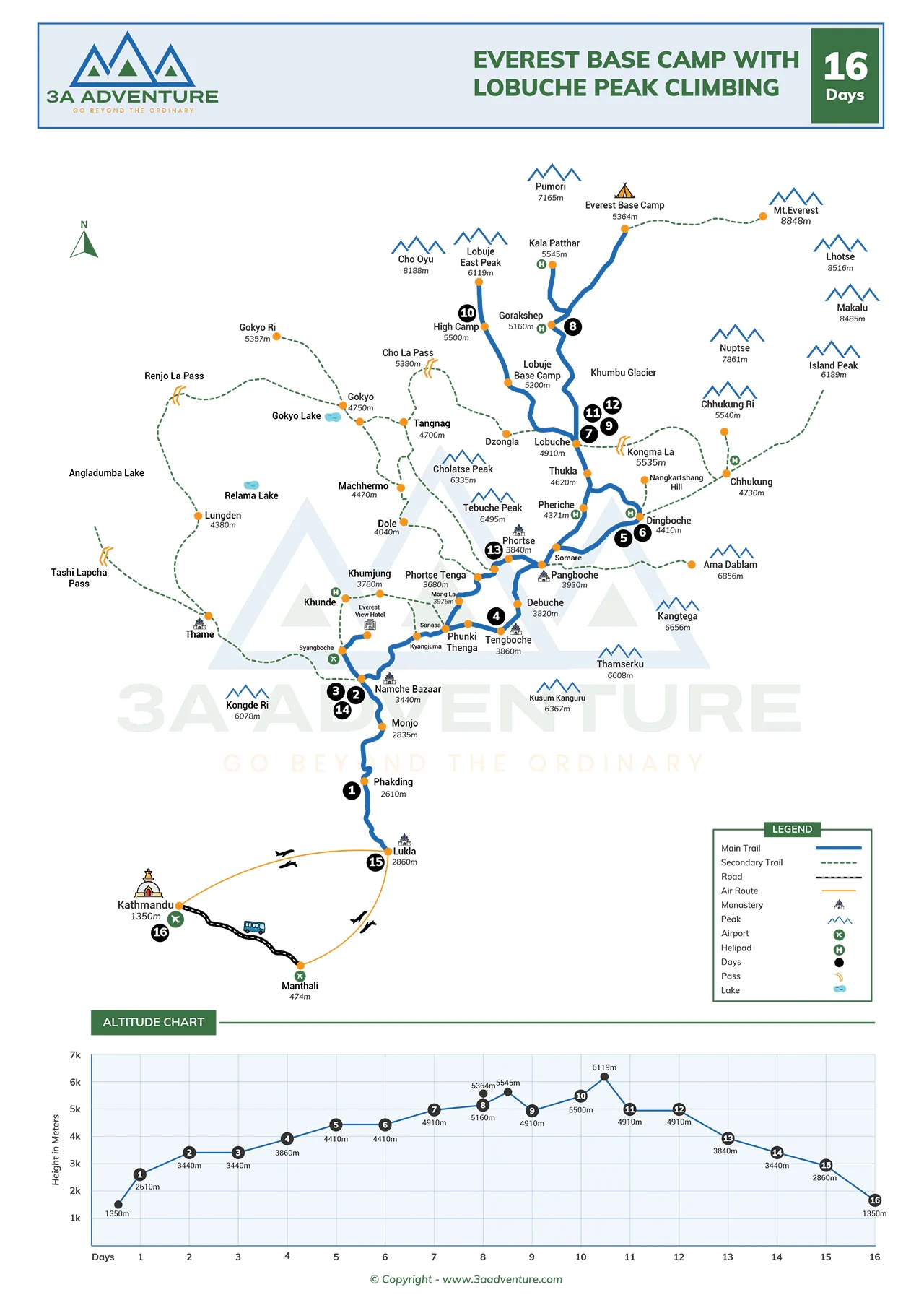
Our proposed Everest Base Camp with Lobuche Peak Climbing itinerary requires traveling from Kathmandu to Lukla to start the trek. At the end of the trek, we will fly back to Kathmandu from Lukla. These are the only transportation options the trek package covers, along with a ride to and from the airport.
Communication
The Everest region is the most well-infrastructured trekking region of Nepal. You will get mobile networks for the most part, but not all the way through. However, if you buy an Everest Link Internet card, you can stay connected to the internet for the entire trekking days. These internet cards are your personal Wi-Fi in the remote Himalayas, your only reliable source of internet connection. The Everest Base Camp with Lobuche Peak Climbing guide will have a satellite phone to contact emergency services in case someone needs it.
Permit
The Everest Base Camp with Lobuche Peak Climbing requires trekkers to obtain the Sagarmatha National Park Entry Permit and the Khumbu Pasang Lhamu Rural Municipality Permit. The fees for these permits will be covered by the trek package, and the guide will help you obtain them easily.
Visa
The visa fee that you have to pay after you arrive at the Tribhuvan International Airport is not a part of the Everest Base Camp with Lobuche Peak Climbing package. After you fill out your visa application form at the immigration section, you are required to pay your visa fees in order to obtain your tourist visa.
Travel Insurance
Travel insurance is a must for this trek; without it, we can not take you on this journey to the Himalayas. You can get any insurance of your choice, but make sure that it covers emergency rescue expenses in case you ever need to be evacuated immediately from the remote highlands via a rescue helicopter.
Extra Expenses
Although the Everest Base Camp with Lobuche Peak Climbing package covers most of your major and daily expenses, there are some things that are not practical for us to cover. Including but not limited to, your extra expenses are emergency rescue services, visa fees, tips for the crew members, travel insurance fees, extra meals, upgraded accommodation arrangements, lunch and dinner in Kathmandu, etc.
Private vs. group trek
We also offer a private trek package where you do not have to share the experience with random people in a group. Instead, you can form a group of your friends and close ones only. Experiencing this amazing Himalayan journey with the ones that are close to you might just be one of the highlights of your life. Meanwhile, our standard group package is best for those who are traveling solo or on a budget.