Based on 27 reviews
Trip Duration
8 DaysTrip Difficulty
EasyMax Altitude:
3,850m. / 12,631ft.Group Size
2-20 PeopleBest Season
Oct-Dec & Mar-MayMeals
Breakfast, Lunch & DinnerAccommodation
TeahouseTransportation
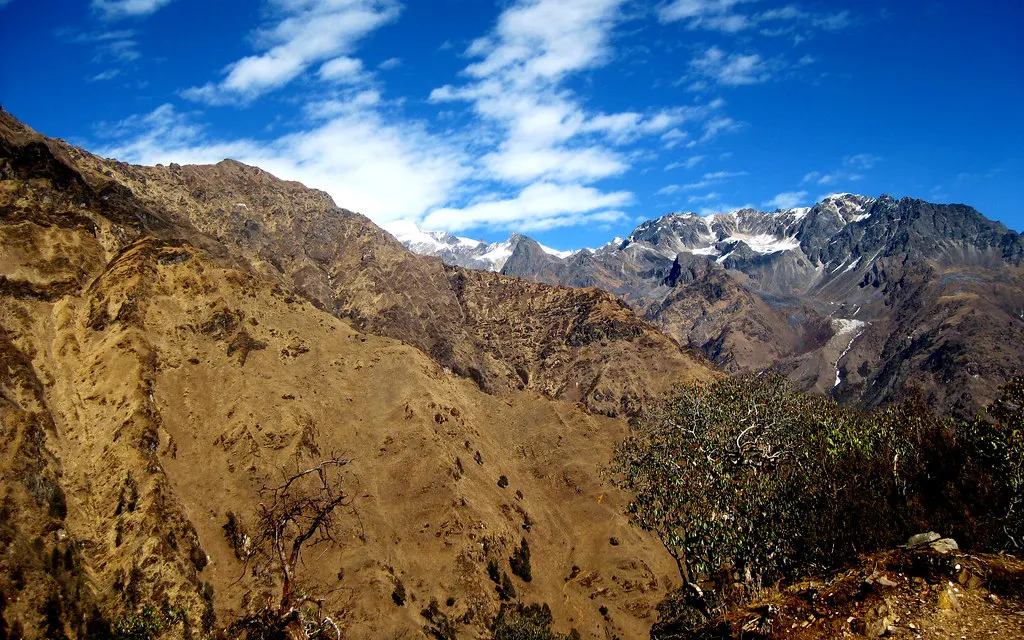
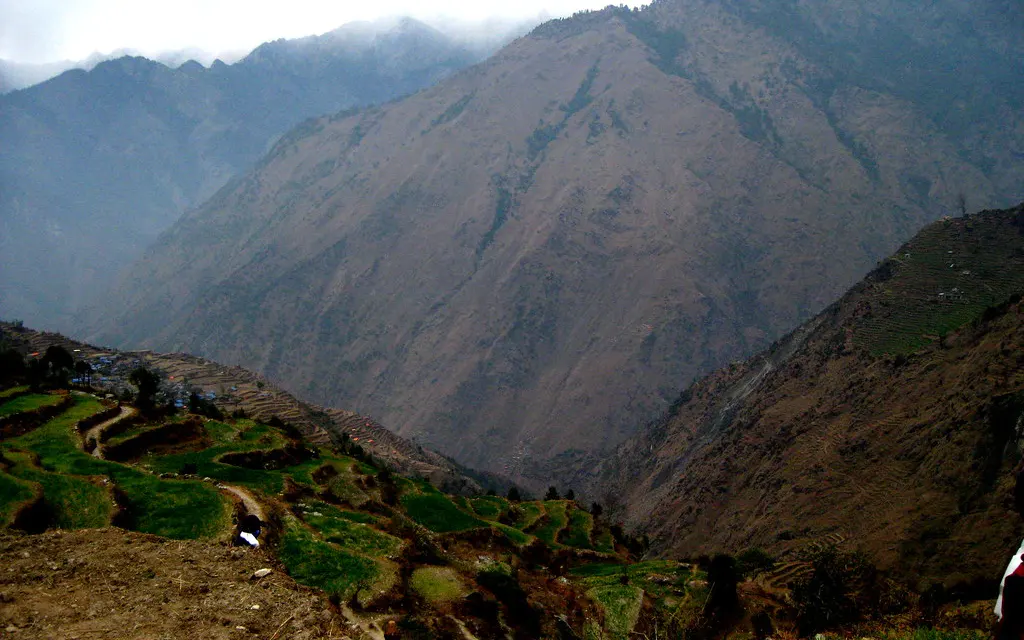
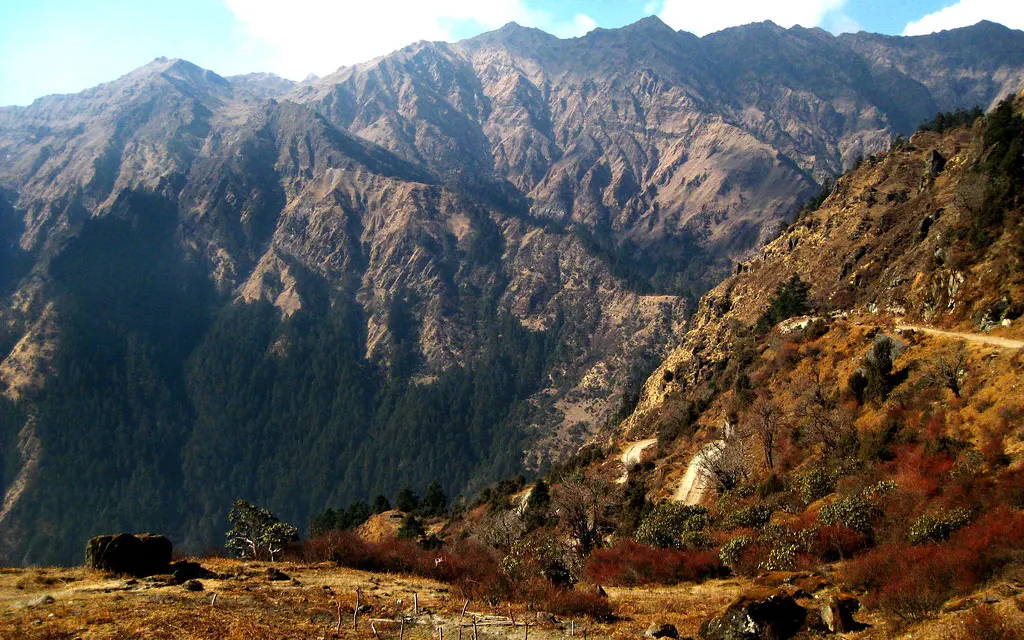
BusThe Ruby Valley Trek is a rewarding journey through one of Nepal’s peaceful mountain regions between the Langtang and Manaslu areas. The trail passes through villagers’ houses, the serene forests, the lush hills and open landscapes of the alpine area, introducing you to the daily life of the local Tamang and Gurung communities. This trek is not as busy as others and it allows you to savor the natural beauty and culture at a leisurely pace. From the rivers to the terraced farmland and from the mountain ridges to the sprawling views of the Himalayas, the daily scenes vary.
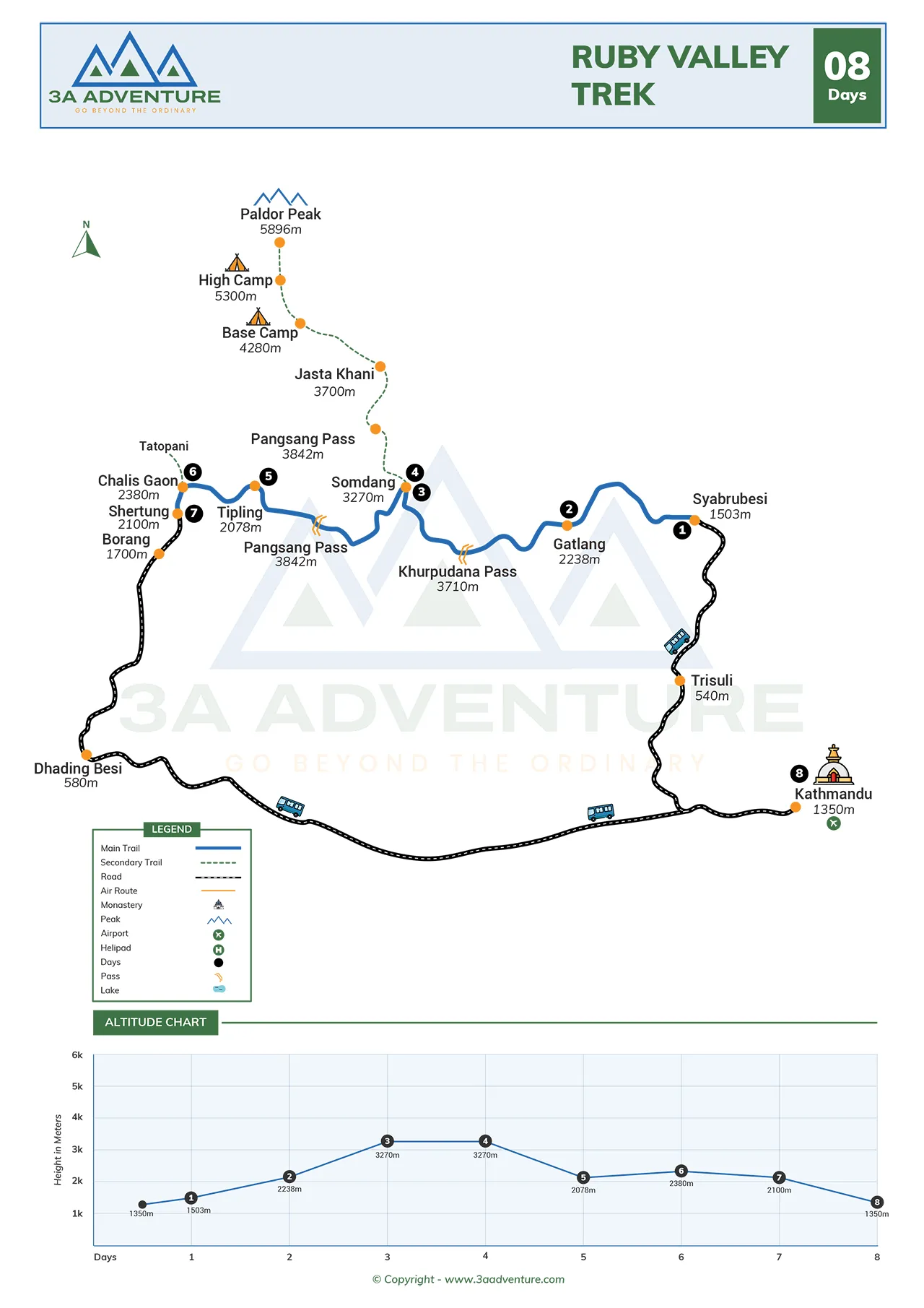
This journey starts with a beautiful drive from Kathmandu to Syabrubesi and then leads through villages like Gatlang, Somdang, Tipling, Chalish and Sertung on the mountain trails. On the route, you walk through rhododendron and pine forests, cross quiet valleys and pass through lonely villages where traditional lives have been lived for generations. The trail also passes through natural hot springs, stunning viewpoints and warm local communities, making the trip even more memorable.
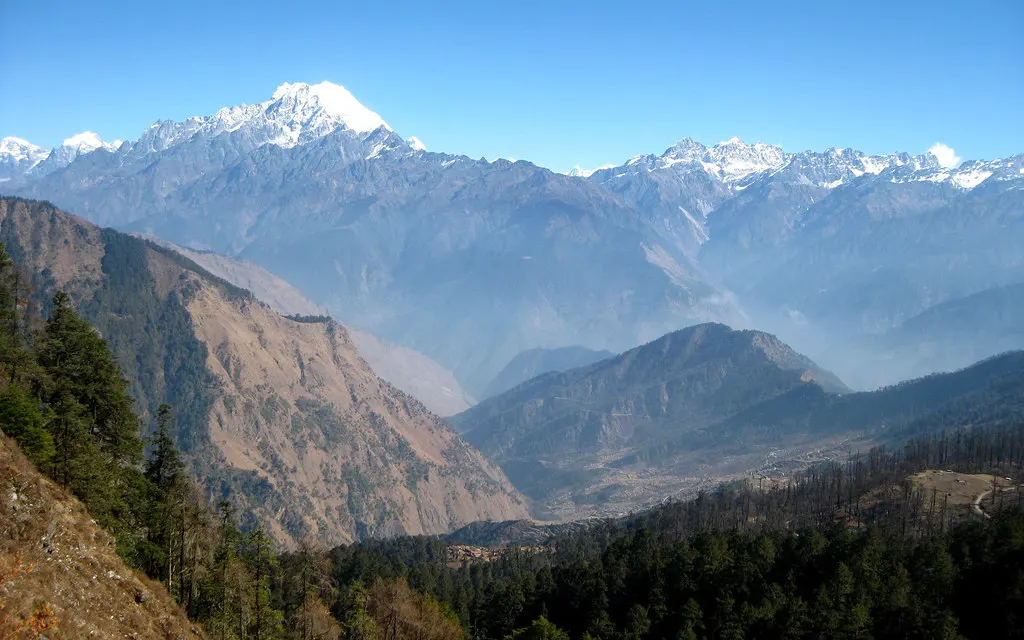
The main attraction of the journey is to cross the Pangsang Pass (3,850 m / 12,631 ft). From this vantage point, one can see the mountain range of Ganesh Himal, Langtang and Manaslu. It also goes through Somdang (3270m / 10728ft), which is a tranquil seasonal settlement with alpine scenery. The route is moderately difficult but you’ll have plenty of time to acclimatise due to its gradual ascent, so you can enjoy the changes in scenery from day to day.
The Ruby Valley Trek route has been carefully designed to ensure a balance of walking, sightseeing and rest. The duration of the trek is moderate and it is recommended for trekkers with average fitness and for those who seek an out-of-the-way Himalayan experience. The setting of the mountains, the culture and tranquility make for an interesting hike without the need to climb mountains.
When it comes to Ruby Valley Trek packages, it is essential to select the right one, as it will make for a well-organized trip with all the transportation, accommodation, meals, permits and local guides sorted out in advance. This trek is a great opportunity to have a meaningful experience of the natural beauty and traditional mountain life of Nepal, whether you are visiting for the first time or are a repeat visitor to see a different area. From start to finish, 3A Adventure is there to assist you in having a safe, comfortable and memorable trekking experience.
The tour starts in Kathmandu with a private jeep tour to Syabrubesi. You will pass through green hills and mountain roads, through rivers and terraced farmland, as the road heads away from the busy city. Clear days offer distant views of the Himalayan peaks on the way also.
The ride goes through small towns and rural villages, so you’ll get a chance to see what life is like in the Nepalese countryside. You will reach Syabrubesi, a quiet village from where you can take off on various trekking routes to the Langtang and Ganesh Himal areas as well after a few hours of travel. It is possible to unwind in your lodge and get ready for the trekking experience ahead.
Activity: Private Jeep Drive, 7 to 8 hours
Max. Altitude: 1,550m/5,085ft. (Syabrubesi)
Meal: Lunch and Dinner
Accommodation: Teahouse
Following breakfast, you start your walk slowly on through the woods, farmland and the traditional Tamang settlements. The trail runs through quiet mountain roads, allowing you to breathe in the fresh air and enjoy the beautiful scenery of the surrounding hills. In the process, you will meet friendly locals and experience the local culture.
By afternoon, you will reach Gatlang (2,238 m / 7,343 ft). This is a typical village of Tamang, famous for stone houses, traditional customs and hospitable people. It is also possible to see the beautiful nearby mountains, before spending the night in a local Lodge, if the weather is clear.
Activity: Trek, 5 to 6 hours
Max. Altitude: 2,238m/7,343ft. (Gatlang)
Meal: Breakfast, Lunch and Dinner
Accommodation: Teahouse
The current trail winds through more quiet woods, through open hillsides and alpine meadows. The farmland gives way to rugged mountain landscape as you continue to rise. The tranquil path provides an opportunity to experience nature as you walk along one of the lesser-known areas of the Ganesh Himal region.
By late afternoon, you will arrive at Somdang (3,270 m / 10,728 ft). It is a historic mining town, set amidst stunning scenery of the Himalayas and tranquil alpine landscapes. Once you arrive at your lodge, you can hit the sack, soak in the peacefulness of the mountains and rest up for the next day of exploring.
Activity: Trek, 6 to 7 hours
Max. Altitude: 3,270m/10,728ft. (Somdang)
Meal: Breakfast, Lunch and Dinner
Accommodation: Teahouse
Today will be spent in the lovely Somdang Valley. The day will involve walking through alpine meadows, fresh mountain air and enjoying ample views of the surrounding Himalayan landscape. This is a great day to take a break from the adventure and catch your breath in the tranquil setting, amid higher elevations.
You can find other perspectives around the valley, see native wildlife if you’re fortunate and enjoy the unspoiled beauty of this deep valley. Spend another cosy night in your Somdang lodge after a successful day of adventuring.
Activity: Exploration Hike, 4 to 5 hours
Max. Altitude: 3,500m/11,483ft. (Somdang Valley)
Meal: Breakfast, Lunch and Dinner
Accommodation: Teahouse
This is one of the best days of our trip. The track then heads upwards, passing through the village of Somdang to the Pangsang Pass (3,850 m / 12,631 ft). The panoramic view from the top is one of the best viewpoints in the area, offering views of Ganesh Himal, Langtang and Manaslu.
The track follows for a period through the pass and then through woods and mountain tracks to reach the old village house of Tipling. Enjoy the local culture and village life before you go to bed in your lodge in this peaceful settlement.
Activity: Trek, 7 to 8 hours
Max. Altitude: 3,850m/12,631ft. (Pangsang Pass)
Meal: Breakfast, Lunch and Dinner
Accommodation: Teahouse
Today, you will depart from Tipling, where you will be met with picturesque forest trails, farmland and peaceful rural villages. Today’s walk is an easier one as the path slowly descends; the path also offers great views of the surrounding hills and valleys.
At noon you will arrive at Chalish Village (1,700 m / 5,577 ft). Several ethnic communities live in the village, each with its own culture and traditions. There will be time for you to stroll around the village, meet the locals and experience the tranquility before you spend the night at your lodge.
Activity: Trek, 5 to 6 hours
Max. Altitude: 2,300m/7,546ft. (Chalish Village)
Meal: Breakfast, Lunch and Dinner
Accommodation: Teahouse
Start the day at the natural hot springs near Chalish. If you don’t mind spending a bit more time, relax and enjoy the quiet before continuing your journey. The path then rises through the woods and countryside to a lovely village called Sertung.
Sertung is famous for its traditional culture, hospitable locals and delightful views of the mountains. Once you arrive, you will be able to wander around the village and take advantage of the serene and peaceful surroundings before the end of your stay in the mountains.
Activity: Trek and Hot Spring Visit, 5 to 6 hours
Max. Altitude: 1,900m/6,234ft. (Sertung)
Meal: Breakfast, Lunch and Dinner
Accommodation: Teahouse
Get an early start to a short hike to the Buddha Park. There is a place from which you can watch the sunrise over the surrounding hills and Himalayan peaks in the distance. Take some photos and appreciate the tranquil scenery and then head back for breakfast.
Then, get on your own jeep and take off for Kathmandu. The route passes through picturesque villages and river valleys and up scenic mountain roads. This is the end of your memorable journey through the Ganesh Himal region after reaching Kathmandu.
Activity: Hike and Private Jeep Drive, 8 to 9 hours
Max. Altitude: 1,350m/4,429ft. (Kathmandu)
Meal: Breakfast and Lunch
Note:
If you have a private group and prefer a personalized experience, we can organize a custom trip tailored to your requirements and group size, running it any day you choose.
Transportation
Food and Accommodation
Guide and Support Staff
Permit and Expenses
Medical and Gear
Others
International Flights and Visa
Food and Accommodation
Travel Insurance and Medical Insurance
Other Expenses
While the Ruby Valley Trek can be done in any season, spring (March – May) and Fall (September – November) are the best. The weather for these months is generally nice and predictable with clear skies, comfortable temperatures and great mountain views. In spring, the rhododendron forests are beautifully in bloom and during the autumn season, new air and good visibility after the monsoon.
Winter is also a possibility for those who are experienced trekkers, though it is colder and snowy in higher areas close to Pangsang Pass (3,850 m / 12,631 ft). Lower trails will be muddy in the summer and there will be less view of the mountains due to the cloud cover.
Spring and autumn are the best times to hike in the Ruby Valley if you are planning your hike. This is also a great time to experience more of the local villages, mountain views and outdoor photography along the way.
The Ruby Valley Trek is rated as medium difficulty and is suitable for individuals who are moderately fit and have some hiking experience. The hikes are typically 5 to 7 hours a day, including some gentle ups and downs through forests, villages and mountain trails. The walk is not really challenging but there are some steep stretches where a steady pace is important.
The highest point of the trek is Pangsang Pass (3,850 m / 12,631 ft). The achievement of this altitude demands good pacing, frequent rest and adequate fluids. Using the outlined route, most trekkers can walk the route comfortably.
A properly planned out Ruby Valley Trek package can be enjoyed without haste. By walking at an easy pace and following your guides’ advice, you will make this trip a safe and pleasurable experience.
While not to the extreme of Himalayan peaks, the Ruby Valley trek still may cause altitude sickness to some trekkers above (3,000 m / 9,843 ft). Common symptoms are headache, fatigue, decreased appetite, dizziness and insomnia. The majority of cases are not serious and get better with rest.
The summit of the hike is the Pangsang Pass (3,850 m / 12,631 ft). If you drink enough water, avoid alcohol, eat a balanced diet and walk slowly, you reduce the risk of altitude-related problems.
By following the suggested Ruby Valley Trek route, your body has enough time to adjust to the higher elevations. Your guide will check on you during the hike and will suggest stopping or going down if symptoms worsen.
With good preparation, the Ruby Valley Trek is more enjoyable and comfortable. This does not require extensive mountaineering experience but if you walk, hike, cycle or lightly jog for several weeks before your trip, you will be more fit. Tightening your legs and enhancing your balance can likewise make everyday trekking simpler.
Bring a comfortable pair of trekking boots, warm clothes and a waterproof jacket, sun cream, sunglasses and a water bottle. The weather can turn bad in a short period of time at the high elevations of the Pangsang Pass (3,850 m / 12,631 ft).
To prepare for your Ruby Valley Trek package, it is best to break in your trekking boots and bring a small backpack on practice hikes. It ensures you can enjoy landscapes and local culture with increased confidence and enjoyment given good physical preparation.
On the Ruby Valley Trek, meals are provided at the local lodges and simple teahouses on the trek. Freshly cooked meals of locally grown produce, eggs, potatoes, vegetables, noodles, soups, dal bhat, etc. can be eaten. There is also a great choice of hot beverages, such as tea and coffee, available.
Accommodation is simple and comfortable. Most lodges offer clean twin-sharing rooms, blankets and a simple dining room, where trekkers sit in the evenings. In more remote areas like Somdang (3270m / 10728ft), the facilities are more basic but are adequate for trekking.
The whole wilderness experience of the Ruby Valley Trek is about accommodation and service by those who are clean and local, not fancy. Residing in village lodges likewise allows visitors to experience the traditions and daily life of the local community.
The journey on the Ruby Valley Trek starts with a private jeep ride from Kathmandu to Syabrubesi. This picturesque route winds through hills, rivers, terraced fields and authentic hamlets before arriving at the trailhead. On completion of the trek, a private jeep brings you back to Kathmandu.
Gravel road in certain mountain areas but private cars offer better flexibility and comfort than public transportation. Times are subject to changes with weather and road conditions.
If you are travelling through the Ruby Valley, bookings will likely be made that will include transport in the package, so you don’t have to worry. You can enjoy the hike without the need to worry about ground transportation, as 3A Adventure does everything necessary to take care of that.
Mobile coverage is available on most stretches of the Ruby Valley Trek but is weaker in more remote mountain areas and on remote trail sections. Nepal Telecom usually has greater coverage than others but the signal might not be present in all areas.
Some lodges offer Wi-Fi services for an additional charge, although the connection may be slow. It is generally possible to charge electronic devices in villages, sometimes for a small charge.
It’s helpful to tell your family during your trip in the Ruby Valley that there may be times when there is limited communication available. Your trekking guide is the primary point of contact for any communications needs that may arise while on the trekking trip and they can assist you with these.
Trekking permits must be obtained for the Ruby Valley. The trekker must normally be equipped with the Langtang National Park Entry Permit and the TIMS Card (if applicable) as per current trekking regulations.
Your guide will have the relevant permits with him/her on the trek. During the trek, the permits may be checked at various checkpoints along the trek. When applying, it is important to have a valid passport copy and passport-size photographs with you.
For those who book a Ruby Valley Trek package, 3A Adventure will obtain the necessary permits before the trek. This enables you to begin the trip without the hassle of permit procedures.
Tourists from most of the countries require a tourist visa for Nepal to participate in the Ruby Valley Trek. Travelers can get the visa on arrival at Tribhuvan International Airport in Kathmandu or apply for it in the Nepalese Embassy in their country. The passport must have at least six months’ validity from the date of arrival.
Tourist visas will be issued for a variety of periods so that tourists can select the visa period that suits their tour programs. It is always advisable to know what the new immigration laws are before you travel.
When you’re planning your Ruby Valley Trek, check that your passport, visa and other travel documents are complete and readily available. Preparing all the documents in advance can facilitate the arrival and the hiking process.
The Ruby Valley Trek is strongly recommended to travel insurance. Policy requirements include trekking, emergency medical treatment, helicopter evacuation, trip cancellation and personal belongings. All hiking trips can have emergency weather or medical conditions.
The maximum elevation is Pangsang Pass (3,850 m / 12,631 ft) but accidents or illnesses may happen at any altitude. Comprehensive insurance will give you financial help when you need it.
While making your Ruby Valley Trek package, please take some time to check your insurance coverage policy and make sure trekking in Nepal is covered. Bring paper and electronic copies of insurance papers with you.
In addition to the cost of the Ruby Valley Trek, you need to budget for travel expenses. This can include beverages, snacks, hot showers, battery charging, internet, laundry, guide/porter tips and even shopping in villages.
ATMs are not available along the trekking route, so cash is recommended. It is easier to carry enough Nepali currency with you before you leave Kathmandu, which will help you to do your daily activities while on the trek.
Your Ruby Valley Trek plan includes the bulk of the travel dates but you might need more or less personal ones based on your tastes. It will make it much easier to use extra cash to take advantage of additional services without any hassle.
This Ruby Valley Trek may be taken as a private tour or as a group tour. A private trek provides flexible travel dates, a custom travel pace and added privacy for families, couples and groups of friends. It is suitable for those who want tailor-made services.
People travelling alone and those who like to meet foreigners are better suited to group treks. Everyone shares transportation, guides and experiences and has agreed upon a schedule.
You can go Ruby Valley trekking alone or with other people and 3A Adventure will provide expert guides and organized support along the way. These are both great ways to be able to enjoy the culture, scenery and quiet trails of the Ruby Valley but in a safe and fun manner.
General
Typically, it’s enough to carry around NPR 10,000 to 15,000 for drinks, WiFi and charging, showers, snacks, tips and personal purchases.
Yes. Do not wear revealing clothing, don’t take pictures of people without permission and always respect local traditions, monasteries and religious sites.
Yes. This trek is often part of the trekking itinerary and many trekkers make it the last stop on their itinerary, adding sightseeing, wildlife tours or other treks.
Preparation & Fitness
Yes. Training with a light backpack will help you to develop balance, endurance and comfort in your backpack while walking throughout the day.
Water-resistant hiking boots that have good ankle support and fit well, broken in, are recommended for hiking on rough mountain trails.
Poles are available and useful for balance and to take pressure off the knees on difficult uphill and downhill sections.
Insurance & Visa
Yes. Road access is restricted in remote areas of treks and thus emergency helicopter evacuation service is strongly recommended.
Nepal accepts a few major currencies and it’s usually easiest to use cash instead of a payment card.
Yes. Be sure to bring a hard copy and an electronic copy for easy verification should it become necessary during your journey.
Guides & Support Staff
Yes. The guide can talk to the residents, book housing and help when it comes to language problems on the walk.
No, you should have a small day pack and the porter has the main trekking pack; it should be within the weight limit.
Yes. For those who like to go on a more flexible itinerary and a more personalized trekking experience, there is also the option of hiring a private guide.
Accommodation and Facilities
The majority of lodges have charging stations and there will be a small fee in some remote villages.
Yes. Blankets are usually provided but it is advisable to bring your own sleeping bag too.
Vegetarian options are plentiful and you will discuss other dietary needs before the trip.
Weather & Seasons
In winter, temperatures can drop to freezing at higher altitudes and spring and autumn are more pleasant.
Yes. Mornings are typically clear and are best for mountain views and photography.
Yes. Small changes to the itinerary may be necessary for safety reasons if the weather is heavy rainfall, snow or conditions on the road.
Health & Safety
Yes. Most villages will have boiled water and/or water purification facilities along the trekking route.
Encounters with wildlife are seldom dangerous and they are generally rare if the trekking trail is a standard trail with a guide.
Booking & Payment
It is recommended to book at least 2-4 weeks in advance during the busiest trekking seasons.
Yes. Generally, a deposit is required to book permits, guides, transportation and lodging in advance.
Yes. Most trekking companies offer the option to pay the rest of the tour after you have landed and before the trekking begins.
Transportation & Flight
The trailhead is accessible by road and private jeep is the most convenient, practical and reliable mode of transportation.
A standard daypack for each traveller and a small individual daypack are typically able to be accommodated comfortably in the vehicle.
Yes. The departure and arrival times may be subject to change if the road conditions or weather conditions are unfavorable or if some local event occurs unexpectedly.