Weather and Best Season
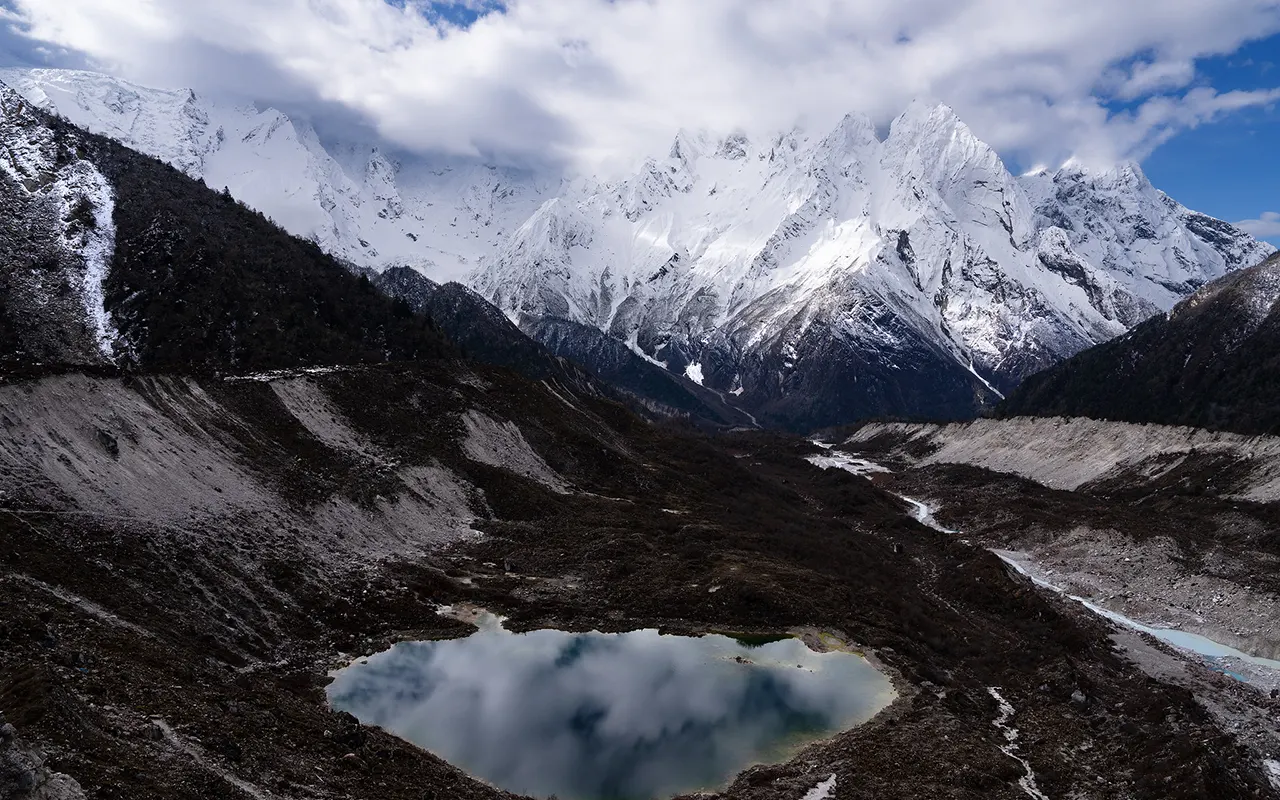
Manaslu Circuit Trek may be appreciated at various times of the year, but spring and autumn are usually the most appropriate seasons. In March to May, there is mild weather and colorful rhododendron woodland along most of the trail in the spring. After the monsoon season, the weather and the clear mountain views are stable and can be enjoyed in autumn, which spans between September and November.
It can be done during winter, although large amounts of snow along the trail to Larkya La Pass (5,106 m / 16,752 ft) can impact the route. It is also common during the monsoon season when there is rain, muddy roads, and poor visibility. The weather is subject to changes in the mountains, and particularly at high altitudes. Proper selection of season assists in enhancing the safety, convenience, and general trekking environment during the voyage.
Difficulty Level
Manaslu Circuit Trek is regarded as an average trek which needs fitness and stamina. The trekkers cover several hours in a day with trails which feature steep rises and falls, rocky roads, and suspension bridges. The difficulty is intensified by the higher altitude and the lower oxygen concentration.
The peak of the trek is Larkya La Pass (5,106 m / 16,752 ft) that must be paced and well acclimatized. Prior trekking experience may be beneficial but not mandatory for serious and well-prepared trekkers. The journey can be made easier by following an appropriate itinerary and ensuring the acclimatization is taken seriously. Manaslu Circuit Trek package can be well planned to enable the trekkers to do the route in a comfortable and safe manner.
Altitude Sickness
The problem of altitude sickness may also impact trekkers since they will be gaining altitude throughout the Manaslu Circuit Trek. The common symptoms are headache, dizziness, fatigue, nausea, and difficulty sleeping. The symptoms arise when the body has difficulty adapting to lower levels of oxygen at higher altitudes.
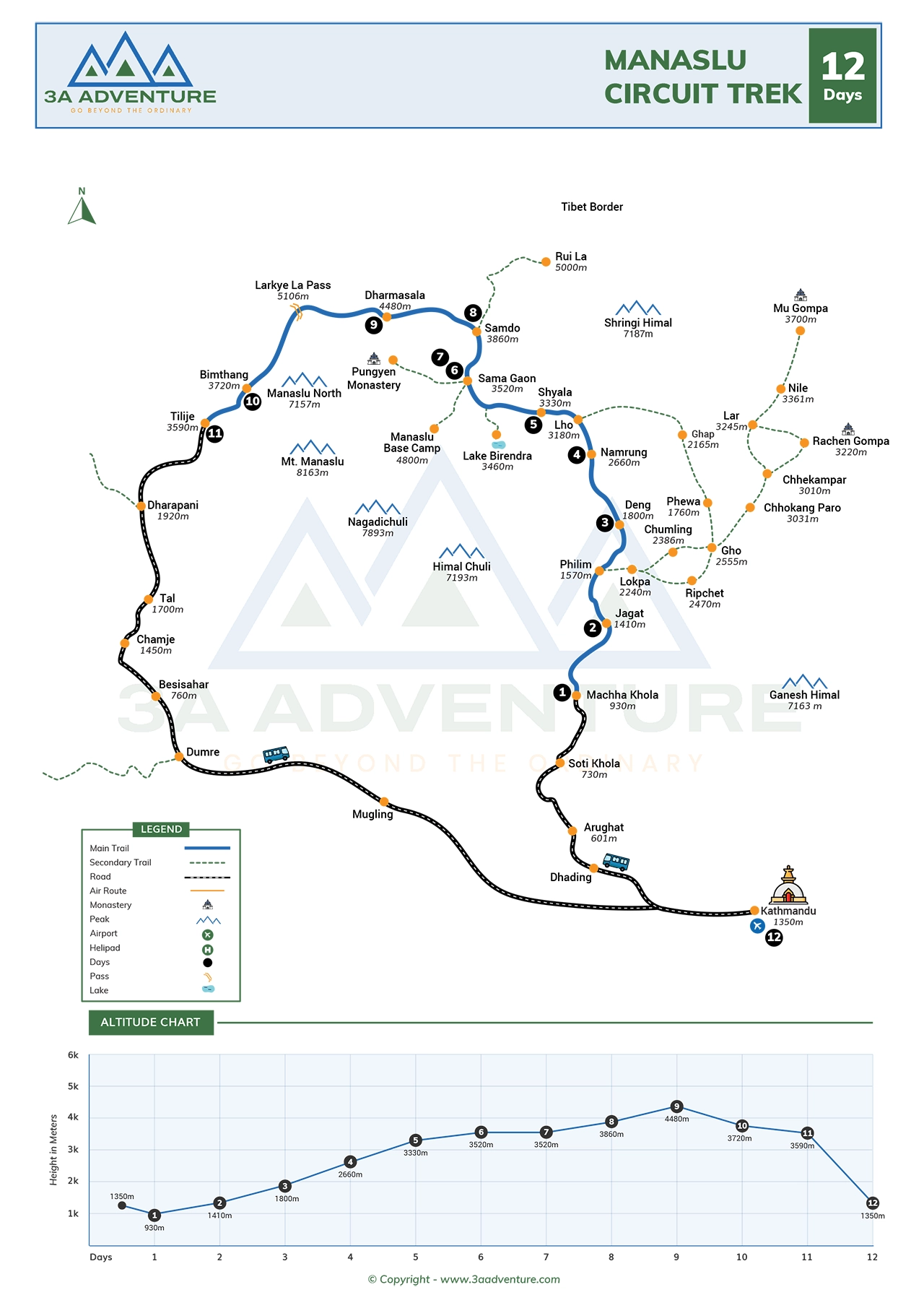
This danger escalates past villages beyond Sama Gaun (3,520 m / 11,549 ft) and up to Larkya La Pass (5,106 m / 16,752 ft). The following can be used to mitigate the risks of developing altitude related problems like proper acclimatization, slow walking, adequate water consumption, and rest. Any symptoms should be noted by trekkers and reported to their guide in case they are feeling ill. The reason why this should be done early is that severe cases of altitude sickness will be dangerous when neglected.
Preparation and Fitness
Planning before the Manaslu Circuit Trek can make the journey more pleasant and comfortable. As the trek will be a number of days of constant walking, it is strongly advisable to get yourself fit before the trek. Hiking, jogging, cycling, and climbing the stairs are activities that can be used in building endurance and strength of legs.
A few weeks of training before your departure will help your body to adjust to more extended periods of activity. It is also possible to carry a daypack during practice hikes to be able to prepare for real trekking conditions. It is also important to be mentally prepared since some of the days of trekking are long and taxing. It is prudent to assess the level of your fitness and choose an itinerary that fits your level before deciding on the final cost of your Manaslu Circuit Trek. A better trekking experience is usually achieved due to proper preparation.
Food and Accommodation
The Manaslu Circuit Trek provides food and accommodation in local teahouses that are on the trail. Food is typically basic, local, and made by the local families. Typical choices are rice, noodles, soups, vegetables, potatoes, bread, eggs, and hot drinks. The higher you move, the more the food options might be restricted because of the difficulty in transporting the food in the far places.
The accommodation is generally in simple teahouses with twin-sharing rooms and shared eating places. Trekkers will find facilities comfortable enough, but as they go up to higher villages they will get simpler. There might be hot showers, charging facilities, and internet services at some locations with an extra charge. The cost of a Manaslu Circuit Trek package usually includes accommodation and food services during the trek, which enables trekkers to enjoy the trip.
Transportation
The Manaslu Circuit Trek is normally transported by driving a vehicle from Kathmandu, then Machha Khola, and finally back to Kathmandu. The initial part of the drive is on tarmac highway, but it gets rugged and rough as the road moves into remote mountainous regions.
The weather and season changes may cause road conditions to change. On mountain roads, shared jeeps are usually utilized, but one can have a private vehicle at a higher cost with more comfort and flexibility. The time taken on roads can be more than anticipated because of the road conditions and traffic. Although the trip is long due to the long drives, the trip gives an opportunity to see rivers, hills, farmland, villages, and changing landscapes. The transportation is typically part of the total trekking itinerary to facilitate hassle-free travel between the start and finish points.
Communication
In most parts of the Manaslu Circuit Trek, there are communication facilities, the quality of which may fluctuate depending on the location and the weather. In a few of the villages, the mobile network coverage is good, but at higher altitudes and in isolated areas along the trail, signals can weaken.
A few teahouses offer internet services at an extra fee, but the connection is usually slow, compared to cities. Due to the remoteness of the area, the internet connection might not be constant. Trekkers who must have frequent contact with their family or friends ought to alert them beforehand that they cannot be connected to the world in some sections of the voyage. It can be handy to carry a local SIM card in places where there is network coverage. When trekking, it is always advisable to be equipped in case of time without either the internet or the mobile service.
Permit
Manaslu Circuit Trek has several permits due to the route traversing a restricted area and a conservation zone. Trekkers need to get the relevant permits prior to commencing the trip. No independent trekking is permitted, and the trek has to be done via a registered trekking agency.
Some of the permits that are usually required are the Manaslu Restricted Area Permit, the Manaslu Conservation Area Permit, and the Annapurna Conservation Area Permit. The fees charged for permits differ according to the season and length of the trek. These permits assist in conservation activities and in controlling tourism in the area. The permit application process can be organized as a trekking service when one needs to book with 3A Adventure. Permit documents are a must during the trek as they are inspected at different checkpoints during the trek.
Visa
The Manaslu Circuit Trek requires most foreigners to take a tourist visa to Nepal. A Nepal tourist visa may typically be issued either on arrival at the Tribhuvan International Airport in Kathmandu or when visiting a Nepalese embassy before traveling. Visitors must make sure that their passport is valid for at least six months before their planned departure.
The visa charges differ with the number of days chosen. Passport-sized pictures and enough money to obtain the visa should be carried in case of applying upon arrival. Travelers must also examine the current immigration requirements before they travel since they can vary.
Travel Insurance
It is strongly advisable to take travel insurance for the Manaslu Circuit Trek. Since the path reaches as high as Larkya La Pass (5,106 m / 16,752 ft), trekkers should be insured to include high-altitude trekking and emergency situations. A proper policy will provide financial assistance in the event of sickness, accident, delays in vacation or unexpected traveling inconvenience.
Helicopter evacuation cover is necessary during any emergency since it may be necessary to have limited access to medical centers in isolated mountain areas. Read the insurance terms and ensure that trekking to the intended height is covered before buying insurance. It is also advisable to carry a copy of your insurance information during the trek. Adequate insurance gives security and enables the trekkers to go through the adventure with more confidence.
Extra Expenses
A Manaslu Circuit Trek package can contain a lot of services; however, trekkers need to save money to spend on personal expenses when on the trip. Other expenses may be hot showers, charging batteries, access to the internet, snacks, bottled beverages, laundry, and personal purchases along the way.
Tipping of guides and porters is also a norm and must be taken into account as part of your budget. The cost is normally higher at the high elevations due to increased difficulty in transporting the goods. The actual package price normally does not include personal trekking gear, travel insurance, and visa charges unless indicated otherwise. Being aware of these additional expenses will enable trekkers to have a better plan on what to expect on their way and prevent any unpleasant surprises when moving through the Manaslu area.
Private and Group Trek
Manaslu Circuit Trek is either a personal trek or a group trek. A private trip will be more flexible, as it gives the trekkers the opportunity to walk with their own group and at their own pace, according to their wishes. Families, couples, or small groups prefer this option, as it is more personalized.
Group tours offer a unique experience of uniting travelers with various backgrounds and sharing the same itinerary. They may be an excellent choice for people who like to meet other trekkers and share the experience with them. The group transfer can also aid in bringing down the total cost of Manaslu Circuit Trek in comparison to individual transfer arrangements. Regardless of whether taking a personal or communal departure, 3A Adventure can arrange the required logistics, permits, guides, and lodging that will allow a successful trekking adventure.