Weather and Best Season
The Langtang Gosaikunda and Helambu Trek can be best undertaken during spring (March to May) and autumn (September to November). The weather is generally consistent, mountain views are clear, and trekking is comfortable during these seasons. Spring is a season of rhododendron forests and green landscapes, and autumn is a season of clean skies and good visibility.
In the winter, it can be trekked; however, in the snowy winter near Gosaikunda and the Laurebina Pass, the route may be difficult. During summer, the monsoon season may be accompanied by rain, muddy roads, and poor visibility of the mountain. The Himalayas weather is dynamic and thus the trekkers ought to be prepared to experience different temperatures during the trek. The proper timing is another aspect of trekking that can be selected to make the trek safer and enjoyable.
Difficulty Level
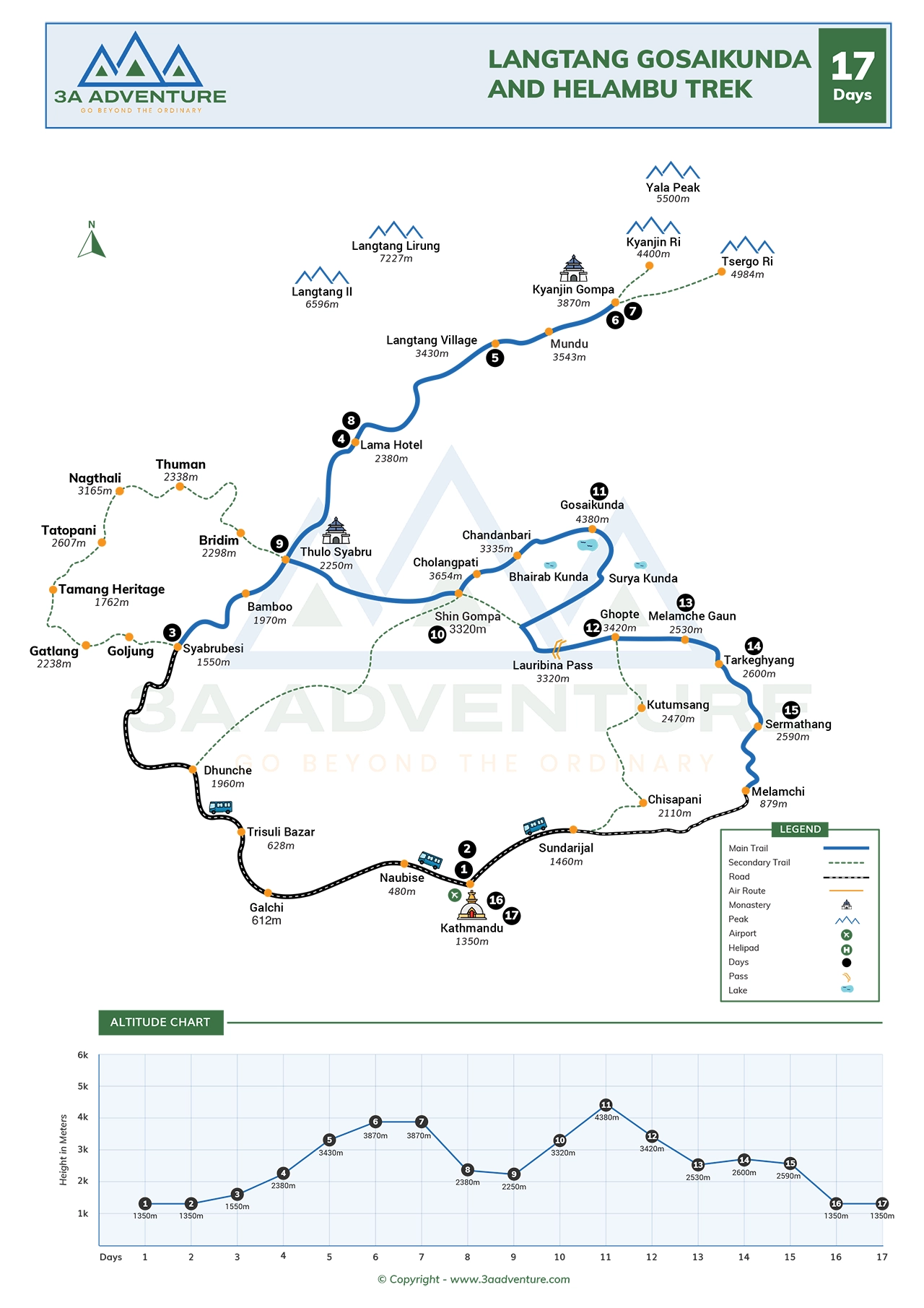
The Langtang Gosaikunda and Helambu Trek is a relatively difficult trek. It is a mixture of long hiking days, hiking up and down steep mountain passes, and mountain passes at elevated altitudes. Trekkers must be willing to walk over a few days in different topography, which includes forests, rocky trails, and alpine valleys. The hardest part is the crossing of Laurebina Pass (4,700 m /15,419 ft).
Experience in trekking is also advantageous but not crucial for physically fit people. The trekking experience is greatly enhanced by proper pacing, acclimatization, and preparations. The trail offers trekkers stunning mountain views, cultural experiences, and holy lakes, and the struggle is worthwhile to those who desire an adventure-filled Himalayan experience.
Altitude Sickness
The Langtang Gosaikunda and Helambu Trek is another trek that is significant to consider in terms of altitude sickness since the trail climbs to a height of above 4,000 m / 13,123 ft. These can include a headache, feeling dizzy, nausea, tiredness and insomnia. Slow and gradual climbing and adequate acclimatization will aid in minimizing the chances of altitude-related issues. To the extent possible, lots of water, a steady pace, and not overworking during the trek are strongly advised.
In case of severe symptoms, it is best to go to a lower elevation. The program is to be accompanied by an acclimatization day in Kyanjin Gompa to facilitate safe acclimatization to high altitude. Trekkers are to be attentive to the reaction of their bodies and report their concerns to their guide.
Preparation and Fitness
During the Langtang Gosaikunda and Helambu Trek, good physical preparation can be used to make the trek more enjoyable and comfortable. A few weeks before the trek, trekkers need to work on cardiovascular fitness by means of hiking, walking, cycling, jogging, or swimming. Core and leg muscle strengthening can also assist on the long trekking days and mountainous, steep trails. Exercising regularly enhances stamina and minimizes exhaustion along the way.
Mental training is also a key factor, as trekking presupposes a shift in weather conditions and multiple days spent in isolated mountain conditions. The Langtang Gosaikunda Helambu Trek itinerary is not a challenge, but with consistency and determination most healthy people with moderate fitness can complete the trek.
Food and Accommodation
During the Langtang Gosaikunda and Helambu Trek, the trekkers have their meals in local teahouses and lodges on the way. Accommodation is usually plain, clean, and comfortable, and facilities are basic to rest after each day of trekking. Food is normally a mixture of Nepali, Tibetan and international food. Popular choices are rice, noodles, soups, vegetables, potatoes, bread, eggs, and hot drinks.
At higher altitudes, food options can be limited, yet healthy food can be found on the trek. It is also by staying in teahouses that the trekkers get in touch with the local communities, as well as being introduced to the hospitality of the mountain. It can be a good idea to bring some snacks in case of longer trekking days.
Transportation
The Langtang Gosaikunda and the Helambu Trek are normally started with transportation, where Kathmandu is the starting point of the trip, and Syabrubesi is the starting point of the trip. The highway trip is through picturesque hills, rivers, villages, and terraced farmlands. At the culmination of the trek, there is transport organized between Kathmandu and Melamchi Bazaar.
In mountain areas, the condition of roads may not always be good, and the time taken to drive somewhere can be different according to the weather and roads. Although there are some rough roads to get here, the ride provides a spectacular experience of the countryside of Nepal and is a great start to the trekking area. Organized transportation helps ensure a smooth and convenient travel experience.
Communication
On much of the Langtang Gosaikunda and Helambu Trek, communication facilities are available, but the quality varies depending on the area. Mobile network coverage is typically good in larger villages and settlements, although the signal is likely to fade in remote mountainous regions. Other teahouses also offer internet services at an extra cost, but the speed is slow at higher altitudes. Trekkers are not supposed to be able to maintain constant connectivity on the trip.
It is advisable to inform family and friends about potential communication restrictions before going. Taking a local SIM card may enhance access to mobile services. Though contemporary communication can be found everywhere, the hiking trip is also a chance to unplug and appreciate the outdoors.
Permit
The Langtang Gosaikunda and Helambu Trek require several permits. Depending on the existing trekking policies, trekkers usually require a Langtang National Park Entry Permit and a TIMS (Trekkers Information Management System) card. Such permits aid in conserving and sustaining trekking infrastructure and enhancing visitor safety.
Along the route, there are permit checkpoints, and trekkers are required to carry their documents during the trek. Some requirements evolve, and thus before traveling, it is best to ensure that the latest regulations are up to date. In case of booking with 3A Adventure, it is possible to get some help and organize the required permits and make sure that all the documents are organized correctly and the trek will start.
Visa
A majority of international visitors require a tourist visa to Nepal prior to beginning the Langtang Gosaikunda and Helambu Trek. Tourist visas are issued at Nepal embassies and consulates in other countries, and a visa can also be issued to most nationalities on arrival at Tribhuvan International Airport in Kathmandu. Visitors will be required to have a valid passport that has enough validity past their dates of travel.
The visa charges are different according to the duration of stay. Since policies regarding immigration may evolve, travelers ought to confirm the current visa policies before travelling. It is also important to ensure that all the travel documents are ready beforehand to prevent any delays and enable the trekkers to enjoy their Himalayan trip.
Travel Insurance
The Langtang Gosaikunda and Helambu Trek are highly suggested to be covered with comprehensive travel insurance. Given that the trek is a remote area with mountainous terrain and high altitudes, emergency medical care, helicopter evacuation, trip cancellation, and personal accident insurance should be provided. As trekkers head further into the mountains, the number of medical facilities is reduced, so emergency evacuation coverage is necessary.
Travelers ought to ensure that they have high-altitude trekking activities in their policy before buying it. One should also bring a copy of the insurance documents when undertaking the trek. Proper travel insurance gives a person a sense of security and a money-back guarantee in case of unforeseen events during the trip.
Extra Expenses
Although most of the trekking packages offer significant services, individual spending is something that trekkers need to have in mind when undertaking the Langtang Gosaikunda and Helambu Trek. Typical additional charges are beverages, snacks, internet services, charging of electronic gadgets, hot showers, laundry, and shopping on behalf of the customer. Tips for guides and porters are also usually considered a personal expense.
It is advisable to carry some cash since ATM facilities are usually not available throughout the trekking route. Travelers spend differently, and additional costs may have a high discrepancy with each individual. To make the trekking experience a lot more comfortable and stress-free, planning a sensible personal budget would do the trick.
Private and Group Trek
The Langtang Gosaikunda and Helambu Trek may be done either as a group Trek or a private Trek. A private trek is more flexible and allows the trekkers to move at their own pace and have a more personalized experience. The group matches tend to be cheaper and offer a chance to interact with other travellers with different backgrounds.
Both alternatives come with the same picturesque terrain, cultural experiences, and hiking attractions. The decision to have a private or a group departure relies on individual preferences, budget, and the type of travelling. 3A Adventure will be able to organize individual and group treks to meet various requirements and have an organized trip to the Himalayas.