

Need Help?
+977 9860666075

Based on 27 reviews

Trip Duration
14 Days
Trip Difficulty
Moderate
Max Altitude:
5,364m. / 17,598ft.
Group Size
2-16 People
Meals
Breakfast, Lunch & Dinner
Accommodation
Hotel, Lodge
Transportation
Flight, Tourist BusThe Luxury Everest Base Camp Trek incorporates the Khumbu region and the Sagarmath National Park, for a memorable remote trekking experience that you are likely to remember for years to come. The national park is a UNESCO World Heritage Site that features rich vegetation, many wildlife, and a dramatic terrain, ranging from lush sub-tropical to barren alpine vegetation. Going from dense forests to open highland ridgelines, you will definitely explore a whole lot of nature throughout the trek.
Not only naturally the Khumbu region is also historically important for the people of Nepal. After the first successful summit of the Everest, Nepal got highlighted on the world map for being the go-to destination for high-altitude trekking and peak climbing expeditions. This was the beginning of the tourism industry in Nepal, which led to the development of many trekking trails and destinations within the country, including the Everest Base Camp trek.
Historically, the people of the mountains, the Sherpas, have been the guides to all the major historic expeditions, especially the first successful summits of many peaks in the region. Even today, the Sherpas continue to guide many treks and mountain climbing adventures. Throughout your time in the Khumbu region, you will get to experience the local way of life, the culture of the Sherpas, and also get to taste some local delicacies.
Once a barren, icy highland, the Everest region is now the most well-facilitated and developed trekking region of Nepal. You can get many modern services throughout the trek, but there are still many remote sections where you will find no traces of civilization. Most of the villages after we cross Namche are remote and barely sustaining if it were not for tourism. Visiting these villages will definitely give you a glimpse of the self-sustaining life of rural highlands.

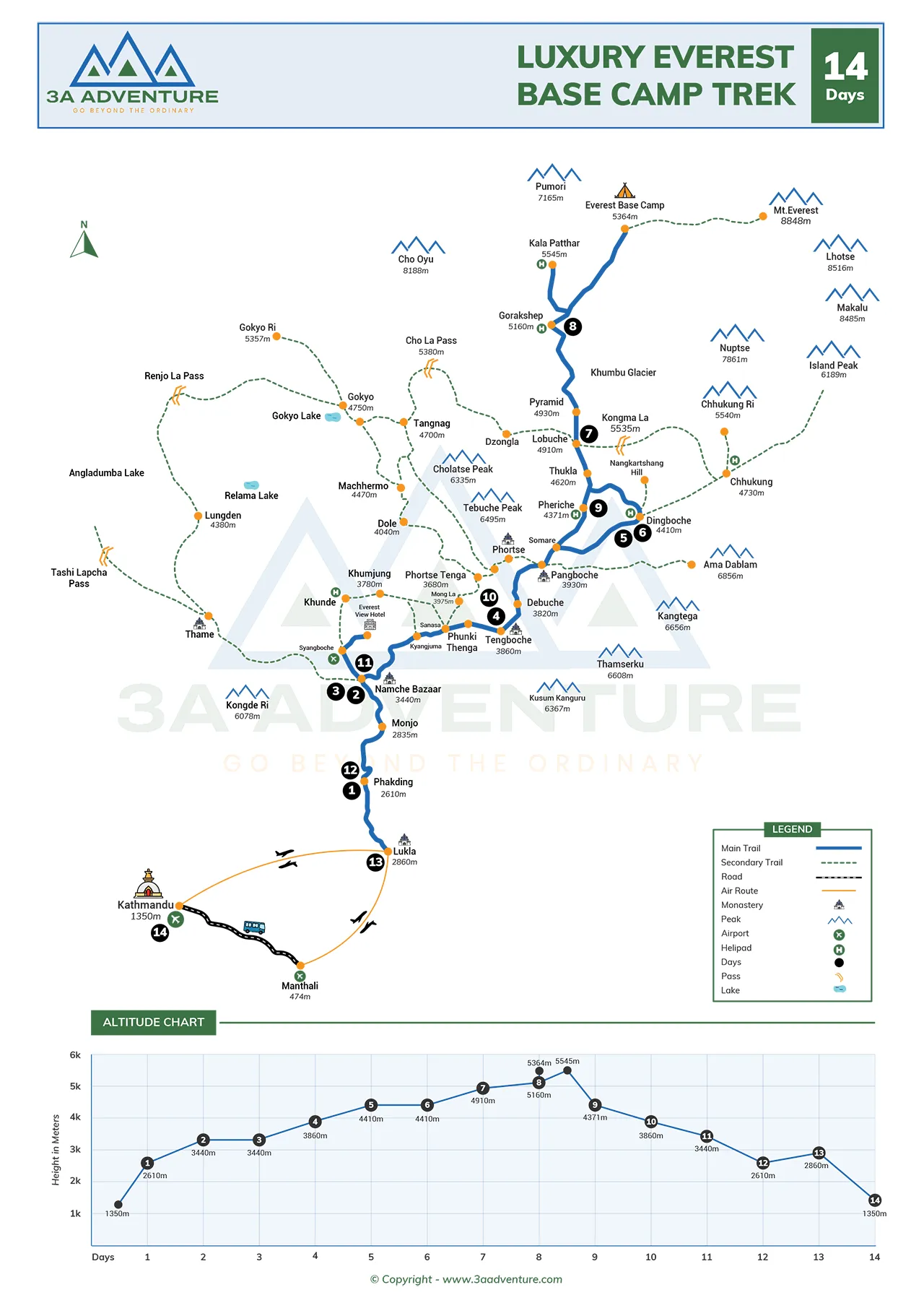
With a total estimated duration of 3.5 hours, day 1 of the Luxury Everest Base Camp Trek features an 8.2 km trail that loses us 250 m of elevation. The trek starts at 2860 m and ends at 2610 m above sea level. But before that, we have to take a short 35-minute flight to Lukla. From there, we will pass the Pasang Lhamu Memorial Gate and head into the Dudh Koshi Valley.
First off, we will pass through Chheplung and cross the Thado Koshi bridge. This part of the trail features a wide view of the Kusum Kanguru peak. From there, we have to move towards the village of Ghar, traversing undulating trails. After reaching Ghat, the trail turns relatively flat and keeps the same features until we get to Phakding.

Activity: 3.5 hrs

Max. Altitude: 2,860m/9,383ft. (Lukla)

Meal: Breakfast, Lunch & Dinner

Accommodation: Lodge
Day 2 of the Luxury Everest Base Camp Trek features a 6-hour trail that covers about 11 km of distance. The elevation gain of the day is 830 m, starting from 2610 m and reaching 3440 m above sea level at the end of the day. Leaving Phakding, the first thing we see is long stretches of Buddhist prayer flags. This trail leads us to the entrance of Sagarmatha National Park.
Reaching Monjo, our permits will be checked, and we will officially enter the park. After a short while, we will arrive at the village of Jorsale, where our lunch will be served. This is the final major stop of the day. Post-lunch, we will get on the last segment of the day and climb up the Namche Hill, gaining about 600 m of elevation in a single climb. Crossing this hill leads us to our destination of the day.
Activity: 6 hrs trek
Max. Altitude: 3,440m/11,286ft. (Namche Bazaar)
Meal: Breakfast, Lunch & Dinner
Accommodation: Lodge
For our first acclimatization day of the Luxury Everest Base Camp Trek, we will practice “hiking high and sleeping low”. This technique has been proven to be the most effective approach to keep away from altitude sickness. After breakfast, we will head towards the Everest View Hotel, which takes about 3 to 4 hours round-trip. The total trekking distance of the day is just about 5.5 km.
In addition to that, we can also visit the Khumjung village on the way back to Namche Bazaar. This village is a great viewpoint and also has a monastery that we can visit. Our total elevation gain of the day is 440 m at the hotel, but the net elevation change remains zero.
Meal: Breakfast, Lunch & Dinner
Accommodation: Lodge
The following day on the Luxury Everest Base Camp Trek, we have to cover over 9.2 km of distance to reach Tengboche village. This trek features 430 m of elevation gain with an estimated trek duration of 5 to 6 hours. Post-breakfast, the trail initially features passing through lively streets of Namche, followed by an ascending trail with views of Lhotse and Ama Dablam in the distance.
Continuing the trek, we will pass the village of Kenjoma and keep on ascending, heading towards Sanasa village. From there, we will trek to Phunki Thenga village and stop for a relaxing lunch. Post-lunch, the trail goes up again, leading us to the destination of the day.
Activity: 5-6 hrs trek
Max. Altitude: 3,870m/12,697ft. (Tengboche)
Meal: Breakfast, Lunch & Dinner
Accommodation: Lodge
The starting altitude of day 5 of the Luxury Everest Base Camp Trek is 3870 m, and by the end of the day, we will get to 4410 m above sea level. The elevation gain of the day is 540 m with a total trek distance of around 10 km. This 5 to 6-hour trek starts with a visit to the Tengboche Monastery early in the morning. This is the largest monastery in the region and features a panoramic scene of Lhotse, Nuptse, Ama Dablam, Thamserku, Everest, and more.
Leaving Tengboche, the trail descends steadily towards Debuche village, reaching 3734 m. From there, we will go over the Imja River, crossing a suspension bridge. Soon after, we will reach Pangboche village at 3900 m above sea level. This village is one of the oldest settlements in the region and also houses a monastery. After that, we will get on the final leg of the day, a steady climb all the way to Dingboche.
Activity: 5-6 hrs trek
Max. Altitude: 4,410m/14,469ft. (Dingboche)
Meal: Breakfast, Lunch & Dinner
Accommodation: Lodge
Today is our 2nd acclimatization day on the Luxury Everest Base Camp Trek itinerary. Our activity of the day includes a short hike to Nangkartshang Peak. The elevation gain of the hike is 673 m, taking us to 5083 m. The day starts at 4410 m with an estimated duration of 5 to 6 hours and a trek distance of 5.6 km.
Leaving Dingboche, the trail ascends aggressively over the slopes of Nagarjun Hill. This can be a tough climb for many since the thinning air makes them tire out faster. From the top of the peak, we will get to enjoy a clear view of the Khumbu Glacier, Lobuche, Chhukung, the Imja Valley, and peaks including Pumori, Nuptse, Lhotse, Ama Dablam, Cho Oyu, Everest, and more.
Activity: 5-6 hrs trek
Max. Altitude: 4,410m/14,469ft. (Dingboche)
Meal: Breakfast, Lunch & Dinner
Accommodation: Lodge
Day 7 of the Luxury Everest Base Camp Trek features 530 m of net elevation gain, taking us to 4940 m above sea level. The total trek distance of the day is 12 km with a total estimated trek duration of 5 to 6 hours. Starting at 4410 m, the trek begins with a set of stone steps, heading north from Dingboche.
Soon, we have to ascend all the way to Dughla and climb the Thukla pass. This ascent is one of the challenges of the trek. Passing by the Everest Memorial, we will reach the top of the pass and descend a little to reach Lobuche.
Activity: 5-6 hrs trek
Max. Altitude: 4,940m/16,207ft. (Lobuche)
Meal: Breakfast, Lunch & Dinner
Accommodation: Lodge
Today is the main day of the Luxury Everest Base Camp Trek. The net elevation gain of the day is 240 m with an estimated trek duration of 7 to 8 hours, making it the longest trekking day. The total trek distance is 11.9 km, starting with a steady climb over rocky terrain to get to Gorak Shep. The path goes along the Khumbu Glacier and stretches about 4.3 km to Gorak Shep. We will reach there in about 3 hours.
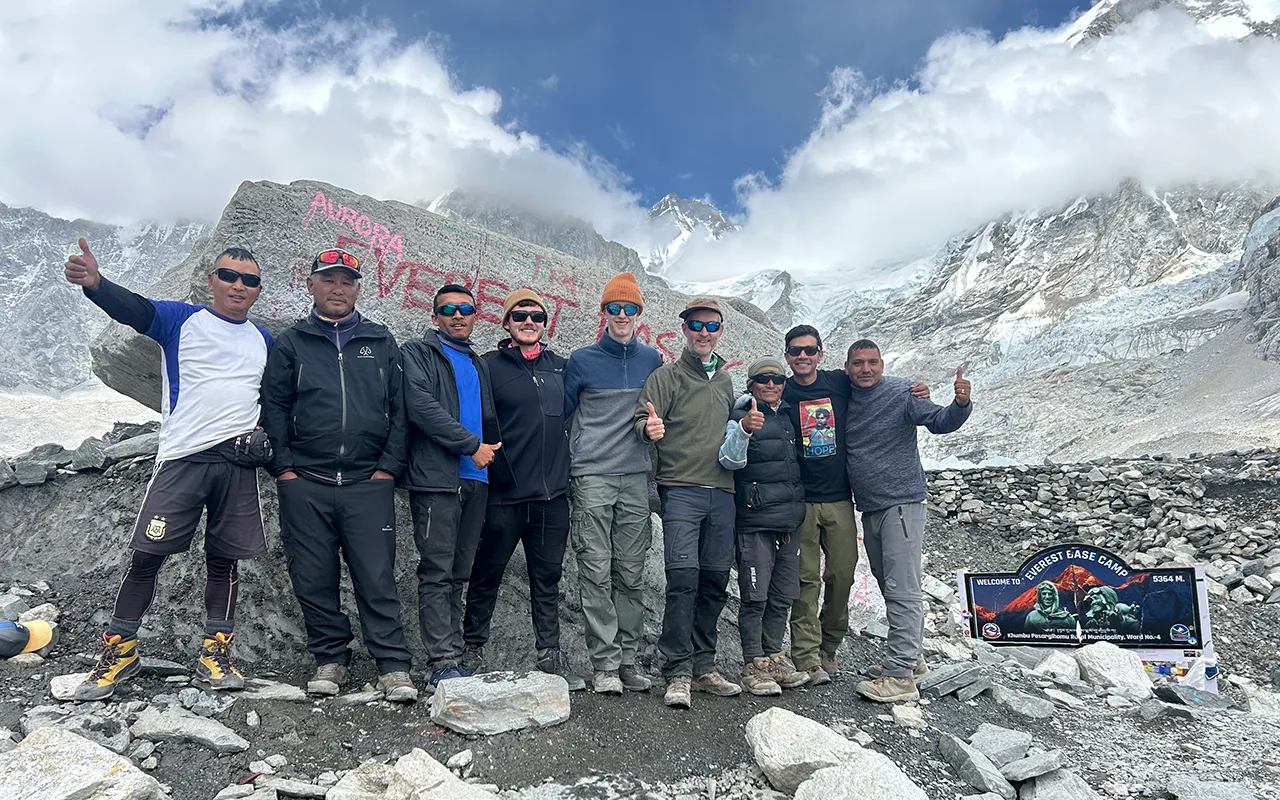
After leaving our heavy luggage at Gorak Shep, we have to climb up to Everest Base Camp. The 2nd part of the trek is 7.6 km long, round-trip, taking about 4 to 5 hours. Reaching the base camp at 5364 m above sea level, we will spend some time there before heading back to Gorakshep to spend the night.
Activity: 7-8 hrs trek
Meal: Breakfast, Lunch & Dinner
Accommodation: Lodge
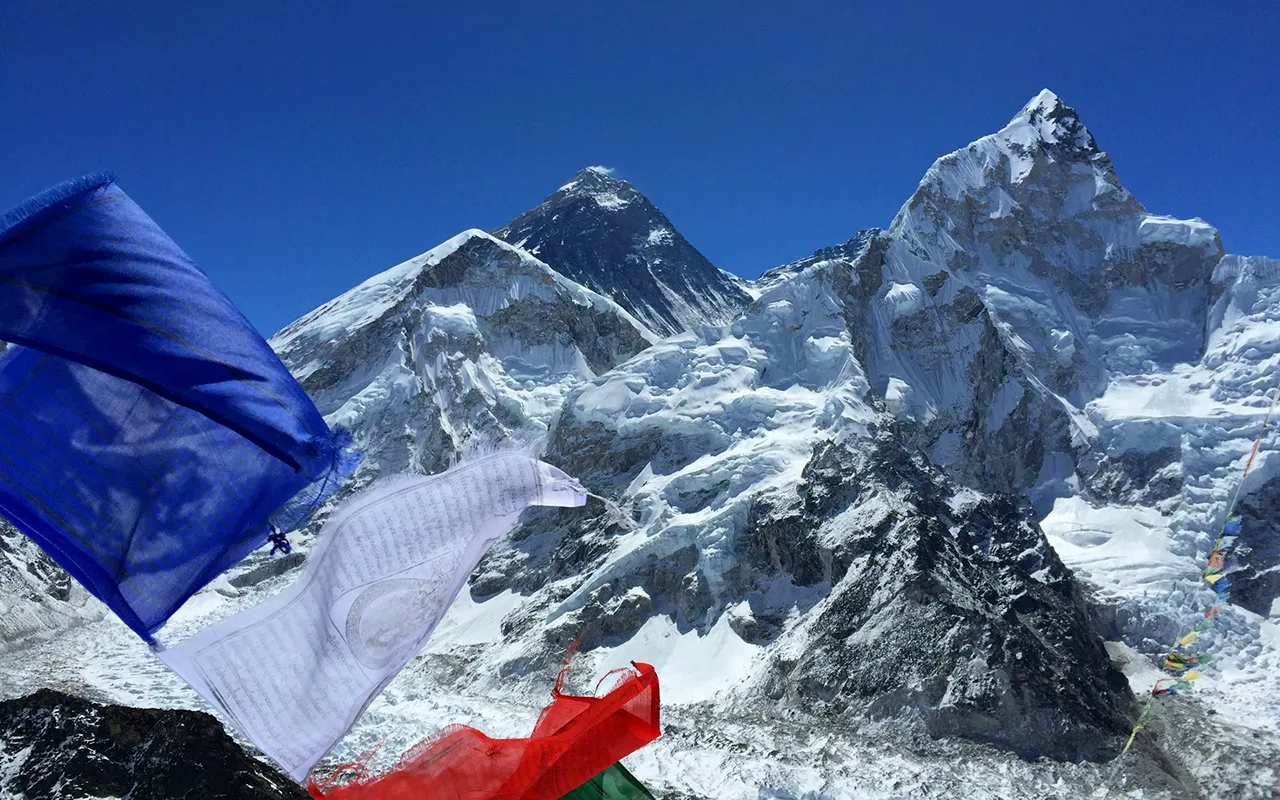
Day 9 of the Luxury Everest Base Camp Trek is yet another exciting day as we will enjoy an amazing sunrise view from Kala Patthar. To make it to the viewpoint on time, we have to start the hike up at around 4 in the morning, depending on the time of sunrise. The ascent will take about 2 hours, leading us to 5555 m above sea level. After enjoying a one-of-a-kind scene of Nuptse, Pumori, Lhotse, and Everest, we will head back to Gorak Shep for breakfast.
Post-breakfast, the descent to Pheriche begins. The initial part of the trail leads us down to Pheriche, over mostly rocky terrain. The trail is not alarmingly steep; it is one of the most doable parts of the trek.
Max. Altitude: 5,555m/18,225ft. (Kala Patthar)
Meal: Breakfast, Lunch & Dinner
Accommodation: Lodge
On the 10th day of the Luxury Everest Base Camp Trek, we will start the descending days. The elevation loss of the day is 395 m, which takes about 6 to 7 hours to complete. Starting from 4250 m above sea level, have to cover about 11 km of distance to reach 3855 m. The trail starts with a slight downhill trek heading towards the village of Dingboche.
Winding through switchbacks, we traverse the Imja Khola Valley and reach the village of Pangboche. We will visit the Pangboche Monastery before continuing the descent. Leaving Pangboche, we have to climb a slight ascent to reach Tengboche.
Activity: 6-7 hrs trek
Max. Altitude: 3,855m/12,648ft. (Tengboche)
Meal: Breakfast, Lunch & Dinner
Accommodation: Lodge
The next day on the Luxury Everest Base Camp Trek, we get back the Namche Bazaar. This trek is 12 km long and takes about 5 to 6 hours to complete. The net elevation loss of the day is 415 m, leading us down to 3440 m by the end of the trek. Starting off, we will go over a steady downhill slope winding through a forested section to reach Phunki Tenga.
Continuing the drop, we will reach Sanasa and rest there for a bit. After a short break, we have to cross a handful of suspension bridges to reach Namche Bazaar. This is the largest town of the region and also the most vibrant one, with lively streets and many modern facilities that you can not find in other Khumbu villages.
Activity: 5-6 hrs trek
Max. Altitude: 3,440m/11,286ft. (Namche Bazaar)
Meal: Breakfast, Lunch & Dinner
Accommodation: Lodge
Day 12 of the Luxury Everest Base Camp Trek is yet another descending day. Today’s total trek distance is 13 km, one of the longest distance of the journey. Starting at 3440 m, the net elevation loss of the day is 790 m, trekking us down to 2650 m. We will complete this trek in about 5 to 6 hours. Descending from Namche, we pass through a forested section and hike down the Namche Hill to reach Jorsale.
From there, we will trek towards the village of Monjo and exit the Sagarmatha National Park. Descending further, the trail takes us to Phakding, our destination of the day.
Activity: 5-6 hrs trek
Max. Altitude: 2,650m/8,694ft. (Phakding)
Meal: Breakfast, Lunch & Dinner
Accommodation: Lodge
The next day is the final trekking day of the Luxury Everest Base Camp Trek. The total distance that we have to cover is just 9 km with a net elevation gain of 250 m. The estimated duration is 3 to 4 hours, starting with a trail following the Dudh Koshi River upstream. En route, we will pass Chaurikharka and a couple of suspension bridges to reach Lukla.
Activity: 3-4 hrs trek
Max. Altitude: 2,860m/9,383ft. (Lukla)
Meal: Breakfast, Lunch & Dinner
Accommodation: Lodge
This is your last day on the Luxury Everest Base Camp Trek itinerary. Starting the day with breakfast at Lukla, we will shortly get on a morning flight to Kathmandu. Reflecting on the experiences you had on the trek, the sense of the Khumbu region accompanies you on the way back.
Max. Altitude: 1,400m/4,593ft. (Kathmandu)

Note:
If you have a private group and prefer a personalized experience, we can organize a custom trip tailored to your requirements and group size, running it any day you choose.
Transportation
Food and Accommodation
Guide and Support Staff
Permit and Expenses
Medical and Gear
Others
International Flights and Visa
Food and Accommodations
Travel and Medical Insurance
Other Expenses
The best season to experience the Luxury Everest Base Camp Trek is spring. During this season, trekkers can experience a great deal of lush forests and blooming flowers. Notably, the blooming Rhododendron flowers en route will surely capture your attention. Moreover, the spring season also offers mild daytime temperatures that are just perfect for trekking. A few of the major festivals also fall in this season; you might just get to witness a cultural celebration during your time in Nepal.
The Luxury Everest Base Camp Trek is a moderately difficult experience. There are some ascents here and there, but they are nothing crazy. However, they do require a certain level of physicality, so we recommend preparing well. Our expert trekkers have rated this trek 7.5 out of 10.
Altitude sickness is a possibility on the Luxury Everest Base Camp Trek; however, it is not a great possibility. Our experienced and knowledgeable guides will make sure that you know all the preventive measures of altitude sickness, and they will also measure your blood oxygen level. Every night and morning, your oxygen levels will be measured to check for early signs of altitude sickness, so we can eradicate it before it grows.
Exercises like jogging, swimming, hiking, cycling, and others that engage your cardio muscles are the best choices. Practically, you do not have to get equipment to do cardio exercises. If you are a gym-goer, you can just use treadmills, a ladder machine, or even do some weighted workouts for strength.
The Luxury Everest Base Camp Trek package provides breakfast, lunch, and dinner every day for the entire trekking days. Your food options are a mix of local and western dishes. Generally, trekkers stick to the national dish of Dal Bhat, as you can get unlimited refills. As for accommodation, we arrange twin-sharing rooms, which is the standard setting in the highlands. You will be spending your nights at premium lodges such as Rivendell Lodge, Himalayan Eco Resort, Everest Inn, and more. We can also arrange private accommodations for you if you prefer. This will come off as additional expenses.
The itinerary that we have discussed above requires trekkers to travel to Lukla at the start of the trek. On the 14th day of the Luxury Everest Base Camp Trek, we have to fly back to Kathmandu from Lukla. Both of these flights are a part of the trek package, and the expenses related to them will be covered by the package. Along with that, we will also drive you to and from the airports to catch your flights to and from Lukla. Note that your international flights are not a part of the package.
You are very likely to receive mobile network connections in the lower region villages like Lukla, Phading, and Namche. As we gain elevation, the reliability of mobile networks drops progressively. However, you can stay connected to the internet since most of the tea houses have WiFi services at a price. Or you can also buy yourself an Everest Link Card, which is basically a personal WiFi that you can use throughout the Everest region. The cost of WiFi or the Everest Card is not covered by the Luxury Everest Base Camp Trek package.
To join this trek adventure, trekkers are required to have the Sagarmatha National Park Permit (SNP) and the Khumbu Pasang Lhamu Rural Municipality Permit. Both of these permits can be obtained from the Tourism Board Office in Kathmandu. The trek package will pay for the fees related to all the permits required by the Luxury Everest Base Camp Trek. During the trekking days, we recommend that trekkers carry their permits at all times.
Visa fees are your personal expenses. If you decide to stay a little longer after the trek, you can take the 30-day visa package, which will cost you USD 50. If you are not planning on doing so, you can just take a 15-day option that will cost you USD 30.
Travel insurance is not a part of the Luxury Everest Base Camp Trek. It is supposed to be your personal expense. Travel insurance will save you from paying the hefty expenses in case of emergencies, if you have to be rescued from the remote highlands via a helicopter. The trek package does not cover any expenses related to travel insurance, nor does it cover any rescue operation-related expenses.
Your extra expenses include international flights to and from Nepal, lunch and dinner in Kathmandu, extra night stays, additional meals, tips for the guides and porters, visa fees upon arrival, insurance fees, and any other personal expenses.
A private Luxury Everest Base Camp Trek takes you along with your loved ones; the trek group will consist of no other people. This can be a great way to spend your vacation in the highlands of Nepal, reaching the base of the Everest. On the flip side, a standard group trek will have you paired with random trekkers and also share a room with another trekker in the group, show you are unlikely to know.
General
We will obtain the trekking permits on your behalf; it just takes a day or two to get the necessary permits. You have to provide us with the necessary documents for it.
No, there are no age restrictions for attempting the Luxury Everest Base Camp Trek. However, we recommend kids under 12 not to join the trek. It can be a bit too much for them.
While mobile network coverage is not available throughout the route, you can join WiFi networks all along the itinerary. However, the speed might not be satisfactory.
You can exchange foreign currencies at a local money exchange in the streets of Kathmandu. That is the most practical and easy way.
No, there are no such pointers; just remember to be respectful and reciprocate the warmth and kindness of the locals.
Starting the trek from Lukla, you do not have to prepare for the altitude difference, as we are considerably in the lower Himalayan region, with no risks of altitude sickness.
Preparation & Fitness
Exercises that include stretching, cardio training, strength training, and breathing exercises can be done to prepare for this trek.
For someone who has not been to any high-altitude trekking, we recommend a training period of 14 to 16 weeks.
On average, you have to cover about 9 to 10 km per day, with an average trek duration of 5 to 6 hours on average.
Yes, hiking with some weight on your back is one of the best exercises to prepare for this trek as it simulates the real trekking conditions.
While there are no official fitness benchmarks for this trek, we recommend that trekkers be capable of walking for hours on end. Stamina is the key to conquering Everest.
 Insurance & Visa
No, a standard tourist visa is only a ticket to enter the country; you need to have the necessary permits to enter the Everest region.
Your travel insurance package must include a high-altitude emergency rescue operation via a helicopter.
Yes, there are many insurance providers that have made a name for themselves. You can ask the trek guide for recommendations.
Yes, the trek guide will check your insurance coverage before the start of the trek. Without being insured, trekkers will not be able to join this trek under any circumstances.
A Nepal tourist visa requires visitors to submit their passport, two passport-sized photos, return tickets, proof of accommodation, a visa fee receipt, and a visa application form.
 Guides & Support Staff
Yes, solo trekking is not allowed in the restricted region of Sagarmatha National Park; licensed guides are mandatory for the trek.
You do not have to pay for guides and porters separately; the trek package will cover their daily wages.
The guides of 3A Adventure are certified in first aid training and have years of experience as a qualification. Generally, guides are not graded by certificates, but rather by their experience and knowledge of the regions.
Usually, personal gear is to be carried by trekkers themselves. A single porter can carry about 24 kg of weight from the start to the end of the trek.
There will be no language barriers when communicating with the guide; however, not all porters are well-versed in English. The guide can bridge the communication gap in such cases.
The working conditions of our crew members are very favorable; we ensure that they are not suffering while performing any of their daily duties along the trek.
 Accommodation and Facilities
The most popular meal along the EBC route is definitely Dal Bhat. It is the national dish of Nepal, featuring rice, lentils, veggies, or meat, with some side condiments as well. Momo (Nepalese dumplings) is also one of the favorites of the region.
The teahouses of the Everest region are very clean and comfortable, and we will make sure not to take you to an unhygienic establishment. Yes, the tea houses provide blankets, but we recommend trekkers take a sleeping bag with them.
Yes, it is possible to charge electronic devices at teahouses; however, since every resource is scarce in the highlands, you will be charged a buck or two. Especially in the remote high-altitude villages.
Yes, there are a few private rooms available at some of the tea houses along the way, but the standard accommodation arrangement is to stay in a shared room.
While it is generally safe, we recommend trekkers use purification tablets.
 Food and Drinks
Yes, you can purchase energy bars and snacks along the trail. You do not have to bring them from Kathmandu.
 Weather & Seasons
During the seasons of autumn and spring, the skies are generally clear with great visibility in the air. The daytime temperature ranges from 10°C to 15°C.
Flight delays are not that common during the peak travel seasons, but if you happen to have one, there is no other option but to wait.
To deal with temperature changes, you have to pack a few lightwears, insulating layers, and warm down jackets.
While it is not an annual thing, the trail to EBC can close during the monsoon and winter due to heavy rain and snow. However, the chances are pretty low.
Thick rain clouds, heavy rainfall, and fog can affect the visibility on the Everest Base Camp trek.
The risks of trekking during the latter days of November are snow-covered trails, icy patches en route, freezing nights, occasionally blocked trails, etc.
 Health & Safety
There are many early signs of altitude sickness, including nausea, lightheadedness, shortness of breath, etc.
Yes, there are medical posts at villages like Namche, Pheriche, Dingboche, Pangboche, and Gorak Shep. Some of the villages even have Himalayan rescue posts for immediate responses to distress calls.
For this trek, trekkers need to have sunscreen, sunglasses, trekking poles, layered clothes, hats, a beanie, etc.
Slipping on snow-covered, icy, and muddy trails is quite common, but you can avoid them with good gripping shoes.
Solo trekking is not a possibility in the region, regardless of gender. However, if you are on a private trek with no one but a porter and a guide, you have nothing to worry about.
You should pack the medications you are on, after consulting a physician, and also a few altitude sickness pills, in case you need them.
 Booking & Payment
Travelers are free to cancel their trek anytime, and as per the policy, you will be refunded a certain amount of the initial deposit, depending on the time of cancellation.
No, there are no hidden fees. Everything that the trek package covers is stated clearly.
If you want to do this trek in autumn or spring, we recommend booking the trek at least 3 or 4 months prior.
No, even if the services are not used by you, we still have to pay for them to be available to you during the trek. So, you are not going to get a refund for unused services.
No, there are no reputable digital platforms to book treks; the best thing to do is to book with the agency directly; avoid the middleman.
Yes, most of the trekking agencies include permit fees and transportation fees, including flights and ground transport. You do not have to pay for them separately.
 Transportation & Flight
You do not have to bother with booking any kind of transportation for this trek, except your international flight to and from Nepal.
Yes, we can also take an alternative flight to Lukla from Ramechhap. Additionally, we can trek to Lukla from Salleri village.
You do not have to use outside transport services; one of our reps and drivers will pick you up from the airport, regardless of the time of day.
Yes, we will take you on a private vehicle if we have to get to Ramechhap to get on a flight to Lukla.
From Kathmandu, it takes about 35 minutes to reach Lukla, while from Ramechhap it takes about 20 minutes.
No, there are no such restrictions; however, flammable things are generally not allowed along with plants and raw food.