

Need Help?
+977 9860666075

Based on 27 reviews

Trip Duration
8 Days
Trip Difficulty
Moderate
Max Altitude:
4,773m. / 15,659ft.
Group Size
2-16 People
Meals
Breakfast, Lunch & Dinner
Accommodation
Hotel, Lodge
Transportation
Tourist BusThe Langtang Trek is one of the most accessible trekking destinations in Nepal, making it a perfect choice for those who prefer easy access and short treks. This 8-day journey takes you to experience the rich culture of Tibetan and Tamang communities along the Langtang region. This trek is a unique combination of a Himalayan trekking experience paired with cultural exposure.
Located just about 120 km from the capital city of Kathmandu, this trekking destination also encompasses the Langtang National Park, which has a size of 1710 sq. km. Travelers can easily reach the starting point of the trek with a 7 to 8 hour drive from Kathmandu, reaching Sybarubesi. The Langtang region borders Tibet and hence features many Tibetan-influenced assets such as the local culture, the Tibetan Buddhism religion, and the Tibetan-influenced temples and houses.
The villages we visit on this trek are dominated by Tamang and Tibetan communities who are very religious and friendly. Sometimes they are also referred to as Langtangpas, people of Langtang. As soon as you reach a village, you will be greeted with a smile by the locals, but do not expect them to be able to communicate in English. Most people in the region can barely communicate well in English, which is one of the reasons you need a guide.
Apart from the rich culture, the region is popular for being one of the most stunning places in Nepal. Starting from subtropical forests, we will reach alpine pastures at the climax of the trek. Scenes from viewpoints like Kyanjin Gompa, Kyanjin Ri, and Tserko Ri are simply unforgettable. You will see many scenes of the peaks nearby and distant ones as well.
If you want to experience this beautiful journey to the mountains, we recommend that you read this trek package thoroughly to understand the nuances of the trek. We have discussed all the important aspects so that you know what you are getting into.

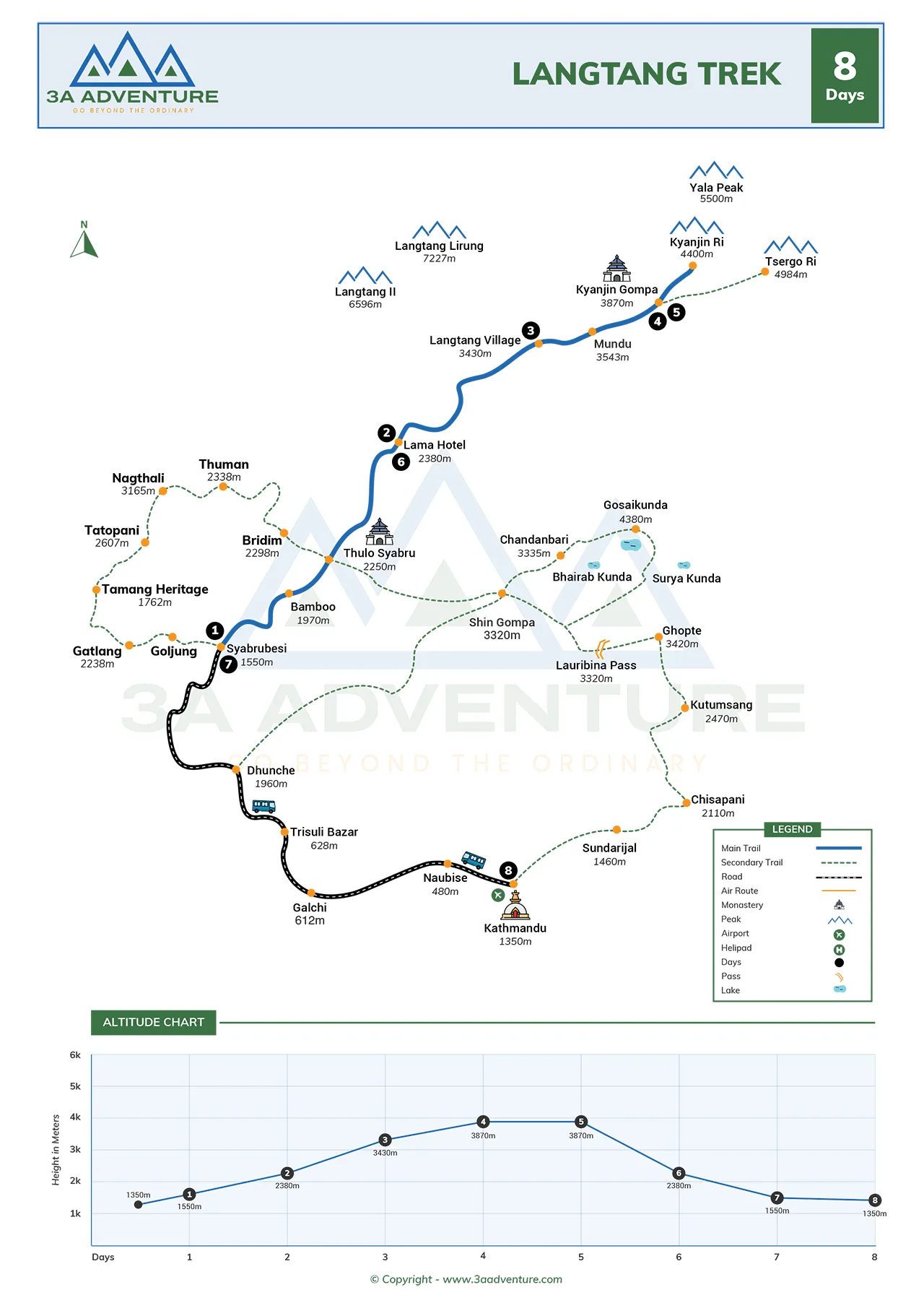
This is the start of your Langtang Trek. You will be taking a ride to Syabrubesi, the starting point of the trek. This drive covers about 122 km of distance within 7 to 8 hours of driving. It takes much time to cover just a hundred kilometers because the road conditions are not below average, with potholes and winding sections all along. Also, we have to leave the highway at some point and ride over narrow 2-lane roads that eventually lead uphill over rugged tracks.
Leaving Kathmandu after breakfast, we head north and drive towards Hattigauda. From there, we will head northwest and reach Battar, passing by small settlements along the way. Following the Pasang Lhamu Highway, we will take a right turn and head north towards the Trishuli Bazaar. Soon after, we will reach the village of Dhunche, which serves as the gateway to Langtang National Park. We can also spend the night in Dhunche if you would prefer so.
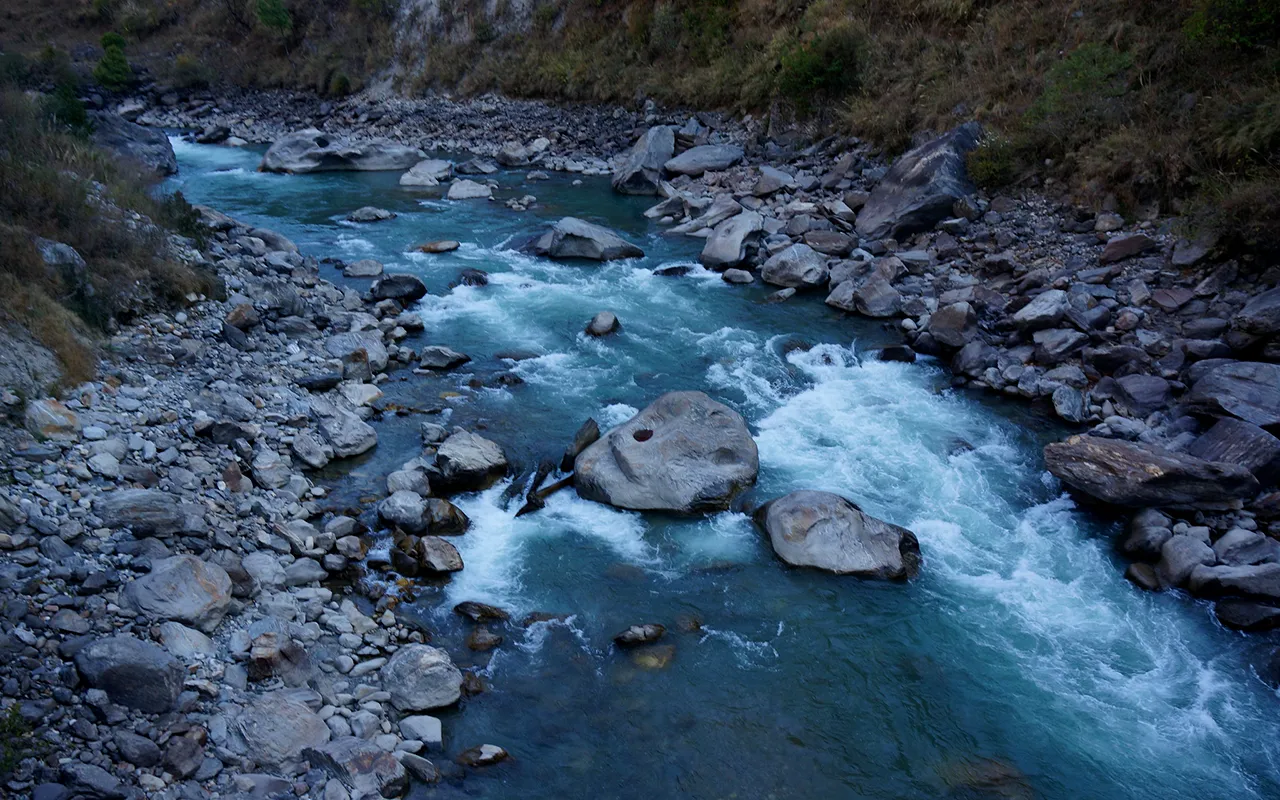
Syabrubesi is not that far from Dhunche, it is just 8 km away, but the road condition is much worse compared to the rest of the road. This village sits beside the Bhote Koshi River and offers inns and lodges for trekkers and travelers.

Activity: 7-8 hrs drive

Max. Altitude: 2,380m/7,808ft. (Syabrubesi)

Meal: Breakfast, Lunch & Dinner

Accommodation: Lodge
Today’s trek distance is about 11.5 km with an estimated trek duration of 6 hours. After breakfast at Syabrubesi, sitting at 1503 meters, we will start the trek to 2470 meters above sea level. This is an elevation gain of 967 meters, beginning with crossing the Bhote Koshi River over a suspension bridge. From there, the trail follows the river and winds through a forested section, passing by occasional tiny settlements.
Crossing a couple of suspension bridges, the trail leads us to Rimche village. The trail to this village is a bit ascending, reaching 2400 meters above sea level. Once we reach there, we will stop for lunch and rest for a short period. After having our meal, the trail ascends yet again, but it’s still a gradual incline that’s very doable. Soon after, we will hit the final stretch of the day and reach the Lama Hotel.
This village is named after the huge hotel there, accompanied by a bunch of inns, lodges, and tea houses. We will spend the night at the Lama Guest House and have a peaceful sleep with the sounds of the Langtang River in the nearby distance.
Activity: 6 hrs trek
Max. Altitude: 2,470m/8,104ft. (Lama Hotel)
Meal: Breakfast, Lunch & Dinner
Accommodation: Lodge
The next day on the Langtang Trek itinerary, we have to cover a total distance of 14.8 km, which can take about 6 hours to complete. The trek starts at 2470 meters above sea level and takes us to 3430 meters by the end of the day, gaining us 960 meters of altitude. Leaving the Lama Hotel, we pass by a lush forest following the Langtang River. The sound of the gushing river water keeps us company throughout.
After a short flat walk, we will gently ascend with a few steep inclines and gain substantial elevation. This trail eventually leads us to the village of Ghoda Tabela, which translates to Horse Stable. This village sits at 3030 meters above sea level and serves as a great resting spot. This area was once a settlement for Tibetans; the remnants of the past settlement are still visible.
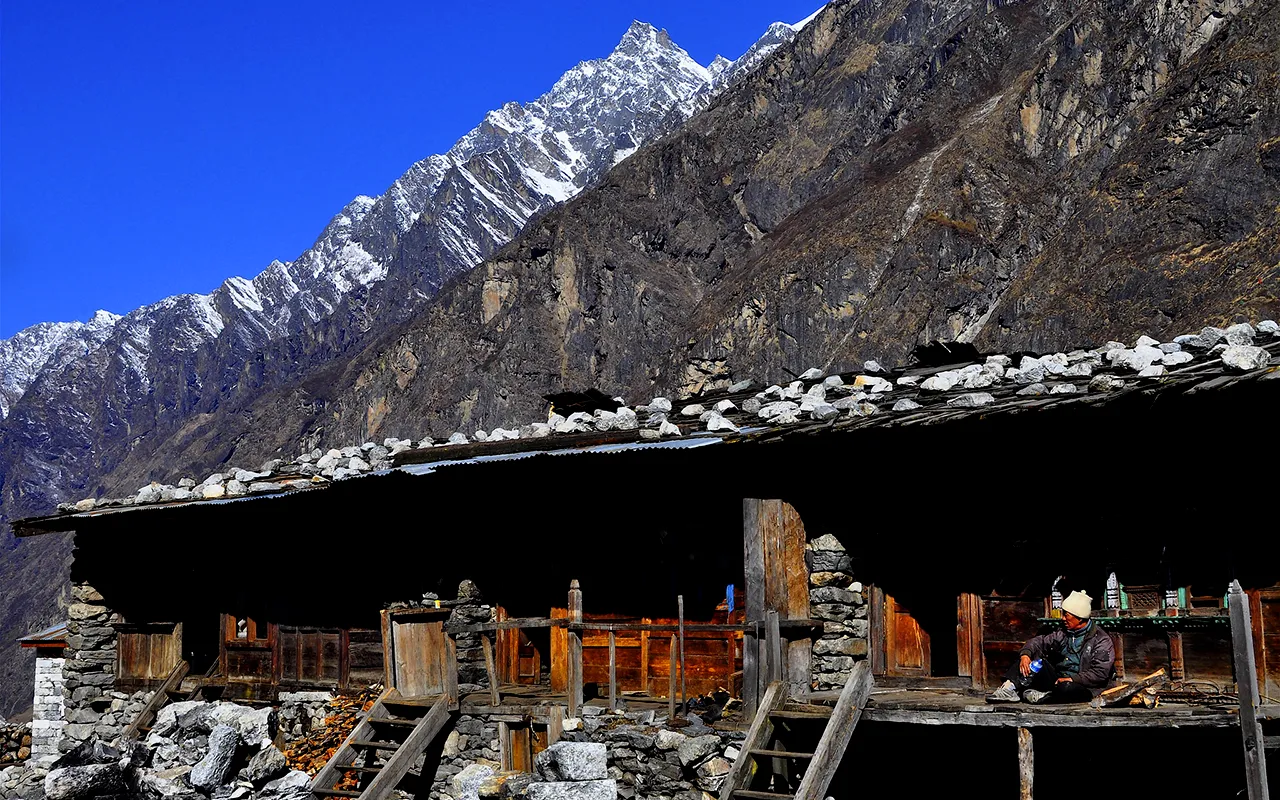
From there, we will head to Chyamki Village, our lunch spot of the day. The beautiful traditional stone houses are among the last remaining ones in the region. The final ascent of the day is a simple, gradual one with scenes of the Langtang mountain range.
Activity: 6 hrs trek
Max. Altitude: 3,430m/11,253ft. (Langtang Village)
Meal: Breakfast, Lunch & Dinner
Accommodation: Lodge
Day 4 of the Langtang Trek features a 6.8 km trek with an elevation gain of 435 meters. This trek begins at 3430 meters above sea level and takes us all the way to 3865 meters, which takes about 3 hours to complete. Departing from Langtang village, we have to get on an ascending trail. The path is easier in comparison to the previous day, and the terrain offers a clear view of the entire Langtang Himalayan range.
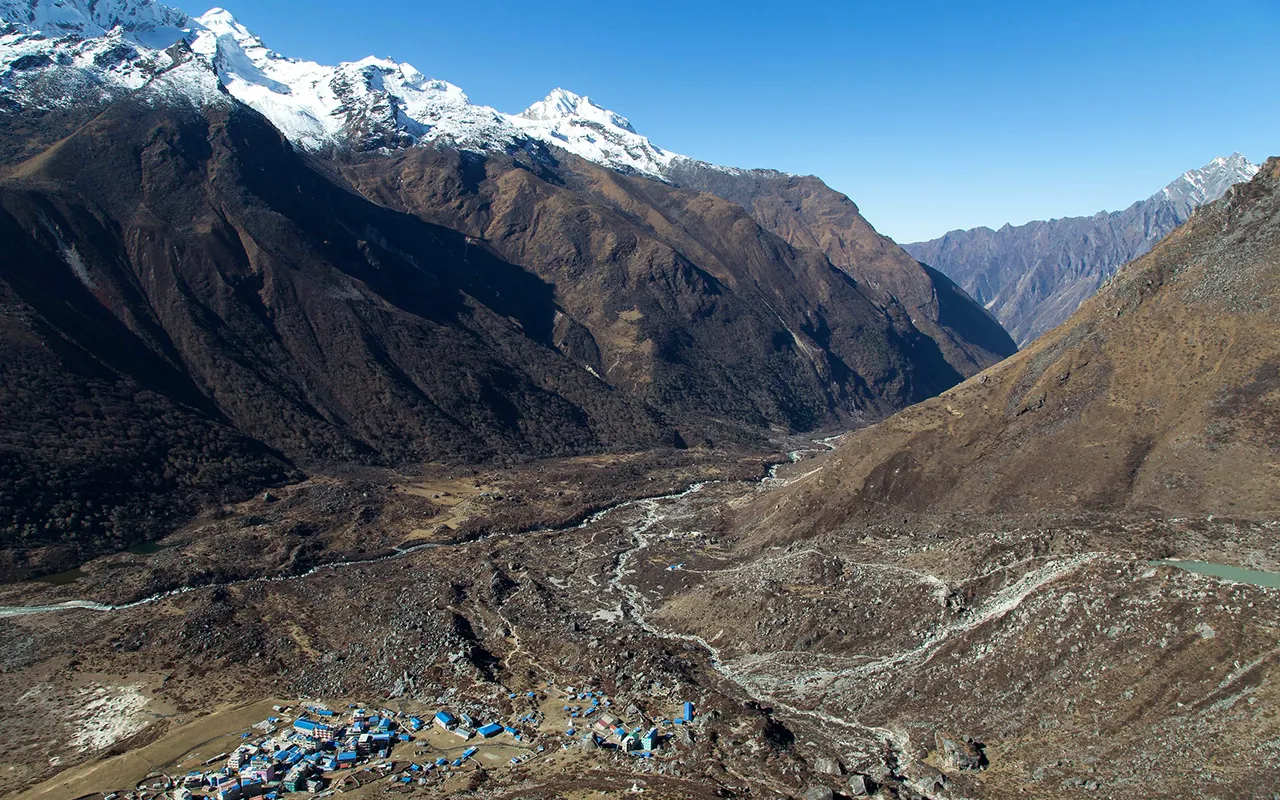
Traversing through open, wide pastures, we have to cross some streams en route as we gain elevation. You will also get to see Mani walls and chortens along the way. Soon after, we will arrive at Kyanjin Gompa, where stunning scenes await us. Along with being a significant cultural landmark, this village offers a gorgeous view of the Langtang II peak. We will check in at our accommodation, and you can spend the rest of the daylight hours strolling around the alleyways.
Activity: 3 hrs trek
Max. Altitude: 3,865m/12,680ft. (Kyanjin Gompa)
Meal: Breakfast, Lunch & Dinner
Accommodation: Lodge
After the shortest trekking day on the Langtang Trek itinerary, we now have a rest/exploration day. To make the most of our time, we will get on an acclimatization hike to either Tserko Ri or Kyanjin Ri. Regardless of the acclimatization hike destination, we will begin the morning with a visit to Kyanjin monastery. After that, we will have a leisurely breakfast at the accommodation and hit the hiking trail.
A hike to Tserko Ri will take about 4 to 5 hours, gaining us 1585 meters of elevation, reaching 5450 meters above sea level, the highest point of the entire Langtang Trek. This hike is going to be a bit difficult, featuring steep ascents and loose rocky trails. From the top of the ridge, we can see Langtang Lirung, Yala Peak, and most of the Langtang Himalayan range. This panoramic view is one of the best scenes of the Himalayas you will ever see.
Our other option is the hike to Kyanjin Ri, which is also the standard acclimatization hike option chosen by most people. Involving a gradual ascent, this hike is much doable in comparison to Tserko Ri. Gaining 908 meters of altitude, this hike reaches 4773 meters above sea level, and the estimated duration is 2 to 3 hours. After we are done with the hike, we will visit the Cheese factory where you can taste many varieties of local cheese.
Activity: 4-5 hrs
Meal: Breakfast, Lunch & Dinner
Accommodation: Lodge
Day 6 of the Langtang Trek itinerary stretches over 21 km, making it the longest trek distance of the journey. The estimated trek duration is 6 hours, taking us to 2470 meters, starting the day at 3865 meters above sea level. This trek will lose us 1395 meters of elevation, beginning with a gradual descent out of the village, admiring the final scenes of Langtang Lirung peak. Soon after, we will reach the Langtang Village, where we will rest for a bit.
Leaving the Langtang village, the trail is initially easy with wide views of the landscape. Before long, we will make it to Ghoda Tabela. This will be our second rest stop of the day. From there, we have to head towards Chyamki village, reaching 3230 meters above sea level. This tiny village will serve our lunch for the day. After the meal, we will trek a narrow trail and enter the Langtang River valley.
As we continue trekking, the trail gets steeper and goes through a windy forested section. Dropping down sharply, we will soon reach the Lama Hotel and check into our room for the night.
Max. Altitude: 3,865m/12,680ft. ()
Meal: Breakfast, Lunch & Dinner
Accommodation: Lodge
On the 7th day of the Langtang Trek, we have an 11.3 km of trail to cover, which can take us about 5 hours to complete. The elevation loss of the day is 967 meters, taking us down to 1503 meters above sea level starting from 2470 meters. Leaving the Lama Hotel, we have to trek alongside the Langtang River, following its curves downstream. The initial part of the descent is gradual, passing by terraced farmlands and crossing small tributaries.
Soon after, the trail goes through a dense forest and leads us all the way to the village of Rimche, at 2400 meters above sea level. This tiny village is one of the major villages in the region, offering a great place to rest and eat. After lunch at Rimche, we have to cross the Langtang and Bhote Koshi rivers to get to Syabrubesi.
Activity: 5 hrs trek
Max. Altitude: 2,470m/8,104ft. (Syabrubesi)
Meal: Breakfast, Lunch & Dinner
Accommodation: Lodge
Today is the last day of the Langtang Trek. After we are done with the final processes, we will hold a short farewell session to congratulate you on the successful journey. One of our reps will escort you to the international airport as per your preferred time.
Max. Altitude: 1,400m/4,593ft. (Kathmandu)

Note:
If you have a private group and prefer a personalized experience, we can organize a custom trip tailored to your requirements and group size, running it any day you choose.
Transportation
Food and Accommodation
Guide and Support Staff
Permit and Expenses
Medical and Gear
Others
International Flights and Visa
Food and Accommodations
Travel and Medical Insurance
Other Expenses
The Langtang Trek is best experienced during the spring season since the forested trails will come to life, offering lush jungles and vibrant flowers. The spring season is also the time when Rhododendron flowers bloom, making the Rhododendron forests seem like something out of a fairytale. In addition to that, the daytime temperature is very suitable for trekking with fewer chances of rainfall. The weather is pretty clear for the most part, but unexpected turns can happen every now and then.
The Langtang Trek is not a difficult trek at all; in fact, it is graded as a moderately difficult trek that is suitable for beginners as well. There are no technical skills required for this, and certainly no tricky and technical passages en route. However, there are some steep ascents and descents that are definitely not a piece of cake. Outside of that, you do not have to worry about any difficult aspects.
The highest point of the Langtang Trek is 4,773 meters above sea level, at Kyanjin Ri. If you decide to go further, we can reach 5450 meters above sea level at Tserko Ri, but this hike is meant for well-experienced trekkers only. So, a standard experience will get you to 4773 meters of maximum altitude, which is not very alarming. Even if you were to get altitude sickness, the effects of it are very trivial and non-lethal.
Preparing well for your trek is always a beneficial thing to do, even though you are someone who lives an active lifestyle. There is no disadvantage to getting some workout done for your Langtang Trek. 3A Adventure’s trek experts recommend light exercise such as swimming, jogging, walking, cycling, and others to engage your cardio muscles, and also boost stamina.
The food options during the trekking days are pretty normal; you can get many types of Nepali dishes, some western options, and some local food. The trek package will provide 3 meals per day, but no drinks, except the ones the tea houses include with the meals. On the other side, all nightly accommodation expenses are covered by the package. You will share a room with one of the fellow trekkers in the group.
The transportation required by the itinerary above will all be covered by the Langtang Trek package. This includes all the ground transportation we discussed in the detailed itinerary section.
Mobile networks will work in most villages in the region, but you will receive zero network in some places that are towered by hills or hidden by the valley. 3A Adventure’s guide will carry a satellite phone to make sure that he can actively communicate with the team and call for help when needed.
This trek required trekkers to have just the Langtang National Park Entry Permit. This permit fee will be covered by the package.
At your entrance to Kathmandu, the officials will have you obtain your tourist visa, which requires paying the visa fees. As per your desired number of days, you will have to pay your visa fees at the immigration section. This will not be covered by the Langtang trek package at all.
Travel insurance is a must for any trekking destination. Not only do they cover emergency rescue operation costs, but some packages also cover your medical costs. Just like your visa fees, the trek package will not cover your travel insurance fee.
The extra expenses of this trek are additional meals, visa fees, international flights, emergency medical care, travel insurance, extra nights, and more.
If you want to experience this trek in a private circle of friends and family, you can choose our private trek option. Although it will cost you a bit more, the price is worth the experience. Meanwhile, a group trek is full of random trekkers, whom you get to befriend as you go along the trek.
General
Including the hike to Tserko Ri, the Langtang Trek stretches about 72 km.
In terms of scenery, the Langtang trek offers views of the Langtang Himalayan range and the Langtang Valley. Whereas EBC and Annapurna treks have their own sets of scenes, unique to them.
Yes, it is certainly a possibility; however, we must make sure that the extended journey is a possibility at the given time.
It was established back in 1952, with the help of the Swiss government. Yes, you can buy cheese from the factory.
While not fully rebuilt, the region has almost reached 95%. The services are no longer affected, nor is the overall trekking experience.
Preparation & Fitness
You should have the fitness level to walk for 6 to 7 hours without any setbacks.
No, prior experience at high altitudes is not necessary for the climb to Kyanjin Gompa.
Just normal and sturdy trekking shoes are best for the rocky and forested paths in Langtang National Park.
Yes, trekking poles are crucial for descents and ascents as well. They support your upper body as well as your lower legs.
You should be able to carry around 3 to 4 kg of stuff in your daypack.
 Insurance & Visa
You do not have to deal with this hassle; the trek guide will obtain the permits on your behalf.
Any normal travel insurance that covers medical expenses and rescue operations up to 6000 meters above sea level is good enough.
No, extra permits are not needed to visit sites like Langshisa Kharka or Gosainkunda Lake.
Yes, the main purpose of getting travel insurance is to save yourself from breaking the bank, paying for emergency evacuation services.
The airport officials will guide you towards the immigration section, where you have to apply for a tourist visa and pay the visa fees to enter the country.
While we do not promote any insurance company, you can ask the trek guide or our reps for a recommendation.
 Guides & Support Staff
Yes, licensed guides are your ticket to enter restricted areas such as a national park.
Expect things like smartphones, cameras, snacks, and water bottles; you can give your whole luggage to the porters.
3A Adventure’s strong porters are capable of carrying about 25 kg of total weight. He will carry the luggage of two trekkers in the group.
Yes, our guides are experienced and trained in following medical protocols in times of emergencies.
Yes, our crew members are equipped with everything they need.
 Accommodation and Facilities
No, private and attached bathrooms are not a thing in the remote highlands. You will rarely find tea houses and lodges that offer such services.
The bedding quality is quite normal; it’s comfortable and warm, and the amenities are very basic.
Yes, hot showers are not a part of the standard stay; they will prepare hot water on demand, and it will cost you a couple of bucks.
 Food and Drinks
Typically, you will find Dal Bhat everywhere, with a couple of Western dishes like pasta, noodles, sandwiches, etc.
Yes, you are free to buy anything you like on the trail, but this is your personal expense.
 Weather & Seasons
October is the best month for optimal conditions and minimal rainfall.
No, generally, landslides do not occur in the Langtang region as it is well forested.
It will not affect the overall accessibility that much, but you will have to traverse snow-covered trails.
Yes, during the spring and autumn seasons, clear nights are very common.
Usually, clouds and fog are not present during the autumn and spring seasons.
 Health & Safety
The chances of altitude sickness on the Tserko Ri hike are low since we will not be spending much time at the top.
Yes, it is more than safe to trek in the Langtang region.
You do not have to pack a first aid kit since the porters will carry some for the group.
Yes, the trails are safe for trekking in winter, but they will all be covered in snow.
No, carnivores do not usually show up at human trails; they live deep inside the forests.
 Booking & Payment
You must reserve the trek about 2 or 3 months prior to the intended start.
You are free to cancel the trek anytime, but you will not be fully refunded.
Yes, adding side trips requires further planning, arrangements, and manpower, so it is going to cost extra.
Yes, you can modify the 8-day Langtang Trek to include additional days in Kyanjin Gompa. This will come at a price.
Yes, your deposit will be refunded in case of natural events like landslides or heavy snowfall. However, a certain portion of the amount will be withheld to compensate the manpower and working hours we put into it.
 Transportation & Flight
The vehicle used for the 122 km trip from Kathmandu to Syabrubesi is a shared jeep that runs locally.
No, road closures are not common in monsoon, but it might happen in rare cases.
Yes, you can opt for a private jeep instead of a bus for the return from Syabrubesi to Kathmandu, but this will be treated as an additional expense.
Yes, there are rest stops during the drive to Syabrubesi, but the amenities are limited to washrooms and restaurants.
No, there are no airstrips near Syabrubesi. You have to get on a bus to start the trek.
Between Dhunche and Syabrubesi, the road quality is not that great.