

Need Help?
+977 9860666075

Based on 27 reviews

Trip Duration
13 Days
Trip Difficulty
Moderate
Max Altitude:
4,985m. / 16,355ft.
Group Size
2-16 People
Meals
Breakfast, Lunch & Dinner
Accommodation
Hotel, LodgeIf you are looking for an adventurous trek through one of Nepal’s most diverse regions that is characterized by intense nature experiences, then look no further. 3A Adventure presents its Langtang Gosainkunda trek, the trek that combines three astounding regions of Langtang, Gosainkunda, and Helambu.
The Langtang Gosainkunda trek is counted among Nepal’s most popular hiking journeys, but attracts only a fraction of the travelers compared to Everest and Annapurna, which is a plus. This adventure is therefore made for those conscious trekkers who have a strong passion for mountaineering and walking.
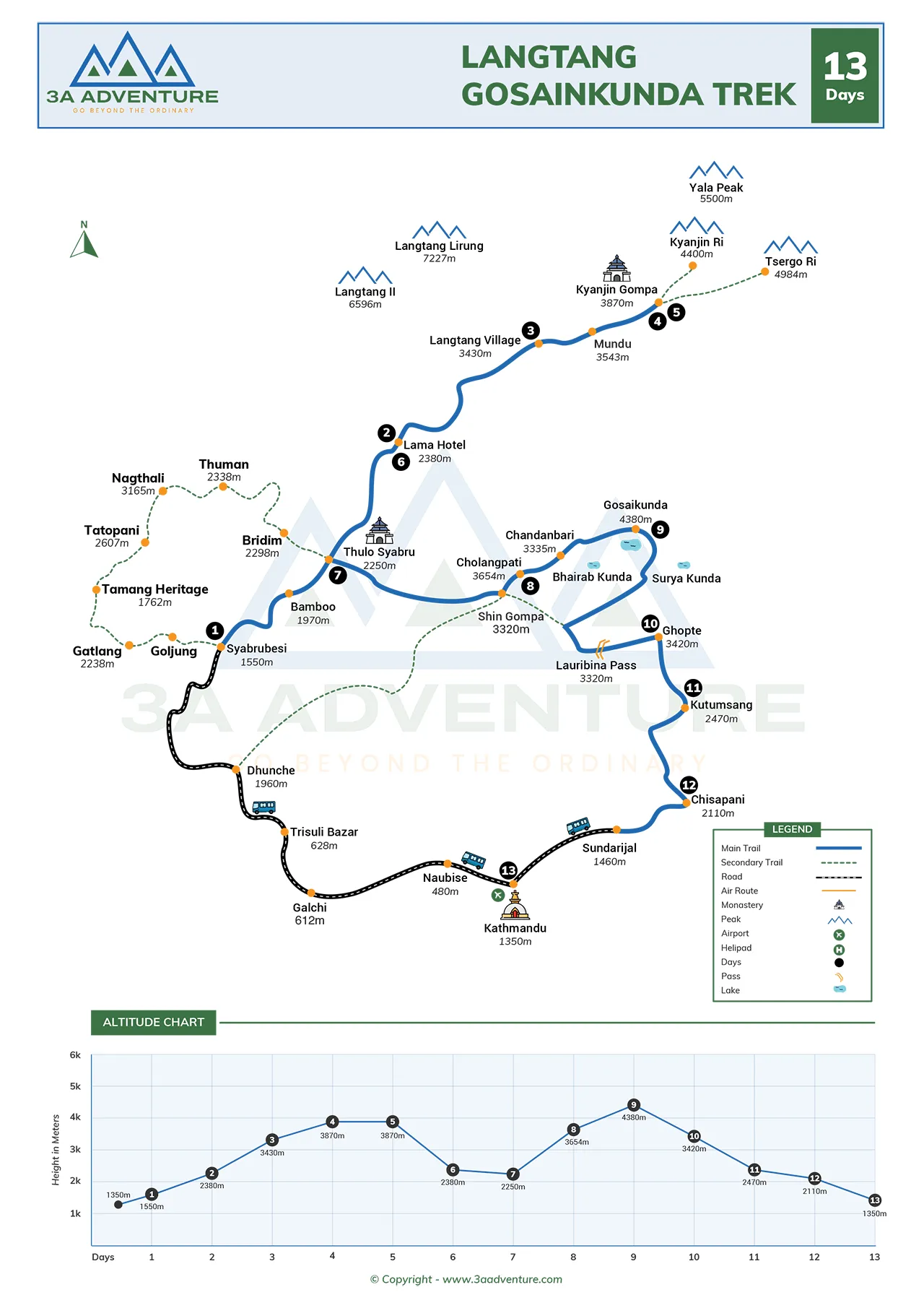
Our Langtang Gosainkunda trek itinerary will first take you through Syabrubesi to the Langtang Valley, located near the Tibetan border, north of Kathmandu, beneath the Langtang massif in the Langtang National Park.
The population of this valley is of Tamangs, who are of Tibetan descent. The several stupas, prayer walls, prayer flags, and monasteries that we encounter on the trail thus testify to their Buddhist faith.
Then the Langtang Gosainkunda trek 13 days journey, will begin walking you through the green pine and rhododendron bushes. On the days ahead, you will keep ascending through the alpine shrubs and come closer to the higher peaks of Langtang as you reach Kyanjin Gompa, the first attraction of our Langtang Gosainkunda trek.
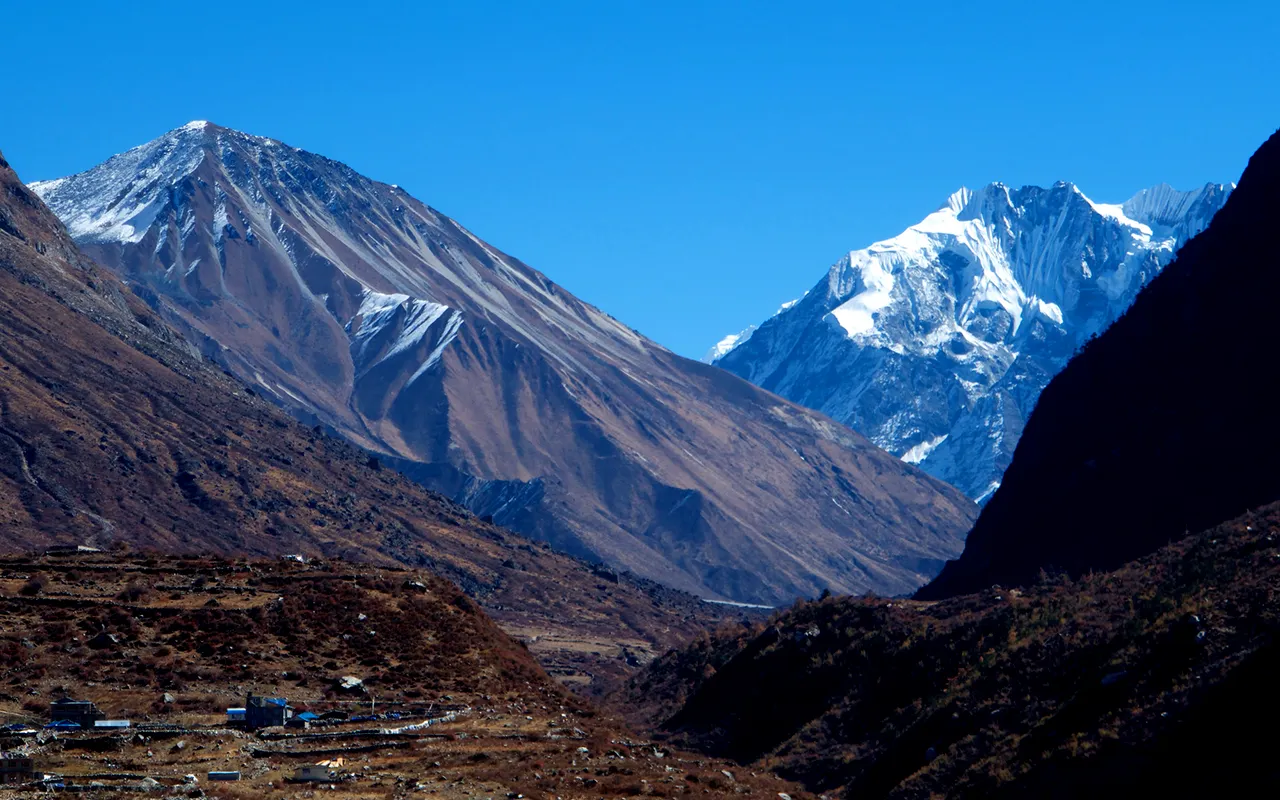
Here, you will enjoy the staggering views of the region’s highest mountain, Langtang Lirung (7234 m). On the other side, you can see the mountains of the Ganesh Himal.
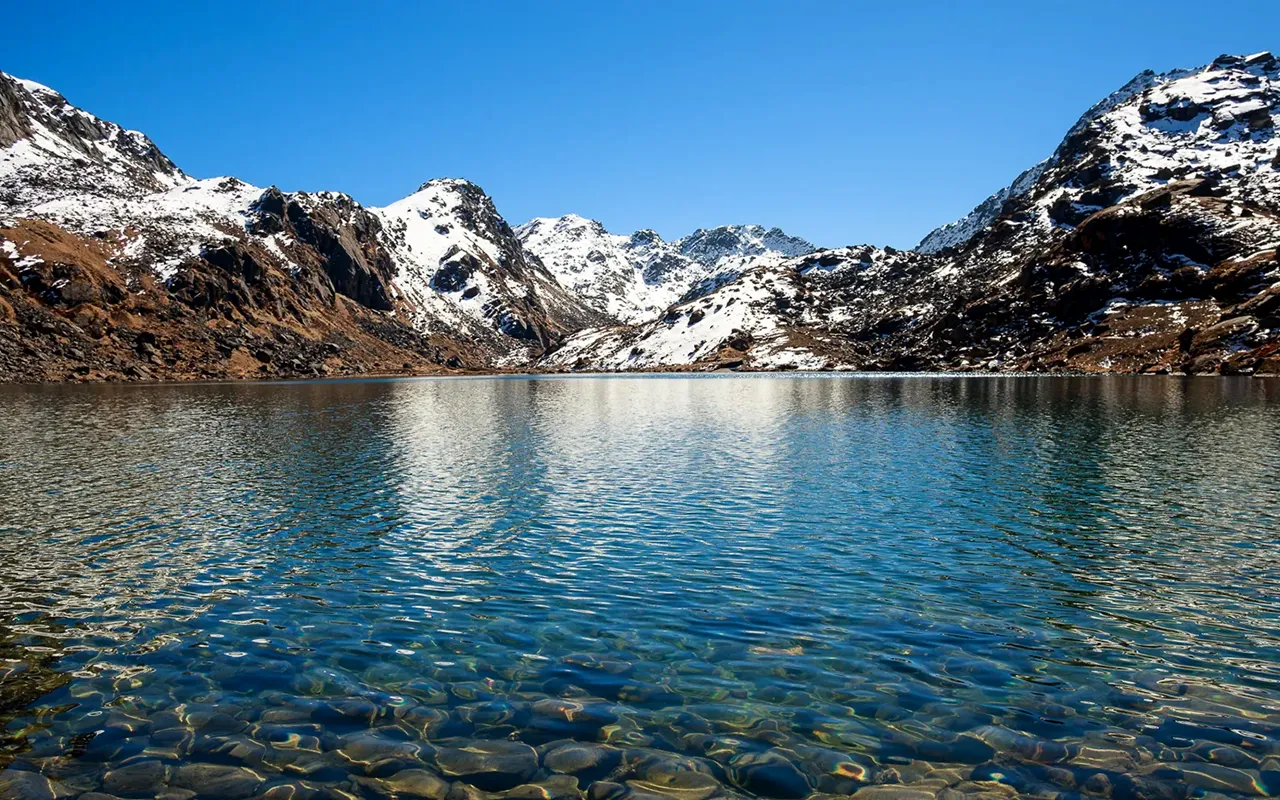
Then our Langtang Gosainkunda trek will take you to another highlight of the trek, the sacred lakes of Gosainkunda shimmering with crystal-clear water amidst the majestic mountains.
These mystical bodies of water are of great religious significance to the local population and offer a striking scenery that invites peace and contemplation. The clear skies, snow-capped peaks, and untouched nature immerse hikers in another world.
Legend has it that Gosainkunda was formed by Shiva when he pierced a glacier with his trident. He did so to quench his thirst after ingesting a poison that threatened to destroy the world.
Thus, every Janai Purnima (Full moon of July/August), Hindus and Buddhists flock here and perform a Pradakshina or Parikrama of the Lake.
Now, our Langtang Gosainkunda trek will advance you to another highlight: the crossing of the Lauribina Pass at 4610 m. This Pass acts as a border separating Gosainkunda from Helambu Valley.
The last leg of our Langtang Gosainkunda trek will now take you through the green villages of Helambu Valley, such as Kutumsang and Chisapani. You will then traverse one more stunning national park in Nepal, Shivapuri. From Sundarijal, you will find your local public transport back to Kathmandu.
During the entire period of our Langtang Gosainkunda trek, you will sleep in simple mountain tea houses. Also, you don’t need to be a trained climber to do this trek, but you do need to be a good hiker.

Our Langtang Gosainkunda trek will commence early in the morning with a departure from Kathmandu towards the north in Syabrubesi of Rasuwa, very near to the Nepal-Tibet border.
We will escape the hustle of the city through Thankot and join the Pasang Lhamu Highway. The drive through Trishuli will be remarkable as we begin to see the passing sights of Manaslu, Langtang, Ganesh, and Annapurna Peaks.
We will make regular stops at Rani Pauwa and Dhunche before we are at Syabrubesi. The Langtang National Park is very enchanting and peaceful, a good spot to rest, so we begin trekking the next day.

Activity: 7-9 hrs drive

Max. Altitude: 1,503m/4,931ft. (Syabrubesi)

Meal: Breakfast, Lunch & Dinner

Accommodation: Lodge
The path today will take us inside the marvelous Langtang Valley. We will move across the solidly hung metal bridges over the rushing currents of Bhote Koshi.
We will then pass by the 1620 m Dhomen settlement, after which the Langtang Khola will start showing us our path onward. A narrow Bamboo forest path at 1970 m will climb up to Rimche (2400 m).
We will climb back up again into the Langtang Valley to our overnight lodge at the Lama Hotel.
Activity: 5-6 hrs trek
Max. Altitude: 2,500m/8,202ft. (Lama Hotel)
Meal: Breakfast, Lunch & Dinner
Accommodation: Lodge
Langtang Khola will once again be our guiding angel, taking us onward through Ghuman Chowk and Chhunama Villages before we take a lunch break at Ghoda Tabela (3000 m).
The occasional glimpses of Langtang Lirung through the pine forest will be pretty calming to see. Moving onward, a military checkpoint will stop us to review our permits.
Now, the trail starts to march upward first gently, then more steeply to Thangshyap. We will keep on marching upward through the forest of Chyamki and Ghumba to finally conclude our today’s long walk at Langtang.
Activity: 5-6 hrs trek
Max. Altitude: 3,430m/11,253ft. (Langtang Village)
Meal: Breakfast, Lunch & Dinner
Accommodation: Lodge
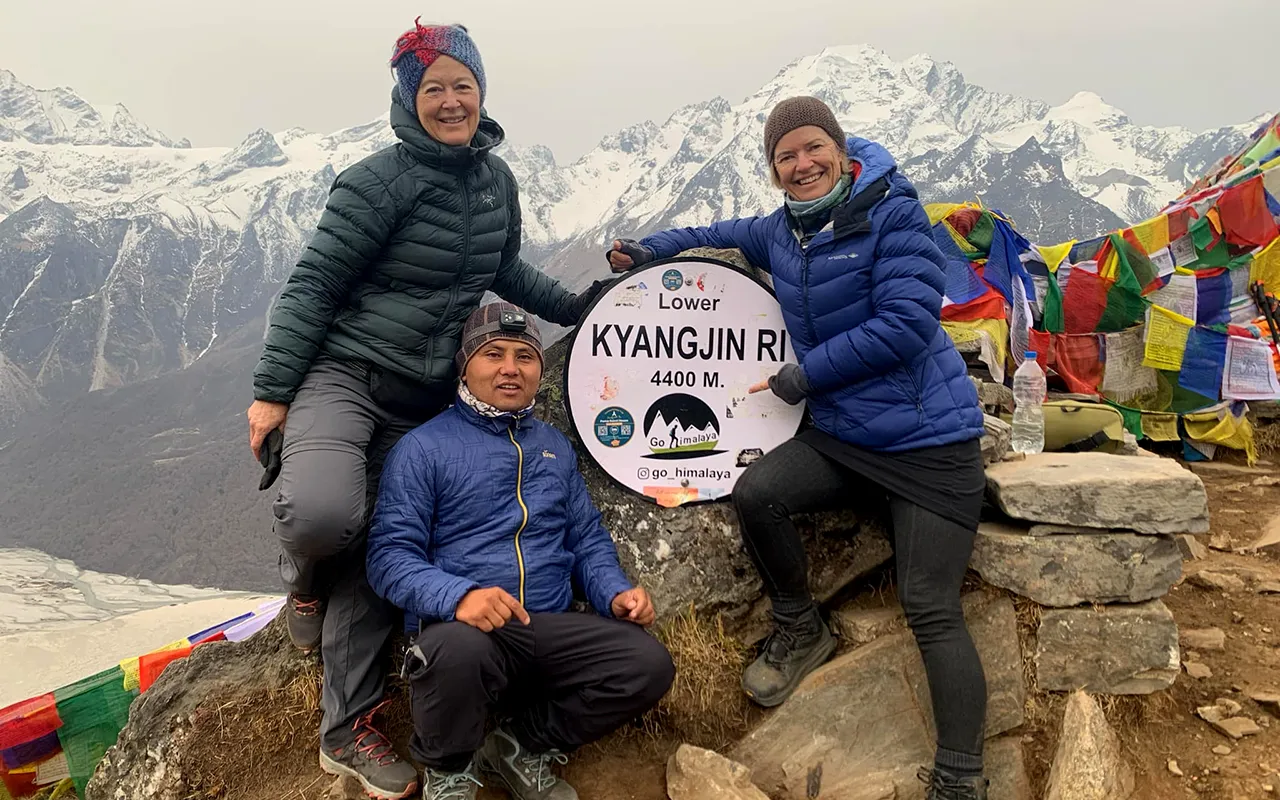
We have a very short walk today to Kyanjin Gompa, where we will stay to acclimatize and prepare for the high pass we have to cross on the Langtang Gosainkund Trek.
After Langtang Village, we will first walk a short distance along a wider path and reach Mundu, where a large number of new settlements after the 2015 earthquake have been established.
You will start to see many alpine shrubs now all around you. Walking further east, we will wander through the summer meadows of Singdun and Yemphu, enjoying the staggering views of Chorkari Ri, Kyanjin Ri, Kinsung, Gangchempo, Langtang Lirung, and Langshisha Ri.
We will soon be at the most important monastery of Langtang, the Kyanjin Gompa, with its prayer wheels, watermills, and stone Mani Walls.
In the afternoon, we can explore the cheese factory established by the Swiss and also look around the Buddhist shrine. We will take it easy today as we will need enough time to acclimate.
Activity: 3-4 hrs trek
Max. Altitude: 3,865m/12,680ft. (Kyanjin Gompa)
Meal: Breakfast, Lunch & Dinner
Accommodation: Lodge
It’s time for one of the most beautiful day hikes on our Langtang Gosainkunda trek 13 days adventure. Kyanjin Gompa offers you several opportunities for your adapting hike.
You can choose to take one of the challenging uprising trails towards 5050 m high Chorkari Ri, or you can march east from the Kyanjin Gompa towards Langshisha Kharka (4160 m).
If you still have energy left, you can challenge yourself further by journeying up to Yala Kharka.
There is also Tsergo Ri Viewpoint (4984 m) and the Kyanjin Ri Viewpoint (4773 m) for you to ascend to if you wish. Whatever route you choose, your eyes will be stunned by the staggering sights of Yala Peak, Tsergo Peak, Kimshung, Ganchenpo, Naya Kang, Langtang Lirung, Dorje Lhakpa, Langshisa Ri, Yurba, Ghonge Liru, and the base of the colossal Langtang Lirung Glacier.
Meal: Breakfast, Lunch & Dinner
Accommodation: Lodge
The Langtang trekking section of our Langtang Gosainkunda trek is now ending. Walking in the reverse direction downhill through Mundu, Ghumba, Thangshyap, Ghodatabela, and Ghumanchok, we will be back at the lodge in Lama Hotel.
Activity: 5-6 hrs trek
Meal: Breakfast, Lunch & Dinner
Accommodation: Lodge
Following the Langtang Khola riverside path, we will descend from Lama Hotel to Rimche and Bamboo. The steep climb will then start to lift us till we are at the canyon.
We will hike downhill along the canyon and cross the long steel hung bridge floating 2000 m high. With amazing Ganesh peak staring at us, a small hill will direct us up and take us toward the Ghopcha Khola.
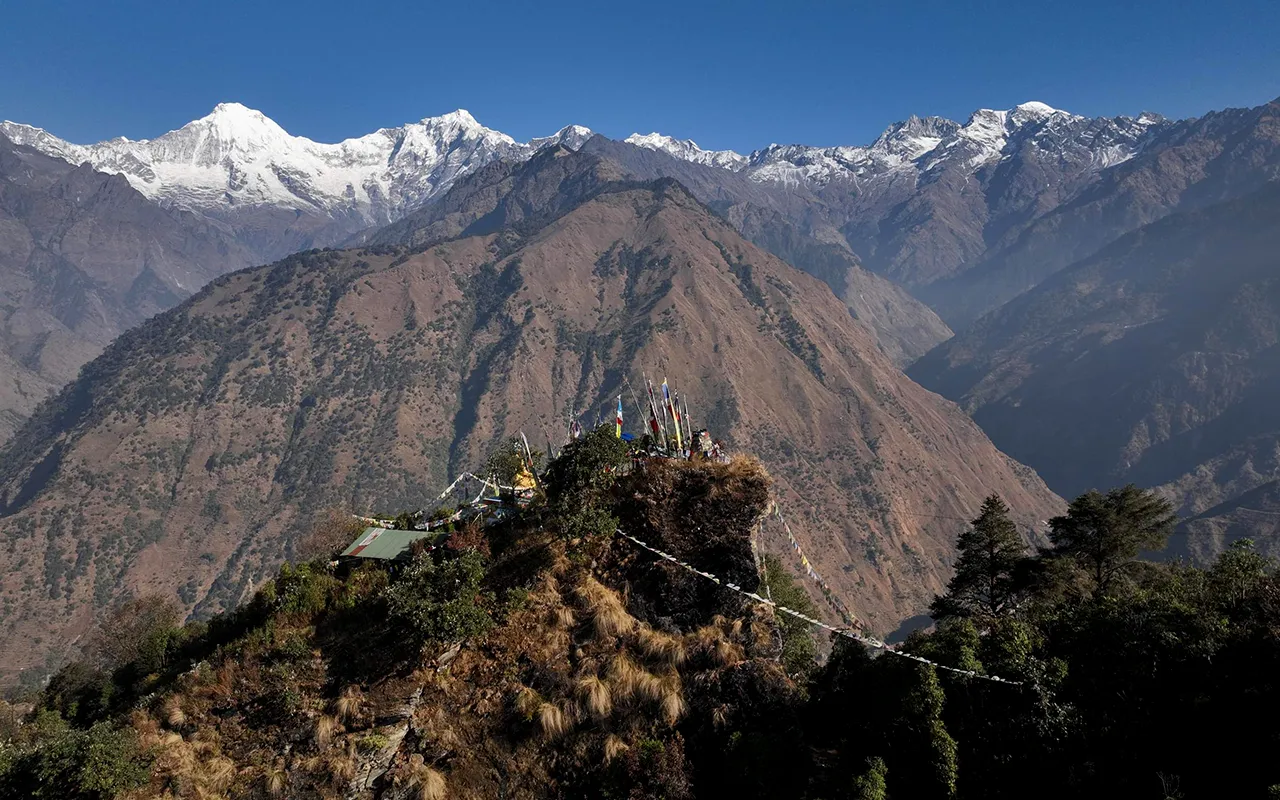
The road across will now carry us easily till we are at Thulo Syabru. It is a Tamang Village situated atop a ridge with magnificent views beyond.
Activity: 6-7 hrs trek
Max. Altitude: 2,150m/7,054ft. ()
Meal: Breakfast, Lunch & Dinner
Accommodation: Lodge
We have one of the challenging days ahead as we will ascend over 1000 m from Thulo Syabru to Cholangpati. The path will begin with a steep climb after Thulo Syabru through oak and rhododendron forests towards the 2550 m height of Dursagang.
The route will now gently ascend along the slope of the Phoprong Danda (3210 m) with increasingly expansive views of the Ganesh peak. The left path from here will now advance us onward to Sing Gompa (3330 m) aka Chandanbari.
From here, the trail will convert into a flat trail, which, within an hour, will direct us to Cholangpati.
Activity: 5-6 hrs trek
Max. Altitude: 3,654m/11,988ft. ()
Meal: Breakfast, Lunch & Dinner
Accommodation: Lodge
Today is all about us enjoying and surrounding ourselves with the magnificent Himalayas. Our walk will be mostly concentrated along the mountain ridges today.
After Cholangpati, the trail will again start to lift steeply, ascending nearly 600 m over the Lauribina (3930 m). Langtang Himal seems outstanding, while Ganesh and Manaslu will also bedazzle the scenery.
Our climb will become steeper and harder, and we will probably be out of breath till we find ourselves over 4165 m tall Gosainkunda pass. The trail will now move down slightly by around 100 m, thus pushing us ahead to Saraswati Kunda (4100 m), the first Gosainkunda Lake.
The 200 m steeply rising trail will take us to Bhiarav Kunda (4364 m), the second in the Gosainkunda Lake system. Ultimately, the Gosainkunda Lake, the main lake at 4380 m, will be seen.
Gosainkunda Lake is of great religious and cultural importance to the Nepalese. It’s one of the most visited pilgrimage sites and the destination of the annual pilgrimage.
The lake itself lies like a bowl of water beneath the tall mountains is joined by nine other lakes. The large rock that can be seen in the center of the lake is said to be the remains of an ancient shrine of Lord Shiva.
Activity: 5-6 hrs trek
Max. Altitude: 4,380m/14,370ft. (Gosainkunda Lake)
Meal: Breakfast, Lunch & Dinner
Accommodation: Lodge
Very early morning, if you wish, you can go out to look at other important Gosainkunda lakes that include Chandra Kunda (Moon Lake), Dudh Kunda (Milk Lake), Ragat Kunda (Blood Lake) and Ama Kunda (Mother Lake).
The moment to face the daring walls of Lauribina Pass has come. It is the highest point of the most rugged part of our Langtang Gosainkunda trek.
We will pause for a moment among the colorful prayer flags and celebrate our moment with Annapurna and Ganesh Peaks. We will now march downhill along a steep but scenic path of around 900 m to Phedi (3714 m)and then on to Ghopte.
Activity: 6-7 hrs trek
Max. Altitude: 4,610m/15,125ft. (Lauribina pass)
Meal: Breakfast, Lunch & Dinner
Accommodation: Lodge
Our Langtang Gosainkunda trek will descend us today into the Helambu Valley. The boulder-covered trail at first will climb us up toward the Tharepati Village (3690 m).
A pleasant downhill hike will then be followed through the rhododendron jungle. As we descend through Magin Goth (3265m), glance back at Gosainkunda with Gangchempo, Langtang, and Dorje Lhakpa rising behind.
The route continues up and climbs the slopes of the Mere Danda pass (3510 m) and Kuala Bhanjyang (3335 m). But then the descent will occur through humid forests to Kutumsang.
Activity: 5-6 hrs trek
Max. Altitude: 2,470m/8,104ft. ()
Meal: Breakfast, Lunch & Dinner
Accommodation: Lodge
We will leave the rugged terrain now and descend through the green villages of Helambu Valley. Along the way, we will pass the most gorgeous Tamang Village of Gul Bhanjyang.
Climbing once again along the rugged inlcined slope of the Thorong Danda (2500 m), we will arrive at the Chipping community. Next, Pati Bhnajyang (1760 m) slope will descend us to Chisapani, where we can have one last truly fabulous view of the mountains.
Activity: 5-6 hrs trek
Max. Altitude: 2,295m/7,530ft. (Chisapani)
Meal: Breakfast, Lunch & Dinner
Accommodation: Lodge
Take a final glance at Gaurishankar, Himalchuli, Jugal, Dorje Lhakpa, Ganesh, and Rolwaling at Chisapani. We will now be ending our Langtang Gosainkunda trek and descending through other specific Tamang settlements of Kulkharka and Mulkharka before we finally enter the Shivapuri National Park and reach Sundarijal.
In Sundarijal, a local bus will transport us along the well-conditioned road of the Jorpati Sundarijal Highway and carry us back to Kathmandu through Jorpati and Gokarneswor.
Activity: 4 hrs / 1 hr drive
Max. Altitude: 1,380m/4,528ft. (Sundarijal)

Note:
If you have a private group and prefer a personalized experience, we can organize a custom trip tailored to your requirements and group size, running it any day you choose.
Transportation
Food and Accommodation
Guide and Support Staff
Permit and Expenses
Medical and Gear
Others
International Flights and Visa
Food and Accommodations
Travel and Medical Insurance
Other Expenses
Langtang, Gosainkunda, and Helambu regions all have a subtropical weather pattern with very dry winters and hot and humid summers. The thermometer shows the average temperature of 18.5°C, with yearly precipitation at 555.9 mm.
If you seek the higher chances of seeing elusive, wonderful red panda and snow leopard of the Langtang National Park, then choose the Langtang Gosainkunda trek either in the spring period between March- May or the autumn period between September-November.
Winter, of December-February can be quite chilly with minimal heating in the tea houses, while summer of June-August is regularly frequented by the monsoon rain.
The ultimate elevation that our Langtang Gosainkunda trek will be taking us over 13 days is the altitude of the Lauribinayak pass/Lauribina Pass at 4610 m.
However, if you choose to climb any of the peaks available at Kyanjin Gompa, such as Chorkari Ri (5050 m), Tsergo Ri (4984 m), or Kyanjin Ri (4773 m), one of these ridges will represent the highest point of elevation of our trek.
The walking duration for each day during the trek will also be limited to 6 hours on average. As for the trekking route, it contains numerous local hills or Danda that can sometimes surpass the elevation of 3000 m.
You should also expect several hard and challenging steep climbs and descents, with some days even gaining over 1000 m in elevation. The Langtang Gosainkunda trek route also features several bridges to cross, and the tea houses will be quite simple.
Thus, all these factors contribute to making our Langtang Gosainkunda trek a level II moderate hiking mountain action that suits all trekkers who can endure the pressure of multi-day long-duration hikes.
The Langtang, Gosainkunda, and Helambu regions are the closest areas to Kathmandu that offer you a chance of a quick Himalayan getaway. The typical elevation of the three areas is expected to be around 4000 m, which isn’t particularly high when compared to other trekking routes in the mountains of Nepal.
Plus, our Langtang Gosainkunda trek itinerary will first engage you in the Langtang trek, so you will already be acclimatized before starting the Gosainkunda trek and overcoming the Lauribina Pass.
Therefore, you won’t be bothered by the altitude on the second and third part of our Langtang Gosainkunda trek. However, it can bother you mildly while doing the Langtang trek, resulting in a mild case of AMS.
Such mild AMS is characterized by the onset of headaches, drowsiness, nausea, fatigue, and sleep trouble at first. In such instances, our guide will handle the situation well and make you rest at your current location or move you back down until AMS completely disappears.
To completely avoid AMS, you can purchase Diamox in Kathmandu and start taking it once the journey commences. We also urge you to consume 3 to 4 liters of water every day.
Although for our Langtang Gosainkunda trek 13 days journey, you don’t need to be a trained hiker, but you must be capable of walking long hours and traverse the steep terrains.
To increase your capability of walking, start with simple jogs or walks in the park nearby. Try the stairs at your office or home and make a simple plan involving running, yoga, cycling, swimming, and weight lifting.
Try to build in your flexibility, strength, and cardio through sports you like to play. Gradually, go on a real simple hiking adventure on the trails that are simple at first and then moderate.
With this physical readiness, also make your mind ready for what comes in the actual Langtang Gosainkunda trek. Learn to coexist with nature, wildlife, and people who are different from what you see and meet normally in your life.
Your accommodation during the Langtang Gosainkunda trek will occur in simple, modest mountain lodges, often called tea houses. These are not the hotels that you find in cities, but these are the actual homes of locals who have transformed their residences into guesthouses.
In these tea houses, you will find a room with two single beds and minimal furniture. Toilets and showers are shared and may sometimes be located outside the lodge.
The food may not be very diverse, but they are excellent in terms of nutrition. Common menu items at the lodges include Dal Vat, momos, eggs, and porridge.
Please note that three-course meals during breakfast, lunch, and dinner will be served, while beverages will be at your own expense.
Our Langtang Gosainkunda trek is truly about immersing yourself in the real experience of Nepal and its people. That’s why, for your mode of transportation from Kathmandu to Syabrubesi and from Sundarijal back to Kathmandu, a local public bus will be used.
This experience can be discomforting and exciting at the same time, but you will also be able to meet the locals and enjoy the adventure together. If you believe that local transport may be somewhat exhausting for you, we can also arrange a private transfer for a minimal surcharge.
Because Langtang and Helambu regions are located adjacent to Kathmandu, the national mobile networks of Ncell and Nepal Telecom will give you a strong signal during your travels, except of course in the high passes and at Gosainkunda Lake, where the signal may be on and off.
In terms of WiFi and internet, several new tea houses have been built in Langtang and Helambu, and most are equipped with WiFi, so they will offer you their WiFi for a minimal surcharge.
When you are at Gosainkunda Lake, internet access can not be assured, but you can take advantage of the 4G data offered by the mobile networks.
The confined territory of the Langtang National Park will allow you to trek through only after you have an entry permit for the Park. Thus, for our Langtang Gosainkunda trek, a Langtang National Park Permit is obligatory along with the TIMS Card (Trekkers Information Management System) that will guarantee your search and rescue in case of unfortunate events.
The 3000 NPR charge per hiker for the Langtang National Park and the 2000 NPR charge per hiker for TIMS are the mandatory parts of our service. In Dhunche, our guide will get these permits on your behalf.
You can buy a tourist visa for Nepal as you arrive at TIA by entering your details in one of the computers you will see at TIA, then printing your ticket, paying, and taking receipt of payment.
Present it at the immigration counter at TIA to have your visa added to your passport. If you want to skip the wait in line, you can also provide your information on the Nepal Immigration online site.
As for the duration, you can select from any three: 15 days (US$30), 30 days (US$50), or 90 days (US$125). The visa will be active once it is affixed to your passport.
Travel insurance for any mountain trekking in Nepal is vital and has been made obligatory for the permit procurement. For the Langtang Gosainkunda trek, we suggest you add the coverage of a helicopter rescue or air ambulance in case of medical emergencies up to 5100 m elevation.
If your insurance also protects you in the issues of extended stays, luggage damage, theft, or loss, then it will be more advantageous.
On our Langtang Gosainkunda trek itinerary, 3A Adventure has taken care of most of your expenses. However, costs for your stay in Kathmandu, meals, TIA transport, and extra nights are not included.
Additionally, beverages, WiFi, hot showers, and charging fees during the trek are excluded. Tipping your guide and porter will also be from your own pocket.
Likewise, international tickets, personal insurance, Nepal visa fees, and any unforeseen expenses beyond 3A Adventure’s control will be your own responsibility.
If personal experience during a trip is what you desire, then we also offer you the opportunity to travel privately in our private Langtang Gosainkunda trek. Or, you can also form your personal group with your family and friends for an intimate adventure.
However, if you like to expand your network and like to share your journey with new people, then our group Langtang Gosainkunda trek will be the right one for you.
We don’t create a larger group but try to keep it to a smaller size so our guide can focus on each guest equally. In a private trip, you will get personal attention from your guide and porter.
General
The Langtang Gosainkunda trek is the combination of three remarkable locations of Langtang Valley, Gosainkunda Lakes, and Helambu region, which are rich not only in varied nature but also culture.
The Langtang Gosainkunda trek is about 177 km in length that can be completed within 12 to 15 days.
The Langtang Gosainkunda trek is regarded as a moderate mountain action that requires traversing the Lauribina Pass at 4610 m elevation.
The TIMS and the permit for entering the Langtang National Park have been made mandatory for this trek.
Yes, they are an integral part of our service for the Langtang Gosainkunda trek.
Your essential items should include a pair of durable hiking boots, multiple layers of clothing for variable temperatures, a waterproof jacket, a sleeping bag suitable for freezing temperatures, a first aid kit, water purification tablets, and sunscreen. a map, a compass, or a GPS device.
Langtang Valley and its diverse wildlife, culture of the Tamang people, the Himalayan extraordinary views, pious Gosainkunda Lakes, and the Helambu Valley route are the major attractions of our trek.
Yes, although the Langtang Valley suffered a lot, local communities worked hard to restore the lodges and the routes. Thus, engaging in the Langtang Gosainkunda trek also means your support for their recovery efforts.
Gosainkunda Lake lies at an average elevation of 4380 m above sea level.
For Hindus, it is the divine lake with Shiva’s energy as he not only originated it but also drank its water to calm his stinging throat after swallowing poison. For Buddhists, the lake is the pious site related to their Guru Rinpoche.
No, you won’t be able to find any ATM booths along the way to Langtang or Helambu.
We can help you with the accommodation suggestion and arrange it, so if you want us to, at an additional surcharge. Please remember that even if you arrive ahead of time, the trek will begin on the scheduled date.
Certainly, individual treks to any one of the locations is also possible, which will be shorter and easier as well.
Certainly, provided they can handle the long walks and the less comfort of tea houses. We can also lessen each day walking hours and lengthen the Langtang Gosainkunda trek itinerary by a few days.
Langtang massifs, Yala Peak, Ganesh Himal, Naya Kang, Annapurna, Yansa Tsenji, Langshisha Ri, and many other Himalayas that often remain hidden on other popular treks of Nepal can be seen. However, Everest will not come into your sight during the trek.
Preparation & Fitness
Include cardio (running, cycling), strength training (gym workouts), and hiking with a weighted backpack.
One to three months will be enough to train for our Langtang Gosainkunda trek itinerary.
 Insurance & Visa
No, standard travel insurance often does not include the hiking risks, or even if they do, the altitude will be specified only up to 3000 m. So, you must upgrade your standard travel insurance with helicopter transport to 5100 m elevation for this trek.
If our Langtang Gosainkunda trek 13 days trip, is the only reason for your visit to Nepal, a standard 15-day visa will be adequate. On the other hand, if you plan to engage in other activities during your stay, a one-month visa would be a better choice.
 Guides & Support Staff
Yes, the presence of a guide is not only mandatory but also emphasizes your safety and ease during the trek.
A very competent, experienced registered hiking guide will be your traveling companion.
Generally, we offer to give you one porter for two trekkers, but you can also choose to hire a personal porter at added fee.
 Accommodation and Facilities
They are mainly the small, family-run lodges that offer a cozy, communal atmosphere but limited amenities.
During trekking, food will be mainly Tibetan and Nepalese flavors with dishes such as Dal Vat, soups, noodles, and some Western dishes like pancakes and pasta.
Since the Langtang Gosainkunda trek 13 days trip, is often taken by trekkers after they complete other adventures in Nepal, so we don’t look after the Kathmandu lodgings. But if you want us, we can certainly make this job easier for you, at an additional surcharge.
 Weather & Seasons
For the ideal hiking conditions, the Nepali autumn and spring will be best for the Langtang Gosainkunda trek.
Morning and night can be a bit chillier, so it’s wise to bring a down jacket and a sleeping bag.
Because of its high location, yes, the Gosainkunda Lake waters freeze from October to June.
 Health & Safety
The main health risk is of AMS, while cold weather and accidents can be other threats as well.
Adhering to the acclimatization days and walks, staying hydrated, and taking sufficient sleep and rest can help you resolve AMS.
 Booking & Payment
Once you send us your signed, all filled-out registration form along with 20 percent of the initial payment, your Langtang Gosainkunda trek will be confirmed.
If you sign up at the last moment, the entire reservation amount must be paid all together.
You can choose to pay in cash or through an online bank transfer as well.
 Transportation & Flight
We can offer you airport transfers if you desire, for which you have to inform us in advance. If you yourself want to arrange your TIA-hotel transfer, taxis are available at TIA, just make sure to negotiate properly.
Certainly, for a tiny surcharge, a private jeep or van can be easily arranged.
No, a local bus is always on the route from Sundarijal to Kathmandu.