

Need Help?
+977 9860666075

Based on 27 reviews

Trip Duration
15 Days
Trip Difficulty
Difficult
Max Altitude:
6,160m. / 20,210ft.
Group Size
2-16 People
Meals
Breakfast, Lunch & Dinner
Accommodation
Hotel, Teahouse
Transportation
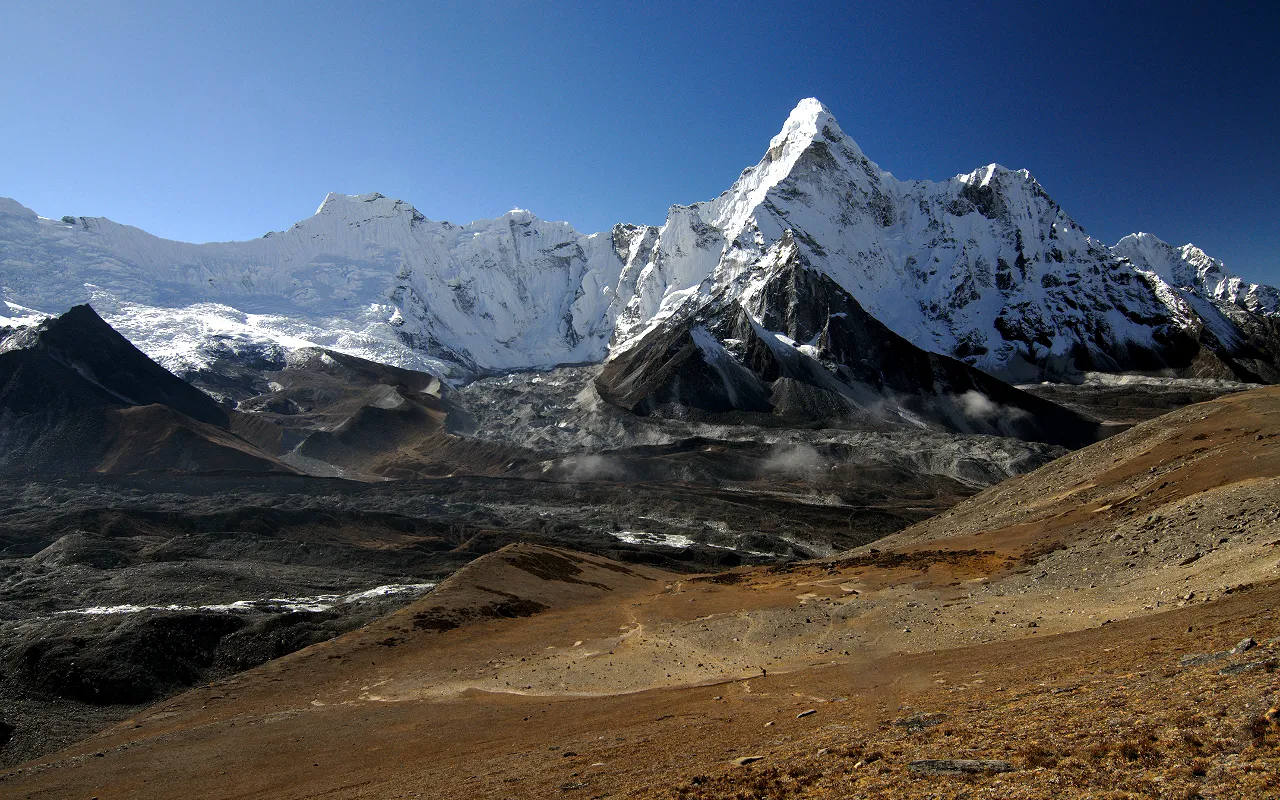
Flight, Tourist BusIncorporating parts of the Everest Base Camp itinerary, the Island Peak Climbing journey is among the most beginner-friendly peak climbing destinations in Nepal. Also known as Imja Tse peak, the Island Peak reaches 6189 meters above sea level. It is located in the Khumbu region, not too far from the Everest region, and within the Sagarmatha National Park area.
The Island Peak was first climbed by Tenzing Norgay Sherpa, the one who guided Sir Edmund Hillary to the peak of Everest for the very first successful summit. The Island Peak was a part of the training in 1953 AD before attempting the climb to Everest. When you see this peak from Dingboche, it seems like it is an island floating in the middle of a sea full of ice and snow. Hence, the peak was given the name Island Peak.
Throughout the journey, you will get to pass by many Sherpa settlements and also spend many nights among the Sherpas. Villages like Namche, Tengboche, Dingboche, Pangboche, Chhukung, and more greatly showcase the Sherpa culture. Trekkers can experience the rich culture of the locals and feel welcomed by their warm smiles all the time.
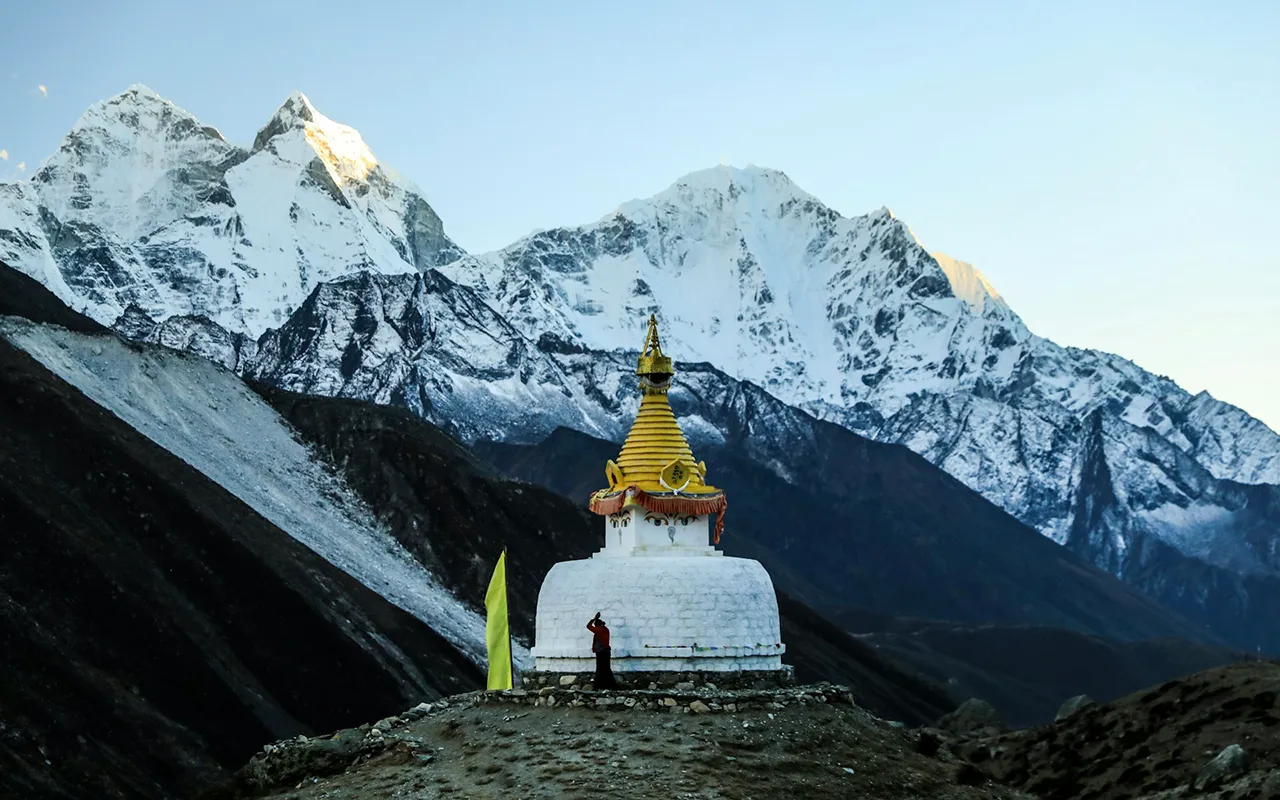
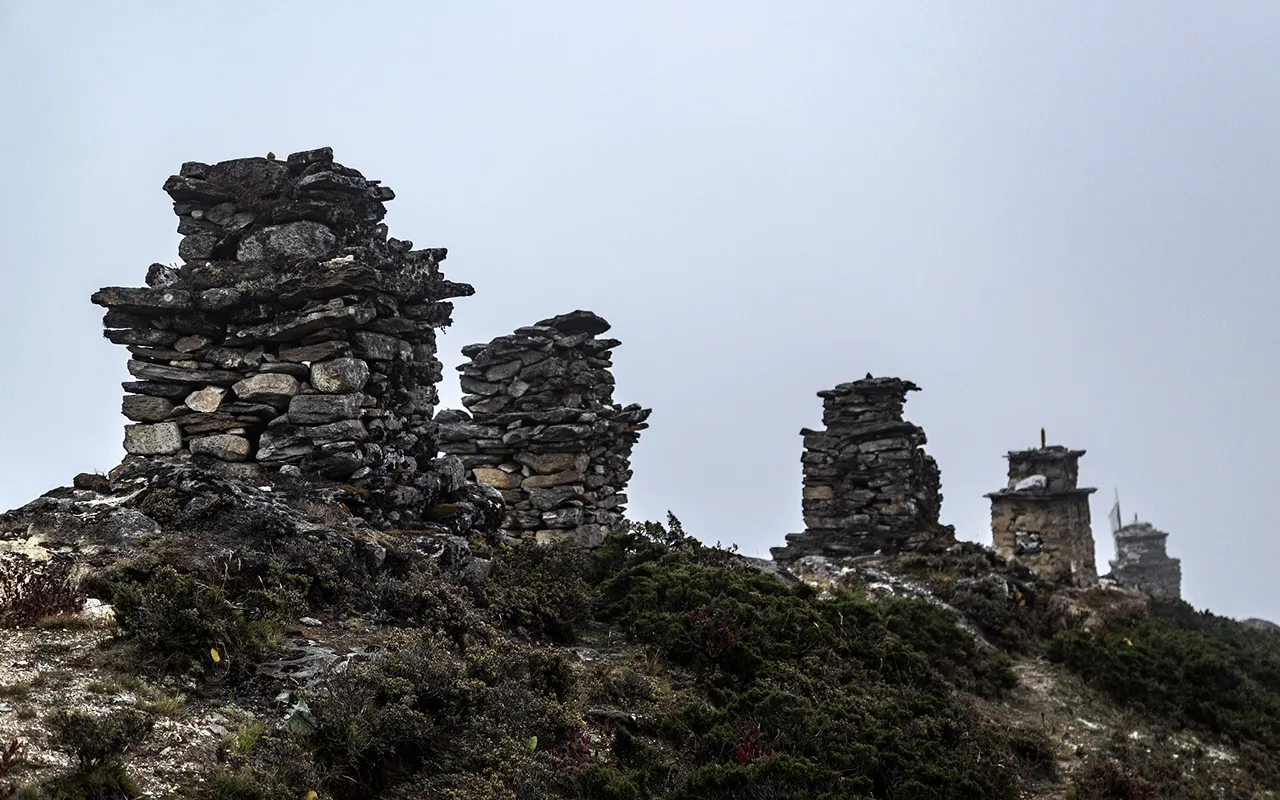
In addition to exposure to the local culture, you will also experience the religious side of the region. En route, you will visit many gompas, including the Phakding monastery, Namche monastery, Pangboche gompa, Tengboche monastery, and more. You can even join their daily prayers if you want to feel spiritual. Also, there are countless chortens and mani walls along the route, signifying the influence of Tibetan Buddhism and the strong beliefs of the locals in Buddhism.
Before you decide to do this mountain climbing journey, we recommend that you go through this detailed breakdown of the trek package and understand what the journey really is. Understanding the requirements, the itinerary, and the overall essence of the journey is really important before you actually book the trek.

The first day of the Island Peak Climbing features arriving at Kathmandu. After landing at the Tribhuvan International Airport, you need to obtain your tourist visa from the immigration desk. For this, you need to fill out a visa application form with all your legal details correctly. After that, you have to go to a nearby counter and pay your visa fees. For this trek, you can choose the 15-day Visa package that will cost you just USD 30 per person. After paying the visa fees, you will get a receipt.
Finally, you have to submit your visa application and the bank receipt of visa fees to get your tourist visa approved. You also need to provide the visa officer with your passport, return ticket, two passport-sized photos, and proof of accommodation. After all that, you will be granted a tourist visa. One of our reps will find you and take you to the hotel for the night. Before you head to bed, we will have a brief meeting, introducing you to the crew members and going over the nuances of the journey.
The visa process can also be done online; you just have to follow the procedure by visiting the official site of the immigration office. This is called an e-visa, and it usually takes 4 to 5 business days for you to receive your tourist visa via email. During the peak travel season, the airports can often be a bit too crowded, making you wait in long lines. At such times, it’s better to apply for a visa online before you arrive in Kathmandu.

Activity: 30 mins drive

Max. Altitude: 1,400m/4,593ft. (Kathmandu)

Meal: Breakfast

Accommodation: Hotel
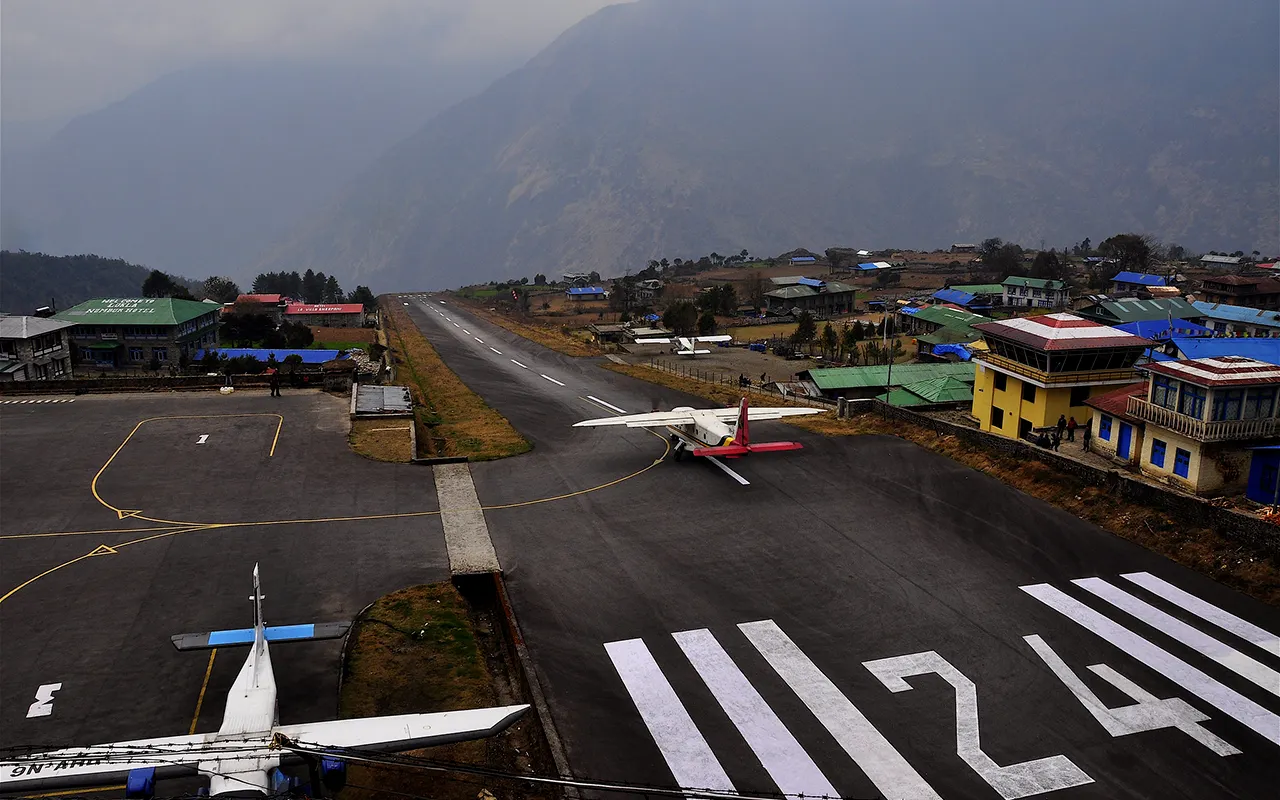
The next day on the Island Peak Climbing journey, we will have a fresh start with a lovely breakfast in Kathmandu. This will be followed by a drive to the airport to catch our flight to Lukla. All the flights to Lukla are set in the morning hours of the day, since the afternoon winds can affect the landing and taking off of the small aircraft. If you are wondering, the runway of Lukla is just over 500 meters long, facing a hill. Safe to assume, it is going to be a dramatic flying experience.
The flight is just 35 minutes long, with wide and clear scenes of the entire Solu and Khumbu region. The overhead view can be confusing for most, especially for ones who are traveling to the Everest region for the first time. After we reach the Tenzing Hillary Airport, the porters will begin carrying our luggage, while you have to get ready with your light daypack. You must carry your essentials in the daypack, including things like water bottles, sunglasses, specs, energy bars, phones, cameras, etc.
Our trekking days on the Island Peak Climbing journey start with a 4-hour trek to Phakding. Today, we will cover about 8 km of distance and lose 250 meters of elevation, reaching 2610 meters above sea level. Starting from 2860 meters above sea level, this trek begins with a slight descent towards Chheplung village. From there, we will reach Ghat village and trek the final section of the day to reach Phakding.
Activity: 35 mins flight / 4 hr trek
Max. Altitude: 2,610m/8,563ft. (Phakding)
Meal: Breakfast, Lunch & Dinner
Accommodation: Lodge
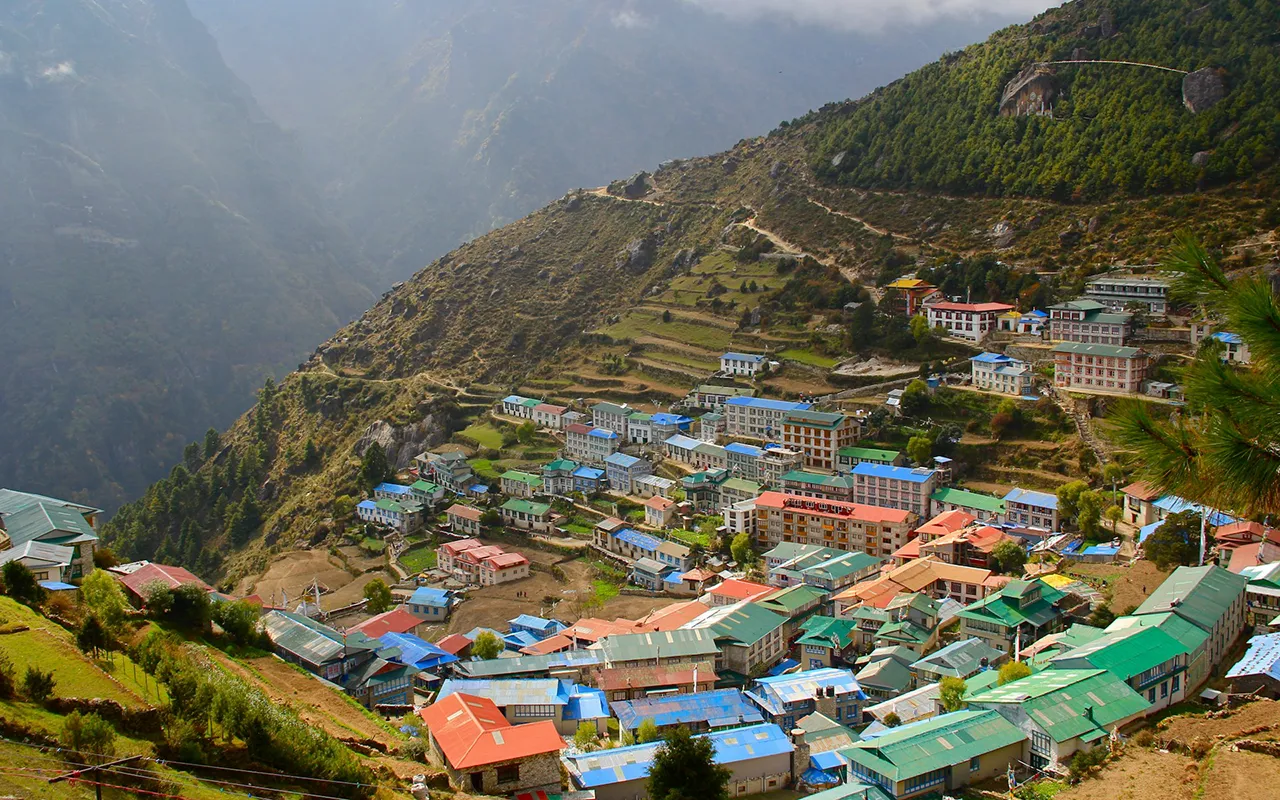
Starting the day at Phakding, we have a 6-hour trek to complete to reach our destination of the day. This trek features a net elevation gain of over 800 meters, taking us to 3440 meters above sea level. The trek distance of the day is 11 km, which begins with an ascent alongside a river. Trekking along the curves of the Dudh Koshi River upstream, we will cross many suspension bridges to reach Monjo. Notably, we will cross the Hillary Tenzing bridge, the highest one on the Island Peak Climbing journey.
Reaching Monjo, we will be at 2835 meters above sea level, and have our permits checked at the entry point of the Sagarmatha National Park. After our permits are validated, we will continue the trek and reach Jorsale, our lunch spot of the day, and the last stop before we reach Namche. After an energizing lunch, the trek resumes with a sharp descent over the Namche hill. This part of the trek gains us over 600 meters of elevation in one go.
The ascent is long and tiring, but with frequent rests and support from the guides and porters, you will make it to the top. After reaching Namche Bazaar, we will head to our accommodation for the night.
Activity: 6 hrs trek
Max. Altitude: 3,440m/11,286ft. ( Namche Bazaar)
Meal: Breakfast, Lunch & Dinner
Accommodation: Lodge
Acclimatization days are very important for letting our bodies adapt to the dramatic changes in weather and climate of the Himalayas. After breakfast, we will go on a short hike to the Everest View Hotel, since it is one of the best viewpoints to see Everest alongside other major peaks. Gaining about 400 meters of elevation, this acclimatization hike takes about 2 to 3 hours to complete round-trip.
From the hotel’s large compound, you can see Ama Dablam, Lhotse, Thamserku, Nuptse, Everest, and other peaks in the near distance. After spending some time at the hotel, we will descend back towards Namche and visit the Syangboche airport on the way. Alternatively, we can also continue towards the Khumjung village and do the Khumjung village loop, but it can be too much for most people, as it takes around 5 hours.
After we get back to Namche, we will rest for a while and get to exploring the village. Sites like the Sherpa Culture Museum, Sagarmatha Next Centre, Namche Monastery, etc., are worth at least one visit. Following a long day of hiking and exploring, the day ends at Namche with a warm and filling dinner.
Activity: 2-3 hrs hike
Meal: Breakfast, Lunch & Dinner
Accommodation: Lodge
Today’s Island Peak Climbing itinerary features a 10 km trail with an elevation gain of around 420 meters, reaching 3865 meters above sea level. This trek takes about 5 to 6 hours to complete, starting with a gradually ascending trail to a stupa. Sitting on a ridge, this stupa serves as a great viewpoint of Namche Bazaar. Passing the gompa, the trail ascends towards Kyangjuma village. After about 3 hours of trekking, we will finally reach Kyangjuma village.
From there, we will follow a descending trail and cross the Dudh Koshi River, followed by a trek through a forested section. Soon enough, we will arrive at Phunki Tenga village and take a relaxing lunch break. This is the final stop before we reach Tengboche. Following the lunch, we will get on a steep ascent over a ridgeline to reach our destination of the day. At Tengboche, you can visit the largest gompa of the Khubmu region, the Dawa Choling Gompa.
Activity: 5-6 hrs trek
Max. Altitude: 3,865m/12,680ft. (Tengboche)
Meal: Breakfast, Lunch & Dinner
Accommodation: Lodge
Day 6 of the Island Peak Climbing itinerary requires trekking for 5 to 6 hours, which takes us to 4410 meters above sea level. The trekking distance of the day is 10 km, starting from 3865 meters above sea level. Leaving Tengboche, we descend gently through a forest dominated by rhododendron and pine trees. This trail leads us into the Imja Valley, having us cross the Dudh Koshi River once again.
After a while, we will reach the village of Pangboche, at 3985 meters above sea level. There, we will visit the Pangboche monastery, with clear views of Ama Dablam peak. From Dingboche, the trail ascends once again, steadily alongside the Imja Khola River, passing by farmlands and meadows. Soon after, we will reach Dingboche, the highest permanent Sherpa village in the whole world.
Activity: 5-6 hrs trek
Max. Altitude: 3,985m/13,074ft. (Dingboche)
Meal: Breakfast, Lunch & Dinner
Accommodation: Lodge
On the 7th day of the Island Peak Climbing itinerary, we have to cover about 5 km of distance, which is the shortest of the entire journey. The estimated trek duration of the day is 2 to 3 hours only, with an elevation gain of 320 meters. The day starts at 4410 meters and ends at 4730 meters above sea level.
Leaving Dingboche, the trail goes through a wide open trail, gradually gaining elevation without any steep sections. The incline is very manageable; however, the thinning of the atmosphere can amplify the effort we need to put in since our bodies breathe more in such cases. Traversing the Imja Khola Valley, the terrain is rocky with some icy streams on the side and scenes of glacial moraines. Soon enough, we will arrive at Chhukung and head towards the accommodation for the night.
Activity: 2-3 hrs trek
Max. Altitude: 4,730m/15,518ft. (Chhukung)
Meal: Breakfast, Lunch & Dinner
Accommodation: Lodge
Today is the second acclimatization day on the Island Peak Climbing itinerary. For our acclimatization hike, we will climb up to Chhukung Ri. This will gain us 820 meters of elevation, with a total trek distance of 5.7 km. We should be able to cover the distance in about 4 hours round-trip. Following a hearty breakfast, we will head northeast and leave the village, traveling over a rocky trail.
With small creeks all over, the initial incline is gentle and offers a great view of Nuptse and Lhotse peaks. As we keep gaining elevation, the steepness of the trail increases and becomes uneven. Although it is not a technical climb, it can still be difficult as you need to be careful of your foot placement. As we reach the top of the ridge, the steepness calms down before the final push of the hike.
The last part of the hike features trekking over loosely packed rocks that dominate the terrain; you might even have to use your hands at times to make sure you are perfectly balanced. After reaching the top of the viewpoint, you will be greeted with a majestic view of the Ama Dablam, Baruntse, Makalu, Lhotse, Nuptse, and other peaks.
Meal: Breakfast, Lunch & Dinner
Accommodation: Lodge
The day starts with a filling breakfast at Chhukung, sitting at 4730 meters above sea level. Today’s Island Peak Climbing itinerary takes us to 5087 meters, gaining us a net elevation of about 250 meters. The total trekking duration of the day is 3 to 4 hours, with a trek distance of just 5 km. Departing from Chhukung, the trail goes behind the village and leads us gently up an ascending trail. The high-elevation arid landscape is very prominent with rocky ground and a few grassy patches.
Along the way, there will be countless scenes of Nuptse, Lhotse, and Ama Dablam peaks in the distance. Continuing the trek, we will head into a wide valley path that leads us to the Island Peak Base Camp. Sitting at 4970 meters of elevation, the base camp is a gravel-covered part of the foothill where you will find many tents. The porters and guides will set up the tents for the night and also cook some food for dinner.
You can spend the rest of the hours exploring the base camp and preparing yourself for the peak climbing tomorrow. The climbing guide will hold a briefing session, making sure that you know and learn how to use the necessary gear for the peak climbing session. Equipment such as harnesses, fixed topes, crampons, microspikes, etc., is mandatory for the climb.
Activity: 3-4 hrs trek
Max. Altitude: 5,087m/16,690ft. (Island Peak Base Camp)
Meal: Breakfast, Lunch & Dinner
Accommodation: Camp
Day 10 of the Island Peak Climbing itinerary is the climactic day. The cumulative elevation gain of the day is 1100 meters, reaching 6189 meters above sea level at the top of the peak. Today’s trek duration is 11 to 12 hours, making it the longest day of the journey, although the total distance is 10 km.
The day begins at 2 AM in the morning, since we do not want to experience the swift afternoon winds at the summit. The average temperature at the base camp at such time ranges from −10°C to −20°C. The initial ascent goes over a rocky slope, requiring the use of trekking poles. After about 4 hours of trekking, we will reach the crampon point, reaching 5700 meters above sea level. This is where we will put on a harness and crampons to start climbing the icy slopes of the peak.
Starting the technical part of the climb, we have to traverse a narrow ridgeline, following the fixed ropes. You must maintain at least three points of contact and carefully place your foot as you go up the slopes. Approaching the summit, we have to use an ascender to follow the fixed ropes since there are steep ice walls that can not be climbed easily. The summit rewards us with a stunning scene of Nuptse, Lhotse, Everest, Ama Dablam, and a couple of other peaks.
Activity: 11-12 hrs trek
Max. Altitude: 6,189m/20,305ft. ()
Meal: Breakfast, Lunch & Dinner
Accommodation: Camp
The 11th day of the Island Peak Climbing itinerary is the first descending day of the journey. Starting from 5087 meters above sea level, we have to descend all the way to 4000 meters, losing 1087 meters. The estimated trek duration of the day is 7 hours, covering about 13 km of total distance in the process. Leaving the base camp, the initial part of the trek is a gentle descent over rocky terrain, heading towards Chhukung.
Entering the Imja Khola Valley, we will cross many small streams en route. Passing by a couple of remote settlements, you get a glimpse of life in barely accessible Himalayan villages. Eventually, we will reach the village of Pangboche and check in at a local tea house to spend the night.
Activity: 7 hrs trek
Max. Altitude: 3,985m/13,074ft. (Pangboche)
Meal: Breakfast, Lunch & Dinner
Accommodation: Teahouse
The following day on the Island Peak Climbing itinerary, we have to trek for 5 hours, losing 560 meters of elevation in the process. The starting elevation is 4000 meters, featuring a 10 km trail, taking us to 3440 meters above sea level. Leaving Pangboche, we will head west and descend steadily through the Imja Khola valley. Passing by chortens and mani walls, the trail features a switchback through a forested area.
After the winding path, we will trek past farmlands and Sherpa settlements to cross one of the tributaries of the Dudh Koshi River. We will cross it over a wooden bridge and approach the final stretch of the day. Ascending a hill, we will reach the town of Namche Bazaar. This town is the main hub of the entire Everest region. You will find many modern services there, which the rest of the villages do not have.
Activity: 5 hrs trek
Max. Altitude: 3,440m/11,286ft. (Namche Bazaar)
Meal: Breakfast, Lunch & Dinner
Accommodation: Lodge
Day 13 features the longest trek distance of the Island Peak Climbing itinerary, stretching over 22 km total. The elevation loss of the day is 580 meters, leading us down to 2860 meters above sea level. Starting off, the trail descends gently and reaches a sharp drop, leading us down Namche Hill. Reaching the foothill of the Namche Hill, we will cross the Hillary Bridge, exiting Jorsale village.
From there, we will first reach the village of Phakding, followed by Monjo, and exit the Sagarmatha National Park. Over the course of reaching Monjo, we will have to cross a bunch of suspension bridges. From Monjo, we will slowly make our way to Lukla and call it a day.
Max. Altitude: 2,860m/9,383ft. (Lukla)
Meal: Breakfast, Lunch & Dinner
Accommodation: Lodge
The next morning, we will have our last breakfast in the hills and move towards the Lukla airport to catch our flight to Kathmandu. This 35-minute flight might feel a bit nostalgic and emotional as you will be leaving the beautiful nature of Khumbu after spending many memorable days in the mountains. After reaching Kathmandu, we will drop you off at your pre-arranged accommodation. You can spend the rest of the day taking a much-needed rest or exploring the vibrant city of Kathmandu.
Max. Altitude: 1,400m/4,593ft. (Kathmandu)
The final day of the Island Peak Climbing itinerary is here. After a morning breakfast, we will meet at the agreed location and hold a short farewell celebration. Following that, one of our reps and drivers will drop you off at the airport with high hopes to see you again for another Himalayan adventure.

Note:
If you have a private group and prefer a personalized experience, we can organize a custom trip tailored to your requirements and group size, running it any day you choose.
Transportation
Food and Accommodation
Guide and Support Staff
Permit and Expenses
Medical and Gear
Others
International Flights and Visa
Food and Accommodations
Travel and Medical Insurance
Other Expenses
The season of autumn is often considered the best season to do the Island Peak Climbing. This season features great trail conditions as it receives very minimal rainfall. You will also get very gentle daytime temperatures ranging from 10°C to 15°C, with the nighttime temperatures ranging from 2°C to 9°C. In addition to that, any of the main festivals of Nepal are celebrated in autumn, since the weather is usually clear. This gives you plenty of opportunity to experience local celebrations.
The Island Peak Climbing journey is graded as a moderately difficult trekking experience. Following the main Everest Base Camp itinerary for the most part, this peak climbing journey features many ascents and descents en route and a challenging climb to the Island Peak. As per our experts, this trek is an 8 out of 10 on the difficulty scale.
Throughout the Island Peak Climbing journey, we will spend a total of 5 nights at elevations over 4000 meters above sea level. Altitude sickness starts from 3500 meters above sea level, but its harmful impacts do not show up until crossing 5000 meters of altitude. This means we are pretty safe from altitude sickness. Our highest point of the trek is 6189 meters above sea level, which is considerably high; however, we will not be spending the night there, we will just spend about 30 to 50 minutes at the top.
To prepare well for this Island Peak Climbing journey, we recommend training for at least 14 to 16 weeks prior to the start of the trek. Exercises like walking, jogging, cycling, swimming, hiking, etc., are the best types of workout you can do to prepare well. You can also do some strength training focusing on the lower half of the body.
The Island Peak Climbing journey provides three meals per day during the trekking days and only breakfasts during your time in Kathmandu. You are free to choose any dish from the menu provided by the establishments. As for accommodation, we require you to share one room with one of your fellow trekkers in the group. If you want private rooms instead, we can manage them at a price. All your accommodation expenses will be covered by the trek package.
This Island Peak Climbing itinerary requires trekkers to fly to and from Lukla at the start and end of the trek. Trekkers also have to drive to and from the airport as per the flight schedule. All of these transportation expenses will be covered by the trek package.
Mobile network connections will be available at the lower region villages only. Meanwhile, you can still find WiFi connections at highland villages, but it can be unstable. Alternatively, you can buy the Everest Link Card and connect to the internet at any point in the trek.
For this journey, you need to have a Sagarmatha National Park Entry Fee, a Local Area Permit/ Pasang Lhamu Rural Municipality permit, and an Island Peak Climbing permit issued by the Nepal Mountaineering Association (NMA). All of the expenses related to these permits are a part of the Island Peak Climbing package.
Visa fees are supposed to be paid after your arrival at the Tribhuvan International Airport. You need to pay for it in order to get a tourist visa stamp on your passport. This will not be covered by the Island Peak Climbing package.
Much like your visa fees, travel insurance is also excluded from the trek package. It is considered an expense of a personal nature. Travel insurance is a must for this trek, as it covers any high-altitude medical and emergency service expenses.
Expenses, including but not limited to international flight expenses, visa fees, tips for the guide and porter, emergency rescue services, lunch and dinner in Kathmandu, any kind of drinks, personal trekking and climbing gear, travel insurance, etc.
A private Island Peak Climbing experience is one of the best things you can experience with your friends and loved ones. It is an intimate experience with nature and the remote hills of the Khumbu region. While it is a bit on the premium side of the spectrum, the extra charge is worth the experience. On the other side, a standard group trek is the budget-friendly option, great for those who are traveling alone or want to make trekker friends.
General
In general, you should plan for 14 to 17 days for this climb, starting and ending at Kathmandu.
Yes, since this peak does not include complicated technical passages, it is very manageable for first-timers and beginner climbers.
We will visit villages including Namche, Tengbcohe, Pangboche, Dingboche, etc., before reaching the base camp.
The 4th day and the 8th day of the itinerary feature acclimatization days.
Yes, you need specific climbing permits to climb Island Peak.
Preparation & Fitness
You must have at least an above-average level of physical fitness to handle the physical requirements.
Yes, you should train for both aspects; good preparation is key to a great climbing experience.
No, previous experience with ice climbing is not necessary.
You will have to carry 3 to 4 kg of weight each day.
Yes, you will go through a short training session before attempting the climb.
 Insurance & Visa
Yes, the visa application process is easy and straightforward.
A 15-day visa package must be enough for this itinerary.
Yes, the insurance package must mention coverage above 6000 meters.
Yes, helicopter evacuation is the only emergency rescue procedure, so it must be included.
Yes, your insurance papers will be validated before we begin the trek.
Yes, we recommend carrying a printed copy of your insurance.
 Guides & Support Staff
Yes, our climbing guides are professionally trained, licensed, and well-experienced.
Yes, the climbing guide will hold a practice session the day prior to the climbing day.
Generally, porters are supposed to carry your personal duffels, while trekkers are supposed to have all their gear with them, ready for action.
No, tipping is not customary in any part of Nepal, but it is expected at the end of the trek.
Yes, a small oxygen cylinder is carried by the porters in case of emergencies.
 Accommodation and Facilities
Staying in a tented camp can be colder than staying at a tea house, and you do not have many options when it comes to food.
Hot showers are only prepared on demand; you will not have a hot shower at most highland villages.
The tea houses are very basic accommodations with limited facilities.
No, every tea house en route has a communal bathroom.
 Food and Drinks
Yes, you will have plenty of options when it comes to vegetarian food.
 Weather & Seasons
The month of October provides the best mix of clear skies and stable climbing conditions.
While it is uncertain, there are some chances of snowfall in early spring.
No, it is not that risky during early December, but it is better to avoid winter season trekking.
No, during the peak trekking season, the weather conditions remain very stable, saving us from postponing the summit day.
Yes, you can get a weather forecast, but it is not fully reliable, as the weather can change in an instant in the highlands.
 Health & Safety
Headache, lightheadedness, nausea, shortness of breath, etc., are symptoms of altitude sickness.
Yes, there are a couple of medical facilities in Namche Bazaar in case of illness.
Yes, satellite phone services will work without fail.
Yes, the porters will carry a couple of cylinders all along the way.
Our night a the base camp is the highest, reaching 5087 meters above sea level.
 Booking & Payment
No, you should do that before booking the trek, so we can work out the logistics before giving you an answer.
Yes, all the required permits for both trekking and climbing are a part of the Island Peak Climbing permit.
No, you can not do so; you will lose your deposit.
Yes, we can arrange something similar, but cancellations are pretty rare.
Yes, since you will be staying extra nights, we have to add the costs of accommodation, food, and more.
 Transportation & Flight
Yes, chartering a private helicopter to Lukla is a viable option.
Yes, domestic flights will allow enough baggage allowance for climbing equipment.
Yes, we provide free pick-ups and drop-offs to the airport.
Yes, this is a doable option, but it will add a couple of days to the itinerary.
If Lukla flights are grounded, we have to wait for the weather to clear.