

Need Help?
+977 9860666075

Based on 27 reviews

Trip Duration
17 Days
Trip Difficulty
Difficult
Max Altitude:
5,535m. / 18,159ft.
Group Size
2-16 People
Meals
Breakfast, Lunch & Dinner
Accommodation
Hotel, Lodge
Transportation
Flight, BusThe Everest Three Pass Trek is one of the few treks in Nepal that are graded as challenging. Located in the Khumbu region of Nepal, this trek covers about 148 to 166 km of distance, depending on the particular itinerary and side treks you do. Regardless of the different side treks, you will have to pass the Kongma La Pass, Cho La Pass, and Renjo La Pass to complete the three passes challenge. Along with that, you will also visit the iconic Everest Base Camp, which holds many great stories and experiences for decades.
The Everest region is the most popular trekking destination in the world and also one of the best. Ever since the early expeditions, the Khumbu region has been popular all around the world, bringing in hundreds of thousands of trekkers every year. First summited by Tenzing Norgay and Edmund Hillary, the Everest peak is the tallest of its kind. At present, thousands of people attempt to climb the peak, experiencing the challenges and the beauty of the region.
The Khumbu region is where the authentic Sherpa villages are set. Throughout the Everest Three Pass Trek, you will get to stay in many charming Sherpa villages that offer a glimpse into the countryside life of the locals, their struggles, and their culture. You will also get to experience their daily practices, along with their religion. The Tibetan Buddhism-influenced region of Everest has many gompa, mani walls, and chortens en route.
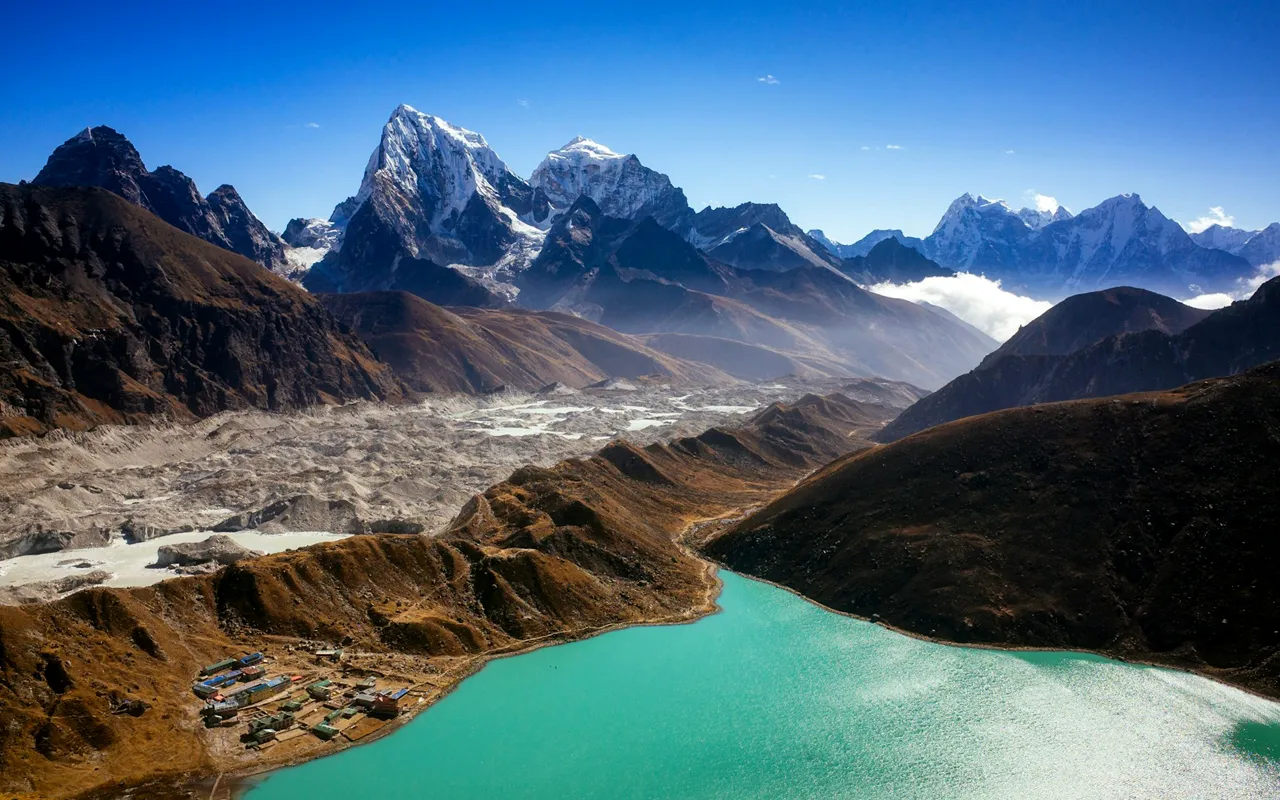
In addition to exploring the Everest region and crossing the challenging mountain passes, you will also visit the picturesque Gokyo Lakes. These lakes are one of the highest freshwater lake systems in the world, featuring turquoise blue waters. Likewise, there are many scenes and sites that you will experience on this trek. To know all about this trek, thoroughly go through this detailed trek package.

Our first day of the Everest Three Pass Trek starts with a flight to Lukla. Depending on the schedule and availability, we will either take a flight directly from Kathmandu or drive to Manthali and take a flight from there. Manthali is about 5 hours away from the city of Kathmandu, which means we will have to spend the night at Manthali to catch the morning flight to Lukla.
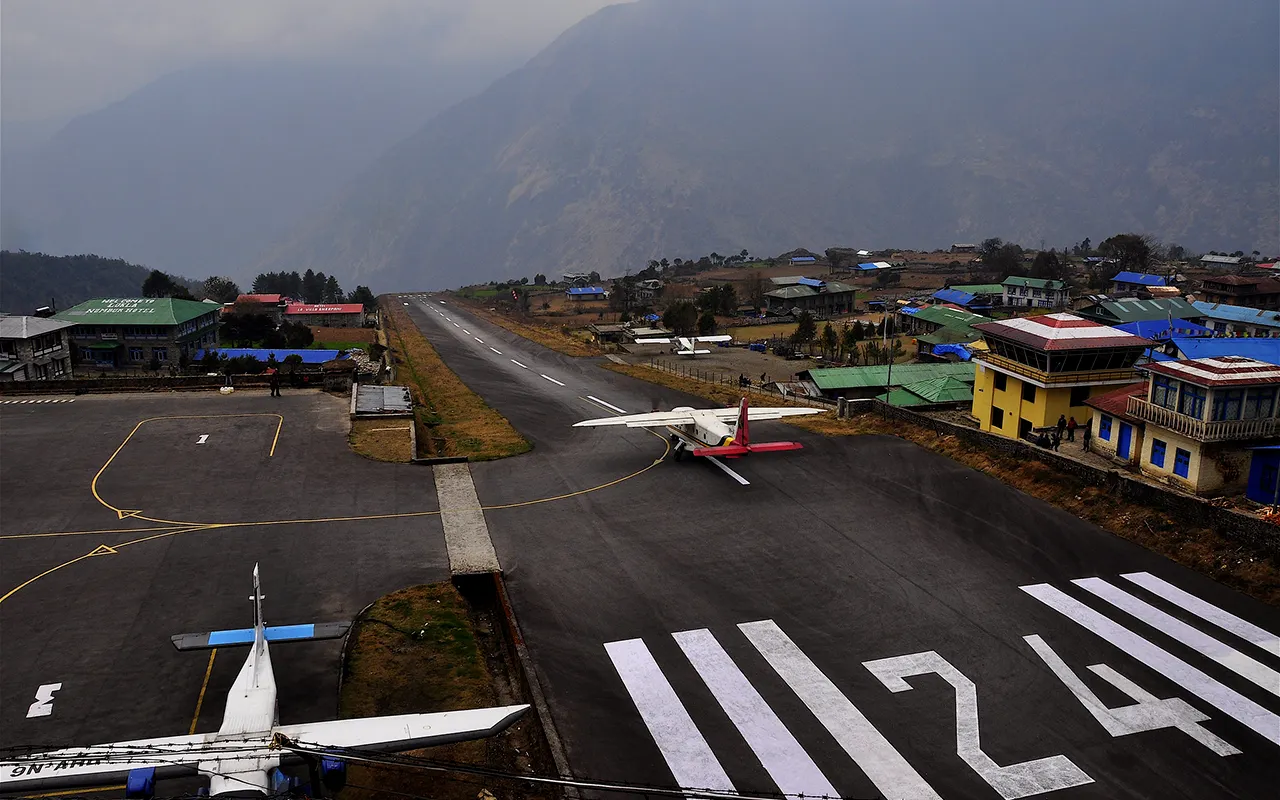
After landing at the dramatically set-up airport of Lukla, we will begin getting ready for the trek ahead. You have to carry a light daypack with your personal items like cameras, water bottles, phones, snacks, etc. The trekking distance of the day is around 7.5 km, which loses us about 250 meters of elevation. After checking in at our accommodation in Phakding, we will visit the Rimishung Monastery, following a short walk from the village.
The 2nd day of the Everest Three Pass Trek features a 7.4 km trail with an estimated duration of 6 hours. The net elevation gain of the day is over 800 meters, leading us to 3440 meters above sea level from 2610 meters. Following the Dudh Koshi River, the initial part of the trail is relatively plain, passing by Zamphuti and Toktok village. Crossing the Dudh Koshi River multiple times over many suspension bridges, the trail reaches Monjo village.
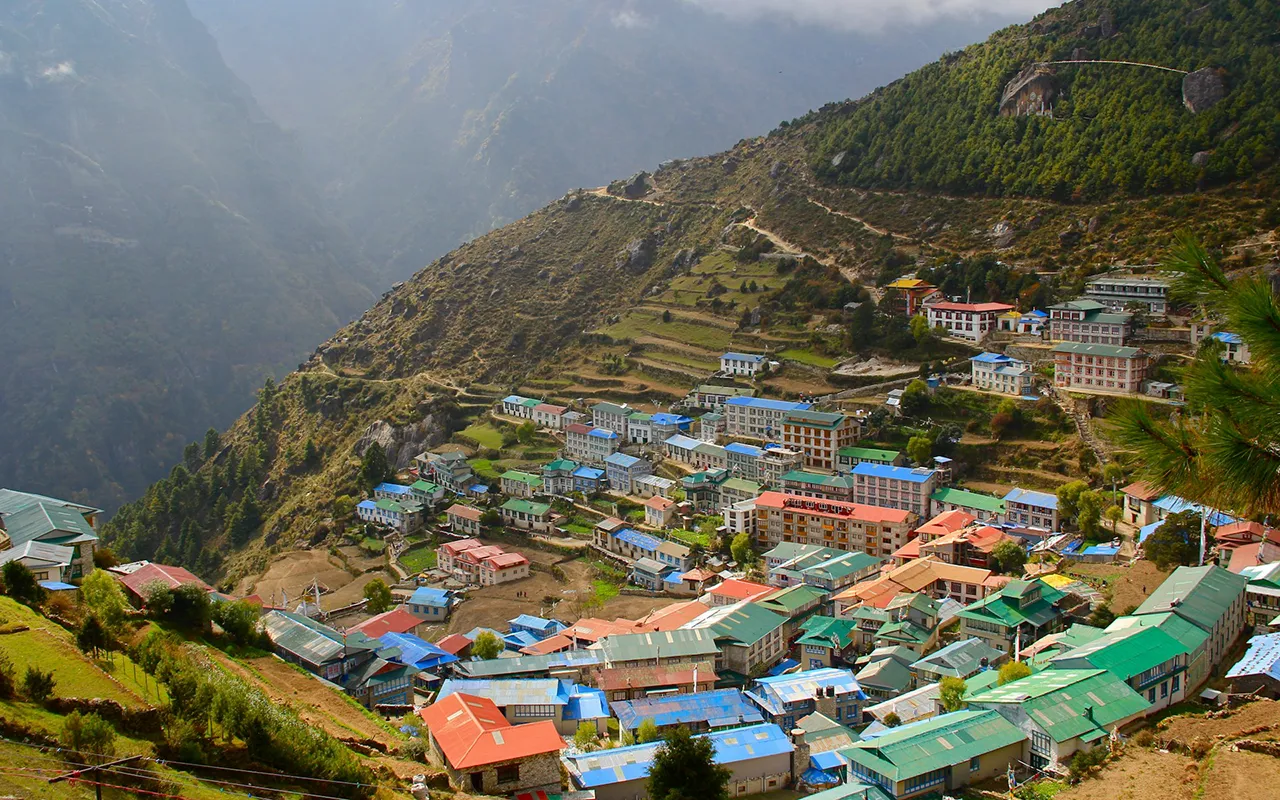
There, our permits will be checked before we are allowed to enter the Sagarmatha National Park. Trekking through the lush park, we will soon reach Jorsale village, where our lunch will be served. After the meal, we have to climb the final section of today’s trek, a 600-meter ascent up the Namche Hill.
Day 3 is the first acclimatization day on the Everest Three Pass Trek itinerary. To make sure that we acclimate properly, we will go on an acclimatization trek to the Everest View Hotel, reaching 3880 meters above sea level. This is the most popular acclimatization hike destination as it offers a panoramic view of Everest, Lhotse, Nuptse, Ama Dablam, and more. It will take us about 3 hours to complete this hike round-trip.
Following the hike, we will visit the Khumjung village where a school has been established in the name of Sir Edmund Hillary. We will also visit the Khumjung Monastery there. After getting back to Namche, we can spend the rest of the hours visiting the visitor center and other local attractions.
After a restful day at Namche Bazaar, today’s Everest Three Pass Trek itinerary has us cover almost 7 km of distance with an estimated trek duration of 6 hours. Starting the day at 3440 meters, our final elevation is going to be 3750 meters, gaining 310 meters of elevation. The initial portion of the trek diverges from the main Everest trek itinerary, heading west towards the Bhote Koshi Valley.
Soon after, we will follow the Bhote Koshi River and arrive at the village of Phurte. There, you can visit a small mud-covered stupa while we rest for a bit. Continuing the trek, we will head towards the village of Thamo, where you can visit the Thamo Gompa as well. Leaving Thamo, we will descend sharply towards the Khumbu Hydroelectric Plant. From there, it won’t take us long to reach Thame.
On the 5th day of the Everest Three Pass Trek, we will be on the trails for over 6 hours and gain 750 meters of elevation. This trek is 8.2 km long with a final elevation of 4500 meters, starting from 3750 meters above sea level. Leaving the village of Thame, we will go deeper into the Bhote Koshi Valley and follow a river through rocky trails and open lands.
Soon after, we will arrive at a village named Taranga, which is the last large village on the route. After a short rest there, we will get to Lungden village, traversing a rugged and rocky trail with a few small streams en route. From Lungden, we have to head towards Marlung village, reaching 4200 meters above sea level. After lunch at Marlung, we will reach Lungden in about 1.5 hours.
The optional visit of the day to Cho Relmo Lake starts after we reach Lungden; it is a short walk, and the scene is worth the extra effort. Alternatively, you can also visit the Nakpa Valley.
The next day on the Everest Three Pass Trek itinerary, we have to trek for about 8 hours, making it the longest trekking day of the journey. The trek distance is just 9 km with a net elevation loss of 250 meters. However, we will be reaching 5446 meters as we cross the Renjo La Pass en route, gaining over 940 meters of elevation. Departing from Lungden, we head towards the first mountain pass of the three.
The ascent to the pass is steep and demanding, but with the help of the guide and porters, you will be able to make it to the top. The view from the summit includes Mt. Everest, Mt. Lhotse, Mt. Makalu, Mt. Cho Oyu, and a couple more. Descending from this pass leads us into the Gokyo Valley. As we lose elevation rapidly, glimpses of Gokyo Lakes come into view. After passing the descent, we will reach Gokyo village and check into our rooms.
Day 7 of the Everest Three Pass Trek is yet another acclimatization day with an acclimatization hike to Gokyo Ri. The hike is very short, stretching just 1.5 km with an estimated duration of 1.5 hours round-trip. The elevation gain is 610 meters, reaching 5400 meters above sea level. From the top, you will get to witness a stunning scene of Mt. Everest, Lhotse, Makalu, Cho Oyu, Nuptse, and a couple of Gokyo Lakes.
We also have an optional hike after we are done with Gokyo Ri. This hike spans around 3 km and reaches 5000 meters above sea level. The estimated duration is 1.5 hours, with a close-up view of the Ngozumpa glacier. Alternatively, you can also hike to the Scoundrel’s Viewpoint, which is just 5 minutes from the Gokyo village.
On the 8th day of the Everest Three Pass Trek, we will trek for about 5 hours with a very minimal net elevation change. The trail is just 3.7 km, making it the shortest of the journey. Leaving the stunning Gokyo village, we will cross the Ngozumpa Glacier, east of Gokyo, and descend over a rocky trail. Soon after, the trail undulated heavily as we trekked alongside the longest glacier in Nepal.
We will follow the eastern ridge of the moraine after passing the huge body of Ngozumpa. This trail leads us into a narrow valley, towered by the giant peaks in the north. After crossing many streams, we will finally arrive at Thangnak village, reaching 4700 meters above sea level.
The following day on the Everest Three Pass Trek, we will trek about 16 km with a net elevation gain of 155 meters. The estimated time duration of the trek is 6 to 7 hours, starting with a trail leading us to the second pass of the trek. The climb to the Cho La Pass features glacial moraine and giant boulders. As we keep gaining elevation, the trail turns more rugged and steep. After about 2 hours, we will reach the summit of the pass, reaching 5420 meters above sea level.
After enjoying the views of Island Peak, Ama Dablam, Cho Oyu, Cholatse, Lhotse, Thamserku, and distant scenes of Everest, we have to descend from the pass. This downhill section is steep and challenging and takes about 1.5 hours to complete. Soon, we will finish crossing the pass and head to Dzongla village.
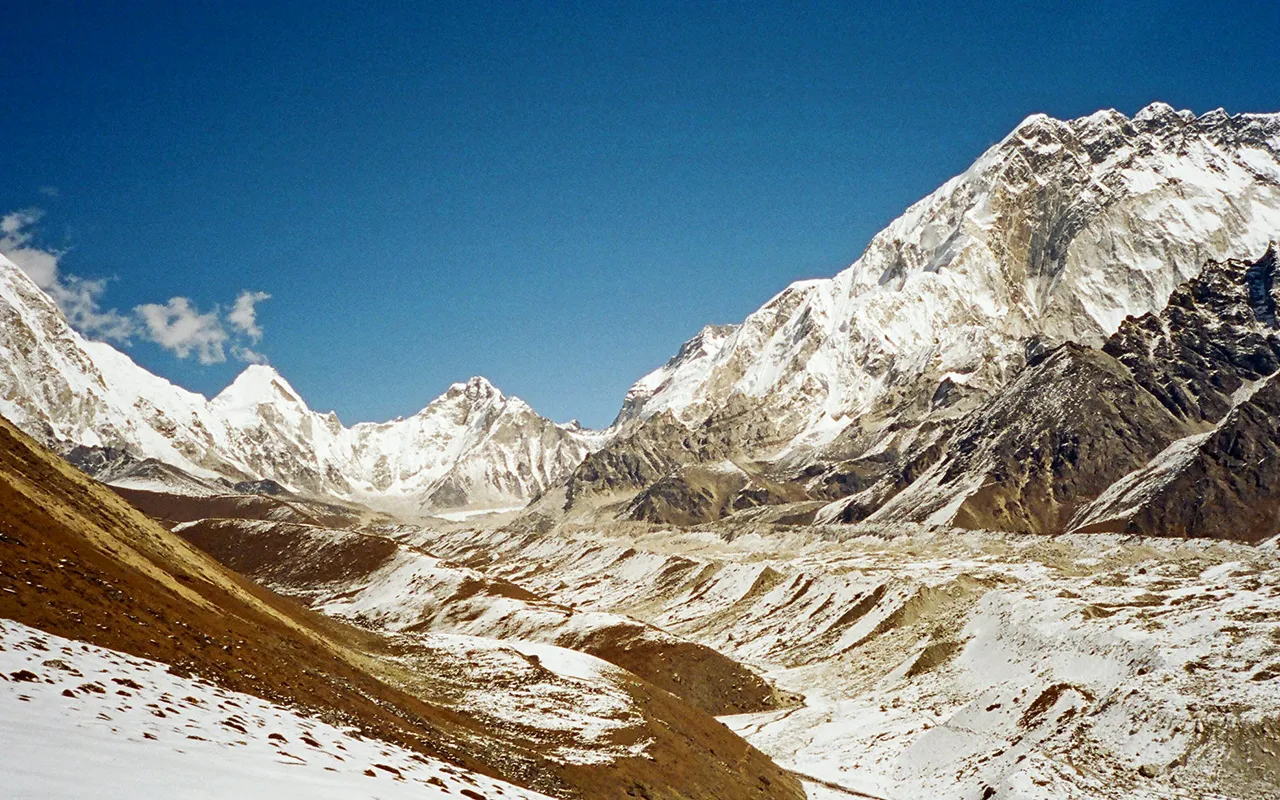
Day 10 of the Everest Three Pass Trek features minimal net elevation change with a total trek distance of 8.3 km, which takes about 4 hours. Leaving Dzongla village, we will descend a little, following the shores of Chola Lake. This initial part of the trek is very doable, passing over rocky terrain with dramatic scenes of the Himalayas. After passing the lake, we will enter the Imja Khola Valley, which joins us to the standard Everest itinerary. En route, there are memorial statues dedicated to those who could not make it out alive of Everest.
Passing this memorial site, we will ascend gradually to Lobuche village. The trail is very easy to follow, going alongside the western side of the Imja Khola Valley. En route, you get to see the Khumbu Glacier and the Pumori peak in the distance. Arriving at Lukla, we will reach 4190 meters above sea level.
Today’s trekking distance is about 15 km with an estimated trek duration of 6 to 7 hours. The net elevation gain is 275 meters, but we will reach much higher elevations throughout the day. Leaving Lobuche, we will head north to get to Gorak Shep. The distance is just 4.5 km and takes about 2.5 hours to complete. The path is rocky, uneven, and often accompanied by other trekking groups.
Leaving our heavy bags at Gorak Shep, we will head to the Everest Base Camp, which takes an additional 3 hours of trekking. After reaching the base camp, we will enjoy a close-up view of the mountains nearby and spend some time admiring the scene. Eventually, we have to descend back to Gorak Shep and spend the night there.
On the 12th day of the Everest Three Pass Trek, we will hike to the amazing Kala Patthar viewpoint. This hike is only 3 km long round-trip, with an elevation gain of 370 meters. The path to Kala Patthar is steep and rocky, but not that difficult. This viewpoint is popular for offering the best view of Everest, Lhotse, and Nuptse peaks. Along with them, you also get to see Pumori, Changtse, and Ama Dablam.
From Kala Patthar, we will descend to Gorak Shep and have a filling breakfast. Descending further down to Lobuche, we have to cover 4.5 km of distance, which takes us about 2 hours. The trail is gradually descending, leading us all the way to 4910 meters above sea level.
The next day on the Everest Three Pass Trek is yet another descending day, as we lose a net elevation of 200 meters. However, we will gain quite some altitude climbing up to the Kongma La Pass. The trek distance of the day is 10.5 km with an estimated trek duration of 7 to 8 hours. We will start the trek with a gradual ascent from Lobuche, heading east. Soon, we will begin climbing the Kongma La Pass and reach 5535 meters above sea level.
A grand scene of Everest, Lhotse, Lhotse Shar, Nuptse, Makalu, Ama Dablam, Baruntse, and Thamserku awaits us at the top. Descending from the pass, we will traverse the Niyang Khola Valley and reach Chhukung.
To get to Tengboche from Chhukung, we have to trek a total distance of 12.9 km and lose 875 meters of altitude. This descent will take us about 5 hours to complete. Leaving Chhukung, we have to traverse the Imja Khola Valley and descend to Dingboche village. From there, we will pass Tusra Kharka and Orsho Kharka to reach Shomare village. Following that, we will head towards Pangboche village, visit the Pangboche monastery, and continue downhill till we reach Tengboche.
Today’s trek loses us about 415 meters of elevation, going from 3855 meters to 3440 meters above sea level. The total trek distance is about 6 km, with an estimated trek duration of 5 hours. The trek begins with a steep descent leading all the way down to a suspension bridge, crossing the Dudh Koshi River. There are some ascents in between, but they are very minor. From there, we will ascend gently till we reach our destination of the day.
The total trek distance of the day is around 15 km, which took us 2 days to cover at the beginning of the trek. Trekking for 6 to 7 hours, we will have a net descent of 590 meters, reaching 2850 meters above sea level from 3440 meters. Starting off, we have to get on a steep descent heading towards the Dudh Koshi River and eventually cross the Hillary Suspension bridge. Passing by Benkar, Monjo, and Phakding, we will reach the final leg of the trek. This marks the end of trekking days on the Everest Three Pass Trek.
The next day on the journey, we will fly back to Kathmandu or Manthali from Lukla. This is how the Everest Three Pass Trek will conclude. The flight will be scenic, offering a wide, overhead view of the entire Khumbu region and the peaks in the north.

Note:
If you have a private group and prefer a personalized experience, we can organize a custom trip tailored to your requirements and group size, running it any day you choose.
Transportation
Food and Accommodation
Guide and Support Staff
Permit and Expenses
Medical and Gear
Others
International Flights and Visa
Food and Accommodations
Travel and Medical Insurance
Other Expenses
The best season to experience this trek is definitely autumn. During the autumn season, the trails are dry, keeping us safe from icy and snow-covered sections. In addition to that, you will also experience a mild daytime temperature during your trekking days, which is very optimal for us. Likewise, the chances of rainfall are minimal, with clear, bright skies being the default weather setting.
The Everest Three Pass Trek is considered to be a challenging trek that demands a high level of physical fitness and preparation. We will spend 9 nights at an elevation over 4500 meters, which increases the risk of altitude sickness. In addition to that, there are many steep ascents and descents that you have to trek in order to get to the next destination on the itinerary. Out of 10, this trek deserves a rating of 9.5.
Altitude sickness is a major risk on this trek, since we will be spending over a week straight at elevations higher than 4500 meters. Generally, people start feeling the effects of altitude sickness after 3500 meters, so it is definitely a great deal that we are spending such a prolonged duration at considerable altitude. However, if we follow the preventive measures and the guide’s recommendation, altitude sickness can be prevented to a certain extent.
To prepare for this exciting and challenging trek, you must draft a 20 to 22-week-long training period. Within that time frame, you must build your endurance level and work your leg muscles to the point that you are easily able to walk for 6 to 7 hours without any problem. Your preparation level will surely affect the overall trekking experience, so train well.
The Everest Three Pass Trek package covers 3 meals per day, but no beverages will be covered. Likewise, the package will cover all your accommodation expenses from the first day of the trek to the last. All your standard rooms are to be shared by two trekkers in the group.
All the ground transportation required by the Everest Three Pass Trek itinerary will be covered. The flight to and from Lukla will also be covered. Meanwhile, your international flight to and from Nepal is your personal expense.
For most days, you are not going to see any mobile networks. However, you can buy an Everest Internet card to keep in touch with your close ones. Tea houses en route also offer WiFi, but they charge you a buck or two, and it’s usually not that reliable.
For this trek, travelers are required to have the Sagarmatha National Park Permit and the Khumbu Pasang Lhamu Rural Municipality Entry Permit. Both of these permits will be covered by the package and managed by the trek guide.
Your visa fees upon arrival in Nepal are your own personal expense. You have to pay the fees as per your intended duration of stay. We do not hold any say in it, nor do we cover any part of it.
Travel insurance is necessary for the Everest Three Pass Trek since we will be trekking to considerable altitudes for over a week. At such high elevations, medical facilities are not present, and the ones present are very basic. So, having insurance that covers emergency rescue costs is the way to go.
Your extra expenses include things like international flights, visa fees, private accommodations, bar bills, laundry fees, hot showers, WiFi fees, insurance fees, etc.
If you want to experience this trek with only your close ones, you should go for our private trek option. It costs a bit more in comparison, but you will get to have a private experience. Meanwhile, if you do not really care about sharing the experience with others, you can go for a group trek.
General
Yes, you are free to customize the itinerary in any way you like, but it must pass the approval of our trek experts.
Yes, you will have a couple of opportunities to interact with the Sherap mountaineers in Thame. It is the hometown of Apa Sherpa and Tenzing Norgay.
Yes, morning prayer ceremonies are held daily at Tengboche Gompa, and you can join the prayer session.
Yes, we will visit the Khumjung Monastery on the day of acclimatization at Namche Bazaar. You can see the purported yeti scalp on display, inside the gompa.
Yes, drone usage is prohibited at key viewpoints like Kala Patthar or Gokyo Ri.
Preparation & Fitness
You can go on short similar hikes to prepare yourself for the descent.
Just one day of acclimatization should be enough to keep you from altitude sickness.
Yes, trekking poles are sufficient for the Cho La Pass crossing.
The ideal pace of the trek is whatever the trek guide sets.
Yes, prior experience is a must for this trek.
Just some normal joint stretches are good enough to prevent knee strain.
 Insurance & Visa
Yes, physical copies of permits are needed to pass the checkpoints.
No, there are no specific insurance requirements, you can just have a normal travel inrsuance.
You can just ask the service provider to highlight the clauses you want to know about.
No, separate permits are not required to visit the Nakpa Valley.
No, 3A Adventure can not assist with visa extensions as it is a governmental process.
 Guides & Support Staff
Yes, our guides are trained to identify safe routes across potential crevasses on the Ngozumpa Glacier.
Usually, personal trekking gear is supposed to be carried by trekkers themselves. But we can make some exceptions in rare cases.
Yes, 3A Adventure’s guides carry satellite phones for emergencies on isolated sections.
Yes, female Sherpa guides are available for the trek, but due to the low number of females in this trade, they are usually booked for months.
Your meals are pre-arranged as per the booking of rooms. The tea house operators keep the ingredients ready as per the number of visitors that they are expecting.
Yes, you can do so; however, there is not much difference in hiring a Nepali-speaking guide and a Sherpa-speaking guide.
Yes, porters eat the meals that the tea houses offer.
 Accommodation and Facilities
Yes, lodges provide blankets, but we suggest bringing a sleeping bag as well.
Most of the tea houses do not have private or single rooms; they only have rooms made for two. Dorm-style rooms are also available at certain places.
Yes, there are laundry facilities in Namche Bazaar. Your laundry bill is not a part of the trek package.
 Food and Drinks
Yes, you are likely to find traditional dishes like Rildhuk or Thenduk throughout the trek.
Yes, meal portions are usually given in set quantities, but they will fill your hungry stomach; no need to worry about staying hungry.
 Weather & Seasons
Clouds in March do not really block the view of Everest from Kala Patthar. However, there is are slight chance of it happening.
Yes, microspikes are necessary for the Cho La Pass descent to Dzongla in late November.
The wind conditions at Renjo La Pass in early April are not that bad; however, a few strong gusts of wind are expected.
Yes, there are seasonal variations in water flow at Chola Lake, but they are not that impactful.
Yes, it is likely to coincide with the trek in October and November.
 Health & Safety
Yes, there are many designated places to rest along the route that also keep you from being in the sun for too long.
The guide will bring the trekker down to a couple of hundred meters after assessing the severity of the altitude sickness. He will also call for help if necessary.
You will encounter yaks throughout the trek, but they do not pose any threat.
A satellite phone is available for communication in case of sudden weather changes.
Every trekker will have headlamps on their heads, and you will be following the steps of the trek guide.
 Booking & Payment
Yes, you can add a photography guide on this trek, but we do not provide such services.
If we are unable to cross the Kongma La Pass, we will make a modified itinerary and continue the trek, or end the trek and return to Kathmandu. Your deposit will be refunded partially.
Yes, depending on how late you change the date, you will be charged a certain amount.
Yes, you will be briefed by the trek guide before beginning the trek.
Yes, we can arrange private rooms for you, but single rooms are not really a thing there. Your private room will be a double-bed room that is supposed to accommodate two trekkers.
 Transportation & Flight
If the Tenzing Hillary Airport is under maintenance, we have no other choice but to wait.
We can either drive to Manthali around midnight or spend the previous night in Manthali.
Yes, you can store extra luggage in Kathmandu if you have any. You will not be charged for it.
No, there are no safety briefings. Although it’s a dramatic landing, the experienced pilots have it all under control.