

Need Help?
+977 9860666075

Based on 27 reviews

Trip Duration
16 Days
Trip Difficulty
Easy
Max Altitude:
6,189m. / 20,305ft.
Group Size
2-16 pax
Best Season
Spring, Autumn
Meals
Breakfast, Lunch & Dinner
Accommodation
Hotel, LodgeOne of the best extended trekking experiences that you can do right now is the Everest Base Camp Trek with Island Peak Climbing. This amazing trek package is a mix of the standard EBC trek, which in itself is a memorable experience, and the Island Peak climbing trek. Even if it could seem a little intimidating, the adventure is just perfect to allow you to visit the distant Himalayan highlands and create incredible memories. Over the course of this 16-day trip, you will get the opportunity to see several genuine rural Sherpa settlements in the Khumbu region.
We advise novices and first-time trekkers not to participate in the Everest Base Camp Trek with Island Peak Climbing as it is not designed for them. You will suffer on this trip to the Himalayas if you are a total novice. Along the way, there are several noteworthy settlements, including Phakding, Namche, Chhukung, Pangboche, and others. The people will greet you with smiles and always provide a helping hand when you need it, so your time in the highlands will be more than just satisfactory.
Trekkers must be in good physical condition because the Himalayan route involves regular, lengthy walks. To make sure that you adapt well to the change in environment, we will start the trek with easy, short treks. Continuing the trek, we have included 2 acclimatization days for you to better adapt to the harsh conditions. Altitude sickness lurks during your sleep, so we will make sure to climb high and sleep low so that you do not have to suffer from it.
Lastly, your main agenda for the trek must be to enjoy the scenes and the rural highland culture, and not to conquer the natural hardships. We recommend not seeing it as a challenge but rather a fun and unique experience away from the urban jungle. With all that out of the way, here’s everything you need to know about the Everest Base Camp Trek with Island Peak Climbing. You can dm us or contact us on our number if you have any questions about this trek.

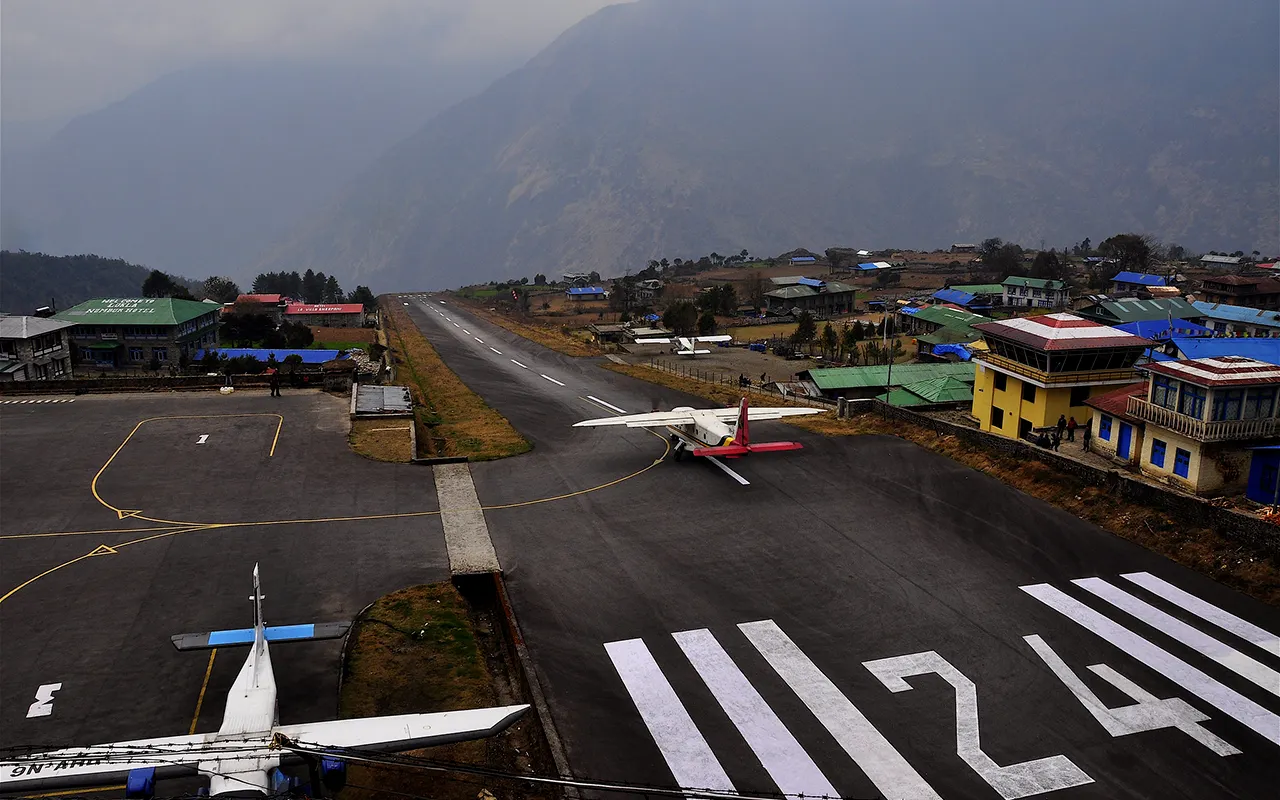
Setting off on the Everest Base Camp Trek with Island Peak Climbing, we will have breakfast in Kathmandu, followed by a drive to the airport. One of our reps and a driver will pick you up from the agreed location in the morning, so you must have your bags packed the night before. Our flight to Lukla will definitely be a scenic journey as you get to see much of the Khumbu region from the window.
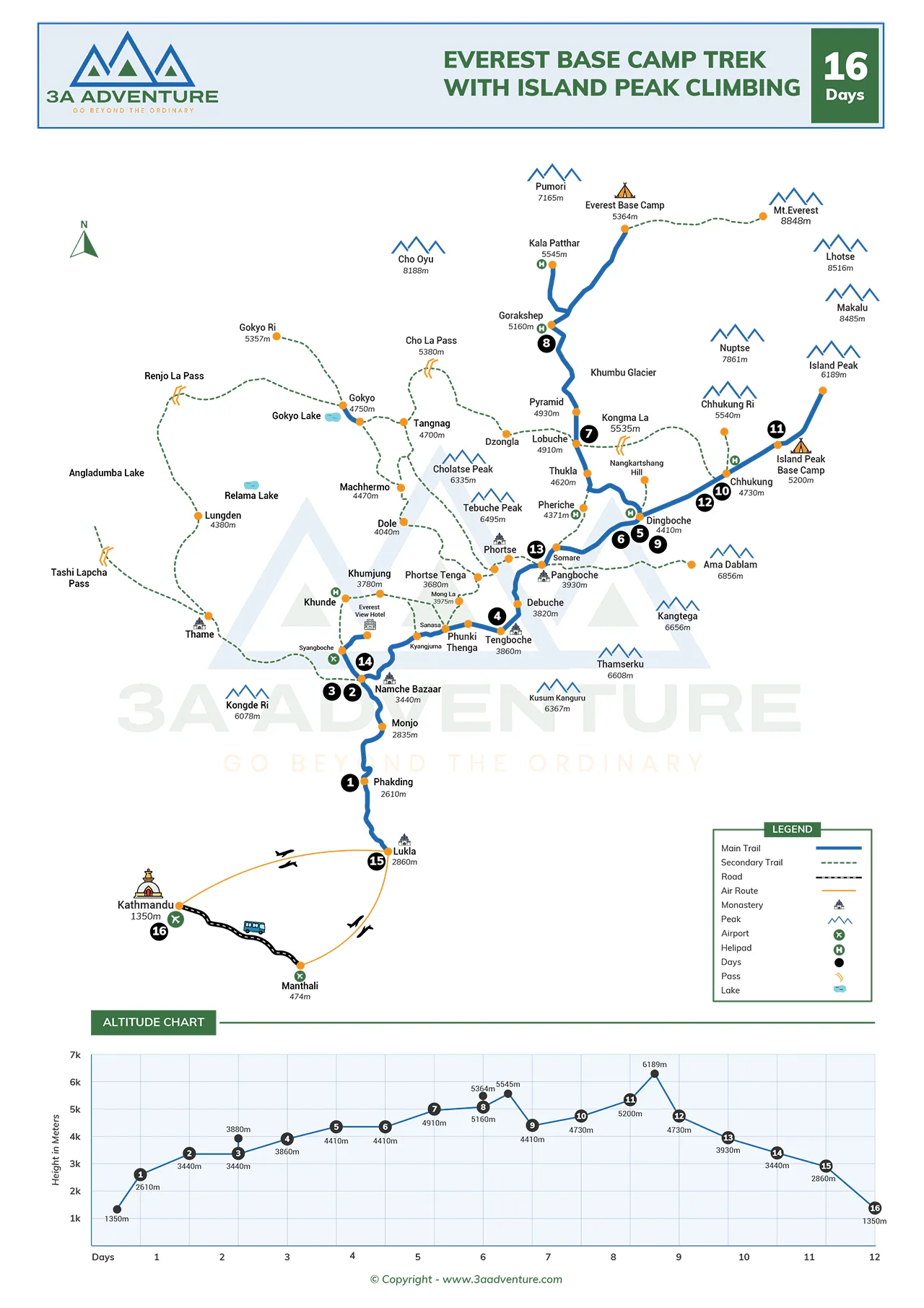
After we reach Lukla, 3A Adventure’s porters will get the heavy bags, and our guides will brief you about the day’s trek. Trekkers are expected to have a light bag on the back to access things like water bottles, sunglasses, energy bars, snacks, phones, etc., easily. The first trekking day of the Everest Base Camp Trek with Island Peak Climbing begins with a flat trail that leads us to the village of Chheplung. The total trek distance of the day is 8.2 km with a net elevation loss of around 250 meters.
Steadily descending, we will first make it to Chheplung village and follow the Dudh Koshi River to reach Thado Koshigaon. Continuing the trek, we shortly arrive at Ghat village and get on the final part of the day to reach Phakding. Along the way, you will get to see the gorgeous Kusum Kanguru peak. It will take us about 3 to 4 hours to complete today’s short trek.

Max. Altitude: 2,610m/8,563ft. (Phakding)

Accommodation: Lodge
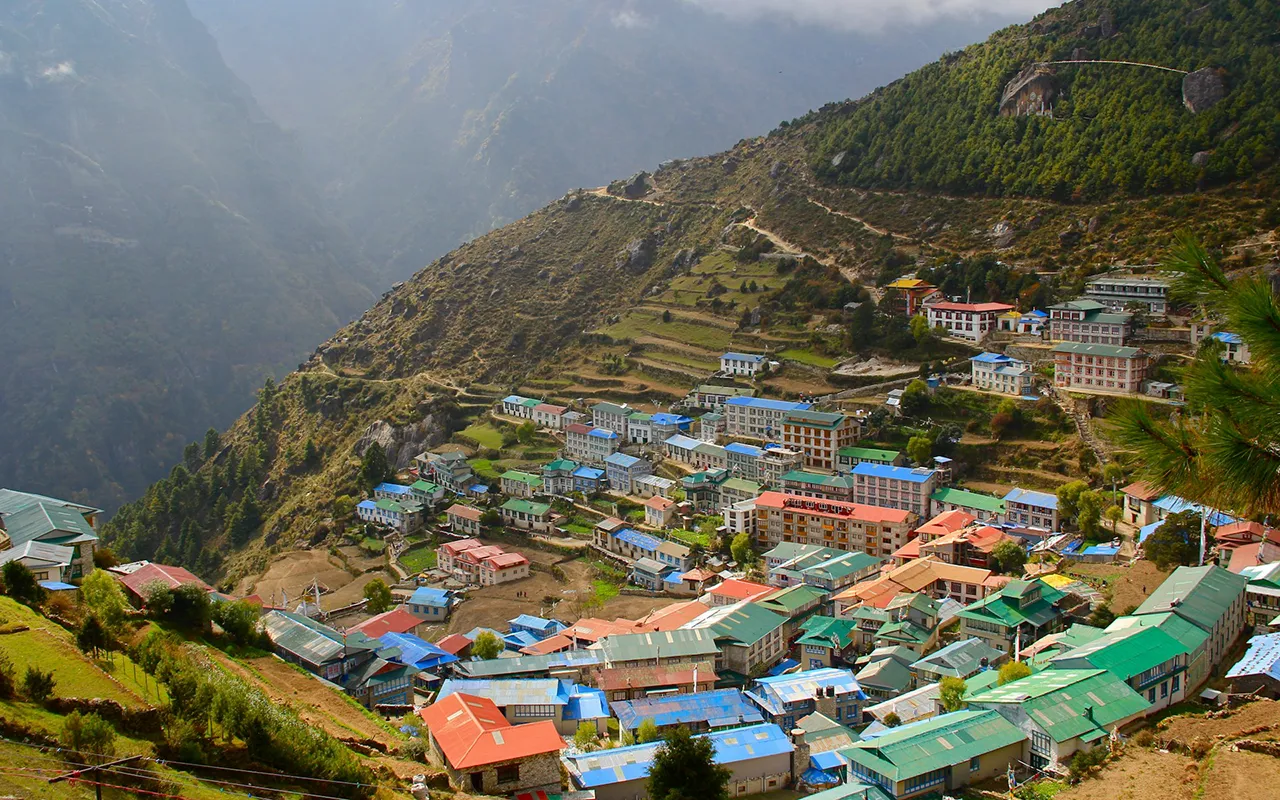
The 2nd day of the Everest Base Camp Trek with Island Peak Climbing requires you to be out and about for 6 to 7 hours. Starting from 2610 meters above sea level, our final standing elevation of the day will be 3440 meters at the amazing Namche Bazaar.
The trek begins with a slight descent and crosses a suspension bridge after about 15 minutes. 30 more minutes of trekking takes us to the village of Zamfute, passing by a hydro power project. From there, we have to ascend to the village of Toktok. With views of Thamserku peak, we will ascend further towards Benkar village, followed by Chhumuwa and Monjo. There, our Sagarmatha National Park entry permits will be checked.
Entering the national park, the path leads us to Jorsalle village, where our lunch will be served. The hardest section of the day and one of the most exhausting climbs of the trip is Namche Hill, which we must ascend after a revitalizing local supper. 10.8 km is the entire trek distance for the day.
Max. Altitude: 3,440m/11,286ft. (Namche Bazaar)
Accommodation: Lodge
Day 3 of the Everest Base Camp Trek with Island Peak Climbing is the first rest day, also known as an acclimatization day. Following breakfast, we will first visit a museum, the local bazaar, and a nearby monastery, and then head towards the Everest View Hotel. The trail up to the Everest View Hotel is partially the same as Khumjung monastery. The Everest View Hotel is the highest hotel in terms of altitude.
It will take us about 3 hours to complete the hike to the Everest View Hotel. The wide open compound offers one of the best scenes of the journey. You will get to see Ama Dablam, Pumori, Nuptse, Lhotse, Everest, and more from there. We can also make the quick diversion to the Khumjung hamlet on the way back to Namche Bazaar. An additional 1.5 hours of trekking will result from this.
Max. Altitude: 3,440m/11,286ft. (Namche Bazaar)
Accommodation: Lodge
The next day, on the Everest Base Camp Trek with Island Peak Climbing itinerary, you reach the real Himalayan terrain. Till Namche Bazaar, we were very near to major civilization, but moving forward, we will be spending the nights in barely accessible villages. The day begins with a gentle trail but soon turns into an ascent. We will descend the steep stone stairs that lead to Dudh Koshi after around two hours of walking.
We will eventually arrive at the final section of the journey, which will take an additional two hours. After arriving in Tengboche, we will check into a tea house in the area and spend some time exploring the village. Gaining us a net elevation of 430 meters, this trek has a total distance of 9.1 km, which we can cover in just about 5 to 6 hours of trekking.

Activity: 5 to 6 hours trekking
Max. Altitude: 3,860m/12,664ft. (Tengboche)
Accommodation: Lodge
Today is the longest (in terms of distance) ascending day of the Everest Base Camp Trek with Island Peak Climbing. The total distance of the day is about 11.15 kilometers and with a net elevation gain of 775 meters. The 5th day of the trek is probably going to be the most tiring ascent of the journey. Starting off over an undulating trail, we will first make our way to Deboche.
After reaching Deboche, we will get on the path to reach the village of Pangboche. This takes about 3 hours in total. Pangboche is almost the midpoint of the trek, so we will take a short break there. We can have our lunch there as well, or we can do it after we get to Shomare. Following a filling lunch at Shomare, we have to trek about 3 more hours to reach our destination of the day, Dingboche. As we get close to Dingboche, you can get grounded coffee in a couple of cafes along the way.
Max. Altitude: 4,410m/14,469ft. (Dingboche)
Accommodation: Lodge
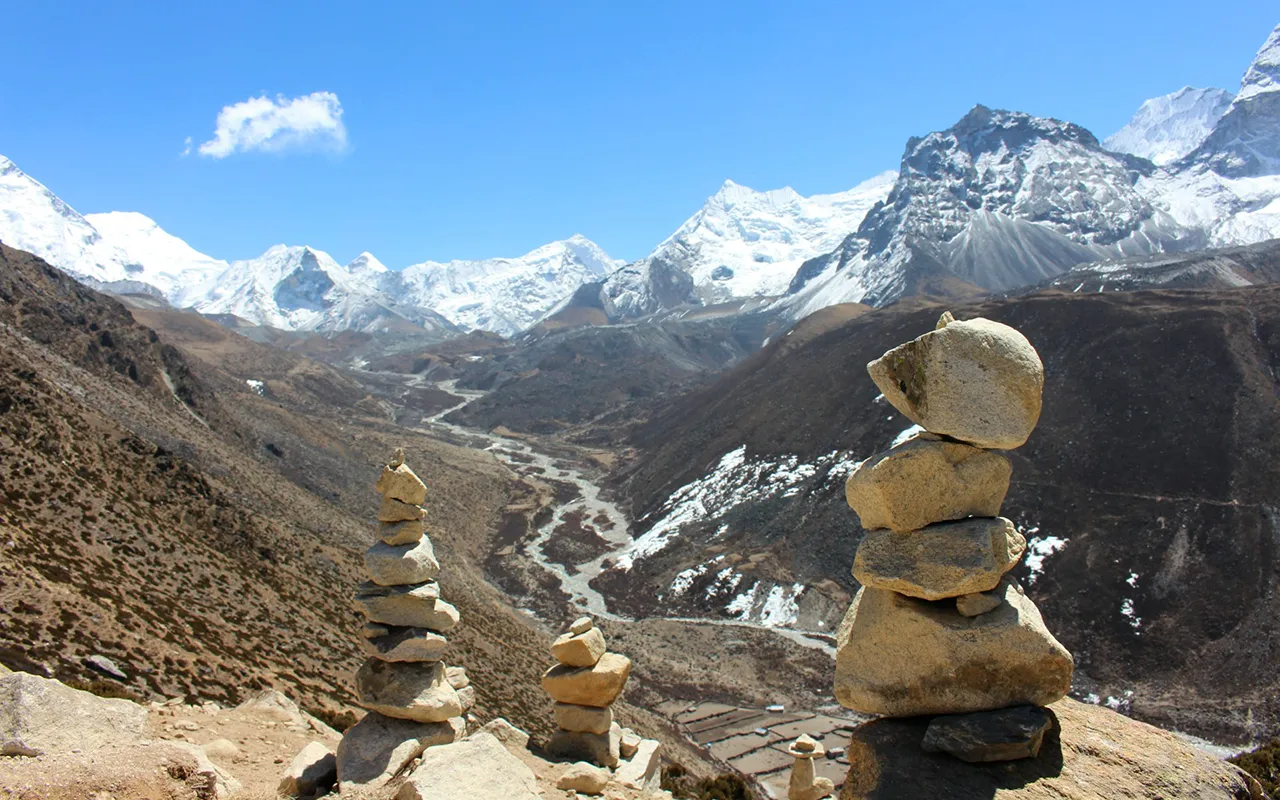
The second acclimatization day is day six of the Everest Base Camp Trek with Island Peak Climbing. Our highest point today is 5083 meters above sea level. We’re going to walk up to the top of Nangkartshang Hill as part of our day’s activities. We will also visit the Nangkartshang Monastery, which is the source of the hill’s name. The monastery is over a century old and serves as a great vantage point as well.
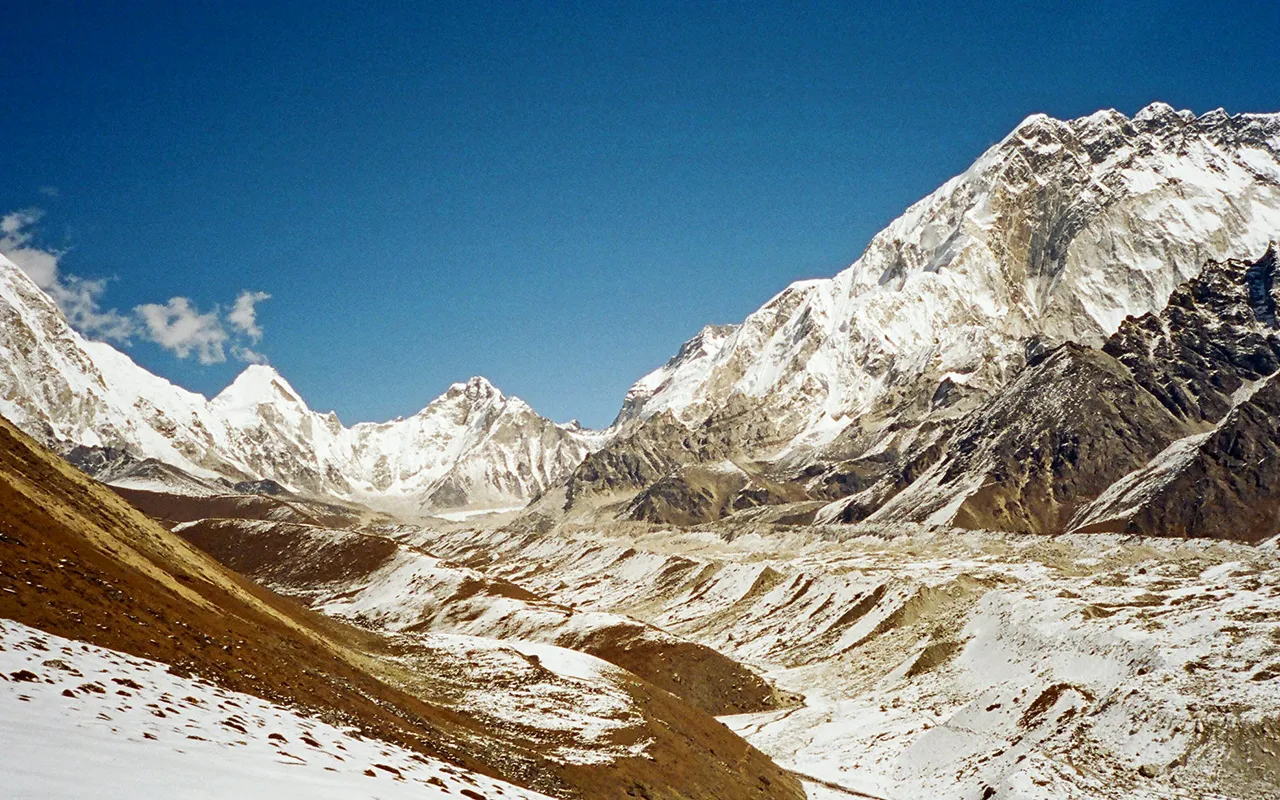
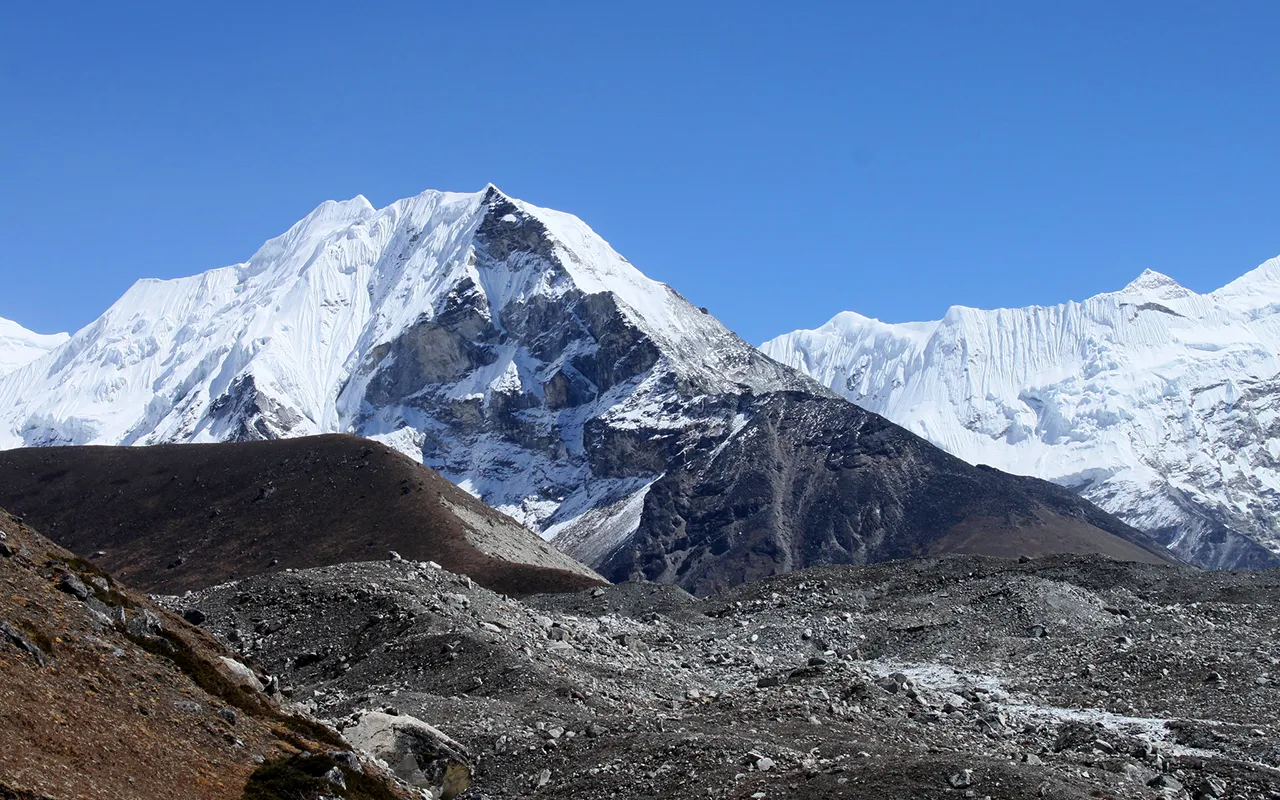
The climb up the slopes of Nangkartshang Hill takes us about 2 hours, offering a great, wide scene of the peaks nearby. Notably, you will get to see the Island Peak, Lhotse, Ama Dablam, and Makalu. After a while, we have to descend back to the village. You can spend the rest of the hours strolling through the settlement.
Max. Altitude: 4,410m/14,469ft. (Dingboche)
Accommodation: Lodge
The 7th day of the Everest Base Camp Trek with Island Peak Climbing features a 5 to 6-hour-long trekking trail that stretches over 12.3 km. The trek begins with a trail that heads north towards Pheriche. We will next proceed to the settlement of Dughla. As we go further, the route gets steeper; we will arrive at Dughla after hiking 4.5 kilometers from Pheriche.
This part of the trail leads us to the Thukla Pass. This tiring and steep ascent lasts for about fifty minutes, leading us to the Everest Memorial site. After about 6 hours of walking, we will eventually reach the destination. It is one of the highest permanent villages in the Khumbu region. We shall have some local meals, then head to bed to rest well. We will have increased our elevation by around 530 meters by the end of the hike, from 4410 meters to 4940 meters above sea level.
Max. Altitude: 4,940m/16,207ft. (Lobuche)
Accommodation: Lodge
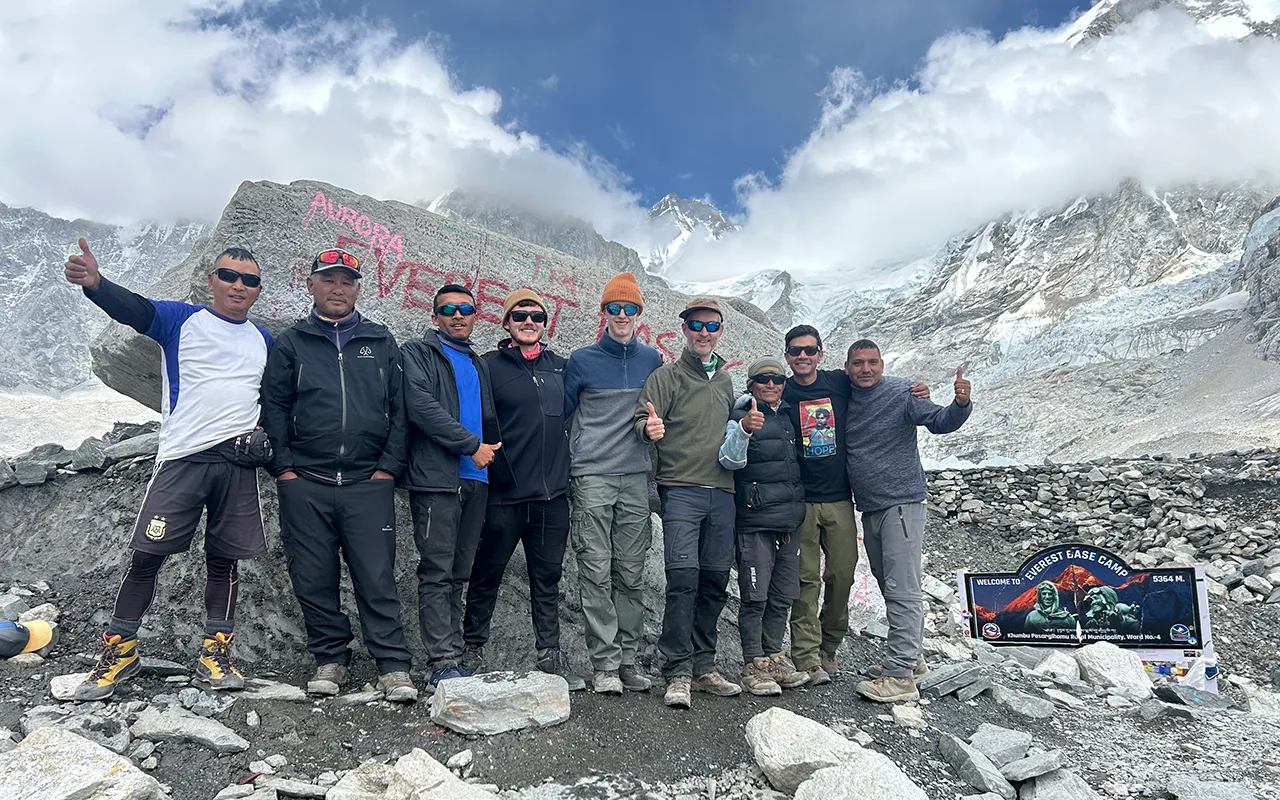
The Everest Base Camp Trek with Island Peak Climbing’s key day has arrived. Additionally, it will be a long day. We must first hike almost 5 km to reach Gorakshep. While the remainder of the path is rolling with small ups and downs, the first two kilometers of the walk are quite easy. We still have kilometers to go after arriving at the final Gorakshep town since we need to go to Everest Base Camp.
The second part of today’s trek is 10 km long, including the descent back to Gorkashep. After leaving our heavy bags at Gorakshep, we begin the trek to the base camp. The terrain is dominated by glacial remnants and loose rocks. Because we will be well over 5000 meters above sea level, this section of the path can be exhausting. As we arrive at the base camp, we will be treated to a breathtaking view of Cho Oyu, Ama Dablam, Kwangde, Nuptse, Makalu, Lhotse, Pumori, and Kantega.
Max. Altitude: 5,164m/16,942ft. (Gorakhshep)
Accommodation: Lodge
On the 9th day of the Everest Base Camp Trek with Island Peak Climbing, we will hike up to a nearby viewpoint and witness a one-of-a-kind sunrise. Starting from Gorakshep, we will get on a to climb a steep trail for about 3 hours to reach the viewpoint of Kala Patthar. One of the highlights of our walk is undoubtedly this breathtaking crack of dawn vista from the Kala Patthar peak. Numerous peaks, including Mount Everest, Nuptse, Changtse, Pumori, Khumbutse, Lingtren, and Lhotse, will be seen in the daybreak landscape.
Since our objective is to witness the sunrise, we must begin our journey extremely early in the morning. As per the average pace, we will return to Gorakshep after about 3 hours. After a hearty breakfast, we have to move down to our next destination. This is the first descending day on the itinerary, and it’s a long descent to Dingboche..
Max. Altitude: 4,410m/14,469ft. (Dingboche)
Accommodation: Lodge
We reach Chhukung the next day on the schedule for the Everest Base Camp Trek with Island Peak Climbing. During the climbing days, we went via this settlement. Following a delicious breakfast, we start the day by traversing the Khumbu glacier, which should take us around two hours. This section of the route takes us to the Kongma Pass’s base; the ascent up the pass’s steep slope will be an unforgettable experience. Trekking poles are necessary due to the extremely demanding and rough path that leads to the peak.
Although the ascent is physically difficult, the view en route and from the top are worth every tiny step you take. Leaving the pass, we have to descend a gradual trail, cross the Imja river, and keep on going along the river to reach Chhukung.
Max. Altitude: 4,730m/15,518ft. (Chhukung)
Accommodation: Lodge
Day 11 of the Everest Base Camp Trek with Island Peak Climbing begins at around 8 AM. We have to cover about 8 km of distance in order to reach the base camp, followed by a training session. Today’s trail is a difficult one, to say the least; it’s rugged, rough, and takes over 3 hours to complete. Since it is only 3 hours away from Chhukung, our trek ends rather soon today. We will enjoy a fantastic view of Imja Lake once we arrive at the base camp.
The climbing guide will conduct a briefing on correct equipment use when the climbers arrive at the Island Peak Base Camp. The guide will make sure that all the essential gears are covered; in addition to that, he will discuss the safety aspects. From there, a grand scene of the Lhotse Glacier along with Mt. Baruntse, Num Ri, Cho Polu, Lhotse, Nuptse, Makalu, and more can be seen.
Max. Altitude: 5,087m/16,690ft. (Island Peak Base Camp)
Accommodation: Lodge
With a height of 5200 meters above sea level, the Island Peak Base Camp is indeed quite high. To avoid altitude sickness, we advise staying properly hydrated during the hike, particularly on this specific day. To accommodate novice climbers and aid in acclimatization, the peak climbing path is broken up into many sections. The high camp, which is 5600 meters above sea level, is our first destination. It should take us around two hours to get to the high camp.
From the high camp, we will head towards the Crampon Point. This part of the climb takes an additional 3 hours to reach. This is the place where we have to set up our camp and keep heading up following the main rope. After a while, we will reach the Imja Glacier and ascend the most challenging part of the day.
To get to the top of the mountain, we will all have to go through a vertical wall. We will be greeted by a vista of Ama Dablam, Lhotse, Makalu, Nuptse, Everest, and more as we cross the area. After taking in the sights, we’ll have a little break before heading back to the high camp and then descending to Chhukng.
Max. Altitude: 4,730m/15,518ft. (Chhukung)
Accommodation: Lodge
The predicted overall journey time for Day 13 of the Everest Base Camp journey with Island Peak Climbing is 4 to 5 hours, covering a distance of around 12 km. We start at 4730 meters above sea level and descend to 3985 meters, a 735-meter elevation decrease for the day. Beginning with a gradual descent, the hike follows the Imja River through the Imja Khola valley.
We will go across a suspension bridge over the Imja River and depart from the mountainous landscape. The track soon rises to 4400 meters after a little ascent. After that, the route descends sharply and leads directly to the town of Pangboche.
Max. Altitude: 3,985m/13,074ft. (Pangboche)
Accommodation: Lodge
Hiking down from Pangboche, we will have to cover about 13 km of distance to reach Namche. This trek can be done within 5 to 6 hours and features 745 meters of net elevation loss. Starting off, the trail is rocky and passes through grasslands, accompanied by bushes and trees. Passing by a couple of Sherpa settlements, we will cross a couple of tributaries of the Dudh Koshi River. Soon enough, we will reach the last part of today’s trek and ascend gradually all the way to Namche Bazaar.
Max. Altitude: 3,440m/11,286ft. (Namche)
Accommodation: Lodge
The entire distance covered by trekking from Namche to Lukla is around 19 kilometers. Reaching 2860 meters above sea level from 3440 meters in Namche, the day’s net elevation difference is 580 meters. The route zigzags to the foothill after leaving Namche, passing via a set of stone stairs and dropping sharply over Namche Hill. Following our descent of the slope, we will go to Jorsale, Monjo, Phakding, and finally Lukla.
Max. Altitude: 2,860m/9,383ft. (Lukla)
Accommodation: Lodge
We return to Kathmandu on the final day of the Everest Base Camp Trek with Island Peak Climbing. Early in the morning, we take the quick flight from Lukla, which allows us to reflect on all of the memories we have created over the journey.
Max. Altitude: 1,400m/4,593ft. (Kathmandu)
Accommodation: Hotel

Note:
If you have a private group and prefer a personalized experience, we can organize a custom trip tailored to your requirements and group size, running it any day you choose.
Transportation
Food and Accommodation
Guide and Support Staff
Permit and Expenses
Medical and Gear
Others
International Flights and Visa
Food and Accommodations
Travel and Medical Insurance
Other Expenses
The best season for the Everest Base Camp Trek with Island Peak Climbing is autumn. This season is one of the most chosen times of the year for hiking and trekking. Many trekkers prefer this season for its overall dry period with very minimal rainfall. The average daytime temperature is also very suitable for trekking, while the nighttime temperature can often be freezing in the highlands.
The Everest Base Camp Trek with Island Peak Climbing can be given a 7.5 out of 10 on the difficulty scale. There are many ascents that will test your endurance and require great physicality. The descents can be slippery too, as we have to trek over loose rocks and icy patches.
There are some chances of altitude sickness on this trek since we will be spending an extended period of time over 4500 meters above sea level, but if you keep yourself well hydrated, the risks are dramatically lower. Other preventive measures include avoiding dehydrating food and drinks, following a safe pace while ascending, and following the “climb high, sleep low” principle.
To prepare well for this trek, we recommend that trekkers start their training at least 14 to 16 weeks before the scheduled start of the trek. You will have ample opportunity to practice endurance and psychologically prepare yourself as a result. Cycling, jogging, running, swimming, and other basic and easy workouts can adequately prepare your body for the physical demands of the walk.
During the trekking days, the Everest Base Camp Trek with Island Peak Climbing package will provide trekkers with 3 meals per day. You are free to choose any meal from the menu provided by the establishments. Trekkers usually go for the national dish of Dal Bhat, which comes with unlimited refills. Likewise, your accommodation expenses throughout the trek will be covered by the package.
A flight from Kathmandu to Lukla is required at the beginning of the journey, and a flight back to Kathmandu is required at the conclusion. The Everest Base Camp Trek with Island Peak Climbing package will include both of these flights as well as airport pickup and drop-off.
Mobile networks will be available only during your stay in the lower region villages. After you reach the highlands, you are highly likely to receive zero network connection. However, you can stay connected to the internet by using the Everest Link Card, which you have to buy separately for around USD 30.
The permits required for this trek are covered by the trek package. This includes the Sagarmatha National Park Entry Permit, the Khumbu Pasang Lhamu Rural Municipality Permit for EBC, and a peak climbing permit.
Your visa fees are not a part of the Everest Base Camp Trek with Island Peak Climbing package. We do not cover it under any circumstances.
Travel insurance is mandatory for this trek; without it, you can not join the trek. The trek guide will check your insurance before beginning the journey. Just like your visa fees, this is not a part of the package either.
As much as we cover most of the daily expenses, there are certain expenses that the Everest Base Camp Trek with Island Peak Climbing package does not cover. These include international flights, hot showers, laundry, bar bills, WiFi fees, extra meals, additional night stays, any kind of beverages, personal trekking gear, high-altitude rescue expenses, and more.
For families or groups of friends who wish to see the Himalayas with just their loved ones, a private trek is the ideal choice. The private trek option is available if you would rather not go with strangers. There are, nonetheless, some individuals who wish to go on the expedition but lack companions. The group trek is your best bet in these situations.
General
A typical plan for the Everest Base Camp Trek with Island Peak Climbing is 16–20 days.
On this walk, you will go to a maximum elevation of 6189 meters above sea level.
Indeed, Island Peak offers views of Everest and several other neighboring summits.
There are two acclimatization days included, one at Namche and the other at Dingboche.
You will visit each of their monasteries in addition to passing Namche Bazaar, Pangboche, Tengboche, and Khumjung.
During the peak season, you can expect a couple of other trekking groups en route and in most of the tea houses.
Preparation & Fitness
Prior trekking expertise is required, though it’s not required up to 5000 meters above sea level.
Yes, they can assist you, but you can just follow the guide’s speed.
It is not mandatory, but practicing it is a plus. Getting used to your gear can make you confident.
The summit day is quite taxing and physically taxing. It is unquestionably a 9 out of 10 on the strenuousness scale.
No, such simulation training is not required, but if it gives you more confidence, you are welcome to undertake it.
 Insurance & Visa
Visas on arrival are not available to citizens of Nigeria, Ghana, Zimbabwe, Swaziland, Cameroon, Somalia, Liberia, Ethiopia, Iraq, Palestine, Afghanistan, and Syria.
Yes, the package includes all of the permits required for the journey.
Yes, the insurance will cover all your medical expenses at remote high-altitude locations.
No, visa extensions are provided by government bodies and employees; we can not put our hands on them.
Yes, that is the main point of getting travel insurance.
 Guides & Support Staff
Yes, in order to access the national park, a professional guide is required.
Yes, before trying the climb, you will participate in a training session.
Yes, our crew members are insured and well-rested.
Yes, there is a satellite phone available at all times in case you need assistance.
Yes, two hikers are assigned one porter as per our typical setup.
 Accommodation and Facilities
You do not have to spend a single night in camping tents on this Everest Base Camp Trek with Island Peak Climbing.
Hot showers are available at most of the tea houses except the ones over 4500 meters.
Yes, the tea houses will charge you extra for Wifi and charging.
 Food and Drinks
Yes, vegetarian and vegan meal options are available at most of the tea houses in the highlands.
Yes, you can purchase many goods at Namche, but it is probably the last place to stock up on goods.
 Weather & Seasons
No, trekking during the monsoon season is not viable for clear views.
No, buffer days are not included in this itinerary.
Yes, but it is highly unlikely during the peak trekking seasons.
Yes, you can expect some snowfall in October since it is the start of winter.
Yes, but such strong winds rarely hit trekkers.
 Health & Safety
You should let the guide know, and he will handle the rest of the procedure.
Yes, there are some clinics at Namche, but not all of them have oxygen support.
Indeed, staying in Base Camp without a valid climbing permit is prohibited.
Yes, you are supposed to leave no traces behind.
Yes, we recommend purifying your water every time you refill, you should not take any chances with your health.
 Booking & Payment
Our cancellation policy provides you with another trek of similar aspects or refunds the initial deposit partially.
Yes, in order to begin organizing your travel, lodging, and other trek-related details, we need a minimum 50% down payment.
No, as we need to reserve the lodging in advance, you can not change the route in the middle of the walk. At some locations, though, we might be able to stay an additional night.
The trek package includes permit fees; however, the waste deposit is not included.
No, unless the journey is canceled due to unforeseen circumstances, you will not receive a refund once the trek has begun.
Yes, we can work out that arrangement.
In the event that a flight is canceled, we do provide rescheduling options.
 Transportation & Flight
Yes, if there are problems at the Kathmandu airport, flights from Manthali to Lukla are typically taken. It is shorter than the flight from Kathmandu, although it is uncommon.
In the spring and fall, the flights to Lukla are rather dependable. We can also take flights from Manthali in case of flight delays. Even so, it will take us five hours to go from Kathmandu to the Manthali airport.
Yes, you can travel by ground if you would rather not fly to Lukla. It will take you roughly two days to drive to Salleri and hike to Lukla.
No, the airport at Syangboche is not open at the moment. The sole airport in the Khumbu region is Tenzing-Hillary Airport.
No, in order to avoid leaving you stuck at the airport after the trek is over, the return flight to Lukla is scheduled well in advance.
Yes, that is a feasible alternative; nevertheless, you will need to consult our trek experts to determine the specifics.
Since these are the only emergency services offered in the isolated highlands, they are definitely worth taking into account.