

Need Help?
+977 9860666075

Based on 27 reviews

Trip Duration
10 Days
Trip Difficulty
Easy
Max Altitude:
5,545m. / 18,192ft.
Best Season
Spring, Autumn
Meals
Breakfast, Lunch & Dinner
Accommodation
Hotel, Lodge, Tea House
Transportation
Bus , FlightThe Everest Base Camp Trek with Helicopter Return is a simplified version of the standard EBC trek that takes about 14 to 17 days to complete, depending on the itinerary taken. This trek takes place within the Khumbu region of Nepal, incorporating the Sagarmatha National Park as well. The region is popular for its dramatic glaciers, deep river valleys, and icefalls. So, throughout the journey, not only will you experience the local culture and people, but also the preserved nature of the park and the Everest region.
The entire Khumbu region is dominated by Sherpa communities, who are known as the people of the mountains. The local Sherpas had been the only guides for countless expeditions in the early days of mountaineering and scaling Mt. Everest. Perhaps, you might know the name Tenzing Norgay Sherpa, who reached the summit of Everest for the first time, along with Edmund Hillary. This was the first time people heard about Sherpas, and ever since, they have been the best mountaineer/trek guides you can choose.
The local culture in the region is heavily influenced by the teachings and practices of Tibetan Buddhism. Their dialect can be traced to Tibet, and their religious practices are more in tune with local Tibetan rituals. Villages like Namche, Khumjung, and Tengboche are great sites to experience the culture of the Khumbu region. If you would like to chat with any locals, 3A Adventure’s experienced guides can help you bridge the communication gap.
Along the way, you get to visit a couple of monasteries, including the Tengboche monastery, Pangboche monastery, and one in Namche Bazaar. In addition to the religious sites, you get to experience stunning and unforgettable scenes from many viewpoints along the way. Scenes of the plethora of peaks in the region, along with the scenes of glaciers and icefalls, will surely make this trek worth every bit of effort you put in.

On the very first day of the Everest Base Camp Trek with Helicopter Return, you will arrive at the Tribhuvan International Airport in Kathmandu. This historic capital of Nepal is one of the best places to start your journey in Nepal. After you successfully obtain your tourist visa upon arrival, one of our reps will be waiting for you at the terminal. He will escort you to your hotel rooms for the night, and we will have you meet the crew member before you head to bed.

Max. Altitude: 1,400m/4,593ft. (Kathmandu)

Accommodation: Hotel
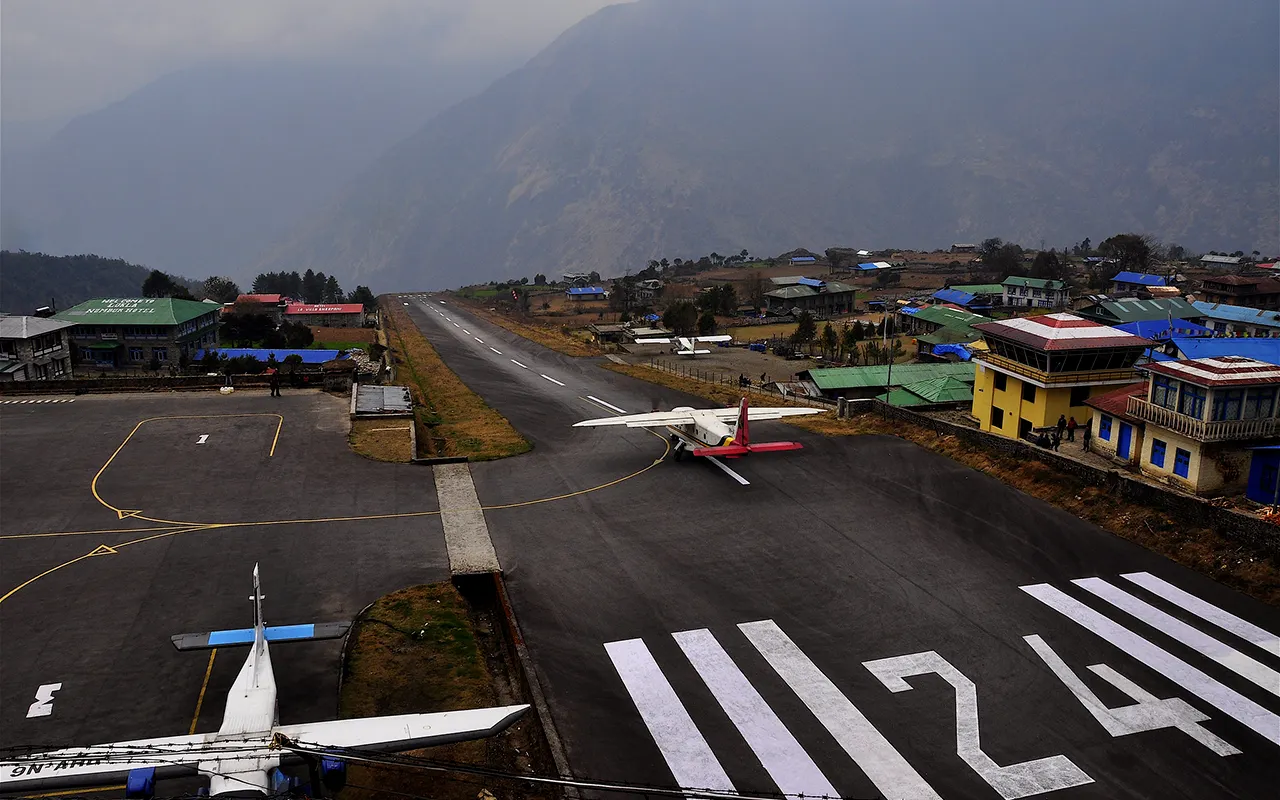
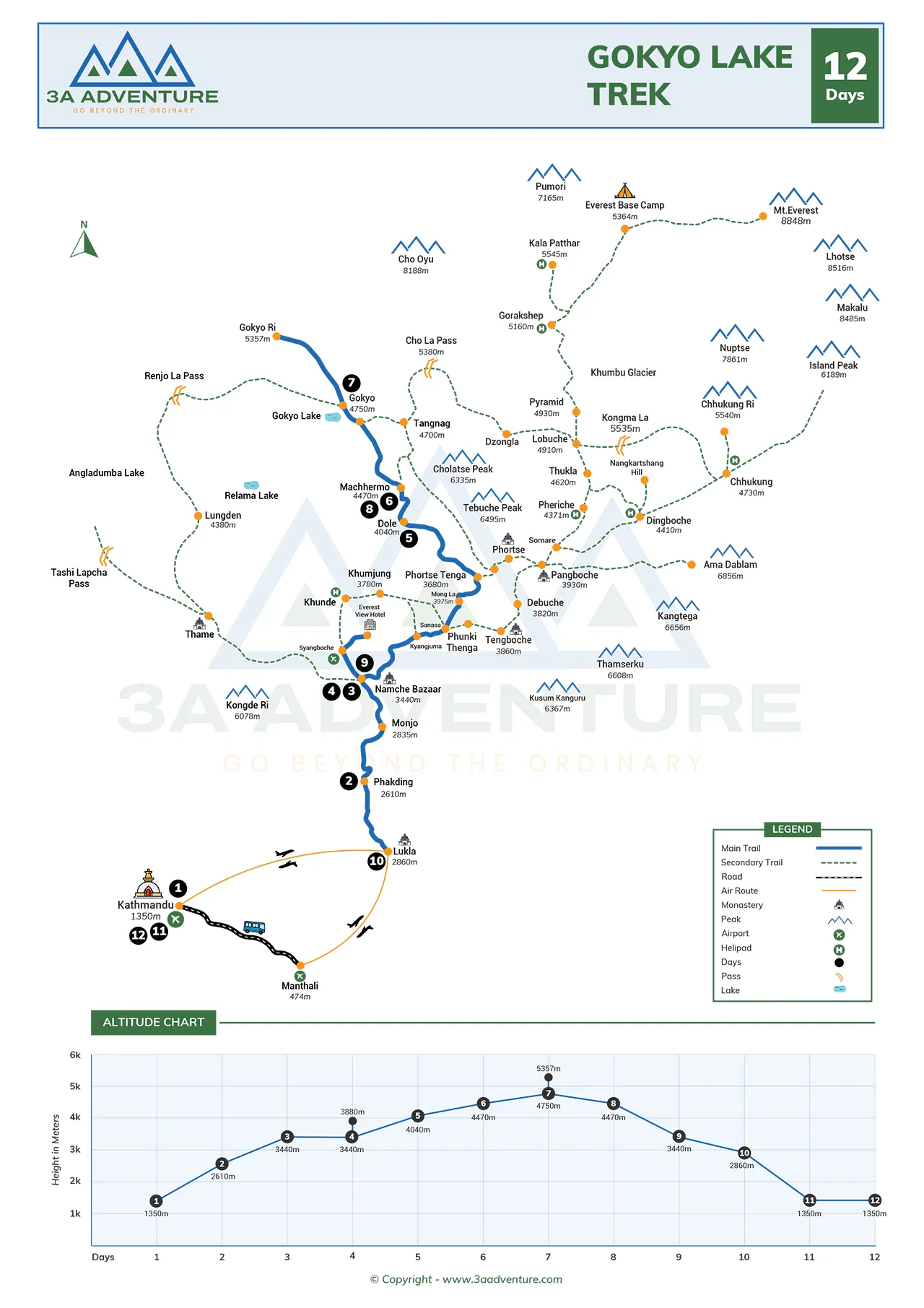
Today is the first trekking day on the Everest Base Camp Trek with Helicopter Return itinerary. Our day starts with a short and exciting flight to Lukla. From there, we have to cover about 8.5 km of distance to reach Phakding. This trek will take us about 3 to 4 hours to cover, and we will lose 250 meters of elevation, starting from 2860 meters at Lukla.
Departing from Lukla, the path gradually descends and crosses a couple of suspension bridges. En route, we will pass Chheplung, Thado Koshi, and Ghat, villages to eventually reach Phakding.
Max. Altitude: 2,610m/8,563ft. (Phakding)
Accommodation: Lodge
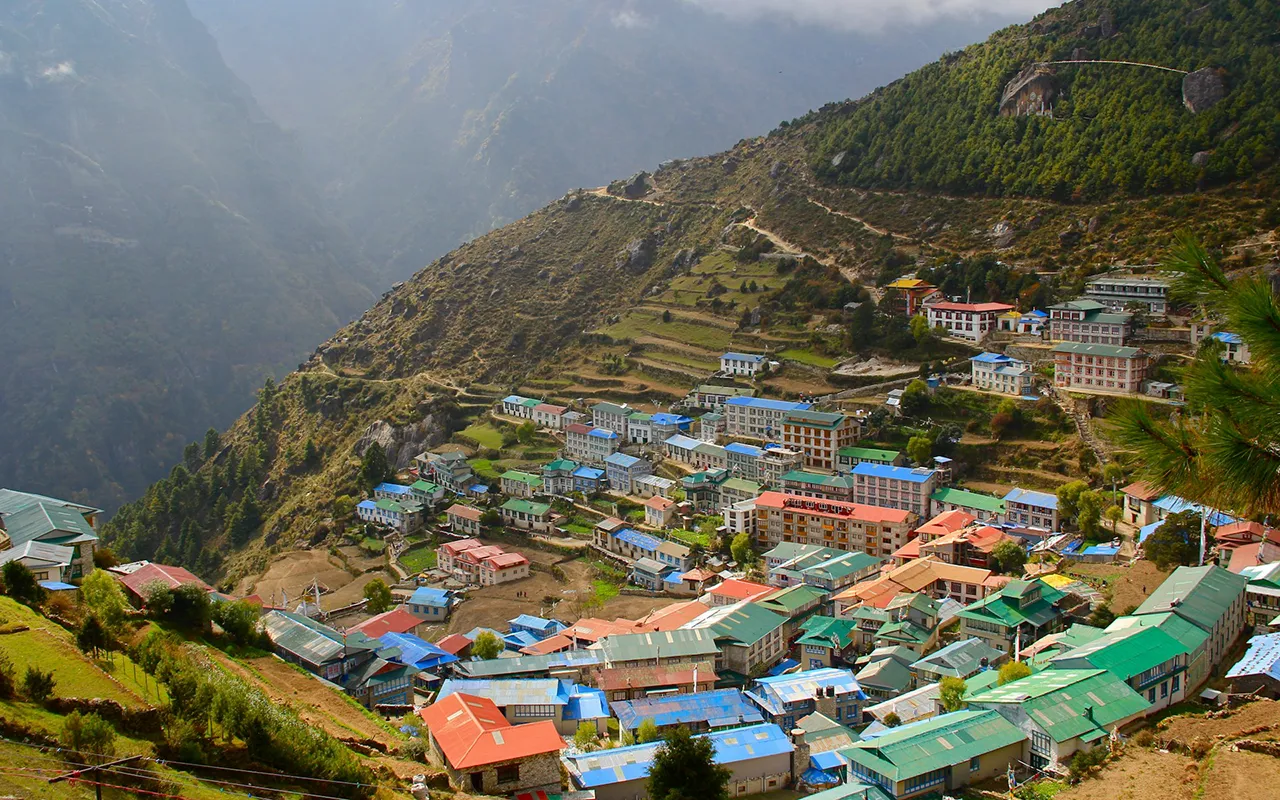
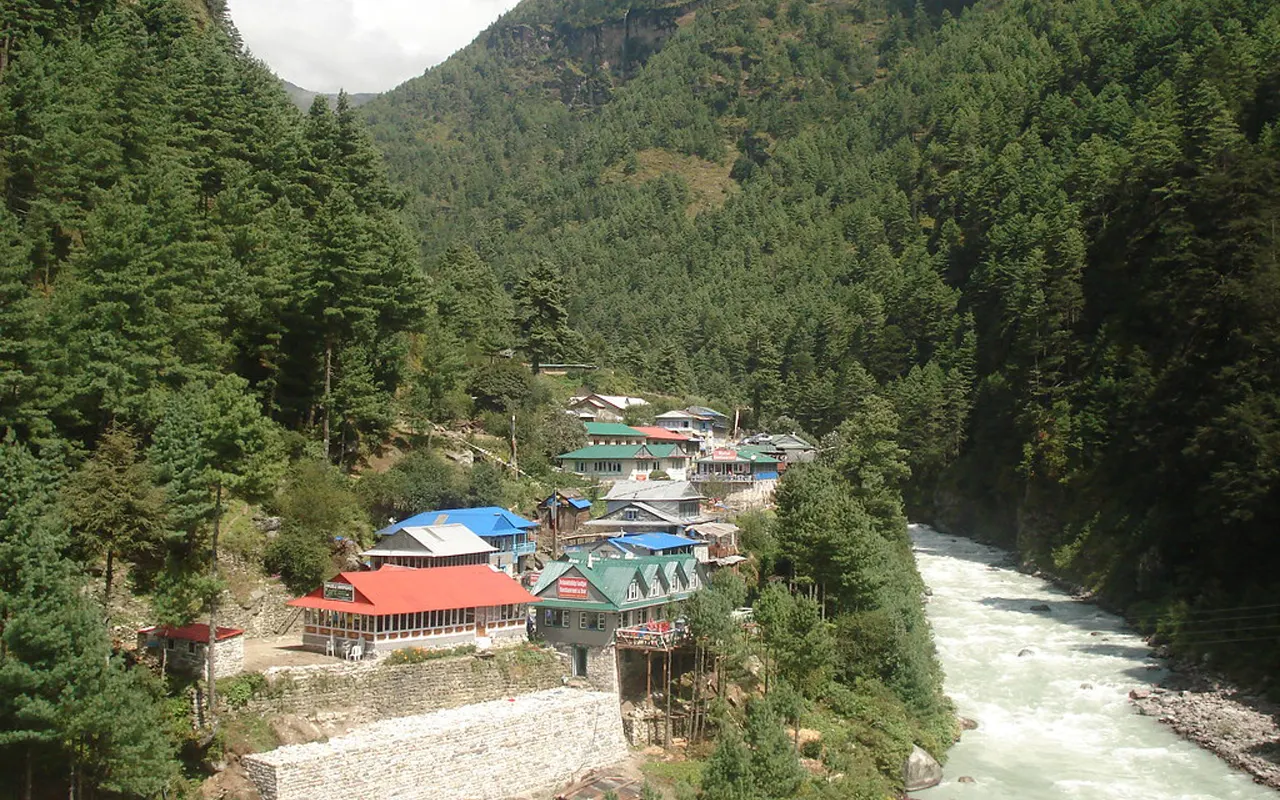
Day 3 of the Everest Base Camp Trek with Helicopter Return features 10.8 km of total trekking distance, which takes about 6 to 7 hours to complete. The elevation gain of the day is 830 meters, starting from 2610 meters and ending at 3440 meters above sea level. The trek begins with a gradual climb and crossing a bunch of suspension bridges over the Dudh Koshi River. After passing Monjo, Toktok, and Jorsale village, we will climb the Namche Hill and reach our destination of the day.
Max. Altitude: 3,440m/11,286ft. (Namche Bazaar)
Accommodation: Lodge
Today is the first acclimatization day of the Everest Base Camp Trek with Helicopter Return. For our acclimatization hike, we will climb up to the Syangboche airstrip and proceed towards the Everest View Hotel. We will gain over 400 meters of elevation reaching the hotel and enjoy a great scene of Everest, Ama Dablam, Lhotse, Nuptse, Thamserku, and more.
After we are done with the views, we will return to Namche Bazaar and visit the attractions nearby. There’s a visitors center, a monastery, a cultural museum, and more. Your time at Namche will be full of short excursions.
Max. Altitude: 3,440m/11,286ft. (Namche Bazaar)
Accommodation: Lodge
Continuing the Everest Base Camp Trek with Helicopter Return, we have to trek about 10 km to reach Tengboche. With an elevation gain of 420 meters, the estimated trek duration is 5 to 6 hours, starting from 3440 meters and ending at 3860 meters above sea level.
Leaving Namche Bazaar, the trail winds up a forested section, leading us to Kyangjuma village. We will reach there after covering about 7 km of distance. Then, we will cross a suspension bridge and hit the final part of today’s trek.
Max. Altitude: 3,867m/12,687ft. (Tengboche/Debuche)
Accommodation: Lodge
The following day, on the Everest Base Camp Trek with Helicopter Return, we have to gain about 550 meters of elevation with an estimated trek duration of 5 to 6 hours. This trek spans 10 km of total distance, taking us from 3860 meters to 4410 meters above sea level.
Starting off, we will descend through a forest and cross the Imja Khola to reach Pangboche village. From there, we have to climb a gradual trail, passing by Shomare and leading us to Dingboche.
Max. Altitude: 4,410m/14,469ft. (Dingboche)
Accommodation: Lodge
Today is yet another acclimatization day on the Everest Base Camp Trek with Helicopter Return. To acclimate well, we have to go on a 3 to 4-hour-long hike to the Nangkartshang hill. The total distance is just 5.5 km round trip, and the elevation gain is about 670 meters, reaching 5083 meters above sea level. From the summit of the hill, you will get to see an amazing scene of Ama Dablam, Makalu, Lhotse, Island Peak, Lobuche, and more. After some time at the top, we will head back to Dingboche.
Max. Altitude: 4,410m/14,469ft. (Dingboche)
Accommodation: Lodge
On the 8th day of the Everest Base Camp Trek with Helicopter Return, we have a total trek distance of 11 km, which takes about 5 to 6 hours to complete. The day starts at 4410 meters above sea level, leading us to a final resting elevation of 4910 meters, gaining 500 meters of elevation.
Leaving Dingbcohe, we will trek a gently ascending trail and head towards Dughla village. From there, we will climb the Thukla Pass and visit the Everest Memorial. After some time at the pass, we will ascend gradually and traverse a rough terrain to reach Lobuche.
Max. Altitude: 4,940m/16,207ft. (Lobuche)
Accommodation: Lodge
Day 9 of the Everest Base Camp Trek with Helicopter Return is the main day. Today’s trek features a 10 km long trail, with an estimated trek duration of 7 hours. The net elevation gain is about 150 meters, reaching 5160 meters above sea level as our resting elevation at night. However, we will reach the 5364-meter-high Everest Base Camp.
Leaving Lobuche, the trail climbs gradually towards Gorak Shep. After reaching there, we will check into our accommodation for the night, leave our heavy bags there, and head towards the base camp. This part of the trek is icy, snow-covered, and rocky. From the base camp, you get to see an unforgettable view of the Khumbu Icefall, Nuptse, Pumori, Lhotse, Changtse, and the Khumbu Glacier.
Max. Altitude: 5,164m/16,942ft. (Gorak Shep)
Accommodation: Lodge
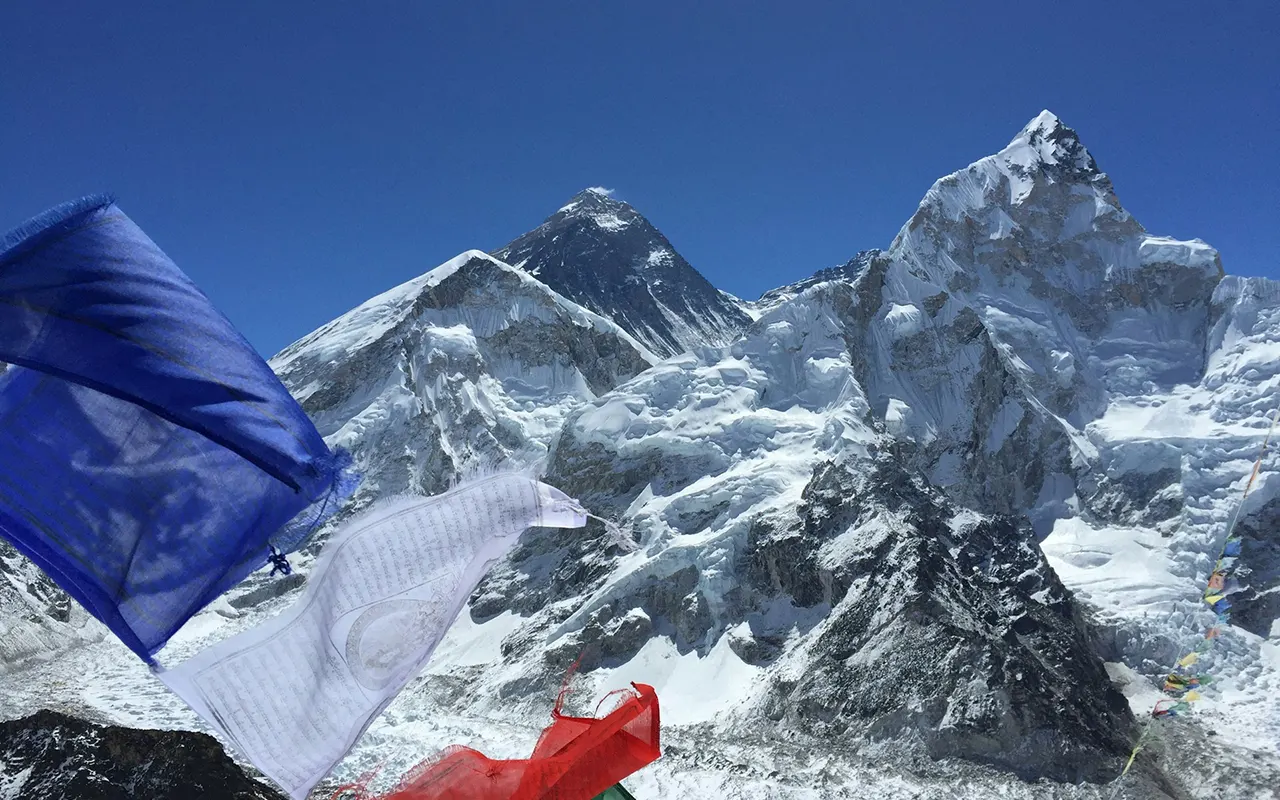
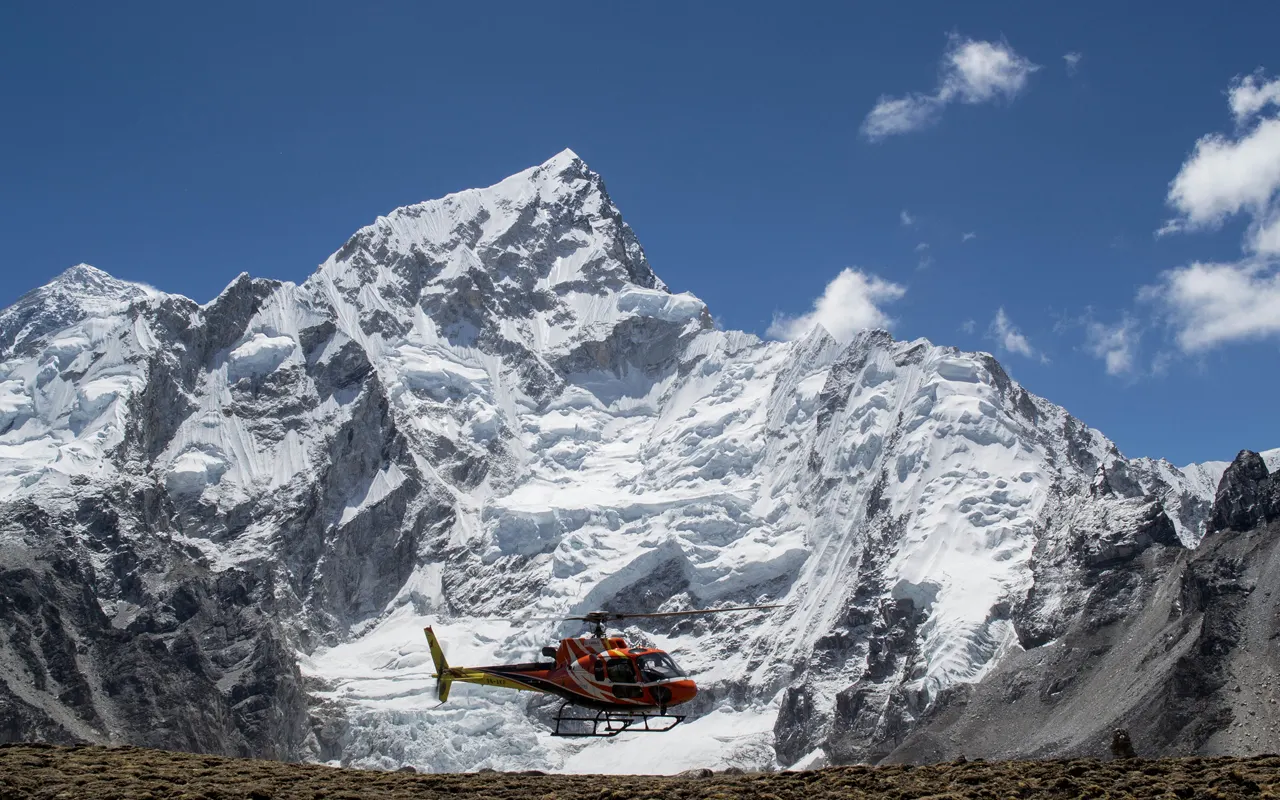
The final day of the Everest Base Camp Trek with Helicopter Return is here. Early in the morning, we will take a relaxed 3 to 4-hour walk from Gorak Shep to Kala Patthar viewpoint. The scene from the top is an amazing panoramic view of Nuptse, Lhotse, Pumori, Ama Dablam, Everest, and more. After some time at the viewpoint, we have to get back to Gorak Shep, eat our breakfast, and get on the helicopter back to Kathmandu.
Max. Altitude: 1,400m/4,593ft. (Kathmandu)
Accommodation: Hotel

Note:
If you have a private group and prefer a personalized experience, we can organize a custom trip tailored to your requirements and group size, running it any day you choose.
Transportation
Food and Accommodation
Guide and Support Staff
Permit and Expenses
Medical and Gear
Others
International Flights and Visa
Food and Accommodations
Travel and Medical Insurance
Other Expenses
The best seasons for doing the Everest Base Camp Trek with Helicopter Return are undoubtedly autumn and spring. Most of the trekkers prefer those seasons as they offer the best trekking conditions out of all the other seasons. To give you an example, the autumn season features mild daytime temperatures ranging from 10°C to 20°C. In addition to that, autumn also features one of the best scenes to witness. The trails are usually dry in autumn, making them less slippery and less icy.
The Everest Base Camp Trek with Helicopter Return is a slightly easier version of the standard EBC trek. It follows the same itinerary, ascending all the way to the Everest Base Camp, but it does not follow the same way back. Instead, we take an easy exit and get on a helicopter flight to Kathmandu from Gorak Shep. Although it does not seem like much, it is a huge relief from the traditional long descents all the way to Lukla. On a scale of 10, this trek deserves a rating of 7.5 since we still have many ascents to cover, despite getting a helicopter ride.
Altitude sickness is a possibility during the Everest Base Camp Trek with Helicopter Return, as we will be spending extended time at elevations higher than 3500 meters. However, the chances are very low if we follow the preventive measures and keep ourselves well hydrated throughout the trek. You can also carry a pill named Diamox, which will substantially reduce the effects of altitude sickness if you ever get sick. Although the changes are very minimal, if your case of altitude sickness is severe, we will call emergency services for rescue via a helicopter.
To prepare for this trek, we recommend you make an 8 to 10-week-long training period. The best thing you can do is increase your stamina and train your cardio. You can also go on short hikes to hills if you are around some. In general, you must focus on engaging your core and building your endurance.
Your food options during the trekking days are not limited to local and traditional food like some other trekking destinations in Nepal. You will have a bunch of western food options throughout the trek, but make sure that you give the traditional food at least one try. Most of the trekkers get hooked on Dal Bhat, the national dish of Nepal. The trek package will cover 3 meals per day (breakfast, lunch, and dinner) during the trekking days. During your time in Kathmandu, you will only be provided with breakfast.
Accommodations are pretty basic in the highlands. Tea houses are the standard options that we will choose for our accommodation throughout the trekking days. In Kathmandu, you will stay at a 3-star hotel. All the accommodation expenses are a part of the Everest Base Camp Trek with Helicopter Return package. However, bills like laundry, bar, hot shower, WiFi, etc., are your own expense.
At the start of the trek, we will escort you from the airport to the hotel for the night. The following day, we will fly out to Lukla from Kathmandu. After reaching the base camp and visiting the viewpoint of Kala Patthar, we will get on a helicopter and fly back to Kathmandu. These are all the transportation expenses that the Everest Base Camp Trek with Helicopter Return package covers.
While mobile networks are a hit or miss, you can enjoy an uninterrupted internet connection throughout the trek using an Everest Internet card. You can get 10 GB worth of internet usage for just USD 20, which should be enough to last throughout this trek. The tea houses have WiFi as well, but they might not be as good as the internet card.
In order to go on this trek, you must have a Sagarmatha National Park permit and a Khumbu Pasang Lhamu Rural Municipality permit. The Everest Base Camp Trek with Helicopter Return package covers the expenses related to the permits.
After you arrive at the Tribhuvan International Airport, you are supposed to get your tourist visa. The visa-on-arrival policy has made it easier for tourists to get a visa just by arriving at the airport. After you fill out the application, you are supposed to pay your visa fees and submit all the necessary documents to obtain entry into the country.
This trek takes you to a maximum altitude of 5545 meters above sea level at the viewpoint of Kala Patthar. That altitude is considerably high, and we have to spend a couple of nights above 4000 meters of elevation. All these factors can induce altitude sickness or require emergency services in one way or another. So, having travel insurance is a must. The Everest Base Camp Trek with Helicopter Return package does not cover your rescue operation expenses; the insurance provider will.
Your extra expenses are international flights, travel insurance fees, visa fees, any kind of beverages, extra meals, snacks, hot showers, WiFi, tips for the crew members, and any services that are not mentioned as inclusive.
The best thing about getting a private trek is sharing the experience with only your loved ones by your side. A private trek costs a bit more than the regular trek package, but it is a worthy experience that many trekkers opt for. A group trek, on the other hand, features random trekkers from all over the globe. This can be the best option for solo riders who want to experience the Everest region.
General
While the standard EBC trek requires descending from Gorak Shep to Lukla, to complete the trek, this helicopter return skips the descending days.
The full itinerary (standard Everest Base Camp trek) takes anywhere from 14 to 17 days, depending on the particular route chosen.
Trekkers are required to have a Sagarmatha National Park permit and a Khumbu Pasang Lhamu Rural Municipality permit for this trek. You can obtain them at the Tourism Board Office in Kathmandu or Pokhara.
Yes, beginners can attempt this trek, but it can be a bit too difficult for some, especially if they turn out to be sensitive to altitude or have an unfit body.
During the peak trekking seasons, such a spring and autumn, you can expect to have a bunch of trekking groups on the trails.
No, as a traveler, you are not expected to know the cultural etiquette of the locals. So, you do not have to worry about it.
Preparation & Fitness
An average level of physical fitness should be enough to complete this trek without any issues.
No, you do not have to do any kind of altitude training for this trek. However, you can engage in such activities if they make you feel prepared for the trek.
Yes, they can complete the trek safely, but they must be well-prepared for the physical demands of the trek. As long as they can reach their daily destinations, there are no problems.
A good pair of trekking poles is all you need for the daytime treks, while a sleeping bag is necessary for nighttime in the highlands, where temperatures can drop to single digits.
Acclimatization days are very important for this trek, and we do not recommend skipping them. If you are someone with years of experience, perhaps you can skip them.
No, fitness tests and medical checkups are not required before starting the trek.
 Insurance & Visa
You need a tourist visa to enter Nepal if you are visiting with a foreign passport. Yes, you can obtain the permits at the airport after your arrival.
Yes, travel insurance is mandatory, and it should cover expenses related to rescue operations and services in the barely accessible highlands.
Yes, your insurance package must have a clause that states such coverage.
No, visa processes are under the jurisdiction of the Government of Nepal, and we can not intervene in their procedures.
If your visa expires during the trek, you can simply visit the official immigration website and extend your visa after filling out an online application.
Yes, e-visas are great for peak trekking seasons and also a great option during normal times, since you do not have to wait for a visa at the airport.
 Guides & Support Staff
Yes, hiring a guide or porter is mandatory for this trek since you will be entering the restricted area of Sagarmatha National Park.
3A Adventure’s guides are very well-experienced and they speak 2or 3 different languages.
In general, a single porter is shared by two trekkers in the group, and a single guide is provided for a trekking group of 6 people.
Our strong porters are capable of carrying about 24 kg in total throughout the trek. This means the luggage limit per person is 12 kg. The trek package covers the wages of the porters; you do not have to pay them separately.
No, such arrangements can not be made since porters will have to travel all that way just to earn a few days’ wages. This is not a practical approach.
Our guides make sure that you follow the right measures of acclimatization, and if you ever get altitude sickness, they will be the ones who will call for help or bring you down to safer elevations.
 Accommodation and Facilities
We will only choose the tea houses and lodges that are hygienic. You do not have to worry about the comfort, the beds are soft enough to give you proper rest.
Yes, hot showers are readily available in Kathmandu, while they need to be prepared in tea houses on the trail. Typically, hot showers are priced at a dollar or two.
Yes, electricity and Wi-Fi are widely available during the trek. However, there are chances of a power outage, and the WiFi speed is not very impressive.
You are not expected to tip the staff at tea houses and lodges; however, if you really want to, you can tip them whatever you are content with.
 Food and Drinks
Typically, Dal Bhat, along with a bunch of other Nepalese dishes, local options, and some western food, are available on the trail.
Yes, special dietary options can be arranged during the trek, just make sure that you let us know beforehand.
While it is generally safe to drink water from natural sources, we recommend using water purification tablets, just to be sure.
 Weather & Seasons
The best months to do this trek are September, October, and November. You can also do this trek in March, April, and May to experience lush forests.
During the trekking season, the weather conditions are generally reliable with no signs of rainfall or clouds that obstruct the view.
We recommend not doing this trek in winter and monsoon; the rest of the seasons require light wear for the lower region and warm, insulating layers for the highlands.
Yes, trekking is possible during the monsoon season, but the trails will be slippery, the rivers will grow exponentially, and leeches can be a problem in forested sections.
 Health & Safety
The common symptoms of altitude sickness include nausea, vomiting, lightheadedness, a slight headache, shortness of breath, etc.
There are some medical facilities and rescue services along the way, at sites like the base camp, Gorak Shep, and more.
The trek guide will let you know all the preventive measures for altitude sickness.
You do not have to handle any emergency services; the trek guide will be in charge of it.
No, there are no risks of wildlife on the trail.
 Booking & Payment
Daily accommodation, 3 meals per day, permit fees, transportation expenses, and more are included in the standard package.
If you have to cancel the trek, you will receive a certain portion of the initial deposit, depending on the time of cancellation.
As long as the changes are trivial, minimal, and doable, we will allow those changes.
No, there are no special discounts for solo travelers or groups. However, doing the trek in less popular seasons can get you a discount.
Our payment methods are very secure, and you do not have to worry about having your credentials mis handled or stolen.
 Transportation & Flight
You can simply take a 20-minute flight to get ot Lukla. You can also charter a helicopter instead.
The flight is scenic and short, with an exciting landing strip.
Yes, there are flights from Ramechhap to Lukla as well. Alternatively, you can also trek to Lukla, which will add about 3 more days to the itinerary.
We will arrange it for you; you do not have to get involved in that hassle.
Yes, we provide free airport pickup and drop off.