

Need Help?
+977 9860666075


Based on 27 reviews

Trip Duration
12 Days
Trip Difficulty
Difficult
Max Altitude:
5,364m. / 17,598ft.
Group Size
2-16 People
Meals
Breakfast, Lunch & Dinner
Accommodation
Lodge
Transportation
Flight, Tourist BusThe Everest Base Camp trek is truly a cherished and aspiring journey for many mountaineers and hiking enthusiasts. It was a dream for us too, and so 3A Adventure has put up the 12 days Everest Base Camp trek itinerary that allows everyone to traverse this stunning location on Earth.
Distinguished around the world for being the most enchanting mountain hiking trail, the Everest Base Camp trek thus often is called the Stepping Stair to Heaven.
Located in the untamed mountain range of Sagarmatha National Park inside the Khumbu Valley, the journey to the Everest Base Camp (5364 m) reveals, in its each step, the picturesque images as if we are in paradise.
You will meet not only dense and lonely forests, rivers, and the Himalayas, but also a desert appearance landscape. Above all, the Everest Base Camp trek also allows you to meet the fascinating Buddhist culture of the Sherpa.
They are the warm-hearted, smiling individuals who like to share what they have and embrace everyone like their family. Additionally, the Everest Base Camp trek is a non-technical journey, and the entire EBC trek route consists of excellent facilities.
The Everest Base Camp trek is therefore an accessible journey for anyone who has good physical fitness and a lot of energy.
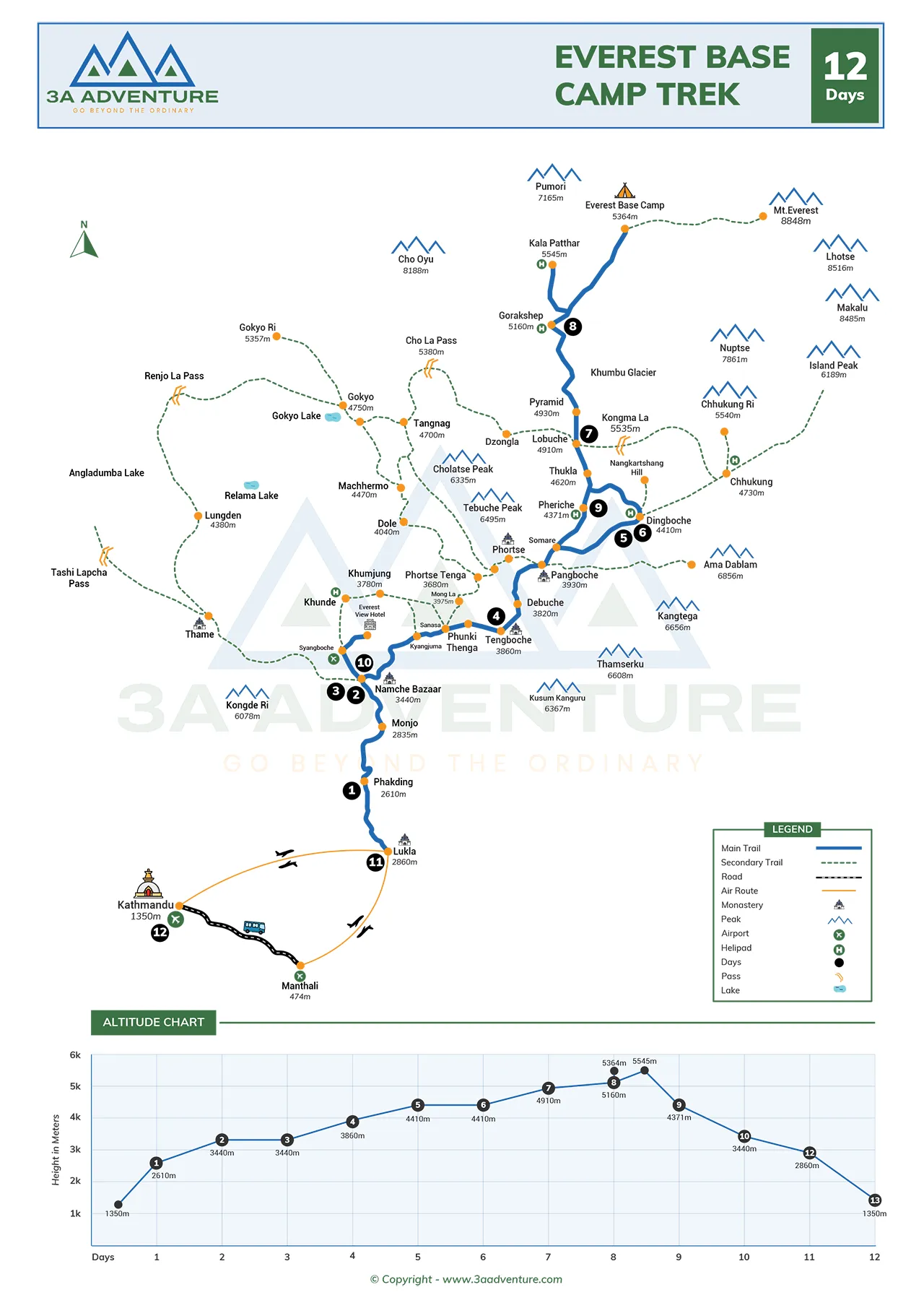
A flight from Kathmandu to Lukla will commence your Everest Base Camp trek. Your trek will begin immediately after landing through the Sagarmatha National Park.
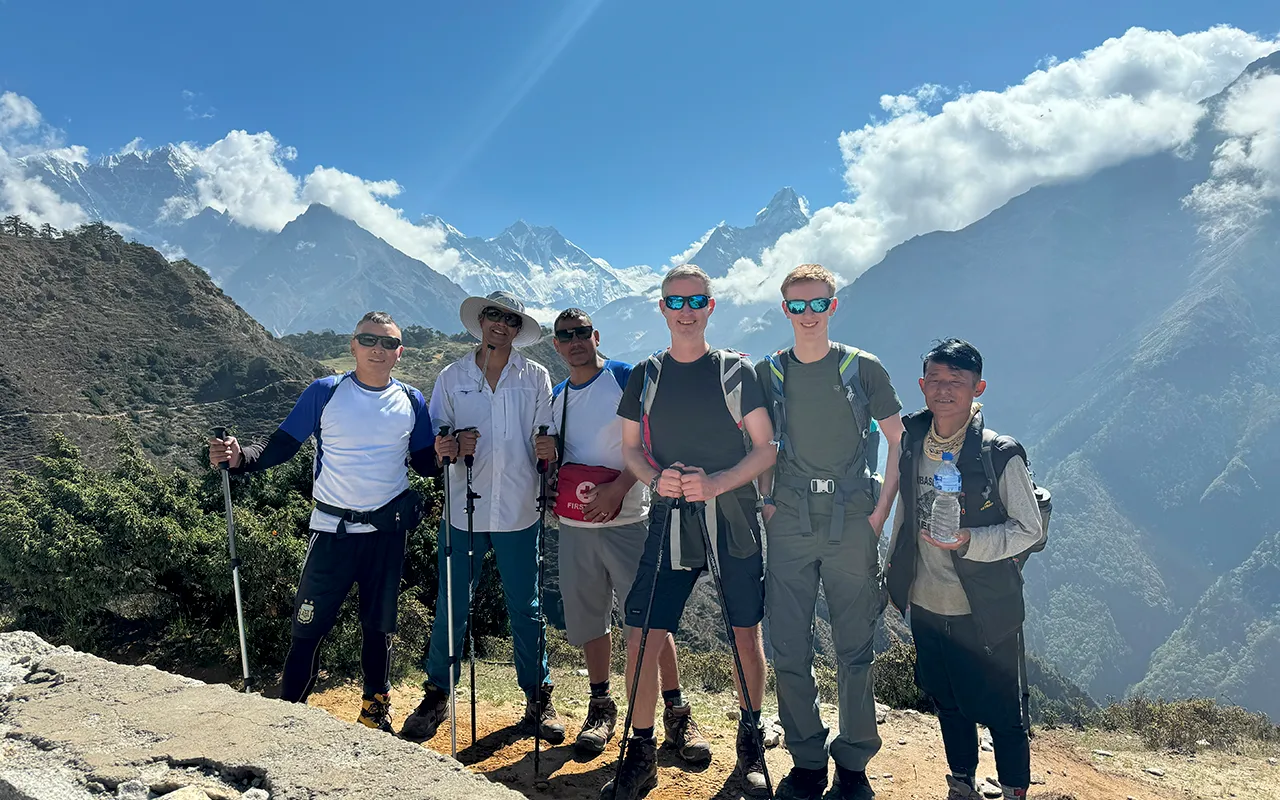
As you walk through the Sherpa communities of Namche, Tengboche, Dingboche, and Lobuche, you will begin to see and feel the authentic Himalayas of Lhotse, Amadablam, Nuptse, Kusum Kanguru, Kangtega, and Thamserku.
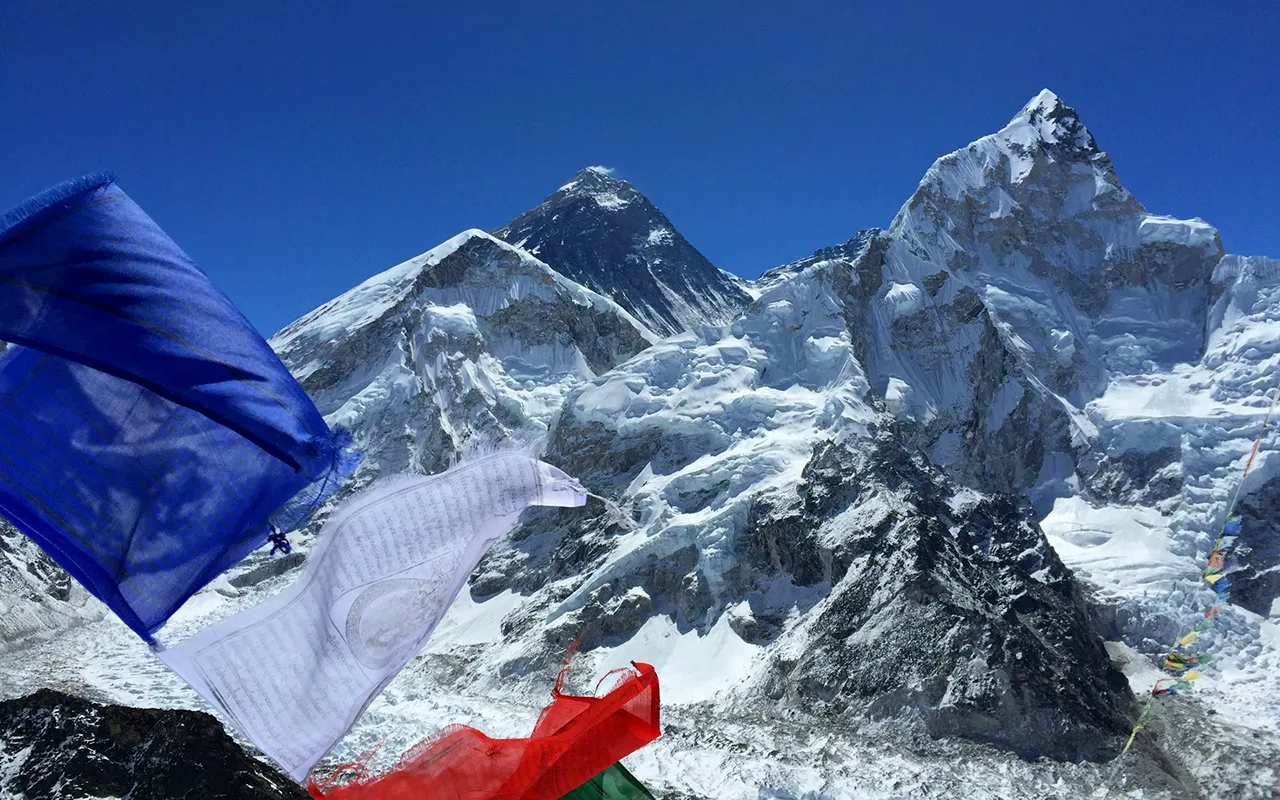
On day 8 of your 12 days Everest Base Camp trek, you will step on the snowy expanse of EBC, and on day 9, you will conquer the black pyramid of Kala Patthar surrounded by Lhotse, Ama Dablam, Everest, Pumori, Thamserku, Nuptse, Lingtren, Khumbutse, and Lobuche. Then, the same circular path will bring you back to Kathmandu, thus ending your Everest Base Camp trek.
With an aim of making the Everest Base Camp trek a pleasurable journey for both beginners and experienced adventurers alike, 3A Adventure has followed a careful acclimatization cycle through the trip.
Also, throughout the entire route, you will be accompanied by an experienced and qualified Nepali Sherpa guide along with porters to carry your luggage.
Grab your opportunity today and get going on our Everest Base Camp trek, an amazing Himalayan hiking adventure to the base of the tallest Himalaya standing on Earth.

Bright and early, we will be beginning our Everest Base Camp trek by heading off to Lukla. Please keep in mind that during the very high Nepal hiking seasons, which happen during spring and autumn, flights to Lukla from TIA may not be available.
Instead, they will all be relocated towards the Manthali domestic airstrip in Ramechhap. In such an instance, 3A Adventure will supply you with its private 4WD to take you to Manthali around midnight, which may take 4 to 5 hours.
Once we are at Lukla, we will go over our 12 days Everest Base Camp trek plan. Then, our real Himalayan hiking commences by the beautiful white shore of Dudh Koshi River.
Kongde Ri, Khumbila, Kusum Kanguru, and Thamserku surround us by our side as we traverse the green fields of Chheplung, Chaurikharka, Thadokoshi, and Ghat to arrive at Phakding for a snug sleep.

Activity: 30 mins flight / 3 hrs hike

Max. Altitude: 2,860m/9,383ft. (Lukla)

Meal: Breakfast, Lunch & Dinner

Accommodation: Lodge
We have a very busy walking day ahead as we head along the real Himalayan trail today. With Dudh Koshi River by our side, we will walk by Benkar and then Monjo.
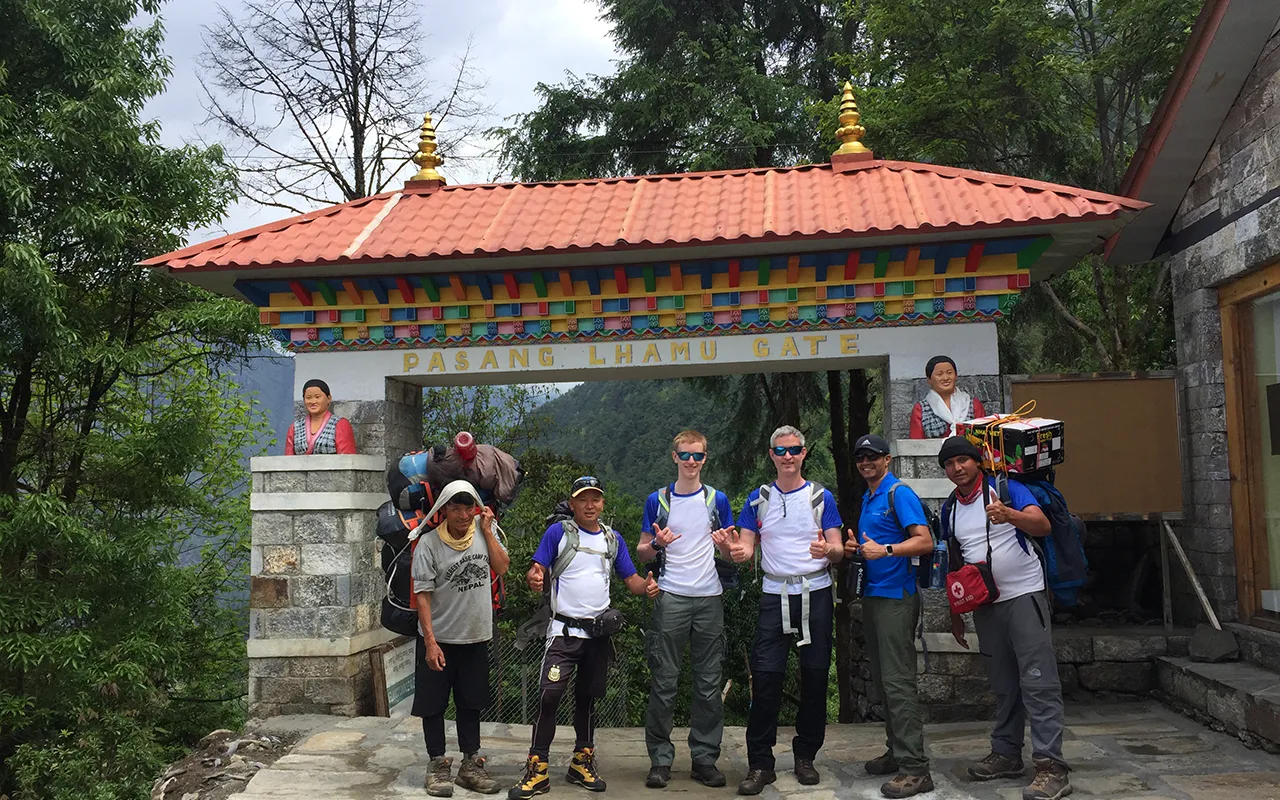
The Sagarmatha National Park entrance gate is around the corner, where we will show our permit for review. Following our climbing route ahead, we will pass through the pine forest of Jorsalle.
We will then approach the spot where Dudh Koshi flows to meet with Bhote Koshi. Up above the Hilary Suspension Bridge floats, after which the trail continues upstream towards Top Danda first and then Namche Bazaar.
We will find Nuptse, Taboche, Thamserku, Everest, and Lhotse staring at us from far behind.
Activity: 5-6 hrs hike
Max. Altitude: 3,440m/11,286ft. (Namche Bazaar)
Meal: Breakfast, Lunch & Dinner
Accommodation: Lodge
Our first acclimatization day, but not a day off on the Everest Base Camp trek. Today, we will engage in a light walk towards Khumjung Village, placed a little above Namche.
The monastery rumored to have preserved the Yeti bones is a must-visit site. Then, we may also head higher towards the Everest View Hotel (3880 m), where the scintillating Cholatse, Tawache, Kusum Kanguru, Lhotse, Thamserku, Nuptse, Ama Dablam, and Everest will capture our senses.
Now, a return downward to Namche and rest will be followed.
Max. Altitude: 3,880m/12,730ft. (Everest View Hotel)
Meal: Breakfast, Lunch & Dinner
Accommodation: Lodge
Our next stopping destination is Tengboche. A winding Himalayan trail will pass us through Kyanjuma and then Sanasa villages. Here, our eyes will meet the junction of Dudh Koshi with Imja Khola.
The trail will now diligently rise towards 3250 m Phungi Thenga. Tengboche is still 2 hour climb from up here. Our feet will meet the leveled ground of Tengboche Monastery with gorgeous Ama Dablam as its backdrop.
Activity: 5-6 hrs hike
Max. Altitude: 3,855m/12,648ft. (Tengboche)
Meal: Breakfast, Lunch & Dinner
Accommodation: Lodge
Resuming our yesterday’s travel, we will make a short descent to Imja Khola. The trail will again carry us gradually up towards Deboche, where we will cross a small bridge.
The land is turning more barren now as we reach the desert-like Upper Pangboche Village (3900 m). A tiny yet time-stood monastery here also at one time housed the Yeti Skull.
The Mani Walls on the path now will lead us upstream through Orsho, Shomare, and Tsuro Wog before we are at Dingboche, where we will end our hike.
Standing tall as one of the tallest Khumbu villages, Dingboche boasts not only comfort but also the phenomenal paradise of Cholatse, Taboche, Nuptse, Ama Dablam, Thamserku, and Lhotse.
Activity: 5-6 hrs
Max. Altitude: 4,360m/14,304ft. (Dingboche)
Meal: Breakfast, Lunch & Dinner
Accommodation: Lodge
We have our another day off and rest day on our Everest Base Camp trek. The village offers us some pleasurable options to make a light walk to adapt to the 4500 m Himalayan air.
A small, calm walk towards Chhukung Village and then a short ascent to Chhukung Ri (5546 m) or a brief climb over 5050 m Nagarjun (Nangkartshang) Hill are some options you can choose from.
Both 5000 m hills are the astonishing lookout points to fixate our eyes on Thamserku, Nirukhang, Lobuche, Cholatse, Island Peak, Makalu, Baruntse, Ama Dablam, and Thamserku.
Meal: Breakfast, Lunch & Dinner
Accommodation: Lodge
Ascending quietly upward through Dusa and Dughla Villages, we will find ourselves standing beneath the massive face of Khumbu Glacier moraine. The path ahead will again rise more intensely till we are at the Dughla Pass or the Chukpi Lhara Pass (4830 m).
Vast stone chortens have been raised here to honor those who tragically lost their bodies in the Khumbu Mountains. The trail now gently slopes downward, directing us west towards Lobuche.
Activity: 5-6 hrs
Max. Altitude: 4,930m/16,175ft. (Lobuche)
Meal: Breakfast, Lunch & Dinner
Accommodation: Lodge
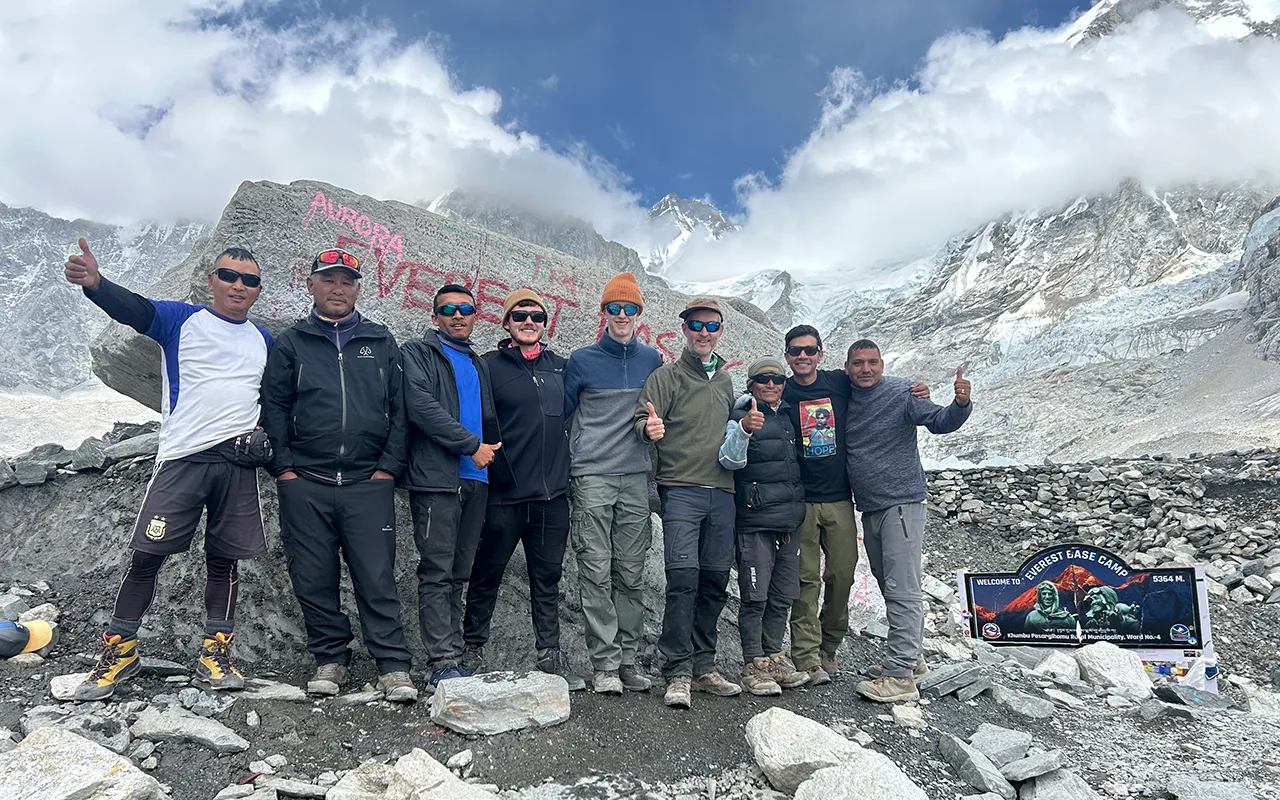
A great day on our EBC trek awaits us today as we set foot on the highly regarded snowy ground of Everest Base Camp. Starting very early in the morning, we will move gently, unhurried, to Gorakshep via Lobuche Pass, alongside the flowing Khumbu Glacier.
After about 3 hours, we will be devouring hot lunch at Gorak Shep, the tallest final lodge settlement in Khumbu. Now, we shall proceed to see the EBC following mostly a flat path.
The very disreputable yet gorgeous Khumbu Icefall will stare at us along with Nuptse, Pumori, Khumbutse, and Lhotse. We will now hike back to Gorakshep for a warm meal.
Activity: 7-8 hrs hike
Max. Altitude: 5,364m/17,598ft. (EBC )
Meal: Breakfast, Lunch & Dinner
Accommodation: Lodge
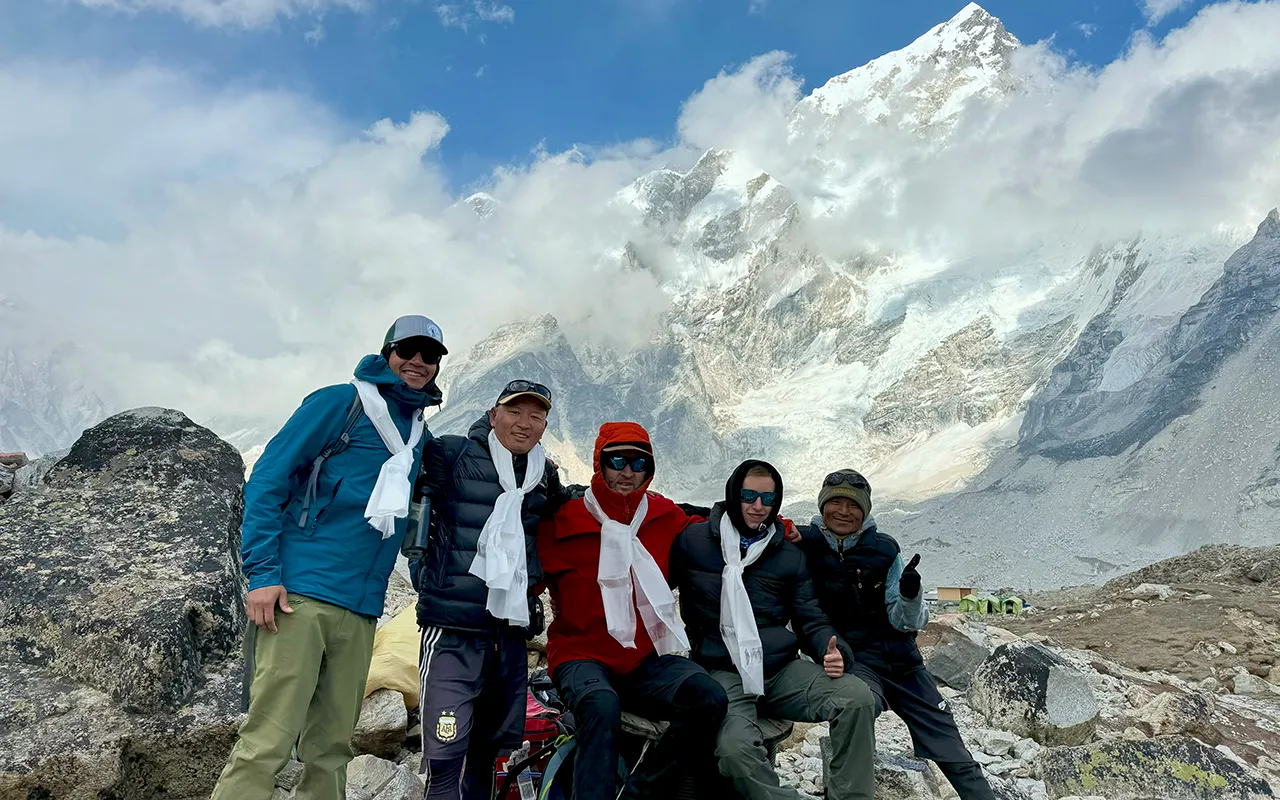
A journey before dawn is mandatory for seeing the magnificent Everest brightening under the rising sun. The uphill trek to Kala Patthar alongside the Khumbu Glacier side wall will be fatiguing but short, only around 1 to 2 hours.
Be ready to be bedazzled by the fabulous god creation in front of you: Lhotse, Pumori, Ama Dablam, Everest, Thamserku, Khumbutse, Nuptse, Lingtren, and Lobuche.
It’s time for us to head back down to Gorakshep for breakfast, after which we will descend the same trail passing through Lobuche and Dughla. From here, we will follow a different trail to reach Pheriche.
Activity: 5-6 hrs trek
Max. Altitude: 5,644m/18,517ft. (Kala Patthar)
Meal: Breakfast, Lunch & Dinner
Accommodation: Lodge
Our Everest Base Camp trek is nearing to a close. Crossing the Khumbu Khola after leaving Pheriche, we will march back down through Shomare, Pangboche, Deboche, Tengboche, Phungi Thanga, Sanasa, and Kyanjuma to finally embrace the comfort of Namche.
Activity: 6-7 hrs
Max. Altitude: 3,440m/11,286ft. (Namche)
Meal: Breakfast, Lunch & Dinner
Accommodation: Lodge
A rigorous descending trail will carry us down to Dudh Koshi Valley, where once again our feet will walk through Jorsalle and Monjo Villages.
Finally, we leave the beautiful ground of Sagarmatha National Park and reach Lukla hiking past Benkar, Phakding, Thadokoshi, Chheplung, and Chaurikharka.
Activity: 6-7 hrs hike
Max. Altitude: 2,850m/9,350ft. (Lukla)
Meal: Breakfast, Lunch & Dinner
Accommodation: Lodge
Our flight from Lukla to land at Manthali or Kathmandu will occur early in the morning. In case of Manthali departure, our 4WD pick-up will be at the airport to transfer you to Kathmandu.
Afterward, in the evening, enjoy a farewell dinner hosted by 3A Adventure.
Activity: 4-5 hrs flight
Max. Altitude: 1,400m/4,593ft. (Kathmandu)

Note:
If you have a private group and prefer a personalized experience, we can organize a custom trip tailored to your requirements and group size, running it any day you choose.
Transportation
Food and Accommodation
Guide and Support Staff
Permit and Expenses
Medical and Gear
Others
International Flights and Visa
Food and Accommodations
Travel and Medical Insurance
Other Expenses
The Everest Base Camp trek largely occurs inside the Sagarmatha National Park, rich in diverse weather patterns ranging from temperate to sub-temperate and alpine.
The lower Khumbu villages below 3500 m enjoy the temperate climate largely shaped by the monsoon rains, while the upper Himalayan region is consistently cold with alpine weather.
Especially in winter appearing from December to February, heavy snow and winds can make trekking nearly impossible. The navigation through the terrain can be demanding as trails will be obscured, and visibility of mountains and signposts often diminishes.
When summer arrives from June to August, the Khumbu Valley goes through heavy rain, increasing the threat of flooding and landslides.
Thus, considering these factors, the best Everest Base Camp trek time will be in spring and autumn, specifically between April and May and October and November.
The Everest Base Camp trek is possible in winter and summer as well, but spring and autumn seasons offer the hikers the best consistent weather and facilities. Tea houses will always be open, experienced porters and guides will be readily open for trek.
Our 12 days Everest Base Camp trek has a difficulty rating of level II category. It means the overall trekking adventure poses a medium challenge for those enthusiastic about trekking.
The walking route is also not excessively demanding and non-technical, so anyone possessing an average fitness level can reach the Everest Base Camp with ease.
The most common challenge that every trekker succumbs to is altitude sickness, but we have arranged acclimatization days to effectively manage this.
The total hiking route length is also 130 km, commencing and ending in Lukla. The ultimate elevation of the entire Everest Base Camp trek route is 5644 m, while the maximum sleeping will occur at 5,185 m in Gorakshep.
Additionally, almost the entire trail is lined with excellent tea houses and facilities, with signposts at every bend. It doesn’t mean that you should underestimate the challenge of the Everest Base Camp trek, but its moderate nature makes it a fantastic first journey for new hikers eager for the adventure it provides.
The Everest Base Camp trek is undeniably a high-altitude Himalayan trekking action leading you up above 3000 m most days. Thus, altitude sickness or the AMS can be the biggest problem for you in our EBC trek.
You can prepare for the AMS by acclimating yourself before the actual EBC trek sets in. However, it is such a condition that can impact anyone, despite their athletic shape.
Once after crossing the threshold of 3000 m at Namche, you may start to experience a headache and dizziness. You may also have trouble sleeping and a tendency to vomit.
You can take Diamox to reduce these early signs of AMS, but only after you discuss it with your doctor. After all, it is a diuretic drug that needs certain precautions.
More than medication, drinking enough water will help you not only fight the AMS but also prevent it. So, bring a refillable water bottle and you can get the boiled water at every tea house on the route.
Besides, our Sherpa guide are well-trained regarding AMS management, so you need not worry. After constant monitoring, he may descend you or pause your hike for one or two days.
In severity, a helicopter rescue will be managed immediately, and we will also contact your insurer for prompt action.
You don’t have to be the fittest and most athletic person to engage in the Everest Base Camp trek. However, if you have been a couch potato, this adventure can be quite challenging for you unless you prepare yourself in advance.
Therefore, we suggest that you start exercising in the months leading up to the EBC trek. You can go running a few times a week or take long walks, preferably with a 15 kg backpack.
It is also wise to wear the shoes you intend to use during the trek while training. You can also carry out additional activities such as cycling, jogging, biking, or swimming.
Practice these activities with frequent breaks, which will help condition your body for the demands of extended walks. To make your legs get used to the frequent ascent and descents on the trek, stair climbing will be the most recommended exercise for you.
Likewise, sports such as volleyball, basketball, football, treadmill run, planks, squats, pull-ups, and push-ups will also build up your cardiovascular condition.
Each night on the Everest Base Camp trek, you will snuggle into the warm and homely tea houses of the locals in the planned overnight villages. Our guide will get you a double room in the newer tea houses that have greatly enhanced their comfort for guests.
These tea houses now offer attached toilets, showers, and WiFi with charging utilities as well. However, hot showers, WiFi, and charging will be at a small extra fee.
Till Dingboche village, you can even get a single room if you like to. Beyond this village, you will have to settle for the humble setting at Lobuche and Gorakshep.
3A Adventure will also look after your food arrangements on the Everest Base Camp trek. Three main courses in breakfast, lunch, and dinner will be served at your table. The drinks and beverages will, however, be left to your own.
Dal Vat will be omnipresent in every tea house menu with the choices from Momo, pasta, thukpa, Tsampa, fried chowmein, chapati, vegetables, eggs, and porridge. Bakery items will also be available till Dingboche.
3A Adventure will be responsible for organizing your transportation during the Everest Base Camp trek. A private 4WD pick-up and drop-off vehicle with driver and guide will be available for your airport and hotel transfers and for the Manthali transfer from Kathmandu. The flights back and forth between Kathmandu/Ramechhap and Lukla will also be looked after.
The local mobile network providers of NTC and Ncell work well almost all the time during the Everest Base Camp trek. Therefore, instead of activating international roaming on your current network, it is cheaper to get either the eSIM or the physical SIM from these Nepali networks for your cellular communication throughout the trek.
These providers also supply 4G/LTE service with a range of affordable data packages so you can stay online even if there is a lack of WiFi signal on the route.
For the WiFi usage, you can buy a 10 GB prepaid WiFi card from Everest Link or AirLink in Lukla or Namche Bazaar, which will remain valid for a month.
On some sections of the route of the EBC trek, you may even get free WiFi. Likewise, almost all tea houses are now able to offer you WiFi, though there will be a small fee.
For our Everest Base Camp trek, we need to have two key mandatory permits:
Remember, the TIMS card will no longer be required for the EBC trek. Our guide will get these permits once you are at Lukla and Monjo villages. The fees have already been incorporated into our total Everest Base Camp trek cost.
Certainly, you will need to get a tourist visa before entering the border of Nepal. However, there is no requirement for you to go through the procedures in the Embassy before you leave your country.
The convenient On Arrival Tourist Visa system has now enabled travelers getting into Nepal to acquire the Nepal tourist visa after landing at TIA or any land border.
Moreover, you can complete the applying process online on the Nepal Immigration Site and make the payment for the Visa once you are at TIA or any Nepal land border.
However, remember to bring the printed application form with your individual barcode. The payment for the Nepal tourist visa will be 30 US Dollars for 15 days, 50 US Dollars for one month, and 125 US Dollars for three months.
For the application to the Nepal Immigration Department for the Visa, you will need:
Having international travel insurance that includes helicopter rescue and evacuation is a compulsory requirement for our Everest Base Camp trek. Without the correct insurance policy, we will not be able to procure the essential permits needed for the EBC trek.
For our 12 days Everest Base Camp trek, please get the insurance policy that covers helicopter transportation, rescue, and evacuation up to an altitude of 5700 meters.
If you also include medical and accidental coverage, along with protection for luggage loss, trip extension, or trip cancellation, you will have additional protection during the Everest Base Camp trek.
This will safeguard you from any unimaginable and unfortunate situations, such as natural calamities, injuries, accidents, or medical conditions, including AMS.
3A Adventure will manage all your travel logistics for the Everest Base Camp trek. So you will only need to reach into your wallet for personal expenses that are not part of our included services.
This includes your personal travel insurance, international flights to and from Nepal, accommodation and meals in Kathmandu, the Nepal tourist visa fee, WiFi, hot showers, hot water, beverage costs, fees for charging your devices on the way, and of course, personal shopping expenses like snacks, extra porter arrangements, and tips for porters and guide.
Other expenses that will not be covered in our Everest Base Camp trek consist of excess baggage charges, which are limited to 9 kg per hiker on the trek, and any additional costs for extra stays due to weather conditions, natural events such as landslides or avalanches, etc.
A group EBC trek means you will be traveling with individuals who share your mindset, all heading to the same destination, sharing not only the route and experience but also the overall cost of the Everest Base Camp trek.
When you journey in a group, every expense related to the Everest Base Camp trek will be divided equally among the group members, thus easing your financial load.
Generally, our group will be small, usually comprising 5 to 6 members. Traveling in this manner will make you confident about the route and the potential challenges of snow and altitude.
Additionally, if the group is large, an assistant guide will be provided to support you if you can’t keep up with others.
However, when traveling in a group, you will have to coordinate your arrival dates and travel plans with people you may not know at all. This will limit your flexibility, and you will also have to adjust your daily routines adjusting the preferences of each group member.
On the other hand, in a private EBC trek, you will be able to make your own Everest Base Camp trek itinerary. You will have enhanced flexibility that will allow you to travel in your own way without the concern of adjusting to a group.
However, you will have the support of a guide, and it’s essential for you to establish a level of trust. This arrangement thus grants you complete freedom to do as you please, whenever you wish.
By discussing with your guide and the company, you can choose the best route and explore various options. Additionally, you will be able to meet new people on the trail and in the lodges as well.
However, in a private EBC trek, you will be responsible for covering the total expenses, which can make this a more expensive choice compared to group travel.
General
It is a class II moderate Himalayan hike to the base camp of Everest at 5364 m altitude.
The EBC trek has no technical challenges, with no extremely steep sections and no requirement for technical gear.
The everyday hikes can vary between 6 to 7 hours and 7 to 12 km each day.
It cannot be regarded as an extremely steep section, but it is long and moderately steep on the way towards Namche Bazaar.
You can purchase the internet access SIM Card of NTC or NCELL in Kathmandu, Lukla, Phakding, or Namche Bazaar. The tea houses will also have WiFi provision at an added fee.
We recommend an average of $600 per person for drinks, meals in Kathmandu, tips for porters, additional sightseeing tours, and souvenirs.
In Kathmandu, Lukla, and Namche, you can find ATM booths to withdraw your required cash.
Certainly, you can lengthen your EBC trek with a side trip to Gokyo Valley. There are also other possible alternatives to add to such as three passes, and the Everest three passes.
If you are trekking in private, it will depart on your scheduled time, and if you are in a group, the EBC trek date will be guaranteed to depart once the minimum number of travelers is reached.
Please find the minimum number of participants listed for our Everest Base Camp trek just below its description.
No, a different EBC trek route will not be designed. It mostly rains in the summer months, sometimes disabling or postponing the Everest Base Camp trek. However, in recent times, it doesn’t rain that much, so the EBC trek route will be generally suitable for walking.
There is no official minimum age specified for the 12 days Everest Base Camp trek, but generally we advise travelers from 16 to 70 years old to engage in our trek.
Once you at Namche, Everest will appear in your sight till Dingboche, and it will reappear from Gorakshep.
Preparation & Fitness
You don’t need to be of a great athletic built for the 12 days Everest Base Camp trek. An average fit and active person can successfully trek to EBC.
Muscle training for at least three months, such as swimming, running, or cycling, will be the right training.
 Insurance & Visa
A passport and a photo, as we have stated above, while travel insurance will be needed for the permit for the trek.
Yes, no matter where you get in from, a tourist visa will be essential, which you can fill out digitally.
Yes, we have stated earlier as well that travel insurance is a must-have for our Everest Base Camp trek.
You should get the personal travel insurance before the Everest Base Camp trek, as you will have to supply us with your policy copy after the reservation.
No, we will offer insurance for our staff and crew members, but personal travel insurance will have to be arranged by you.
 Guides & Support Staff
Yes, you will have a local guide and an assistant guide for a group containing more than 6 people, and a porter for every two people.
It is not mandatory, but recommended and expected as well.
Generally, ten to fifteen percent, but more based on your will and their service satisfaction.
 Accommodation and Facilities
The tea houses will be pretty simple, not like in Kathmandu, but comfortable enough for a homely night and meal. The rooms will be generally double with shared bathrooms.
If available, yes, you can have a single room and an attached bathroom too, but at an additional fee to your travel budget.
Yes, mostly in high altitude, as central heating is not available in the tea houses, so it’s better to bring a sleeping bag.
Certainly, on request, the tea house will prepare a meal that suits you.
Yes, hot showers or hot water will be practically be offered on the entire route, except at Lobuche and Gorakshep.
Yes, there will be electricity throughout the route, and the tea house will allow you to charge at an additional fee.
 Weather & Seasons
Weather-wise, it’s October and April, but if you love a secluded trail, December and January will also be excellent choices.
Certainly, if you’re an experienced adventurer, then it will be a great way to get an extreme trekking adventure.
 Health & Safety
It will be the altitude increment each day till you are at Kala Patthar.
Our 12 days Everest Base Camp trek itinerary has a natural acclimatization cycle with additional overnight stays in Namche and Dingboche.
Generally, no vaccination has been obligatory for the Everest Base Camp trek, but it would be wise if you vaccinate against yellow fever, hepatitis, tetanus, etc.
 Booking & Payment
Yes, please read carefully our terms and conditions regarding the deductible charges.
An advance deposit of 20 percent will be needed for your confirmed reservation.
 Transportation & Flight
No, you will have to foresee the airport transport from TIA to your hotel, but taxis will be available conveniently at TIA.
Certainly, the helicopter option to Lukla or from Gorakshep to Kathmandu is available, and we can make it available to you for an extra service fee.
Unfortunately, we cannot guarantee the Lukla flights as they are very dependent on the climate. A flight will re-arranged if it gets postponed.